Why the papacy matters
The pope is the bishop of Rome. Catholics hold that Christ made Peter the rock of his Church, and that the bishops of Rome succeed Peter in that office. If that is so, the record should show the other churches turning to Rome from early on. If the office was invented later, the record should show that too.
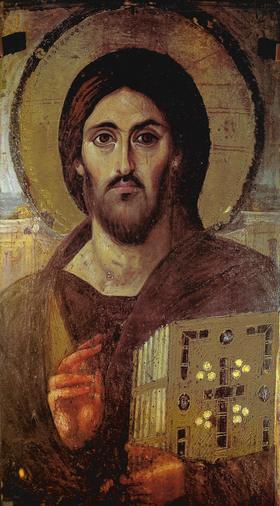
The claim rests on what Jesus said to Peter.
“And I tell you, you are Peter, and on this rock I will build my church, and the powers of death shall not prevail against it. I will give you the keys of the kingdom of heaven, and whatever you bind on earth shall be bound in heaven, and whatever you loose on earth shall be loosed in heaven.”
Jesus to Simon PeterMatthew 16:18-19, c. AD 30Read it in the source: Bible Gateway, RSV Catholic Edition
The words about keys were not new. Isaiah speaks of the key of the house of David, laid on one man's shoulder, to open and to shut.
“And I will place on his shoulder the key of the house of David; he shall open, and none shall shut; and he shall shut, and none shall open.”
The prophet IsaiahIsaiah 22:22, Old TestamentRead it in the source: Bible Gateway, RSV Catholic Edition
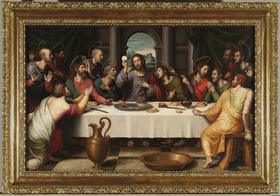
At the Last Supper Jesus prayed for Peter by name and told him to strengthen his brethren.
“Simon, Simon, behold, Satan demanded to have you, that he might sift you like wheat, but I have prayed for you that your faith may not fail; and when you have turned again, strengthen your brethren.”
Jesus at the Last SupperLuke 22:31-32, c. AD 30Read it in the source: Bible Gateway, RSV Catholic Edition
After the Resurrection he told Peter three times to feed his sheep.
“"Simon, son of John, do you love me more than these?" He said to him, "Yes, Lord; you know that I love you." He said to him, "Feed my lambs." … "Tend my sheep." … "Feed my sheep."”
Jesus after the ResurrectionJohn 21:15-17, c. AD 30Read it in the source: Bible Gateway, RSV Catholic Edition
About 170 the bishop of Corinth writes that Peter and Paul taught in Italy and died as martyrs at the same time.
“You have thus by such an admonition bound together the planting of Peter and of Paul at Rome and Corinth. For both of them planted and likewise taught us in our Corinth. And they taught together in like manner in Italy, and suffered martyrdom at the same time.”
Dionysius of Corinth, in EusebiusChurch History 2.25.8, c. 170Read it in the source: New Advent
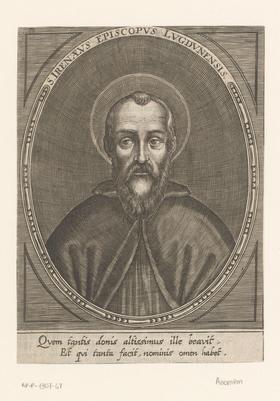
About 180 Irenaeus writes that every church should agree with the church of Rome.
“For it is a matter of necessity that every Church should agree with this Church, on account of its preeminent authority”
St. Irenaeus of LyonsAgainst Heresies 3.3.2, c. 180Read it in the source: New Advent
In 341 Pope Julius writes to bishops of the East that the custom was to write to Rome first.
“Are you ignorant that the custom has been for word to be written first to us, and then for a just decision to be passed from this place? If then any such suspicion rested upon the Bishop there, notice thereof ought to have been sent to the Church of this place”
Pope St. Julius ILetter to the Eusebian bishops at Antioch (341), in St. Athanasius, Defence against the Arians (Apologia contra Arianos) 35, 341Read it in the source: New Advent
The same record shows a pope resisted. In 256 a bishop in Cappadocia writes against Pope Stephen, and in doing so says that Stephen claims the succession from Peter.
“And in this respect I am justly indignant at this so open and manifest folly of Stephen, that he who so boasts of the place of his episcopate, and contends that he holds the succession from Peter, on whom the foundations of the Church were laid, should introduce many other rocks and establish new buildings of many churches; maintaining that there is baptism in them by his authority.”
Firmilian, Bishop of Caesarea in CappadociaLetter to Cyprian, 17 (Epistle 74 among Cyprian's letters on the linked page), 256Read it in the source: New Advent
The Church teaches that Peter's office belongs to her foundation and is continued under the primacy of the pope.
“The Lord made Simon alone, whom he named Peter, the "rock" of his Church. He gave him the keys of his Church and instituted him shepherd of the whole flock. … This pastoral office of Peter and the other apostles belongs to the Church's very foundation and is continued by the bishops under the primacy of the Pope.”
Catechism of the Catholic ChurchCCC 881, 1992Read it in the source: vatican.va
The first timeline below follows the office through the centuries, including the times a pope was resisted or a council said otherwise. The second gives every pope in order, as the Holy See publishes the list. On the timeline at the top of the page, each bar in the row named The Papacy is one pontificate.
2 timelines
72 quotations, each linked to the page it was checked against.
Where each one begins
Each has a row of its own under the main timeline. The row opens at the year shown here.
Eastern Orthodox: parted from the Catholic Church. The legates of the pope and the patriarch of Constantinople excommunicate each other. This is the date usually given for the break between East and West.