Old Testament
Scripture
The key of the house of David
The prophet Isaiah Isaiah 22:22
“And I will place on his shoulder the key of the house of David; he shall open, and none shall shut; and he shall shut, and none shall open.”
This timeline follows the office of the pope from its root in Scripture to today. It begins long before anything was defined: what Jesus said to Peter, what the early writers say of Peter's preaching and death at Rome, how the first Christians spoke of the church of Rome, when other churches turned to it and when they resisted it. It then shows how Rome and Constantinople came to give different accounts of Rome's place, down to the break of 1054, and how the office was defined afterward, at Florence in 1439 and in full at the First Vatican Council in 1870.
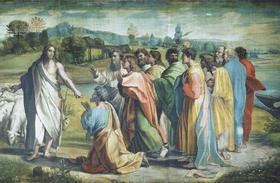
Jesus gives Simon the name Peter, promises to build his Church on this rock, and promises him the keys of the kingdom of heaven.
“And I tell you, you are Peter, and on this rock I will build my church, and the powers of death shall not prevail against it. I will give you the keys of the kingdom of heaven, and whatever you bind on earth shall be bound in heaven, and whatever you loose on earth shall be loosed in heaven.””
JesusMatthew 16:18-19Read it in the source: Bible Gateway, RSV Catholic Edition
The papacy claims to be an office that Jesus gave, for the sake of the Church he calls his own. This timeline shows the record for that claim, including the times a pope was resisted. The measure throughout is whether Peter's successors served what Christ entrusted to Peter.
Drafted from primary sources. Every quotation is checked against the page it links to. The timeline includes the moments when a pope was resisted or a council said something different, because they are part of the record. The doctrine is argued point by point on the objection timelines on Peter the rock, the office of Peter, papal supremacy and papal infallibility, and the other matters in dispute with the East are on the timeline of the East-West schism. Every pope in order is on the other timeline in this section. Six texts are quoted from the Fordham sourcebook, since no preferred host carries them. One, St. Optatus, is quoted from tertullian.org, a fallback host, since no preferred host carries it.
A work in progress. The quotations below are not all the evidence on this matter. More are being added.
“And I will place on his shoulder the key of the house of David; he shall open, and none shall shut; and he shall shut, and none shall open.”
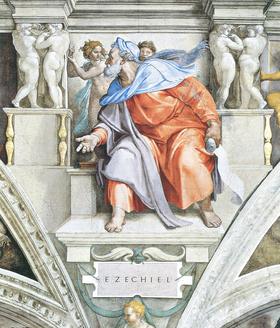
“For thus says the Lord God: Behold, I, I myself will search for my sheep, and will seek them out. … And I will set up over them one shepherd, my servant David, and he shall feed them: he shall feed them and be their shepherd.”
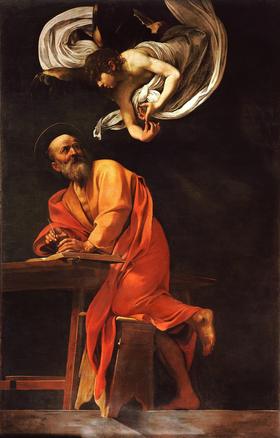
“The names of the twelve apostles are these: first, Simon, who is called Peter, and Andrew his brother”
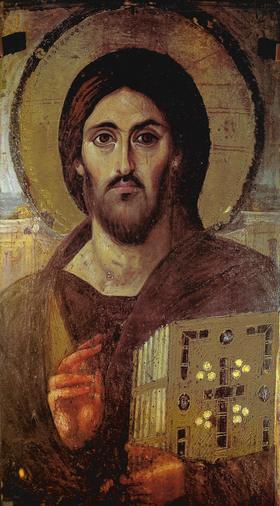
“And I tell you, you are Peter, and on this rock I will build my church, and the powers of death shall not prevail against it. I will give you the keys of the kingdom of heaven, and whatever you bind on earth shall be bound in heaven, and whatever you loose on earth shall be loosed in heaven.”
“Truly, truly, I say to you, when you were young, you girded yourself and walked where you would; but when you are old, you will stretch out your hands, and another will gird you and carry you where you do not wish to go.” (This he said to show by what death he was to glorify God.) And after this he said to him, “Follow me.””
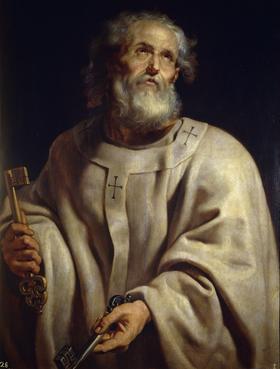
“She who is at Babylon, who is likewise chosen, sends you greetings; and so does my son Mark.”
““And to the angel of the church in Philadelphia write: ‘The words of the holy one, the true one, who has the key of David, who opens and no one shall shut, who shuts and no one opens.”
“If, however, any shall disobey the words spoken by Him through us, let them know that they will involve themselves in transgression and serious danger”
“I do not, as Peter and Paul, issue commandments unto you. They were apostles; I am but a condemned man”
“You have thus by such an admonition bound together the planting of Peter and of Paul at Rome and Corinth. For both of them planted and likewise taught us in our Corinth. And they taught together in like manner in Italy, and suffered martyrdom at the same time.”
“For it is a matter of necessity that every Church should agree with this Church, on account of its preeminent authority”
“Matthew also issued a written Gospel among the Hebrews in their own dialect, while Peter and Paul were preaching at Rome, and laying the foundations of the Church. After their departure, Mark, the disciple and interpreter of Peter, did also hand down to us in writing what had been preached by Peter.”
“Thereupon Victor, who presided over the church at Rome, immediately attempted to cut off from the common unity the parishes of all Asia, with the churches that agreed with them, as heterodox; and he wrote letters and declared all the brethren there wholly excommunicate. … But this did not please all the bishops. And they besought him to consider the things of peace, and of neighborly unity and love.”
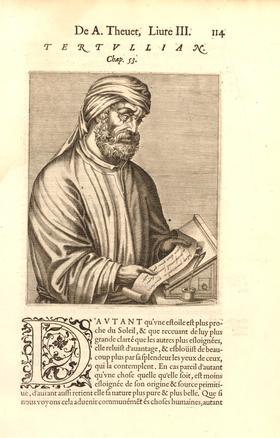
“Since, moreover, you are close upon Italy, you have Rome, from which there comes even into our own hands the very authority (of apostles themselves). How happy is its church, on which apostles poured forth all their doctrine along with their blood! Where Peter endures a passion like his Lord's! Where Paul wins his crown in a death like John's”
“But I can show the trophies of the apostles. For if you will go to the Vatican or to the Ostian way, you will find the trophies of those who laid the foundations of this church.”
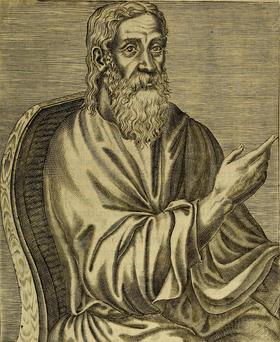
“The Gospel according to Mark had this occasion. As Peter had preached the Word publicly at Rome, and declared the Gospel by the Spirit, many who were present requested that Mark, who had followed him for a long time and remembered his sayings, should write them out.”
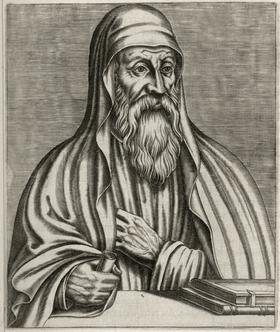
“Peter appears to have preached in Pontus, Galatia, Bithynia, Cappadocia, and Asia to the Jews of the dispersion. And at last, having come to Rome, he was crucified head-downwards; for he had requested that he might suffer in this way.”
“And in this respect I am justly indignant at this so open and manifest folly of Stephen, that he who so boasts of the place of his episcopate, and contends that he holds the succession from Peter, on whom the foundations of the Church were laid, should introduce many other rocks and establish new buildings of many churches; maintaining that there is baptism in them by his authority.”
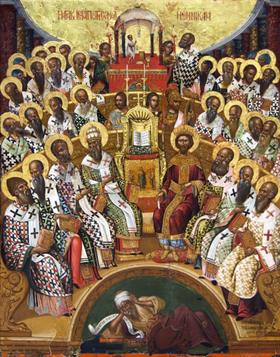
“Let the ancient customs in Egypt, Libya and Pentapolis prevail, that the Bishop of Alexandria have jurisdiction in all these, since the like is customary for the Bishop of Rome also. Likewise in Antioch and the other provinces, let the Churches retain their privileges.”
“It is, therefore, recorded that Paul was beheaded in Rome itself, and that Peter likewise was crucified under Nero. This account of Peter and Paul is substantiated by the fact that their names are preserved in the cemeteries of that place even to the present day.”
“Are you ignorant that the custom has been for word to be written first to us, and then for a just decision to be passed from this place? If then any such suspicion rested upon the Bishop there, notice thereof ought to have been sent to the Church of this place”
“let us, if it seem good to your charity, honour the memory of Peter the Apostle, and let those who gave judgment write to Julius, the bishop of Rome, so that, if necessary, the case may be retried by the bishops of the neighbouring provinces and let him appoint arbiters”
“You cannot then deny that you do know that upon Peter first in the City of Rome was bestowed the Episcopal Cathedra, on which sat Peter, the Head of all the Apostles … that, in this one Cathedra, unity should be preserved by all”
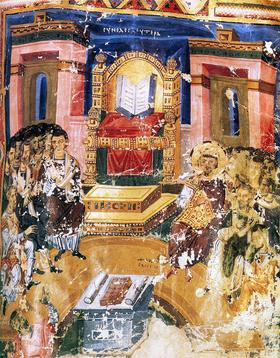
“Because it is new Rome, the bishop of Constantinople is to enjoy the privileges of honour after the bishop of Rome.”
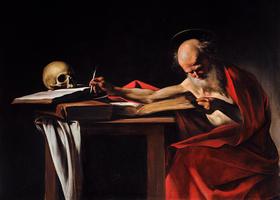
“…pushed on to Rome in the second year of Claudius to overthrow Simon Magus, and held the sacerdotal chair there for twenty-five years until the last, that is the fourteenth, year of Nero. At his hands he received the crown of martyrdom being nailed to the cross with his head towards the ground and his feet raised on high”
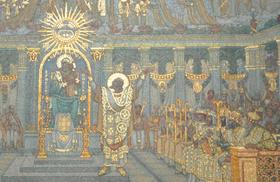
“The holy and most blessed pope Cœlestine, according to due order, is his successor and holds his place, and us he sent to supply his place in this holy synod”
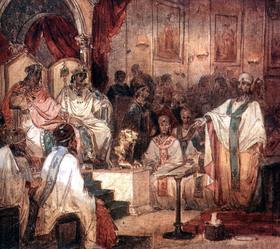
“For the Fathers rightly granted privileges to the throne of old Rome, because it was the royal city. And the One Hundred and Fifty most religious Bishops, actuated by the same consideration, gave equal privileges (ἴσα πρεσβεῖα) to the most holy throne of New Rome”
“We have ratified also the canon of the 150 holy Fathers who met at Constantinople in the time of the great Theodosius of holy memory, which ordains that after your most holy and Apostolic See, the See of Constantinople shall take precedence, being placed second … Accordingly, we entreat you, honour our decision by your assent”
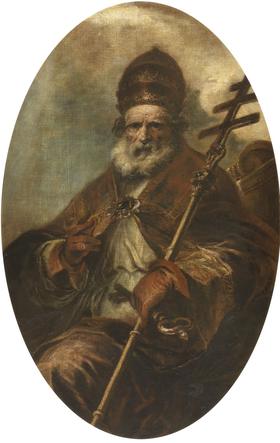
“But the bishops' assents, which are opposed to the regulations of the holy canons composed at Nicæa in conjunction with your faithful Grace, we do not recognize, and by the blessed Apostle Peter's authority we absolutely dis-annul in comprehensive terms”
“There are two powers, august Emperor, by which this world is chiefly ruled, namely, the sacred authority of the priests and the royal power. Of these that of the priests is the more weighty, since they have to render an account for even the kings of men in the divine judgment.”
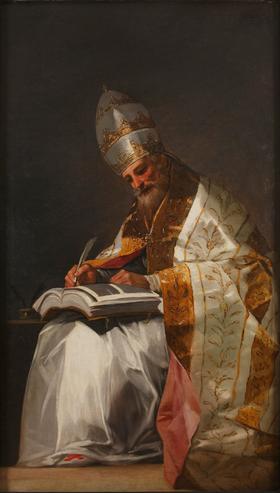
“For my honour is the honour of the universal Church: my honour is the solid vigour of my brethren. Then am I truly honoured when the honour due to all and each is not denied them. For if your Holiness calls me Universal Pope, you deny that you are yourself what you call me universally.”
“And with these we define that there shall be expelled from the holy Church of God and anathematized Honorius who was some time Pope of Old Rome, because of what we found written by him to Sergius, that in all respects he followed his view and confirmed his impious doctrines.”
“But the highest prince of the Apostles fought with us: for we had on our side his imitator and the successor in his see, who also had set forth in his letter the mystery of the divine word … For the ancient city of Rome handed you a confession of divine character, and a chart from the sunsetting raised up the day of dogmas, and made the darkness manifest, and Peter spoke through Agatho”
“Renewing the enactments by the 150 Fathers assembled at the God-protected and imperial city, and those of the 630 who met at Chalcedon; we decree that the see of Constantinople shall have equal privileges with the see of Old Rome, and shall be highly regarded in ecclesiastical matters as that is, and shall be second after it.”
“Since we understand that in the city of the Romans, in the holy fast of Lent they fast on the Saturdays, contrary to the ecclesiastical observance which is traditional, it seemed good to the holy synod that also in the Church of the Romans the canon shall immovably stands fast which says: If any cleric shall be found to fast on a Sunday or Saturday (except on one occasion only) he is to be deposed; and if he is a layman he shall be cut off.”
“For the blessed Peter himself, the chief of the Apostles, who first sat in the Apostolic See, left the chiefship of his Apostolate, and pastoral care, to his successors, who are to sit in his most holy seat forever. And that power of authority, which he received from the Lord God our Saviour, he too bestowed and delivered by divine command to the Pontiffs, his successors”
“The bishops of Constantinople and of Jerusalem, although they are called patriarchs, do not possess as much authority as the above [sees]. For, as regards the church of Constantinople, none of the apostles founded it nor did the synod of Nicaea, which is more venerable and celebrated than all other synods, make any mention of it; rather its bishop was given the title of patriarch more through the favor of princes than by reason, since Constantinople was called "New Rome."”
“So, having both the most blessed pope Nicholas as the instrument of the holy Spirit and his successor, the most holy pope Hadrian, we declare and order that everything which has been expounded and promulgated by them in a synod at various times, both for the defence and well-being of the church of Constantinople and of its chief priest, namely Ignatius, its most holy patriarch, as well as for the expulsion and condemnation of Photius, the upstart and usurper, should be maintained and observed”
Eastern Orthodox: parted from the Catholic Church. The legates of the pope and the patriarch of Constantinople excommunicate each other. This is the date usually given for the break between East and West.
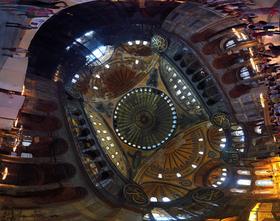
“For you know that from the sixth holy and ecumenical council to the present the commemoration of the pope has been excised from the sacred diptychs of our holy churches. … And from then until now the pope has been cut off from our holy and catholic church.”
“And when I went to Constantinople 45 years ago, under the Lord Patriarch Sergios [Sergios II, 1001-1019] of blessed memory, I found that the pope at that time was being commemorated in the divine service along with the other patriarchs. How the commemoration of the pope was later cut off and for what reason, I do not know.”
“But more grave and more insupportable than all of these, that which also displays most clearly their dementia, is the following: they say that they will not travel here so that they might be taught or hold discussions, but rather for teaching and persuading us to hold their dogmas.”
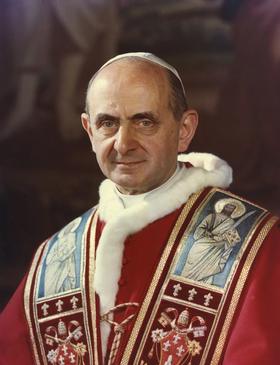
“the decisions, actions and painful incidents which in 1054 resulted in the sentence of excommunication leveled against the Patriarch Michael Cerularius and two other persons by the legate of the Roman See under the leadership of Cardinal Humbertus, legates who then became the object of a similar sentence pronounced by the patriarch and the Synod of Constantinople.”
“That the Roman church was founded by God alone. That the Roman pontiff alone can with right be called universal. That he alone can depose or reinstate bishops. That, in a council his legate, even if a lower grade, is above all bishops, and can pass sentence of deposition against them.”
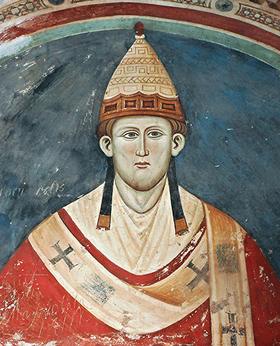
“Renewing the ancient privileges of the patriarchal sees, we decree, with the approval of this sacred universal synod, that after the Roman church, which through the Lord's disposition has a primacy of ordinary power over all other churches inasmuch as it is the mother and mistress of all Christ's faithful, the church of Constantinople shall have the first place”
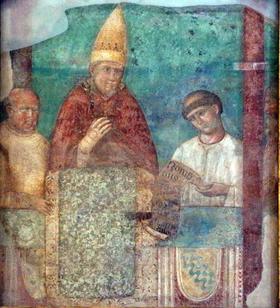
“Furthermore, we declare, we proclaim, we define that it is absolutely necessary for salvation that every human creature be subject to the Roman Pontiff.”
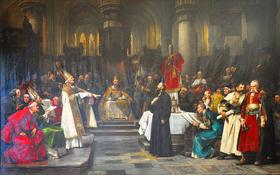
“First it declares that, legitimately assembled in the holy Spirit, constituting a general council and representing the catholic church militant, it has power immediately from Christ; and that everyone of whatever state or dignity, even papal, is bound to obey it in those matters which pertain to the faith, the eradication of the said schism and the general reform of the said church of God in head and members.”
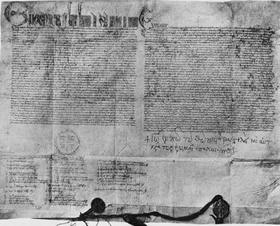
“We also define that the holy apostolic see and the Roman pontiff holds the primacy over the whole world and the Roman pontiff is the successor of blessed Peter prince of the apostles, and that he is the true vicar of Christ, the head of the whole church and the father and teacher of all Christians, and to him was committed in blessed Peter the full power of tending, ruling and governing the whole church, as is contained also in the acts of ecumenical councils and in the sacred canons.”
“For it is clearly established that only the contemporary Roman pontiff, as holding authority over all councils, has the full right and power to summon, transfer and dissolve councils. This we know not only from the witness of holy scripture, the statements of holy fathers and our predecessors as Roman pontiffs, and the decisions of the sacred canons, but also from the declarations of the same councils.”
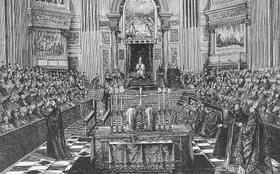
“We teach and declare that, according to the gospel evidence, a primacy of jurisdiction over the whole church of God was immediately and directly promised to the blessed apostle Peter and conferred on him by Christ the lord.”
“So, then, if anyone says that the Roman pontiff has merely an office of supervision and guidance, and not the full and supreme power of jurisdiction over the whole church, and this not only in matters of faith and morals, but also in those which concern the discipline and government of the church dispersed throughout the whole world … let him be anathema.”
“This power of the supreme pontiff by no means detracts from that ordinary and immediate power of episcopal jurisdiction, by which bishops, who have succeeded to the place of the apostles by appointment of the holy Spirit, tend and govern individually the particular flocks which have been assigned to them. On the contrary, this power of theirs is asserted, supported and defended by the supreme and universal pastor; for St Gregory the Great says: "My honour is the honour of the whole church.”
“we teach and define as a divinely revealed dogma that when the Roman pontiff speaks EX CATHEDRA, that is, when, in the exercise of his office as shepherd and teacher of all Christians, in virtue of his supreme apostolic authority, he defines a doctrine concerning faith or morals to be held by the whole church, he possesses, by the divine assistance promised to him in blessed Peter, that infallibility which the divine Redeemer willed his church to enjoy in defining doctrine concerning faith or morals.”
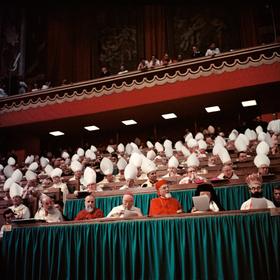
“But the college or body of bishops has no authority unless it is understood together with the Roman Pontiff, the successor of Peter as its head. The pope's power of primacy over all, both pastors and faithful, remains whole and intact. In virtue of his office, that is as Vicar of Christ and pastor of the whole Church, the Roman Pontiff has full, supreme and universal power over the Church.”
“The reply given at that time by the venerated Pontiff left the matter in suspense, in doubt. … New most patient and accurate investigations have been subsequently pursued with a result that, relying on the judgement of worthy and prudent persons, We believe to be positive: The relics also of St. Peter have been identified in a manner that We cannot but accept as convincing”
“It is also the flock of which God himself foretold that he would be the shepherd, and whose sheep, even though governed by human shepherds, are unfailingly nourished and led by Christ himself, the Good Shepherd and Prince of Shepherds, who gave his life for his sheep.”
“The Lord made St. Peter the visible foundation of his Church. He entrusted the keys of the Church to him. the bishop of the Church of Rome, successor to St. Peter, is "head of the college of bishops, the Vicar of Christ and Pastor of the universal Church on earth"”
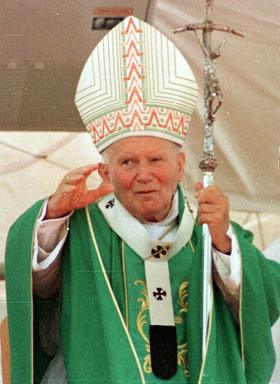
“I am convinced that I have a particular responsibility in this regard, above all in acknowledging the ecumenical aspirations of the majority of the Christian Communities and in heeding the request made of me to find a way of exercising the primacy which, while in no way renouncing what is essential to its mission, is nonetheless open to a new situation.”
The East-West SchismFor most of the first thousand years the churches of East and West were in one communion. This timeline follows the record in six parts. It starts with what both held: the Creed of 381, and what bishops and councils of the East said of the Roman see when they turned to it. It then shows the strains: the rank of Constantinople, the words "and the Son", differing customs, and breaks that were healed, as in the Acacian schism from 484 to 519. In 1054 the pope's legates and the patriarch of Constantinople excommunicated each other. In 1965 a pope and a patriarch said together that those sentences fell on persons and not on the Churches. The break hardened afterwards, above all when Western crusaders sacked Constantinople in 1204, and two councils of reunion, at Lyons in 1274 and at Florence in 1439, did not hold in the East. The later parts show the Orthodox Churches in their own confessions, the Eastern Christians who entered communion with Rome, and where the two sides stand today. On the question of who departed, each side appeals to the first thousand years. The Orthodox hold that the West added to the faith. The Catholic Church holds that the primacy the East once turned to is the one she still confesses. The quotations of both sides are here in date order.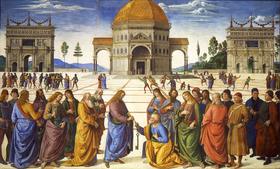 Peter the rock“The rock in Matthew 16:18 is Christ, or Peter's confession of faith. It is not Peter. Scripture says Christ is the only foundation and the head of the Church.”
 The office of Peter“Peter had no special office over the Apostles, and his authority is not passed to successors, specifically to the bishops of Rome.”The ecumenical councilsWhen a question about the faith divided Christians, the bishops met in council and gave a ruling. This timeline starts with the meeting of the apostles and elders in Jerusalem and then quotes each of the Church's twenty-one general councils, from Nicaea in 325 to the Second Vatican Council. Each entry gives one passage from the council's decrees, on the main question before it or on one of its chief rulings.
 Papal supremacy“Peter had no authority over the other apostles, and the Pope has none over the whole Church. James presided at the council in Jerusalem, and Peter calls himself only a fellow elder.”Papal infallibility“The Pope cannot be infallible. Jesus rebuked Peter and called him Satan, and Paul had to oppose him to his face at Antioch.”