Tradition Timeline Leave an objection

Start page / Kinds of source

Orthodox Writers

All 19 quotations on this site filed under “Orthodox”, from every timeline, in date order.

Each mark is one quotation. Touch the timeline to read it.

Why Orthodox writers are quoted

For about a thousand years the churches of East and West were one. The break between them is usually dated to 1054. This row gives Orthodox writers in their own words, so that the reasons for the break are stated by those who hold them and not by us.

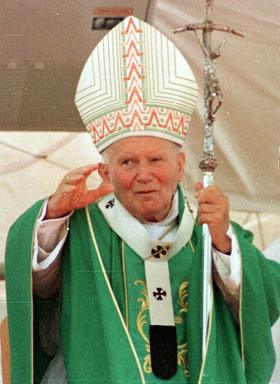
  1. An elderly pope in green vestments and a white and gold mitre raises his hand in greeting, holding his staff with the crucifix

    Pope St. John Paul II recalls that for a whole millennium Christians were united, and that Rome acted as moderator when disagreements arose.

    “I am convinced that I have a particular responsibility in this regard, above all in acknowledging the ecumenical aspirations of the majority of the Christian Communities and in heeding the request made of me to find a way of exercising the primacy which, while in no way renouncing what is essential to its mission, is nonetheless open to a new situation. For a whole millennium Christians were united in "a brotherly fraternal communion of faith and sacramental life ... If disagreements in belief and discipline arose among them, the Roman See acted by common consent as moderator".”

    Pope St. John Paul IIUt Unum Sint, 95, 1995Read it in the source: vatican.va

Where the site has a timeline that gives the Catholic answer, the entry links to it.

The East-West Schism: all 61 quotations

19 quotations in date order

A work in progress. The quotations below are not all the evidence on this matter. More are being added.

The Middle Ages800 to 1500
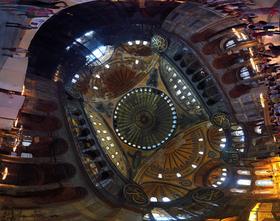
1054A wide view up into the great dome and half domes of Hagia Sophia, ringed with windows
Orthodox

The patriarch of Constantinople: the pope is cut off from our church

Michael Cerularius, Patriarch of Constantinople Letter to Peter, Patriarch of Antioch, 9 (June or July 1054)

“For you know that from the sixth holy and ecumenical council to the present the commemoration of the pope has been excised from the sacred diptychs of our holy churches. … And from then until now the pope has been cut off from our holy and catholic church.”

Read it in the source: Fordham Sourcebook

See it on the timeline: The tradition of the papacy

1054
Orthodox

The addition to the Creed rejected

Michael Cerularius, Patriarch of Constantinople Letter to Peter, Patriarch of Antioch, 12 (June or July 1054)

“reasoning badly and dangerously, they have made some sort of addition to the holy creed, so that it is as follows: "...and in the Holy Spirit, the Lord, the giver of life, who proceeds from the Father and the Son."”

Read it in the source: Fordham Sourcebook

See it on the timeline: The East-West Schism

1054
Orthodox

The patriarch of Antioch answers: the pope was named within living memory

Peter III, Patriarch of Antioch Letter to Michael Cerularius, Patriarch of Constantinople, 5 (1054)

“And when I went to Constantinople 45 years ago, under the Lord Patriarch Sergios [Sergios II, 1001-1019] of blessed memory, I found that the pope at that time was being commemorated in the divine service along with the other patriarchs. How the commemoration of the pope was later cut off and for what reason, I do not know.”

Read it in the source: Fordham Sourcebook

See it on the timeline: The tradition of the papacy

1054A wide view up into the great dome and half domes of Hagia Sophia, ringed with windows
Orthodox

The patriarch of Constantinople: the Latins are not to be counted orthodox

Michael Cerularius, Patriarch of Constantinople Letter to Peter, Patriarch of Antioch, 14 (June or July 1054)

“Therefore, if they live in such a way and, enfeebled by such customs, dare these things which are obviously lawless, forbidden, and abominable, then will any right-thinking person consider that they are at all to be included in the category of the orthodox? I think not.”

Read it in the source: Fordham Sourcebook

See it on the timeline: The East-West Schism

1054
Orthodox

What Cerularius found hardest to bear

Michael Cerularius, Patriarch of Constantinople Letter to Peter, Patriarch of Antioch, 15 (June or July 1054)

“But more grave and more insupportable than all of these, that which also displays most clearly their dementia, is the following: they say that they will not travel here so that they might be taught or hold discussions, but rather for teaching and persuading us to hold their dogmas.”

Read it in the source: Fordham Sourcebook

See it on the timeline: The tradition of the papacy

1054
Orthodox

The patriarch of Antioch warns against making the tear worse

Peter III, Patriarch of Antioch Letter to Michael Cerularius, Patriarch of Constantinople, 21 (July or August 1054)

“And I exhort, entreat, ask, and mentally embrace your holy feet, that Your Divine Blessedness might lack too great a strictness and concur in those matters. For it is to be feared that while you wish to mend that which is torn, you will make the tear worse, and, while you are zealous to set right that which has fallen, you will cause a worse fall. But consider if it is not clearly for this reason--that is, for this long separation and dissension which has divided this great apostolic see from our holy church--that all evil has multiplied in life and the whole cosmos fares ill”

Read it in the source: Fordham Sourcebook

See it on the timeline: The East-West Schism

1054
Orthodox

The patriarch of Antioch: one thing only stands in the way

Peter III, Patriarch of Antioch Letter to Michael Cerularius, Patriarch of Constantinople, 22 (July or August 1054)

“As for me, I will make my opinion clear: if ever they would correct the addition to the holy creed, I would demand nothing else, leaving as a matter of indifference, along with all the other matters, even their fault regarding the unleavened bread. … And this also I exhort Your Divine Blessedness to accept, so that you may not, by demanding everything, lose everything.”

Read it in the source: Fordham Sourcebook

See it on the timeline: The East-West Schism

c. 1148
Orthodox

A Byzantine view: the primacy passed to Constantinople

Anna Comnena The Alexiad, Book 1, ch. 13 (written c. 1148)

“For when the imperial seat was transferred from Rome hither to our native Queen of Cities, and the senate, and the whole administration, there was also transferred the arch-hieratical primacy. And the Emperors from the very beginning have given the supreme right to the episcopacy of Constantinople, and the Council of Chalcedon emphatically raised the Bishop of Constantinople to the highest position, and placed all the dioceses of the inhabited world under his jurisdiction.”

Read it in the source: Fordham Sourcebook

See it on the timeline: The East-West Schism

1204
Orthodox

The sack of Constantinople by the Fourth Crusade

Nicetas Choniates History, on the capture of Constantinople in April 1204

“How shall I begin to tell of the deeds wrought by these nefarious men! Alas, the images, which ought to have been adored, were trodden under foot! Alas, the relics of the holy martyrs were thrown into unclean places! … For the sacred altar, formed of all kinds of precious materials and admired by the whole world, was broken into bits and distributed among the soldiers, as was all the other sacred wealth of so great and infinite splendor.”

Read it in the source: Fordham Sourcebook

See it on the timeline: The East-West Schism

1395
Orthodox

A patriarch of Constantinople: the Latins "are not in communion with our church"

Anthony, Patriarch of Constantinople Letter to Vasily I, Grand Prince of Moscow, 1395

“Indeed he enjoys such great authority over all that even the Latins themselves, who are not in communion with our church, render him the same honor and submission which they did in the old days when they were united with us.”

Read it in the source: Fordham Sourcebook

See it on the timeline: The East-West Schism

1672
Orthodox

The Synod of Jerusalem answers Calvinism

Dositheus, Patriarch of Jerusalem, and the Synod of Jerusalem Confession of Dositheus, Decree 17

“We believe further that after the consecration of the bread and of the wine the substance of the bread and of the wine no longer remains, but the very body and blood of the Lord under the appearance and form of bread and wine, that is, under the accidents of the bread.”

Our translation. The words as written, in Latin:

“Item facta panis et vini consecratione nec panis nec vini manere amplius substantiam credimus, sed ipsum corpus et sanguinem Domini sub panis et vini specie et figura, id est, sub panis accidentibus.”

Read it in the source: CCEL

See it on the timeline: The East-West Schism

The Modern Era1800 to today
1839
Orthodox

The Russian catechism: many independent Churches, one Church

Philaret, Metropolitan of Moscow The Longer Catechism of the Orthodox, Catholic, Eastern Church, Q. 261

“How does it agree with the unity of the Church, that there are many separate and independent churches, as those of Jerusalem, Antioch, Alexandria, Constantinople, Russia? These are particular churches, or parts of the one Catholic Church: the separateness of their visible organization does not hinder them from being all spiritually great members of the one body of the Universal Church, from having one Head, Christ, and one spirit of faith and grace. This unity is expressed outwardly by unity of Creed, and by communion in prayer and Sacraments.”

Read it in the source: CCEL

See it on the timeline: The East-West Schism

1839
Orthodox

The Russian catechism: the faith of the seven councils kept unchanged in the East

Philaret, Metropolitan of Moscow The Longer Catechism of the Orthodox, Catholic, Eastern Church, Q. 273

“In the East, in the land of Judæa, our Lord Jesus Christ, having finished the work of our salvation, laid the foundation of his own proper Christian Church: from thence she spread herself over the whole universe; and to this day the orthodox Catholic œcumenical faith, confirmed by the seven œcumenical Councils, is preserved unchanged in its original purity in the ancient Churches of the East, and in such as agree with them, as does by God's grace the Church of Russia.”

Read it in the source: CCEL

See it on the timeline: The East-West Schism

1848
Orthodox

The Eastern patriarchs on Rome's place in the early Church

The Patriarchs of Constantinople, Alexandria, Antioch and Jerusalem Encyclical of the Eastern Patriarchs, A Reply to the Epistle of Pope Pius IX, § 13 (May 1848)

“Thus he [St. Irenaeus] who is cited by his Holiness as a witness of the primacy of the Roman Church, shows that its dignity is not that of a lordship, nor even appellate, to which St. Peter himself was never ordained, but is a brotherly privilege in the Catholic Church, and an honor assigned the Popes on account of the greatness and privilege of the City.”

Read it in the source: Fordham Sourcebook

See it on the timeline: The East-West Schism

1848
Orthodox

The Filioque rejected

The Patriarchs of Constantinople, Alexandria, Antioch and Jerusalem Encyclical of the Eastern Patriarchs, A Reply to the Epistle of Pope Pius IX, § 5 (May 1848)

“Wherefore the One, Holy, Catholic, and Apostolic Church, following in the steps of the holy Fathers, both Eastern and Western, proclaimed of old to our progenitors and again teaches today synodically, that the said novel doctrine of the Holy Ghost proceeding from the Father and the Son is essentially heresy, and its maintainers, whoever they be, are heretics, according to the sentence of Pope St. Damasus, and that the congregations of such are also heretical, and that all spiritual communion in worship of the orthodox sons of the Catholic Church with such is unlawful.”

Read it in the source: Fordham Sourcebook

See it on the timeline: The East-West Schism
1895
Orthodox

Constantinople answers: the Church of the seven councils

Patriarch Anthimos of Constantinople and his synod Patriarchal Encyclical of 1895, A Reply to the Papal Encyclical of Pope Leo XIII on Reunion, XX

“In these sources we, the orthodox, find the old and divinely-transmitted doctrines, to which we carefully hold fast to the present time, and nowhere do we find the innovations which later times of empty mindedness brought forth in the West, and which the Papal Church having adopted retains till this very day. The orthodox Eastern Church then justly glories in Christ as being the Church of the seven Ecumenical Councils and of the first nine centuries of Christianity, and therefore the one holy, catholic and apostolic Church of Christ, 'the pillar and ground of the truth'”

Read it in the source: Fordham Sourcebook

See it on the timeline: The East-West Schism
1895
Orthodox

The pope's universal jurisdiction rejected

Patriarch Anthimos of Constantinople and his synod Patriarchal Encyclical of 1895, A Reply to the Papal Encyclical of Pope Leo XIII on Reunion, XIV

“But having recourse to the fathers and the Ecumenical Councils of the Church of the first nine centuries, we are fully persuaded that the Bishop of Rome was never considered as the supreme authority and infallible head of the Church, and that every bishop is head and president of his own particular Church, subject only to the synodical ordinances and decisions of the Church universal as being alone infallible, the Bishop of Rome being in no wise excepted from this rule, as Church history shows.”

Read it in the source: Fordham Sourcebook

See it on the timeline: The East-West Schism

1895
Orthodox

Papal infallibility rejected

Patriarch Anthimos of Constantinople and his synod Patriarchal Encyclical of 1895, XVIII

“The orthodox Eastern and catholic Church of Christ, with the exception of the Son and Word of God, who was ineffably made man, knows no one infallible upon earth.”

Read it in the source: Fordham Sourcebook

See it on the timeline: The East-West Schism

1895
Orthodox

The Immaculate Conception rejected

Patriarch Anthimos of Constantinople and his synod Patriarchal Encyclical of 1895, XIII

“The one holy, catholic and apostolic Church of the seven Ecumenical Councils teaches that the supernatural incarnation of the only-begotten Son and Word of God, of the Holy Ghost and the Virgin Mary, is alone pure and immaculate; but the Papal Church scarcely forty years ago again made an innovation by laying down a novel dogma concerning the immaculate conception of the Mother of God and ever-Virgin Mary, which was unknown to the ancient Church”

Read it in the source: Fordham Sourcebook

See it on the timeline: The East-West Schism