Tradition Timeline Leave an objection

Start page / Kinds of source

The Doctors of the Church

All 102 quotations on this site filed under “Doctor of the Church”, from every timeline, in date order.

Each mark is one quotation. Touch the timeline to read it.

Why the Doctors of the Church matter

Doctor is the Latin word for teacher. The Church gives the title Doctor of the Church to saints whose teaching she holds up for all the faithful. A pope confers it, often centuries after the saint has died. Thirty-eight men and women have received it.

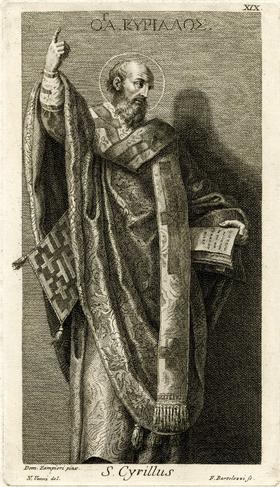
  1. An engraving of a bearded bishop in Eastern vestments holding a book and raising his right hand in blessing

    The Doctors did not teach a faith of their own. St. Cyril of Jerusalem, one of them, tells those preparing for Baptism to keep only what the Church hands on to them.

    “But in learning the Faith and in professing it, acquire and keep that only, which is now delivered to you by the Church, and which has been built up strongly out of all the Scriptures. For since all cannot read the Scriptures, some being hindered as to the knowledge of them by want of learning, and others by a want of leisure, in order that the soul may not perish from ignorance, we comprise the whole doctrine of the Faith in a few lines.”

    St. Cyril of JerusalemCatechetical Lecture 5.12, c. 386Read it in the source: New Advent

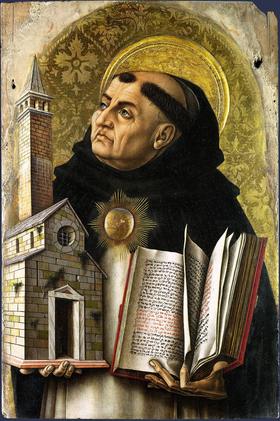
  2. A Dominican friar with a tonsure and a gold halo holds an open book and a small church, with a shining sun on his chest

    St. Thomas Aquinas, another, says that later ages did not add to the substance of the faith. They stated openly what earlier ages already held.

    “Accordingly we must conclude that, as regards the substance of the articles of faith, they have not received any increase as time went on: since whatever those who lived later have believed, was contained, albeit implicitly, in the faith of those Fathers who preceded them. But there was an increase in the number of articles believed explicitly, since to those who lived in later times some were known explicitly which were not known explicitly by those who lived before them.”

    St. Thomas AquinasSumma Theologiae II-II, q. 1, a. 7, I answer that, c. 1271Read it in the source: New Advent

The earliest Doctors, such as St. Augustine and St. Jerome, are also Church Fathers, and most of what they say is on the Fathers row. This row holds mostly the Doctors who came after the age of the Fathers, St. Thomas Aquinas among them.

The Doctors of the Church: all 40 quotations

102 quotations in date order

A work in progress. The quotations below are not all the evidence on this matter. More are being added.

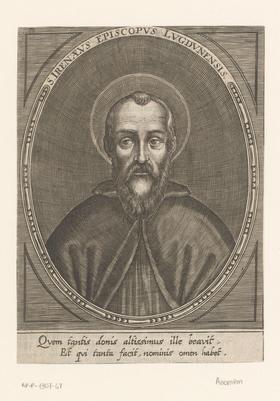
c. 202An engraved oval portrait of a bearded bishop with a halo, with a Latin inscription around the frame
Church Father

St. Irenaeus, bishop of Lyons

St. Irenaeus of Lyons Against Heresies 4.20.7

“For the glory of God is a living man; and the life of man consists in beholding God. For if the manifestation of God which is made by means of the creation, affords life to all living in the earth, much more does that revelation of the Father which comes through the Word, give life to those who see God.”

Read it in the source: New Advent

See it on the timeline: The Doctors of the Church

367
Church Father

St. Hilary of Poitiers, bishop and Doctor

St. Hilary of Poitiers On the Trinity 12, 57, as quoted by Benedict XVI, General Audience, 10 October 2007

“Obtain, O Lord … that I may keep ever faithful to what I have professed in the symbol of my regeneration, when I was baptized in the Father, in the Son and in the Holy Spirit. That I may worship you, our Father, and with you, your Son; that I may deserve your Holy Spirit, who proceeds from you through your Only Begotten Son”

Read it in the source: vatican.va

See it on the timeline: The Doctors of the Church

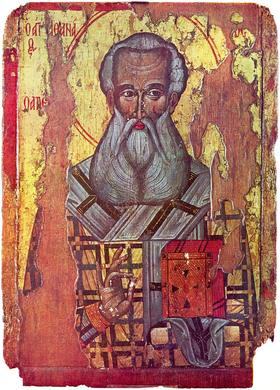
373A worn icon of a bishop with a broad grey beard holding a jewelled book, on a red and gold ground
Church Father

St. Athanasius of Alexandria, bishop and Doctor

St. Athanasius of Alexandria On the Incarnation of the Word 54.3

“For He was made man that we might be made God; and He manifested Himself by a body that we might receive the idea of the unseen Father; and He endured the insolence of men that we might inherit immortality.”

Read it in the source: New Advent

See it on the timeline: The Doctors of the Church

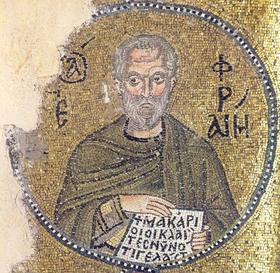
373A round gold mosaic of an old monk with a short beard holding a scroll of Greek text
Church Father

St. Ephrem the Syrian, deacon and Doctor

St. Ephrem the Syrian Hymns on the Nativity of Christ, as quoted by Benedict XVI, General Audience, 28 November 2007

“The Lord entered her and became a servant; the Word entered her, and became silent within her; thunder entered her and his voice was still; the Shepherd of all entered her; he became a Lamb in her, and came forth bleating.”

Read it in the source: vatican.va

See it on the timeline: The Doctors of the Church

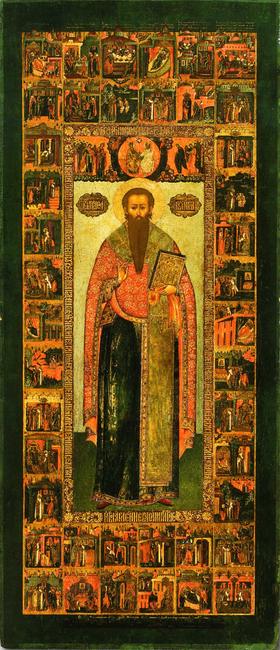
379A tall icon of a bishop with a dark pointed beard holding a book, surrounded by many small painted scenes
Church Father

St. Basil the Great, bishop and Doctor

St. Basil the Great On the Holy Spirit 15.36

“Through the Holy Spirit comes our restoration to paradise, our ascension into the kingdom of heaven, our return to the adoption of sons, our liberty to call God our Father, our being made partakers of the grace of Christ, our being called children of light, our sharing in eternal glory, and, in a word, our being brought into a state of all fullness of blessing”

Read it in the source: New Advent

See it on the timeline: The Doctors of the Church

c. 386An engraving of a bearded bishop in Eastern vestments holding a book and raising his right hand in blessing
Church Father

St. Cyril of Jerusalem, bishop and Doctor

St. Cyril of Jerusalem Catechetical Lecture 5.12

“But in learning the Faith and in professing it, acquire and keep that only, which is now delivered to you by the Church, and which has been built up strongly out of all the Scriptures. For since all cannot read the Scriptures, some being hindered as to the knowledge of them by want of learning, and others by a want of leisure, in order that the soul may not perish from ignorance, we comprise the whole doctrine of the Faith in a few lines.”

Read it in the source: New Advent

See it on the timeline: The Doctors of the Church

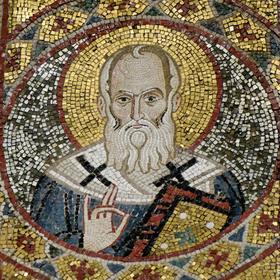
390A round gold mosaic of a balding bishop with a white beard, wearing a white stole marked with black crosses
Church Father

St. Gregory of Nazianzus, bishop and Doctor

St. Gregory of Nazianzus Oration 27 (First Theological Oration), 5

“For we ought to think of God even more often than we draw our breath; and if the expression is permissible, we ought to do nothing else.”

Read it in the source: New Advent

See it on the timeline: The Doctors of the Church

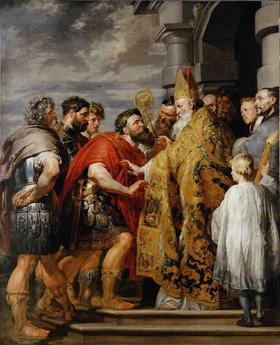
397A bishop in a gold cope and mitre on the steps of a church holds out his hand to stop an emperor in armour and a red cloak
Church Father

St. Ambrose of Milan, bishop and Doctor

St. Ambrose of Milan On Virginity 16, 99, as quoted by Benedict XVI, General Audience, 24 October 2007

“If you have a wound to heal, he is the doctor; if you are parched by fever, he is the spring; if you are oppressed by injustice, he is justice; if you are in need of help, he is strength; if you fear death, he is life; if you desire Heaven, he is the way; if you are in the darkness, he is light”

Read it in the source: vatican.va

See it on the timeline: The Doctors of the Church

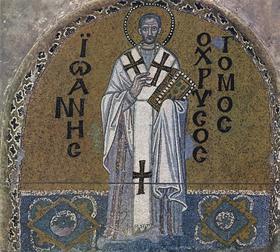
407A gold mosaic of a bishop in white vestments marked with crosses, holding a book, with his name in Greek letters on either side
Church Father

St. John Chrysostom, bishop and Doctor

St. John Chrysostom Homilies on Matthew 50.4

“Would you do honor to Christ's body? Neglect Him not when naked; do not while here you honor Him with silken garments, neglect Him perishing without of cold and nakedness. For He that said, This is my body, and by His word confirmed the fact, This same said, You saw me an hungered, and fed me not”

Read it in the source: New Advent

See it on the timeline: The Doctors of the Church

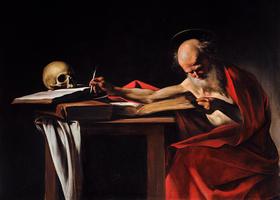
420An old man with a bald head and a red cloak leans over a large book, pen in hand, with a skull resting on another book on the table
Church Father

St. Jerome, priest and Doctor

St. Jerome Letter 30, 7, as quoted by Benedict XVI, General Audience, 14 November 2007

“How could one live without the knowledge of Scripture, through which one learns to know Christ himself, who is the life of believers?”

Read it in the source: vatican.va

See it on the timeline: The Doctors of the Church

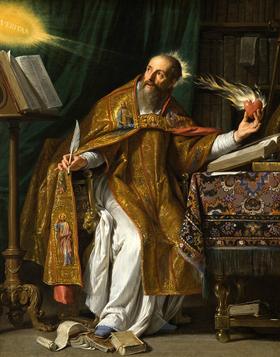
430A bishop in a gold cope sits at a desk with a quill in one hand and a flaming heart in the other, looking up at a burst of light
Church Father

St. Augustine of Hippo, bishop and Doctor

St. Augustine of Hippo Confessions 10.27.38

“Too late did I love You, O Fairness, so ancient, and yet so new! Too late did I love You! For behold, You were within, and I without, and there did I seek You; I, unlovely, rushed heedlessly among the things of beauty You made. You were with me, but I was not with You.”

Read it in the source: New Advent

See it on the timeline: The Doctors of the Church

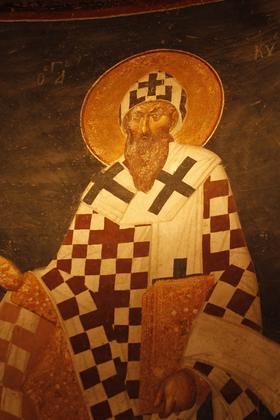
444A wall painting of a bishop with a pointed beard, in a cap and vestments patterned with crosses
Church Father

St. Cyril of Alexandria, bishop and Doctor

St. Cyril of Alexandria First Letter to Succensus, as quoted by Benedict XVI, General Audience, 3 October 2007

“Only one is the Son, only one the Lord Jesus Christ, both before the Incarnation and after the Incarnation. Indeed, the Logos born of God the Father was not one Son and the one born of the Blessed Virgin another; but we believe that the very One who was born before the ages was also born according to the flesh and of a woman”

Read it in the source: vatican.va

See it on the timeline: The Doctors of the Church

c. 450
Church Father

St. Peter Chrysologus, bishop and Doctor

St. Peter Chrysologus Sermon 71, 3, as quoted in CCC 2777

“Our awareness of our status as slaves would make us sink into the ground and our earthly condition would dissolve into dust, if the authority of our Father himself and the Spirit of his Son had not impelled us to this cry . . . 'Abba, Father!' . . . When would a mortal dare call God 'Father,' if man's innermost being were not animated by power from on high?”

Read it in the source: vatican.va

See it on the timeline: The Doctors of the Church

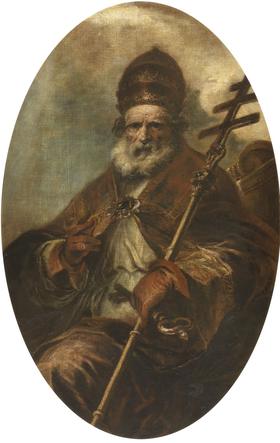
461An oval painting of an old pope with a white beard in a tiara, holding a tall cross
Church Father

St. Leo the Great, pope and Doctor

Pope St. Leo the Great Sermon 21, 1

“Our Saviour, dearly-beloved, was born today: let us be glad. For there is no proper place for sadness, when we keep the birthday of the Life, which destroys the fear of mortality and brings to us the joy of promised eternity. No one is kept from sharing in this happiness.”

Read it in the source: New Advent

See it on the timeline: The Doctors of the Church

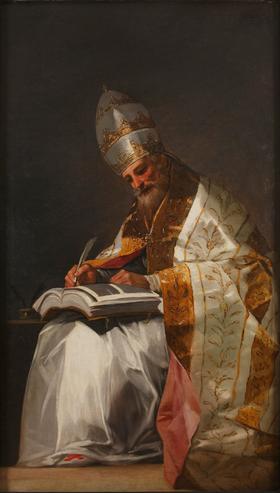
604A pope in a tiara and a pale cope bends over a large book, writing
Church Father

St. Gregory the Great, pope and Doctor

Pope St. Gregory the Great Pastoral Rule, Book 1, ch. 1

“No one presumes to teach an art till he has first, with intent meditation, learned it. What rashness is it, then, for the unskilful to assume pastoral authority, since the government of souls is the art of arts!”

Read it in the source: New Advent

See it on the timeline: The Doctors of the Church

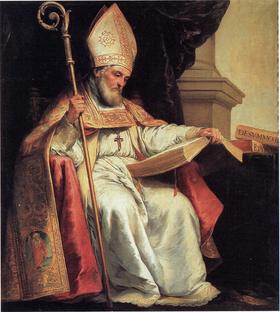
636An old bishop in white and gold vestments and a mitre sits reading a large book, holding a crozier
Church Father

St. Isidore of Seville, bishop and Doctor

St. Isidore of Seville Differentiarum Liber II, 34, 135, as quoted by Benedict XVI, General Audience, 18 June 2008

“Therefore let the servant of God, imitating Christ, dedicate himself to contemplation without denying himself active life. Behaving otherwise would not be right. Indeed, just as we must love God in contemplation, so we must love our neighbour with action.”

Read it in the source: vatican.va

See it on the timeline: The Doctors of the Church

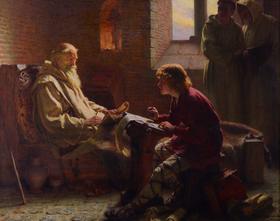
735An old monk sits propped in a chair, speaking, while a young monk kneels beside him writing on a scroll
Church Father

St. Bede the Venerable, priest and Doctor

St. Bede Ecclesiastical History of the English Nation, Book 5, ch. 24 (written c. 731)

“And now, I beseech thee, good Jesus, that to whom thou hast graciously granted sweetly to partake of the words of thy wisdom and knowledge, thou wilt also vouchsafe that he may some time or other come to thee, the fountain of all wisdom, and always appear before thy face, who livest and reignest world without end.”

Read it in the source: Fordham Sourcebook

See it on the timeline: The Doctors of the Church

The Middle Ages800 to 1500
c. 1003
Doctor of the Church

St. Gregory of Narek, monk and Doctor

St. Gregory of Narek Book of Lamentations, 83, as quoted by Pope Francis, Message to the Armenians, 12 April 2015

“Remember, [Lord,]… those of the human race who are our enemies as well, and for their benefit accord them pardon and mercy… Do not destroy those who persecute me, but reform them, root out the vile ways of this world, and plant the good in me and them”

Read it in the source: vatican.va

See it on the timeline: The Doctors of the Church

1072
Doctor of the Church

St. Peter Damian, monk, bishop and Doctor

St. Peter Damian Sermon 8, 5, as quoted by Benedict XVI, General Audience, 9 September 2009

“May Christ be heard in our language, may Christ be seen in our life, may he be perceived in our hearts”

Read it in the source: vatican.va

See it on the timeline: The Doctors of the Church

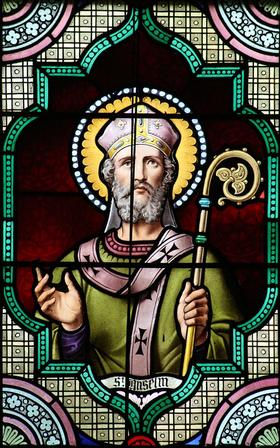
1109A stained-glass window of a bearded archbishop in a mitre holding a crozier and raising his hand
Doctor of the Church

St. Anselm of Canterbury, archbishop and Doctor

St. Anselm Proslogion, as quoted by Benedict XVI, General Audience, 23 September 2009

“I pray, O God, to know you, to love you, that I may rejoice in you. And if I cannot attain to full joy in this life may I at least advance from day to day, until that joy shall come to the full”

Read it in the source: vatican.va

See it on the timeline: The Doctors of the Church

1153
Doctor of the Church

St. Bernard of Clairvaux, abbot and Doctor

St. Bernard of Clairvaux Homily 2 on the words Missus est, 17, as quoted by Benedict XVI, General Audience, 21 October 2009

“In danger, in distress, in uncertainty … think of Mary, call upon Mary. She never leaves your lips, she never departs from your heart; and so that you may obtain the help of her prayers, never forget the example of her life. If you follow her, you cannot falter; if you pray to her, you cannot despair; if you think of her, you cannot err.”

Read it in the source: vatican.va

See it on the timeline: The Doctors of the Church

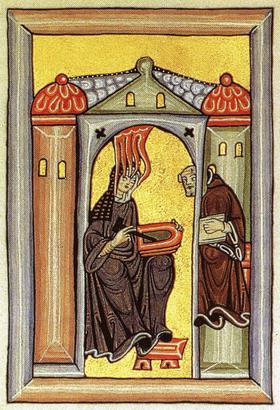
1179A nun sits in a small building with flames reaching down to her head, writing on a tablet, while a monk looks in from the side
Doctor of the Church

St. Hildegard of Bingen, abbess and Doctor

St. Hildegard of Bingen Explanation of the Athanasian Creed, as quoted by Benedict XVI, Apostolic Letter proclaiming St. Hildegard of Bingen a Doctor of the Church, 7 October 2012

“For this very reason, because man is wise, knowledgeable and intelligent, he knows creation; he knows God — whom he cannot see except by faith — through creation and his great works, even if with his five senses he barely comprehends them”

Read it in the source: vatican.va

See it on the timeline: The Doctors of the Church

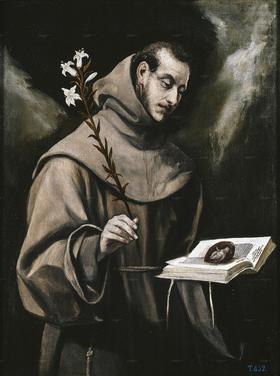
1231A young friar in a grey habit holds a lily and an open book on which a tiny figure of the Christ Child appears
Doctor of the Church

St. Anthony of Padua, friar and Doctor

St. Anthony of Padua Sermones Dominicales et Festivi III, as quoted by Benedict XVI, General Audience, 10 February 2010

“If you preach Jesus, he will melt hardened hearts; if you invoke him he will soften harsh temptations; if you think of him he will enlighten your mind”

Read it in the source: vatican.va

See it on the timeline: The Doctors of the Church

c. 1256A Dominican friar with a tonsure and a gold halo holds an open book and a small church, with a shining sun on his chest
Doctor of the Church
St. Thomas Aquinas Summa Theologiae, Supplement, q. 25, a. 1, I answer that

“Hence we must say on the contrary that indulgences hold good both in the Church's court and in the judgment of God, for the remission of the punishment which remains after contrition, absolution, and confession, whether this punishment be enjoined or not. The reason why they so avail is the oneness of the mystical body in which many have performed works of satisfaction exceeding the requirements of their debts”

Read it in the source: New Advent

See it on the timeline: Indulgences

c. 1256
Doctor of the Church
St. Thomas Aquinas Summa Theologiae, Supplement, q. 27, a. 1, I answer that

“…although those merits which are applied by means of an indulgence, might possibly avail a person so that he could merit grace (by way of congruity and impetration), yet it is not for this reason that they are applied, but for the remission of punishment. Hence they do not avail those who are in mortal sin, and consequently, true contrition and confession are demanded as conditions for gaining all indulgences.”

Read it in the source: New Advent

See it on the timeline: Indulgences

13th century
Doctor of the Church
St. Thomas Aquinas Summa Theologiae, Supplement, q. 34, a. 1, I answer that

“God wished to produce His works in likeness to Himself, as far as possible, in order that they might be perfect, and that He might be known through them. Hence, that He might be portrayed in His works, not only according to what He is in Himself, but also according as He acts on others, He laid this natural law on all things, that last things should be reduced and perfected by middle things, and middle things by the first, as Dionysius says (Eccl. Hier. v). Wherefore that this beauty might not be lacking to the Church, He established Order in her so that some should deliver the sacraments to others, being thus made like to God in their own way, as co-operating with God; even as in the natural body, some members act on others.”

Read it in the source: New Advent

See it on the timeline: Holy Orders

c. 1267
Doctor of the Church
St. Thomas Aquinas Summa Theologiae I, q. 1, a. 10, I answer that

“Since the literal sense is that which the author intends, and since the author of Holy Writ is God, Who by one act comprehends all things by His intellect, it is not unfitting, as Augustine says (Confess. xii), if, even according to the literal sense, one word in Holy Writ should have several senses.”

Read it in the source: New Advent

See it on the timeline: The inspiration of Scripture

c. 1267
Doctor of the Church
St. Thomas Aquinas Summa Theologiae I, q. 1, a. 8, Reply to Objection 2

“Nevertheless, sacred doctrine makes use of these authorities as extrinsic and probable arguments; but properly uses the authority of the canonical Scriptures as an incontrovertible proof, and the authority of the doctors of the Church as one that may properly be used, yet merely as probable. For our faith rests upon the revelation made to the apostles and prophets who wrote the canonical books, and not on the revelations (if any such there are) made to other doctors.”

Read it in the source: New Advent

See it on the timeline: The authority of the Fathers

c. 1267
Doctor of the Church
St. Thomas Aquinas Summa Theologiae I, q. 68, a. 1, I answer that

“The first [rule] is, to hold the truth of Scripture without wavering. The second is that since Holy Scripture can be explained in a multiplicity of senses, one should adhere to a particular explanation, only in such measure as to be ready to abandon it, if it be proved with certainty to be false; lest Holy Scripture be exposed to the ridicule of unbelievers, and obstacles be placed to their believing.”

Read it in the source: New Advent

See it on the timeline: Evolution and Genesis

c. 1267
Doctor of the Church

Aquinas: hold an explanation of Scripture ready to give it up

St. Thomas Aquinas Summa Theologiae I, q. 68, a. 1, I answer that

“In discussing questions of this kind two rules are to observed, as Augustine teaches (Gen. ad lit. i, 18). The first is, to hold the truth of Scripture without wavering. The second is that since Holy Scripture can be explained in a multiplicity of senses, one should adhere to a particular explanation, only in such measure as to be ready to abandon it, if it be proved with certainty to be false; lest Holy Scripture be exposed to the ridicule of unbelievers, and obstacles be placed to their believing.”

Read it in the source: New Advent

See it on the timeline: The Galileo case

c. 1267
Doctor of the Church

Aquinas: Scripture describes what the senses see

St. Thomas Aquinas Summa Theologiae I, q. 70, a. 1, Reply to Objection 3

“In the opinion of Aristotle, however, the stars are fixed in their orbits, and in reality have no other movement but that of the spheres; and yet our senses perceive the movement of the luminaries and not that of the spheres (De Coel. ii, text. 43). But Moses describes what is obvious to sense, out of condescension to popular ignorance, as we have already said”

Read it in the source: New Advent

See it on the timeline: The Galileo case

c. 1270
Doctor of the Church
St. Thomas Aquinas Summa Theologiae I-II, q. 114, a. 5, I answer that

“The gift of grace may be considered in two ways: first in the nature of a gratuitous gift, and thus it is manifest that all merit is repugnant to grace, since as the Apostle says (Romans 11:6), "if by grace, it is not now by works." … Hence it is manifest that no one can merit for himself the first grace.”

Read it in the source: New Advent

See it on the timeline: Faith and works

c. 1270
Doctor of the Church
St. Thomas Aquinas Summa Theologiae I-II, q. 112, a. 5, I answer that

“There are three ways of knowing a thing: first, by revelation, and thus anyone may know that he has grace, for God by a special privilege reveals this at times to some, … Secondly, a man may, of himself, know something, and with certainty; and in this way no one can know that he has grace. … Thirdly, things are known conjecturally by signs; and thus anyone may know he has grace, when he is conscious of delighting in God, and of despising worldly things, and inasmuch as a man is not conscious of any mortal sin.”

Read it in the source: New Advent

See it on the timeline: Assurance of salvation

c. 1271
Doctor of the Church
St. Thomas Aquinas Summa Theologiae II-II, q. 122, a. 4, Reply to Objection 4

“In the New Law the observance of the Lord's day took the place of the observance of the Sabbath, not by virtue of the precept but by the institution of the Church and the custom of Christian people. … And again in the New Law, dispensation is more easily granted than in the Old”

Read it in the source: New Advent

See it on the timeline: The Sunday Mass obligation

c. 1271
Doctor of the Church
St. Thomas Aquinas Summa Theologiae II-II, q. 1, a. 9, On the contrary

“The universal Church cannot err, since she is governed by the Holy Ghost, Who is the Spirit of truth: for such was Our Lord's promise to His disciples [John 16:13]: "When He, the Spirit of truth, is come, He will teach you all truth."”

Read it in the source: New Advent

See it on the timeline: The Magisterium

c. 1271
Doctor of the Church
St. Thomas Aquinas Summa Theologiae II-II, q. 39, a. 1, I answer that

“Now the unity of the Church consists in two things; namely, in the mutual connection or communion of the members of the Church, and again in the subordination of all the members of the Church to the one head, … Now this Head is Christ Himself, Whose viceregent in the Church is the Sovereign Pontiff.”

Read it in the source: New Advent

See it on the timeline: Papal supremacy

c. 1271
Doctor of the Church
St. Thomas Aquinas Summa Theologiae II-II, q. 1, a. 10, I answer that

“Consequently to publish a new edition of the symbol belongs to that authority which is empowered to decide matters of faith finally, so that they may be held by all with unshaken faith. Now this belongs to the authority of the Sovereign Pontiff, … The reason of this is that there should be but one faith of the whole Church, … and this could not be secured unless any question of faith that may arise be decided by him who presides over the whole Church, so that the whole Church may hold firmly to his decision.”

Read it in the source: New Advent

See it on the timeline: Papal infallibility

c. 1271
Doctor of the Church
St. Thomas Aquinas Summa Theologiae II-II, q. 11, a. 1, I answer that

“Secondly, because, though he intends to assent to Christ, yet he fails in his choice of those things wherein he assents to Christ, because he chooses not what Christ really taught, but the suggestions of his own mind. Therefore heresy is a species of unbelief, belonging to those who profess the Christian faith, but corrupt its dogmas.”

Read it in the source: New Advent

See it on the timeline: Have popes been heretics?

c. 1271
Doctor of the Church
St. Thomas Aquinas Summa Theologiae II-II, q. 1, a. 7, I answer that

“Accordingly we must conclude that, as regards the substance of the articles of faith, they have not received any increase as time went on: since whatever those who lived later have believed, was contained, albeit implicitly, in the faith of those Fathers who preceded them. But there was an increase in the number of articles believed explicitly, since to those who lived in later times some were known explicitly which were not known explicitly by those who lived before them.”

Read it in the source: New Advent

See it on the timeline: Doctrines defined later

c. 1271
Doctor of the Church
St. Thomas Aquinas Summa Theologiae II-II, q. 39, a. 1, body

“Now the unity of the Church consists in two things; namely, in the mutual connection or communion of the members of the Church, and again in the subordination of all the members of the Church to the one head … Now this Head is Christ Himself, Whose viceregent in the Church is the Sovereign Pontiff.”

Read it in the source: New Advent

See it on the timeline: The one Church

c. 1271
Doctor of the Church
St. Thomas Aquinas Summa Theologiae II-II, q. 10, a. 8, I answer that

“Among unbelievers there are some who have never received the faith, such as the heathens and the Jews: and these are by no means to be compelled to the faith, in order that they may believe, because to believe depends on the will: nevertheless they should be compelled by the faithful, if it be possible to do so, so that they do not hinder the faith, by their blasphemies, or by their evil persuasions, or even by their open persecutions. It is for this reason that Christ's faithful often wage war with unbelievers, not indeed for the purpose of forcing them to believe, because even if they were to conquer them, and take them prisoners, they should still leave them free to believe, if they will, but in order to prevent them from hindering the faith of Christ.”

Read it in the source: New Advent

See it on the timeline: Violence in the Church's history

c. 1271
Doctor of the Church
St. Thomas Aquinas Summa Theologiae II-II, q. 18, a. 4, Reply to Objection 2

“Hope does not trust chiefly in grace already received, but on God's omnipotence and mercy, whereby even he that has not grace, can obtain it, so as to come to eternal life. Now whoever has faith is certain of God's omnipotence and mercy.”

Read it in the source: New Advent

See it on the timeline: Assurance of salvation

c. 1271
Doctor of the Church
St. Thomas Aquinas Summa Theologiae II-II, q. 24, a. 11, I answer that

“We can, accordingly, consider charity in three ways: first on the part of the Holy Ghost, Who moves the soul to love God, and in this respect charity is incompatible with sin through the power of the Holy Ghost, Who does unfailingly whatever He wills to do. … Thirdly, charity can be considered on the part of its subject, which is changeable on account of the free-will. … the charity of the wayfarer does not so fill the potentiality of its subject, because the latter is not always actually directed to God: so that when it is not actually directed to God, something may occur whereby charity is lost.”

Read it in the source: New Advent

See it on the timeline: Eternal security

c. 1271
Doctor of the Church
St. Thomas Aquinas Summa Theologiae II-II, q. 83, a. 4, body (I answer that)

“Prayer is offered to a person in two ways: first, as to be fulfilled by him, secondly, as to be obtained through him. On the first way we offer prayer to God alone, since all our prayers ought to be directed to the acquisition of grace and glory, which God alone gives … This is also clear from the very style employed by the Church in praying: since we beseech the Blessed Trinity "to have mercy on us," while we ask any of the saints "to pray for us."”

Read it in the source: New Advent

See it on the timeline: Praying to saints

c. 1271
Doctor of the Church
St. Thomas Aquinas Summa Theologiae II-II, q. 84, a. 1, Reply to Objection 1

“…the reverence which we pay to God, and which belongs to latria, differs from the reverence which we pay to certain excellent creatures; this belongs to dulia … And since external actions are signs of internal reverence, certain external tokens significative of reverence are offered to creatures of excellence, and among these tokens the chief is adoration: yet there is one thing which is offered to God alone, and that is sacrifice. … Accordingly it was with the reverence due to an excellent creature that Nathan adored David … It was with the reverence due to God that John was forbidden to adore the angel”

Read it in the source: New Advent

See it on the timeline: Honoring the Pope

c. 1271
Doctor of the Church
St. Thomas Aquinas Summa Theologiae II-II, q. 2, a. 7, Reply to Objection 3

“If, however, some were saved without receiving any revelation, they were not saved without faith in a Mediator, for, though they did not believe in Him explicitly, they did, nevertheless, have implicit faith through believing in Divine providence, since they believed that God would deliver mankind in whatever way was pleasing to Him”

Read it in the source: New Advent

See it on the timeline: Other religions

c. 1271
Doctor of the Church

St. Thomas Aquinas defends the death penalty for heresy

St. Thomas Aquinas Summa Theologiae II-II, q. 11, a. 3, I answer that

“On their own side there is the sin, whereby they deserve not only to be separated from the Church by excommunication, but also to be severed from the world by death. For it is a much graver matter to corrupt the faith which quickens the soul, than to forge money, which supports temporal life. Wherefore if forgers of money and other evil-doers are forthwith condemned to death by the secular authority, much more reason is there for heretics, as soon as they are convicted of heresy, to be not only excommunicated but even put to death. On the part of the Church, however, there is mercy which looks to the conversion of the wanderer, wherefore she condemns not at once, but "after the first and second admonition," as the Apostle directs: after that, if he is yet stubborn, the Church no longer hoping for his conversion, looks to the salvation of others, by excommunicating him and separating him from the Church, and furthermore delivers him to the secular tribunal to be exterminated thereby from the world by death.”

Read it in the source: New Advent

See it on the timeline: The Inquisition and the use of force against heresy

c. 1271
Doctor of the Church

The Church's custom: no baptism of Jewish children against their parents' will

St. Thomas Aquinas Summa Theologiae II-II, q. 10, a. 12, I answer that

“Now it was never the custom of the Church to baptize the children of the Jews against the will of their parents, although at times past there have been many very powerful catholic princes like Constantine and Theodosius, with whom most holy bishops have been on most friendly terms, as Sylvester with Constantine, and Ambrose with Theodosius, who would certainly not have failed to obtain this favor from them if it had been at all reasonable. It seems therefore hazardous to repeat this assertion, that the children of Jews should be baptized against their parents' wishes, in contradiction to the Church's custom observed hitherto.”

Read it in the source: New Advent

See it on the timeline: Judaism and the Church

c. 1271
Doctor of the Church
St. Thomas Aquinas Summa Theologiae II-II, q. 33, a. 4, Reply to Objection 2

“It must be observed, however, that if the faith were endangered, a subject ought to rebuke his prelate even publicly. Hence Paul, who was Peter's subject, rebuked him in public, on account of the imminent danger of scandal concerning faith, and, as the gloss of Augustine says on Galatians 2:11, "Peter gave an example to superiors, that if at any time they should happen to stray from the straight path, they should not disdain to be reproved by their subjects."”

Read it in the source: New Advent

See it on the timeline: Papal infallibility

c. 1271
Doctor of the Church
St. Thomas Aquinas Summa Theologiae I-II, q. 105, a. 2, Reply to Objection 7

“Secondly, a matter may be doubtful even among experts: and therefore, in order to remove doubts of this kind, the Law prescribed that all should foregather in some chief place chosen by God, where there would be both the high-priest, who would decide doubtful matters relating to the ceremonies of divine worship; and the chief judge of the people, who would decide matters relating to the judgments of men: just as even now cases are taken from a lower to a higher court either by appeal or by consultation.”

Read it in the source: New Advent

See it on the timeline: Papal supremacy

c. 1272
Doctor of the Church
St. Thomas Aquinas Summa Theologiae II-II, q. 83, a. 14, Reply to Objection 1

“As Augustine says (ad Probam. Ep. cxxx), "to pray with many words is not the same as to pray long; to speak long is one thing, to be devout long is another. For it is written that our Lord passed the whole night in prayer, and that He 'prayed the longer' in order to set us an example."”

Read it in the source: New Advent

See it on the timeline: The Rosary

c. 1272
Doctor of the Church
St. Thomas Aquinas Summa Theologiae II-II, q. 1, a. 9, On the contrary

“The universal Church cannot err, since she is governed by the Holy Ghost, Who is the Spirit of truth: for such was Our Lord's promise to His disciples (John 16:13): "When He, the Spirit of truth, is come, He will teach you all truth."”

Read it in the source: New Advent

See it on the timeline: Was the Church corrupted early?

c. 1272
Doctor of the Church
St. Thomas Aquinas Summa Theologiae II-II, q. 88, a. 11, body

“Now the obligation of observing continency is connected with Holy Orders, not essentially but by the institution of the Church; wherefore it seems that the Church can grant a dispensation from the vow of continency solemnized by the reception of Holy Orders.”

Read it in the source: New Advent

See it on the timeline: Priestly celibacy

c. 1272
Doctor of the Church
St. Thomas Aquinas Summa Theologiae II-II, q. 102, a. 1, I answer that

“Now just as a carnal father partakes of the character of principle in a particular way, which character is found in God in a universal way, so too a person who, in some way, exercises providence in one respect, partakes of the character of father in a particular way, since a father is the principle of generation, of education, of learning and of whatever pertains to the perfection of human life”

Read it in the source: New Advent

See it on the timeline: Calling priests "Father"

c. 1272
Doctor of the Church
St. Thomas Aquinas Summa Theologiae II-II, q. 154, a. 11, body

“This may occur in two ways: First, through being contrary to right reason, and this is common to all lustful vices; secondly, because, in addition, it is contrary to the natural order of the venereal act as becoming to the human race: and this is called "the unnatural vice." This may happen in several ways. … Thirdly, by copulation with an undue sex, male with male, or female with female, as the Apostle states (Romans 1:27)”

Read it in the source: New Advent

See it on the timeline: Homosexuality

c. 1272
Doctor of the Church
St. Thomas Aquinas Summa Theologiae II-II, q. 154, a. 1, body

“Now this same matter may be discordant with right reason in two ways. First, because it is inconsistent with the end of the venereal act. On this way, as hindering the begetting of children, there is the "vice against nature," which attaches to every venereal act from which generation cannot follow”

Read it in the source: New Advent

See it on the timeline: Contraception

c. 1273
Doctor of the Church
St. Thomas Aquinas Summa Theologiae III, q. 25, a. 5, body

“Since, therefore, the Blessed Virgin is a mere rational creature, the worship of "latria" is not due to her, but only that of "dulia": but in a higher degree than to other creatures, inasmuch as she is the Mother of God. For this reason we say that not any kind of "dulia" is due to her, but "hyperdulia."”

Read it in the source: New Advent

See it on the timeline: Honor given to Mary

c. 1273
Doctor of the Church
St. Thomas Aquinas Summa Theologiae III, q. 27, a. 4, body

“We must therefore confess simply that the Blessed Virgin committed no actual sin, neither mortal nor venial; so that what is written (Canticles 4:7) is fulfilled: "Thou art all fair, O my love, and there is not a spot in thee," etc.”

Read it in the source: New Advent

See it on the timeline: Mary without sin

c. 1273
Doctor of the Church
St. Thomas Aquinas Summa Theologiae III, q. 28, a. 3, body and Reply to Objection 5

“Without any hesitation we must abhor the error of Helvidius, who dared to assert that Christ's Mother, after His Birth, was carnally known by Joseph, and bore other children. … We must therefore simply assert that the Mother of God, as she was a virgin in conceiving Him and a virgin in giving Him birth, did she remain a virgin ever afterwards. … Wherefore the brethren of the Lord are so called, not by birth, as being born of the same mother; but by relationship, as being blood-relations of His.”

Read it in the source: New Advent

See it on the timeline: Perpetual virginity

c. 1273
Doctor of the Church
St. Thomas Aquinas Summa Theologiae III, q. 27, a. 1, body

“Nothing is handed down in the canonical Scriptures concerning the sanctification of the Blessed Mary as to her being sanctified in the womb; indeed, they do not even mention her birth. But as Augustine, in his tractate on the Assumption of the Virgin, argues with reason, since her body was assumed into heaven, and yet Scripture does not relate this; so it may be reasonably argued that she was sanctified in the womb.”

Read it in the source: New Advent

See it on the timeline: The Assumption

c. 1273
Doctor of the Church
St. Thomas Aquinas Summa Theologiae III, q. 26, a. 1, body

“And, consequently, Christ alone is the perfect Mediator of God and men, inasmuch as, by His death, He reconciled the human race to God. Hence the Apostle, after saying, "Mediator of God and man, the man Christ Jesus," added: "Who gave Himself a redemption for all." However, nothing hinders certain others from being called mediators, in some respect, between God and man, forasmuch as they cooperate in uniting men to God, dispositively or ministerially.”

Read it in the source: New Advent

See it on the timeline: Mary as Mediatrix

c. 1273
Doctor of the Church
St. Thomas Aquinas Summa Theologiae III, q. 75, a. 2, body

“Now it is evident that Christ's body does not begin to be present in this sacrament by local motion. First of all, because it would follow that it would cease to be in heaven: for what is moved locally does not come anew to some place unless it quit the former one.”

Read it in the source: New Advent

See it on the timeline: The Real Presence and the Ascension

c. 1273
Doctor of the Church
St. Thomas Aquinas Summa Theologiae III, q. 75, a. 4, body

“And this is done by Divine power in this sacrament; for the whole substance of the bread is changed into the whole substance of Christ's body, and the whole substance of the wine into the whole substance of Christ's blood. Hence this is not a formal, but a substantial conversion; nor is it a kind of natural movement: but, with a name of its own, it can be called "transubstantiation."”

Read it in the source: New Advent

See it on the timeline: Transubstantiation

c. 1273
Doctor of the Church
St. Thomas Aquinas Summa Theologiae III, q. 25, a. 2, body

“As stated above (Article 1) adoration is due to the subsisting hypostasis: yet the reason for honoring may be something non-subsistent, on account of which the person, in whom it is, is honored. And so the adoration of Christ's humanity may be understood in two ways. First, so that the humanity is the thing adored: and thus to adore the flesh of Christ is nothing else than to adore the incarnate Word of God: just as to adore a King's robe is nothing else than to adore a robed King. And in this sense the adoration of Christ's humanity is the adoration of "latria."”

Read it in the source: New Advent

See it on the timeline: Adoring the Eucharist

c. 1273
Doctor of the Church
St. Thomas Aquinas Summa Theologiae III, q. 83, a. 1, Reply to Objection 1

“As Ambrose says (commenting on Hebrews 10:1), "there is but one victim," namely that which Christ offered, and which we offer, "and not many victims, because Christ was offered but once: and this latter sacrifice is the pattern of the former. For, just as what is offered everywhere is one body, and not many bodies, so also is it but one sacrifice."”

Read it in the source: New Advent

See it on the timeline: The Mass as sacrifice

c. 1273
Doctor of the Church
St. Thomas Aquinas Summa Theologiae III, q. 25, a. 3, Reply to Objection 4

“The Apostles, led by the inward instinct of the Holy Ghost, handed down to the churches certain instructions which they did not put in writing, but which have been ordained, in accordance with the observance of the Church as practiced by the faithful as time went on. Wherefore the Apostle says [2 Thessalonians 2:14]: "Stand fast; and hold the traditions which you have learned, whether by word"—that is by word of mouth—"or by our epistle"—that is by word put into writing.”

Read it in the source: New Advent

See it on the timeline: Scripture and Tradition

c. 1273
Doctor of the Church
St. Thomas Aquinas Summa Theologiae III, q. 8, a. 6, Reply to Objection 3

“As Augustine says (Tract. xlvi in Joan.): "If the rulers of the Church are Shepherds, how is there one Shepherd, except that all these are members of one Shepherd?" So likewise others may be called foundations and heads, inasmuch as they are members of the one Head and Foundation.”

Read it in the source: New Advent

See it on the timeline: Peter the rock

c. 1273
Doctor of the Church
St. Thomas Aquinas Summa Theologiae III, q. 64, a. 2, Reply to Objection 3

“The apostles and their successors are God's vicars in governing the Church which is built on faith and the sacraments of faith. Wherefore, just as they may not institute another Church, so neither may they deliver another faith, nor institute other sacraments”

Read it in the source: New Advent

See it on the timeline: Constantine and the Church

c. 1273
Doctor of the Church
St. Thomas Aquinas Summa Theologiae III, q. 46, a. 3, I answer that

“But in this that man was delivered by Christ's Passion, many other things besides deliverance from sin concurred for man's salvation. In the first place, man knows thereby how much God loves him, and is thereby stirred to love Him in return, and herein lies the perfection of human salvation … Thirdly, because Christ by His Passion not only delivered man from sin, but also merited justifying grace for him and the glory of bliss”

Read it in the source: New Advent

See it on the timeline: Are Catholics Christians?

c. 1273
Doctor of the Church
St. Thomas Aquinas Summa Theologiae III, q. 73, a. 3, I answer that

“…the reality of the sacrament is the unity of the mystical body, without which there can be no salvation; for there is no entering into salvation outside the Church, just as in the time of the deluge there was none outside the Ark, which denotes the Church, according to 1 Peter 3:20-21. And it has been said above (III:68:2), that before receiving a sacrament, the reality of the sacrament can be had through the very desire of receiving the sacrament.”

Read it in the source: New Advent

See it on the timeline: No salvation outside the Church

c. 1273
Doctor of the Church
St. Thomas Aquinas Summa Theologiae III, q. 82, a. 1, Reply to Objection 2

“A devout layman is united with Christ by spiritual union through faith and charity, but not by sacramental power: consequently he has a spiritual priesthood for offering spiritual sacrifices … Hence, too, it is written (1 Peter 2:5): "A holy priesthood, to offer up spiritual sacrifices."”

Read it in the source: New Advent

See it on the timeline: The ordained priesthood

c. 1273
Doctor of the Church
St. Thomas Aquinas Summa Theologiae III, q. 82, a. 1, body

“…such is the dignity of this sacrament that it is performed only as in the person of Christ. Now whoever performs any act in another's stead, must do so by the power bestowed by such a one. But as the power of receiving this sacrament is conceded by Christ to the baptized person, so likewise the power of consecrating this sacrament on Christ's behalf is bestowed upon the priest at his ordination”

Read it in the source: New Advent

See it on the timeline: The priest and the Eucharist

c. 1273
Doctor of the Church
St. Thomas Aquinas Summa Theologiae III, q. 84, a. 3, Reply to Objection 3

“God alone absolves from sin and forgives sins authoritatively; yet priests do both ministerially, because the words of the priest in this sacrament work as instruments of the Divine power, as in the other sacraments”

Read it in the source: New Advent

See it on the timeline: Confession to a priest

c. 1273
Doctor of the Church
St. Thomas Aquinas Summa Theologiae III, q. 68, a. 2, I answer that

“Secondly, the sacrament of Baptism may be wanting to anyone in reality but not in desire: for instance, when a man wishes to be baptized, but by some ill-chance he is forestalled by death before receiving Baptism. And such a man can obtain salvation without being actually baptized, on account of his desire for Baptism, which desire is the outcome of "faith that worketh by charity," whereby God, Whose power is not tied to visible sacraments, sanctifies man inwardly.”

Read it in the source: New Advent

See it on the timeline: Baptism and salvation

c. 1273
Doctor of the Church
St. Thomas Aquinas Summa Theologiae III, q. 68, a. 9, Reply to Objection 3

“Just as a child, when he is being baptized, believes not by himself but by others, so is he examined not by himself but through others, and these in answer confess the Church's faith in the child's stead, who is aggregated to this faith by the sacrament of faith.”

Read it in the source: New Advent

See it on the timeline: Infant baptism

c. 1273
Doctor of the Church
St. Thomas Aquinas Summa Theologiae III, q. 66, a. 7, I answer that

“In the sacrament of Baptism water is put to the use of a washing of the body, whereby to signify the inward washing away of sins. Now washing may be done with water not only by immersion, but also by sprinkling or pouring. And, therefore, although it is safer to baptize by immersion, because this is the more ordinary fashion, yet Baptism can be conferred by sprinkling or also by pouring”

Read it in the source: New Advent

See it on the timeline: Baptism by pouring

c. 1273
Doctor of the Church
St. Thomas Aquinas Summa Theologiae III, q. 66, a. 7, Reply to Objection 2

“Christ's burial is more clearly represented by immersion: wherefore this manner of baptizing is more frequently in use and more commendable. Yet in the other ways of baptizing it is represented after a fashion, albeit not so clearly; for no matter how the washing is done, the body of a man, or some part thereof, is put under water, just as Christ's body was put under the earth.”

Read it in the source: New Advent

See it on the timeline: Baptism by pouring

c. 1273
Doctor of the Church
St. Thomas Aquinas Summa Theologiae III, q. 25, a. 3, Reply to Objection 1

“This commandment does not forbid the making of any graven thing or likeness, but the making thereof for the purpose of adoration, wherefore it is added: "Thou shalt not adore them nor serve them." … But because in the New Testament God was made man, He can be adored in His corporeal image.”

Read it in the source: New Advent

See it on the timeline: Images and statues

1273
Doctor of the Church
St. Thomas Aquinas Summa Theologiae III, q. 72, a. 11 (I answer that)

“this sacrament of Confirmation is, as it were, the final completion of the sacrament of Baptism; in the sense that by Baptism man is built up into a spiritual dwelling, and is written like a spiritual letter; whereas by the sacrament of Confirmation, like a house already built, he is consecrated as a temple of the Holy Ghost, and as a letter already written, is signed with the sign of the cross. Therefore the conferring of this sacrament is reserved to bishops, who possess supreme power in the Church: just as in the primitive Church, the fulness of the Holy Ghost was given by the apostles, in whose place the bishops stand (Acts 8).”

Read it in the source: New Advent

See it on the timeline: Confirmation

1273
Doctor of the Church
St. Thomas Aquinas Summa Theologiae III, q. 80, a. 8, I answer that

“A thing may prevent the receiving of this sacrament in two ways: first of all in itself, like mortal sin, which is repugnant to what is signified by this sacrament, as stated above (Article 4): secondly, on account of the Church's prohibition; and thus a man is prevented from taking this sacrament after receiving food or drink, for three reasons. First, as Augustine says (Resp. ad Januar., Ep. liv), "out of respect for this sacrament," so that it may enter into a mouth not yet contaminated by any food or drink. Secondly, because of its signification. i.e. to give us to understand that Christ, Who is the reality of this sacrament, and His charity, ought to be first of all established in our hearts, according to Matthew 6:33: "Seek first the kingdom of God." Thirdly, on account of the danger of vomiting and intemperance, which sometimes arise from over-indulging in food, as the Apostle says (1 Corinthians 11:21): "One, indeed, is hungry, and another is drunk."”

Read it in the source: New Advent

See it on the timeline: The Eucharist
c. 1273
Doctor of the Church
St. Thomas Aquinas Summa Theologiae III, q. 84, a. 3, I answer that

“…this sacrament is perfected by that which is done by the priest. Wherefore the part taken by the penitent, whether it consist of words or deeds, must needs be the matter of this sacrament, while the part taken by the priest, takes the place of the form. … This removal is expressed by the priest saying: "I absolve thee": because sins are fetters, according to Proverbs 5:22.”

Read it in the source: New Advent

See it on the timeline: Penance and Reconciliation

c. 1273
Doctor of the Church
St. Thomas Aquinas Summa Theologiae III, q. 75, a. 1, Reply to Objection 3

“Christ's body is not in this sacrament in the same way as a body is in a place, which by its dimensions is commensurate with the place; but in a special manner which is proper to this sacrament. Hence we say that Christ's body is upon many altars, not as in different places, but "sacramentally": and thereby we do not understand that Christ is there only as in a sign, although a sacrament is a kind of sign; but that Christ's body is here after a fashion proper to this sacrament, as stated above.”

Read it in the source: New Advent

See it on the timeline: The Real Presence and the Ascension

c. 1273
Doctor of the Church
St. Thomas Aquinas Summa Theologiae III, q. 77, a. 6, Reply to Objection 1

“After the consecration bread can be said to be in this sacrament in two ways. First, as to the species, which retain the name of the previous substance … Secondly, Christ's very body can be called bread, since it is the mystical bread "coming down from heaven."”

Read it in the source: New Advent

See it on the timeline: Transubstantiation

1274
Doctor of the Church
St. Thomas Aquinas Summa Theologiae, Supplement, Q. 30, Art. 1, I answer that

“Now this sacrament is conferred by way of a kind of medicament, even as Baptism is conferred by way of washing, and the purpose of a medicament is to expel sickness. Hence the chief object of the institution of this sacrament is to cure the sickness of sin. Therefore, just as Baptism is a spiritual regeneration, and Penance, a spiritual resurrection, so Extreme Unction is a spiritual healing or cure.”

Read it in the source: New Advent

See it on the timeline: The Anointing of the Sick

1274
Doctor of the Church

St. Thomas Aquinas, friar and Doctor

St. Thomas Aquinas Summa Theologiae I, q. 1, a. 8, reply to objection 2

“Since therefore grace does not destroy nature but perfects it, natural reason should minister to faith as the natural bent of the will ministers to charity.”

Read it in the source: New Advent

See it on the timeline: The Doctors of the Church

1274
Doctor of the Church

St. Bonaventure, friar, bishop and Doctor

St. Bonaventure The Journey of the Mind into God 1, 15, as quoted by Benedict XVI, General Audience, 17 March 2010

“He who is not brightened by such splendours of created things is blind; he who does not awake at such clamours is deaf; he who does not praise God on account of all these effects is mute; he who does not turn towards the First Principle on account of such indications is stupid”

Read it in the source: vatican.va

See it on the timeline: The Doctors of the Church

1274A Dominican friar with a tonsure and a gold halo holds an open book and a small church, with a shining sun on his chest
Doctor of the Church
St. Thomas Aquinas Summa Theologiae III, q. 65, a. 1, I answer that

“the sacraments of the Church were instituted for a twofold purpose: namely, in order to perfect man in things pertaining to the worship of God according to the religion of Christian life, and to be a remedy against the defects caused by sin. And in either way it is becoming that there should be seven sacraments.”

Read it in the source: New Advent

See it on the timeline: The seven sacraments

c. 1274
Doctor of the Church
St. Thomas Aquinas Summa Theologiae, Supplement, q. 42, a. 1, I answer that and Reply to Objection 1

“I answer that, A sacrament denotes a sanctifying remedy against sin offered to man under sensible signs. … Wherefore since this is the case in matrimony, it is reckoned among the sacraments. Reply to Objection 1. The words whereby the marriage consent is expressed are the form of this sacrament, and not the priest's blessing, which is a sacramental.”

Read it in the source: New Advent

See it on the timeline: Matrimony

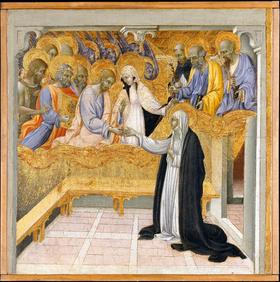
1380A nun in a white habit and black cloak kneels and holds out her hand to Christ, who stands among a group of saints with gold halos
Doctor of the Church

St. Catherine of Siena, virgin and Doctor

St. Catherine of Siena Dialogue of Divine Providence, ch. 30, as quoted by Benedict XVI, General Audience, 24 November 2010

“out of mercy you have washed us in his Blood, out of mercy you have wished to converse with creatures. O crazed with love! It did not suffice for you to take flesh, but you also wished to die!... O mercy! My heart drowns in thinking of you: for no matter where I turn to think, I find only mercy”

Read it in the source: vatican.va

See it on the timeline: The Doctors of the Church

1569
Doctor of the Church

St. John of Avila, priest and Doctor

St. John of Avila Letter 160, as quoted by Benedict XVI, Apostolic Letter proclaiming St. John of Avila a Doctor of the Church, 7 October 2012

“Open your little heart to that breadth of love by which the Father gave us his Son, and with him gave us himself, and the Holy Spirit, and all things besides”

Read it in the source: vatican.va

See it on the timeline: The Doctors of the Church

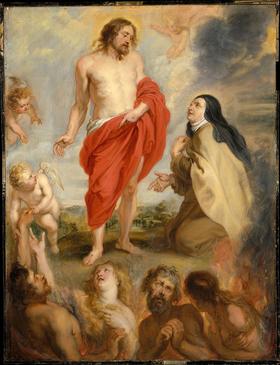
1582A Carmelite nun kneels before Christ, who stands in a red cloak, while people below reach up out of flames
Doctor of the Church

St. Teresa of Avila, Carmelite reformer and Doctor

St. Teresa of Avila The Book of Her Life 8, 5, as quoted in CCC 2709

“Contemplative prayer [oracion mental] in my opinion is nothing else than a close sharing between friends; it means taking time frequently to be alone with him who we know loves us.”

Read it in the source: vatican.va

See it on the timeline: The Doctors of the Church

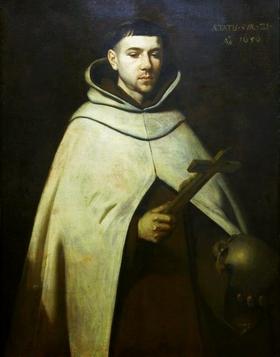
1591A young Carmelite friar in a white cloak holds a cross, with a skull beside him
Doctor of the Church

St. John of the Cross, Carmelite and Doctor

St. John of the Cross The Ascent of Mount Carmel, as quoted in CCC 65

“In giving us his Son, his only Word (for he possesses no other), he spoke everything to us at once in this sole Word - and he has no more to say. . . because what he spoke before to the prophets in parts, he has now spoken all at once by giving us the All Who is His Son.”

Read it in the source: vatican.va

See it on the timeline: The Doctors of the Church

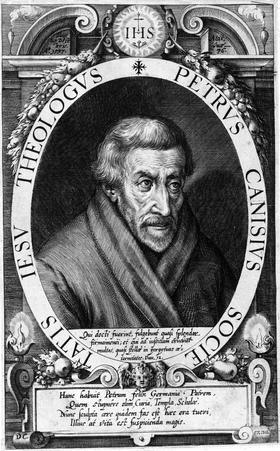
1597An engraved oval portrait of an old priest with a thin beard, his hands joined, with his name in Latin around the frame
Doctor of the Church

St. Peter Canisius, Jesuit and Doctor

St. Peter Canisius Journal, 4 September 1549, as quoted by Benedict XVI, General Audience, 9 February 2011

“In the end, as if you were opening to me the heart of the Most Sacred Body, which it seemed to me I saw before me, you commanded me to drink from that source, inviting me, as it were, to draw the waters of my salvation from your founts, O my Saviour”

Read it in the source: vatican.va

See it on the timeline: The Doctors of the Church

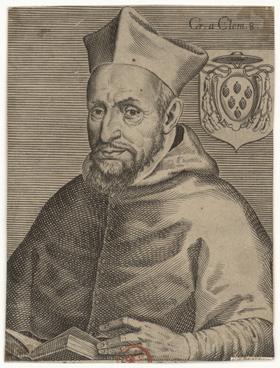
1615An engraved portrait of an elderly cardinal with a short beard wearing a biretta, his hand resting on a book
Doctor of the Church

Bellarmine: the Fathers read the sun as moving

St. Robert Bellarmine Letter to Paolo Antonio Foscarini, 12 April 1615, second point

“Second. I say that, as you know, the Council [of Trent] prohibits expounding the Scriptures contrary to the common agreement of the holy Fathers. And if Your Reverence would read not only the Fathers but also the commentaries of modern writers on Genesis, Psalms, Ecclesiastes and Josue, you would find that all agree in explaining literally (ad litteram) that the sun is in the heavens and moves swiftly around the earth, and that the earth is far from the heavens and stands immobile in the center of the universe. Now consider whether in all prudence the Church could encourage giving to Scripture a sense contrary to the holy Fathers and all the Latin and Greek commentators.”

Read it in the source: Fordham Sourcebook

See it on the timeline: The Galileo case

1615
Doctor of the Church

Bellarmine: if it were demonstrated, Scripture would have to be explained with caution

St. Robert Bellarmine Letter to Paolo Antonio Foscarini, 12 April 1615, third point

“Third. I say that if there were a true demonstration that the sun was in the center of the universe and the earth in the third sphere, and that the sun did not travel around the earth but the earth circled the sun, then it would be necessary to proceed with great caution in explaining the passages of Scripture which seemed contrary, and we would rather have to say that we did not understand them than to say that something was false which has been demonstrated.But I do not believe that there is any such demonstration; none has been shown to me.”

Read it in the source: Fordham Sourcebook

See it on the timeline: The Galileo case

1619
Doctor of the Church

St. Lawrence of Brindisi, Capuchin and Doctor

St. Lawrence of Brindisi As quoted by Benedict XVI, General Audience, 23 March 2011

“is a light for the mind and a fire for the will, so that man may know and love God. For the inner man, who lives through the living grace of God’s Spirit, it is bread and water, but bread sweeter than honey and water better than wine or milk”

Read it in the source: vatican.va

See it on the timeline: The Doctors of the Church

1621An engraved portrait of an elderly cardinal with a short beard wearing a biretta, his hand resting on a book
Doctor of the Church

St. Robert Bellarmine, cardinal and Doctor

St. Robert Bellarmine The Ascent of the Mind to God, as quoted by Benedict XVI, General Audience, 23 February 2011

“O soul, your example is God, infinite beauty, light without shadow, splendour that exceeds that of the moon and the sun. … For this reason you must conclude: whoever finds God finds everything, whoever loses God loses everything”

Read it in the source: vatican.va

See it on the timeline: The Doctors of the Church

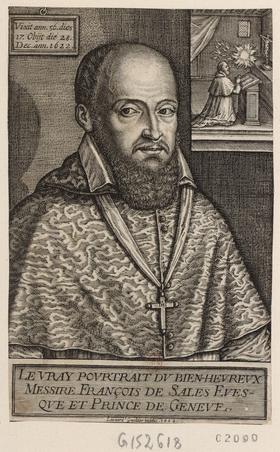
1622An engraved portrait of a bald, bearded bishop, with a French caption beneath
Doctor of the Church

St. Francis de Sales, bishop and Doctor

St. Francis de Sales Letter to St. Jane Frances de Chantal, 14 October 1604, as quoted by Benedict XVI, General Audience, 2 March 2011

“this is the rule of our obedience, which I write for you in capital letters: do all through love, nothing through constraint; love obedience more than you fear disobedience. I leave you the spirit of freedom, not that which excludes obedience, which is the freedom of the world, but that liberty that excludes violence, anxiety and scruples”

Read it in the source: vatican.va

See it on the timeline: The Doctors of the Church

1787
Doctor of the Church

St. Alphonsus Liguori, bishop and Doctor

St. Alphonsus Liguori The Great Means of Prayer, as quoted by Benedict XVI, General Audience, 30 March 2011

“God does not deny anyone the grace of prayer, with which one obtains help to overcome every form of concupiscence and every temptation. And I say, and I will always repeat as long as I live, that the whole of our salvation lies in prayer”

Read it in the source: vatican.va

See it on the timeline: The Doctors of the Church

The Modern Era1800 to today
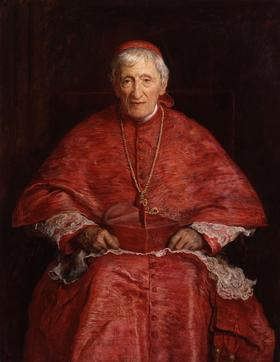
1890A frail old cardinal in scarlet robes and a red skullcap sits facing the viewer
Doctor of the Church

St. John Henry Newman, priest, cardinal and Doctor

St. John Henry Newman Meditations and Devotions, as quoted by Pope Leo XIV, Homily at the Proclamation of St. John Henry Newman as a Doctor of the Church, 1 November 2025

“God has created me to do Him some definite service; He has committed some work to me which He has not committed to another. I have my mission—I never may know it in this life, but I shall be told it in the next”

Read it in the source: vatican.va

See it on the timeline: The Doctors of the Church

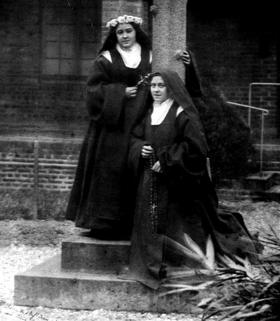
1897A black and white photograph of two Carmelite nuns on a stone step in a courtyard, one standing and one kneeling in front of her
Doctor of the Church

St. Thérèse of Lisieux, Carmelite and Doctor

St. Thérèse of Lisieux Her autobiography, as quoted in CCC 826

“If the Church was a body composed of different members, it couldn't lack the noblest of all; it must have a Heart, and a Heart BURNING WITH LOVE. And I realized that this love alone was the true motive force which enabled the other members of the Church to act; if it ceased to function, the Apostles would forget to preach the gospel, the Martyrs would refuse to shed their blood.”

Read it in the source: vatican.va

See it on the timeline: The Doctors of the Church