““If a prophet arises among you, or a dreamer of dreams, and gives you a sign or a wonder, and the sign or wonder which he tells you comes to pass, and if he says, ‘Let us go after other gods,’ which you have not known, ‘and let us serve them,’ you shall not listen to the words of that prophet or to that dreamer of dreams; for the Lord your God is testing you, to know whether you love the Lord your God with all your heart and with all your soul.”
Short answer
The Church agrees that the Fathers were fallible men. She does not teach that any one of them is free from error. St. Augustine gave that honor only to the canonical Scriptures, and Pope Leo XIII says that some statements of the Fathers have been abandoned as incorrect. The Fathers matter as witnesses to what the apostles handed on, and their witness has most weight where they agree. Tertullian gave the reason about the year 200: error in many churches would have produced many different results, not one and the same faith. The apostles were men too. Jesus promised them the Holy Spirit, and St. Paul says the word he preached was the word of God and not the word of men.
Where it starts with Jesus
At the Last Supper Jesus promises the apostles that the Holy Spirit will bring to their remembrance all that he said to them.
“But the Counselor, the Holy Spirit, whom the Father will send in my name, he will teach you all things, and bring to your remembrance all that I have said to you.”
JesusJohn 14:26Read it in the source: Bible Gateway, RSV Catholic Edition
How it points to Jesus
The Fathers are not read for their own sake. They are witnesses to what the apostles handed on, and the apostles handed on what Jesus said and did. Reading the Fathers is a way of asking what he taught, from people who lived near the time of those who heard him.
Drafted from primary sources. Every quotation is checked against the page it links to.
20 quotations in date order
A work in progress. The quotations below are not all the evidence on this matter. More are being added.
“Remember the days of old, consider the years of many generations; ask your father, and he will show you; your elders, and they will tell you.”
“But the Counselor, the Holy Spirit, whom the Father will send in my name, he will teach you all things, and bring to your remembrance all that I have said to you.”
“Now these Jews were more noble than those in Thessaloni′ca, for they received the word with all eagerness, examining the scriptures daily to see if these things were so.”
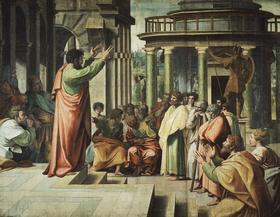
“And we also thank God constantly for this, that when you received the word of God which you heard from us, you accepted it not as the word of men but as what it really is, the word of God, which is at work in you believers.”
“So also our beloved brother Paul wrote to you according to the wisdom given him, speaking of this as he does in all his letters. There are some things in them hard to understand, which the ignorant and unstable twist to their own destruction, as they do the other scriptures.”
“We have learned from none others the plan of our salvation, than from those through whom the Gospel has come down to us, which they did at one time proclaim in public, and, at a later period, by the will of God, handed down to us in the Scriptures, to be the ground and pillar of our faith. For it is unlawful to assert that they preached before they possessed perfect knowledge, as some do even venture to say, boasting themselves as improvers of the apostles. For, after our Lord rose from the dead, [the apostles] were invested with power from on high when the Holy Spirit came down [upon them], were filled from all [His gifts], and had perfect knowledge”
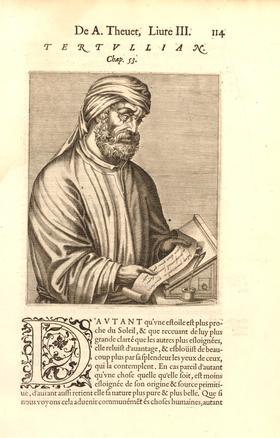
“…is it likely that so many churches, and they so great, should have gone astray into one and the same faith? No casualty distributed among many men issues in one and the same result. Error of doctrine in the churches must necessarily have produced various issues. When, however, that which is deposited among many is found to be one and the same, it is not the result of error, but of tradition.”
“Again it is not tedious to speak of the [books] of the New Testament. These are, the four Gospels, according to Matthew, Mark, Luke, and John. Afterwards, the Acts of the Apostles and Epistles (called Catholic), seven, viz. of James, one; of Peter, two; of John, three; after these, one of Jude. In addition, there are fourteen Epistles of Paul, written in this order. The first, to the Romans; then two to the Corinthians; after these, to the Galatians; next, to the Ephesians; then to the Philippians; then to the Colossians; after these, two to the Thessalonians, and that to the Hebrews; and again, two to Timothy; one to Titus; and lastly, that to Philemon. And besides, the Revelation of John.”
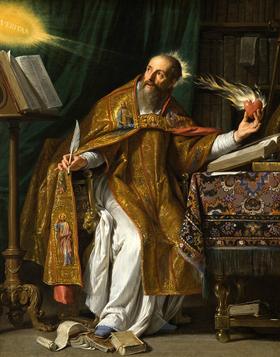
“For I confess to your Charity that I have learned to yield this respect and honour only to the canonical books of Scripture: of these alone do I most firmly believe that the authors were completely free from error. … As to all other writings, in reading them, however great the superiority of the authors to myself in sanctity and learning, I do not accept their teaching as true on the mere ground of the opinion being held by them; but only because they have succeeded in convincing my judgment of its truth either by means of these canonical writings themselves, or by arguments addressed to my reason.”
“I, Peregrinus, who am the least of all the servants of God, remembering the admonition of Scripture, Ask your fathers and they will tell you, your elders and they will declare unto you, Deuteronomy 32:7”
“But what, if in antiquity itself there be found error on the part of two or three men, or at any rate of a city or even of a province? Then it will be his care by all means, to prefer the decrees, if such there be, of an ancient General Council to the rashness and ignorance of a few. But what, if some error should spring up on which no such decree is found to bear? Then he must collate and consult and interrogate the opinions of the ancients, of those, namely, who, though living in various times and places, yet continuing in the communion and faith of the one Catholic Church, stand forth acknowledged and approved authorities: and whatsoever he shall ascertain to have been held, written, taught, not by one or two of these only, but by all, equally, with one consent, openly, frequently, persistently, that he must understand that he himself also is to believe without any doubt or hesitation.”
“Whom yet we are to believe in this condition, that that only is to be accounted indubitable, certain, established, which either all, or the more part, have supported and confirmed manifestly, frequently, persistently, in one and the same sense, forming, as it were, a consentient council of doctors, all receiving, holding, handing on the same doctrine. But whatsoever a teacher holds, other than all, or contrary to all, be he holy and learned, be he a bishop, be he a Confessor, be he a martyr, let that be regarded as a private fancy of his own, and be separated from the authority of common, public, general persuasion”
“It behooves us, then, to give heed to these instances from Church History, so many and so great, and others of the same description, and to understand distinctly, in accordance with the rule laid down in Deuteronomy, that if at any time a Doctor in the Church have erred from the faith, Divine Providence permits it in order to make trial of us, whether or not we love God with all our heart and with all our mind.”
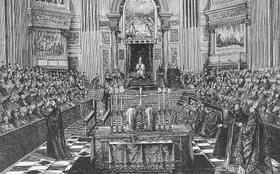
“The holy fathers, who have gathered at intervals in the four holy councils, have followed the examples of antiquity. They dealt with heresies and current problems by debate in common, since it was established as certain that when the disputed question is set out by each side in communal discussions, the light of truth drives out the shadows of lying. The truth cannot be made clear in any other way when there are debates about questions of faith, since everyone requires the assistance of his neighbour.”
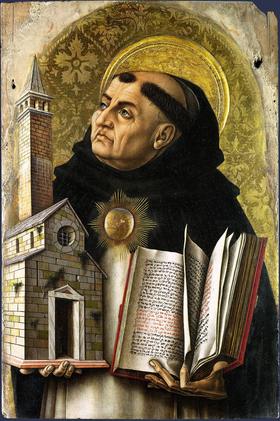
“Nevertheless, sacred doctrine makes use of these authorities as extrinsic and probable arguments; but properly uses the authority of the canonical Scriptures as an incontrovertible proof, and the authority of the doctors of the Church as one that may properly be used, yet merely as probable. For our faith rests upon the revelation made to the apostles and prophets who wrote the canonical books, and not on the revelations (if any such there are) made to other doctors.”
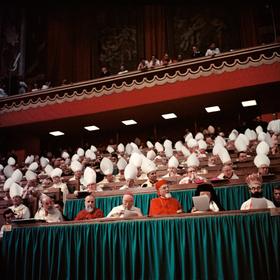
“Now since the decree on the interpretation of holy scripture, profitably made by the council of Trent, with the intention of constraining rash speculation, has been wrongly interpreted by some, we renew that decree and declare its meaning to be as follows: that in matters of faith and morals, belonging as they do to the establishing of christian doctrine, that meaning of holy scripture must be held to be the true one, which holy mother church held and holds, since it is her right to judge of the true meaning and interpretation of holy scripture. In consequence, it is not permissible for anyone to interpret holy scripture in a sense contrary to this, or indeed against the unanimous consent of the fathers.”
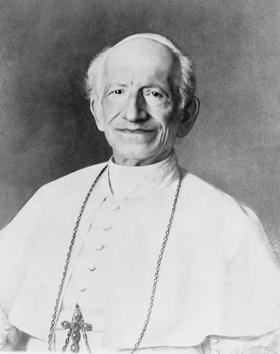
“The unshrinking defence of the Holy Scripture, however, does not require that we should equally uphold all the opinions which each of the Fathers or the more recent interpreters have put forth in explaining it; for it may be that, in commenting on passages where physical matters occur, they have sometimes expressed the ideas of their own times, and thus made statements which in these days have been abandoned as incorrect. Hence, in their interpretations, we must carefully note what they lay down as belonging to faith, or as intimately connected with faith-what they are unanimous in. For "in those things which do not come under the obligation of faith, the Saints were at liberty to hold divergent opinions, just as we ourselves are,"”
“The words of the holy fathers witness to the presence of this living tradition, whose wealth is poured into the practice and life of the believing and praying Church. Through the same tradition the Church's full canon of the sacred books is known, and the sacred writings themselves are more profoundly understood and unceasingly made active in her”
“The Church, a communion living in the faith of the apostles which she transmits, is the place where we know the Holy Spirit: - in the Scriptures he inspired; - in the Tradition, to which the Church Fathers are always timely witnesses; - in the Church's Magisterium, which he assists”
Related timelines
Scripture and Tradition“Tradition is man-made. The Bible alone is the Christian's authority.”
The Doctors of the ChurchThe Church gives the title Doctor of the Church to saints whose teaching she holds up for all the faithful. Thirty-eight have received it, from St. Irenaeus, who died about 202, to St. John Henry Newman, who died in 1890. Each is shown here at the year of his or her death, and thirty-seven of them in their own words.
The inspiration of Scripture“The Bible was written by men, like any other book. Quoting the Bible to show that God inspired it is arguing in a circle.”
Saints of the age of the Fathers, 313 to 604Twenty-nine saints who died between the peace of Constantine and the death of Pope Gregory the Great. Each is shown in his or her own words, in an early account, or in a pope's description. For seven of them a second entry quotes an early writer's account of a healing or sign.
The Old Testament canon“Catholics added seven books to the Old Testament. The Jews, to whom the oracles of God were entrusted, never accepted them.”
The Magisterium“The Catholic Church claims its Magisterium is an infallible teaching authority. But no body of men stands over Scripture, and every teaching has to be tested by the Bible.”