Old Testament
Scripture
Micah Micah 5:2
“But you, O Bethlehem Eph′rathah, who are little to be among the clans of Judah, from you shall come forth for me one who is to be ruler in Israel, whose origin is from of old, from ancient days.”
Start page / Objections / Authority
Verses cited for this objection: 2 Tim. 3:16, 2 Pet. 1:20-21
Short answer
The Church agrees that men wrote the Bible. She calls them true authors, who used their own powers and abilities. She also teaches that God inspired them, so that the books have God as their author. The Bible is not one book by one writer. It is 73 books by many writers of different ages, and the later books take up the earlier ones. Isaiah, the Psalms and Micah were written before Jesus was born, and the New Testament writers point to them by name. Jesus said that the law of Moses, the prophets and the psalms were written about him. From the second century on, Christian writers pointed to this agreement among so many authors as a reason to believe that God spoke through them.
On the day he rose, Jesus tells the apostles that the law of Moses, the prophets and the psalms were written about him.
“Then he said to them, “These are my words which I spoke to you, while I was still with you, that everything written about me in the law of Moses and the prophets and the psalms must be fulfilled.” Then he opened their minds to understand the scriptures”
JesusLuke 24:44-45Read it in the source: Bible Gateway, RSV Catholic Edition
Christians hold the Bible to be God's word because of Jesus. He treated the Scriptures of Israel as God's word and said they spoke of him, and the New Testament was written by men he sent or by their companions. The many books by many writers have one subject, and it is he.
Drafted from primary sources. Every quotation is checked against the page it links to.
A work in progress. The quotations below are not all the evidence on this matter. More are being added.
“But he was wounded for our transgressions, he was bruised for our iniquities; upon him was the chastisement that made us whole, and with his stripes we are healed. All we like sheep have gone astray; we have turned every one to his own way; and the Lord has laid on him the iniquity of us all. He was oppressed, and he was afflicted, yet he opened not his mouth; like a lamb that is led to the slaughter, and like a sheep that before its shearers is dumb, so he opened not his mouth.”
“Yea, dogs are round about me; a company of evildoers encircle me; they have pierced my hands and feet—I can count all my bones—they stare and gloat over me; they divide my garments among them, and for my raiment they cast lots.”
“But you, O Bethlehem Eph′rathah, who are little to be among the clans of Judah, from you shall come forth for me one who is to be ruler in Israel, whose origin is from of old, from ancient days.”
“and assembling all the chief priests and scribes of the people, he inquired of them where the Christ was to be born. They told him, “In Bethlehem of Judea; for so it is written by the prophet: ‘And you, O Bethlehem, in the land of Judah, are by no means least among the rulers of Judah; for from you shall come a ruler who will govern my people Israel.’””
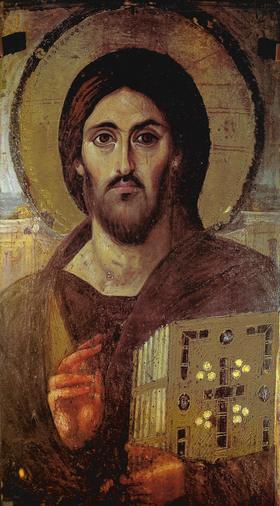
“You search the scriptures, because you think that in them you have eternal life; and it is they that bear witness to me … If you believed Moses, you would believe me, for he wrote of me.”
“When the soldiers had crucified Jesus they took his garments and made four parts, one for each soldier; also his tunic. But the tunic was without seam, woven from top to bottom; so they said to one another, “Let us not tear it, but cast lots for it to see whose it shall be.” This was to fulfil the scripture, “They parted my garments among them, and for my clothing they cast lots.””
“Then he said to them, “These are my words which I spoke to you, while I was still with you, that everything written about me in the law of Moses and the prophets and the psalms must be fulfilled.” Then he opened their minds to understand the scriptures”
“Now the passage of the scripture which he was reading was this: “As a sheep led to the slaughter or a lamb before its shearer is dumb, so he opens not his mouth. In his humiliation justice was denied him. Who can describe his generation? For his life is taken up from the earth.” And the eunuch said to Philip, “About whom, pray, does the prophet say this, about himself or about some one else?” Then Philip opened his mouth, and beginning with this scripture he told him the good news of Jesus.”
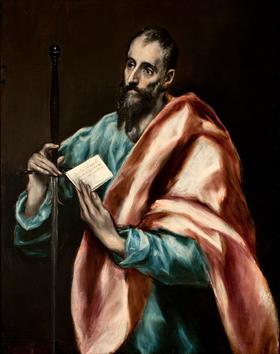
“All scripture is inspired by God and profitable for teaching, for reproof, for correction, and for training in righteousness, that the man of God may be complete, equipped for every good work.”
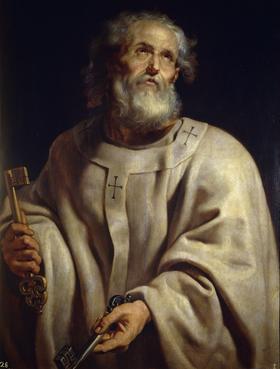
“First of all you must understand this, that no prophecy of scripture is a matter of one’s own interpretation, because no prophecy ever came by the impulse of man, but men moved by the Holy Spirit spoke from God.”
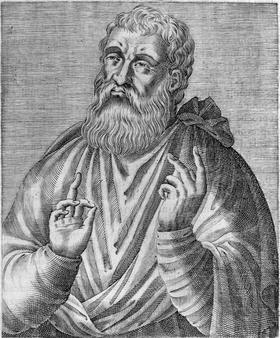
“But when you hear the utterances of the prophets spoken as it were personally, you must not suppose that they are spoken by the inspired themselves, but by the Divine Word who moves them. For sometimes He declares things that are to come to pass, in the manner of one who foretells the future; sometimes He speaks as from the person of God the Lord and Father of all; sometimes as from the person of Christ”
“And why should I recount the multitude of prophets, who are numerous, and said ten thousand things consistently and harmoniously? For those who desire it, can, by reading what they uttered, accurately understand the truth, and no longer be carried away by opinion and profitless labour. These, then, whom we have already mentioned, were prophets among the Hebrews, — illiterate, and shepherds, and uneducated.”
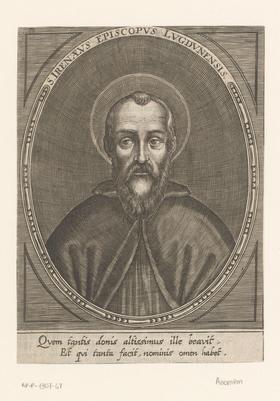
“all Scripture, which has been given to us by God, shall be found by us perfectly consistent; and the parables shall harmonize with those passages which are perfectly plain; and those statements the meaning of which is clear, shall serve to explain the parables; and through the many diversified utterances [of Scripture] there shall be heard one harmonious melody in us, praising in hymns that God who created all things.”
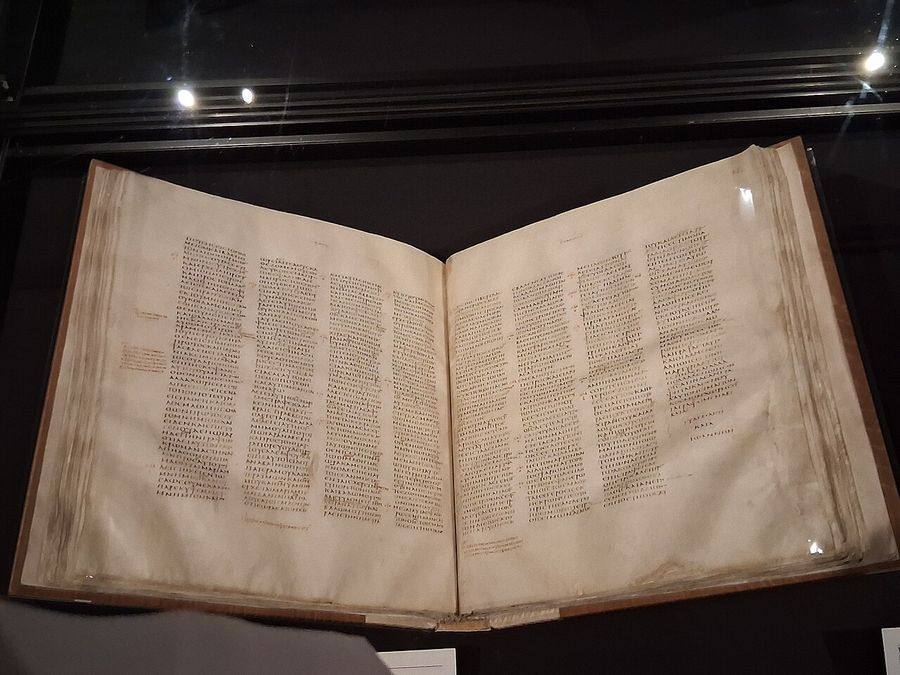
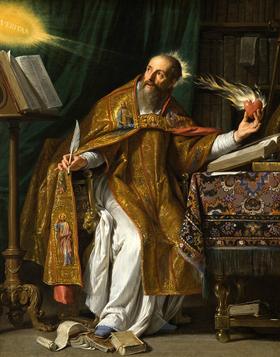
“Finally, let our authors, among whom the canon of the sacred books is fixed and bounded, be far from disagreeing in any respect. It is not without good reason, then, that not merely a few people prating in the schools and gymnasia in captious disputations, but so many and great people, both learned and unlearned, in countries and cities, have believed that God spoke to them or by them, i.e. the canonical writers, when they wrote these books. There ought, indeed, to be but few of them, lest on account of their multitude what ought to be religiously esteemed should grow cheap; and yet not so few that their agreement should not be wonderful.”
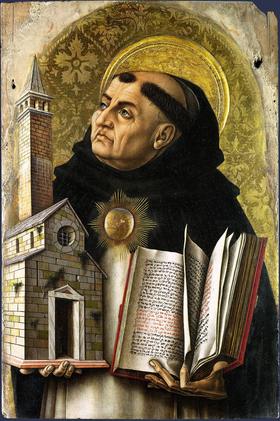
“Since the literal sense is that which the author intends, and since the author of Holy Writ is God, Who by one act comprehends all things by His intellect, it is not unfitting, as Augustine says (Confess. xii), if, even according to the literal sense, one word in Holy Writ should have several senses.”
“These books the church holds to be sacred and canonical not because she subsequently approved them by her authority after they had been composed by unaided human skill, nor simply because they contain revelation without error, but because, being written under the inspiration of the holy Spirit, they have God as their author, and were as such committed to the church.”
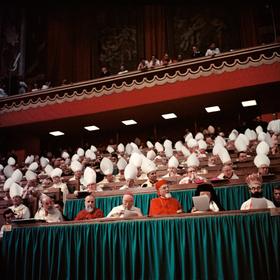
“In composing the sacred books, God chose men and while employed by Him they made use of their powers and abilities, so that with Him acting in them and through them, they, as true authors, consigned to writing everything and only those things which He wanted.”
“Be especially attentive "to the content and unity of the whole Scripture". Different as the books which compose it may be, Scripture is a unity by reason of the unity of God's plan, of which Christ Jesus is the center and heart, open since his Passover.”
“Besides, the New Testament has to be read in the light of the Old. Early Christian catechesis made constant use of the Old Testament. As an old saying put it, the New Testament lies hidden in the Old and the Old Testament is unveiled in the New.”
“The Church accepts and venerates as inspired the 46 books of the Old Testament and the 27 books of the New.”
 Scripture and Tradition“Tradition is man-made. The Bible alone is the Christian's authority.”The life of Jesus Christ: the record inside and outside the BibleJesus of Nazareth lived in Galilee and Judea and was crucified under Pontius Pilate about AD 30. This timeline sets out the record of his life, death and resurrection in date order. It begins with the Gospels and the letters of the apostles. Some of these writers say they saw him themselves. Luke says he wrote down what eyewitnesses had handed on, and an early report says Mark wrote down the preaching of Peter. It goes on to Roman, Jewish and Greek writers who were not Christians, and to the first Christian writers after the apostles. It goes on to what the Church says about the Gospels as history and what she confesses about him today, that he is one divine person, true God and true man, and ends with the Shroud of Turin, the linen cloth that is still being studied.
 Evolution and Genesis“The Catholic Church teaches theistic evolution. That contradicts Genesis, which says God formed man from the dust and made them male and female from the beginning.”
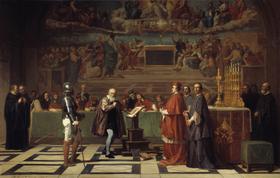 The Galileo caseIn 1616 the Congregation of the Index called the teaching that the earth moves false and contrary to Holy Scripture. In 1633 the cardinals of the Holy Office judged Galileo Galilei vehemently suspected of heresy for holding it, banned his book and sentenced him to prison. This timeline gives what the Church had taught before then about Scripture and the knowledge of nature, the two rulings in their own words, and what the Church has said about them since.
 The Old Testament canon“Catholics added seven books to the Old Testament. The Jews, to whom the oracles of God were entrusted, never accepted them.”
 Are Catholics Christians?“Catholics are not really Christians. They follow a church and man-made rules instead of Jesus, they have no relationship with him, and they are not saved.”