The ruler from Bethlehem
“But you, O Bethlehem Eph′rathah, who are little to be among the clans of Judah, from you shall come forth for me one who is to be ruler in Israel, whose origin is from of old, from ancient days.”
Start page / Jesus Christ

Jesus of Nazareth lived in Galilee and Judea and was crucified under Pontius Pilate about AD 30. This timeline sets out the record of his life, death and resurrection in date order. It begins with the Gospels and the letters of the apostles. Some of these writers say they saw him themselves. Luke says he wrote down what eyewitnesses had handed on, and an early report says Mark wrote down the preaching of Peter. It goes on to Roman, Jewish and Greek writers who were not Christians, and to the first Christian writers after the apostles. It goes on to what the Church says about the Gospels as history and what she confesses about him today, that he is one divine person, true God and true man, and ends with the Shroud of Turin, the linen cloth that is still being studied.
Drafted from primary sources. Every quotation is checked against the page it links to. The writers marked "Non-Christian writer" did not share the Christian faith. They are quoted for what they record: that Jesus lived, that he was put to death under Pontius Pilate, and that Christians worshipped him. They are read here in standard translations kept by full-text libraries, since the Catholic sites do not carry them. Where scholars dispute a passage, a note under it says so. One witness often cited, the Babylonian Talmud (Sanhedrin 43a), is left out because none of the approved sources carries its text.
A work in progress. The quotations below are not all the evidence on this matter. More are being added.

“But you, O Bethlehem Eph′rathah, who are little to be among the clans of Judah, from you shall come forth for me one who is to be ruler in Israel, whose origin is from of old, from ancient days.”
“Surely he has borne our griefs and carried our sorrows; yet we esteemed him stricken, smitten by God, and afflicted. But he was wounded for our transgressions, he was bruised for our iniquities; upon him was the chastisement that made us whole, and with his stripes we are healed. All we like sheep have gone astray; we have turned every one to his own way; and the Lord has laid on him the iniquity of us all. He was oppressed, and he was afflicted, yet he opened not his mouth; like a lamb that is led to the slaughter, and like a sheep that before its shearers is dumb, so he opened not his mouth.”
“Yea, dogs are round about me; a company of evildoers encircle me; they have pierced my hands and feet— I can count all my bones— they stare and gloat over me; they divide my garments among them, and for my raiment they cast lots.”
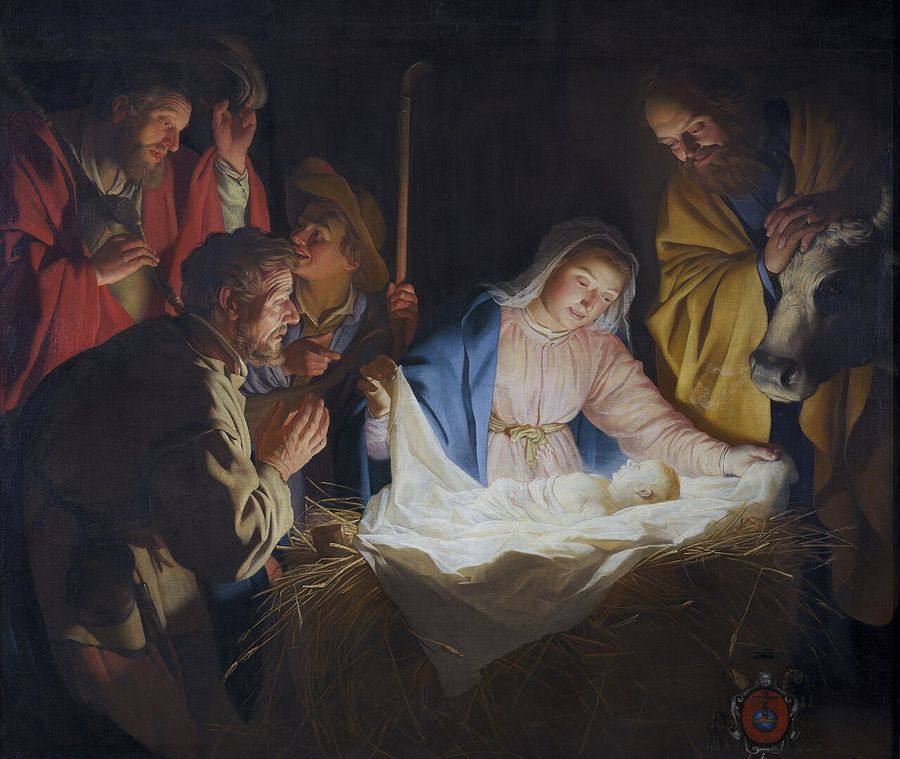
“In those days a decree went out from Caesar Augustus that all the world should be enrolled. This was the first enrollment, when Quirin′i-us was governor of Syria. And all went to be enrolled, each to his own city. And Joseph also went up from Galilee, from the city of Nazareth, to Judea, to the city of David, which is called Bethlehem, because he was of the house and lineage of David, to be enrolled with Mary, his betrothed, who was with child. And while they were there, the time came for her to be delivered. And she gave birth to her first-born son and wrapped him in swaddling cloths, and laid him in a manger, because there was no place for them in the inn.”
“assembling all the chief priests and scribes of the people, he inquired of them where the Christ was to be born. They told him, “In Bethlehem of Judea; for so it is written by the prophet: ‘And you, O Bethlehem, in the land of Judah, are by no means least among the rulers of Judah; for from you shall come a ruler who will govern my people Israel.’””
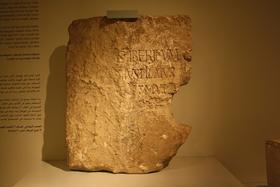
“In the fifteenth year of the reign of Tibe′ri-us Caesar, Pontius Pilate being governor of Judea, and Herod being tetrarch of Galilee, and his brother Philip tetrarch of the region of Iturae′a and Trachoni′tis, and Lysa′ni-as tetrarch of Abile′ne, in the high-priesthood of Annas and Ca′iaphas, the word of God came to John the son of Zechari′ah in the wilderness; and he went into all the region about the Jordan, preaching a baptism of repentance for the forgiveness of sins.”
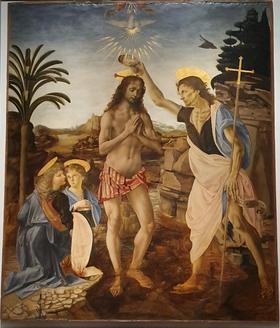
“In those days Jesus came from Nazareth of Galilee and was baptized by John in the Jordan. And when he came up out of the water, immediately he saw the heavens opened and the Spirit descending upon him like a dove; and a voice came from heaven, “Thou art my beloved Son; with thee I am well pleased.””
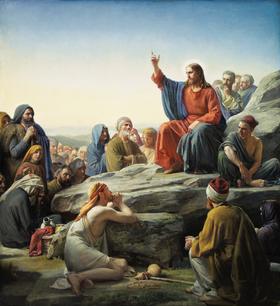
“And he went about all Galilee, teaching in their synagogues and preaching the gospel of the kingdom and healing every disease and every infirmity among the people. So his fame spread throughout all Syria, and they brought him all the sick, those afflicted with various diseases and pains, demoniacs, epileptics, and paralytics, and he healed them. And great crowds followed him from Galilee and the Decap′olis and Jerusalem and Judea and from beyond the Jordan.”
“For God so loved the world that he gave his only Son, that whoever believes in him should not perish but have eternal life. For God sent the Son into the world, not to condemn the world, but that the world might be saved through him.”
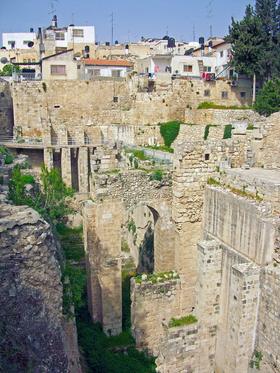
“Now there is in Jerusalem by the Sheep Gate a pool, in Hebrew called Beth-za′tha, which has five porticoes. In these lay a multitude of invalids, blind, lame, paralyzed. One man was there, who had been ill for thirty-eight years. When Jesus saw him and knew that he had been lying there a long time, he said to him, “Do you want to be healed?” The sick man answered him, “Sir, I have no man to put me into the pool when the water is troubled, and while I am going another steps down before me.” Jesus said to him, “Rise, take up your pallet, and walk.” And at once the man was healed, and he took up his pallet and walked.”
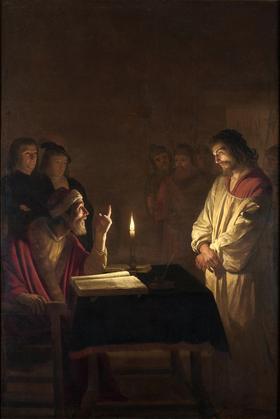
“And the high priest stood up in the midst, and asked Jesus, “Have you no answer to make? What is it that these men testify against you?” But he was silent and made no answer. Again the high priest asked him, “Are you the Christ, the Son of the Blessed?” And Jesus said, “I am; and you will see the Son of man sitting at the right hand of Power, and coming with the clouds of heaven.” And the high priest tore his mantle, and said, “Why do we still need witnesses? You have heard his blasphemy. What is your decision?” And they all condemned him as deserving death.”
“Pilate entered the praetorium again and called Jesus, and said to him, “Are you the King of the Jews?” … Pilate said to him, “So you are a king?” Jesus answered, “You say that I am a king. For this I was born, and for this I have come into the world, to bear witness to the truth. Every one who is of the truth hears my voice.” Pilate said to him, “What is truth?” … After he had said this, he went out to the Jews again, and told them, “I find no crime in him.”
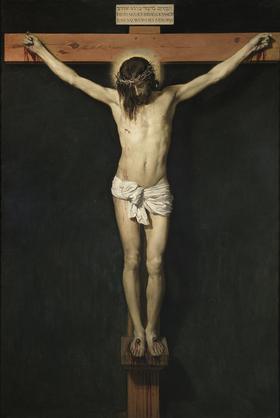
“So they took Jesus, and he went out, bearing his own cross, to the place called the place of a skull, which is called in Hebrew Gol′gotha. There they crucified him, and with him two others, one on either side, and Jesus between them. Pilate also wrote a title and put it on the cross; it read, “Jesus of Nazareth, the King of the Jews.” Many of the Jews read this title, for the place where Jesus was crucified was near the city; and it was written in Hebrew, in Latin, and in Greek.”
“When the soldiers had crucified Jesus they took his garments and made four parts, one for each soldier; also his tunic. But the tunic was without seam, woven from top to bottom; so they said to one another, “Let us not tear it, but cast lots for it to see whose it shall be.” This was to fulfil the scripture, “They parted my garments among them, and for my clothing they cast lots.””
“So the soldiers came and broke the legs of the first, and of the other who had been crucified with him; but when they came to Jesus and saw that he was already dead, they did not break his legs. But one of the soldiers pierced his side with a spear, and at once there came out blood and water. He who saw it has borne witness—his testimony is true, and he knows that he tells the truth—that you also may believe.”
“And when evening had come, since it was the day of Preparation, that is, the day before the sabbath, Joseph of Arimathe′a, a respected member of the council, who was also himself looking for the kingdom of God, took courage and went to Pilate, and asked for the body of Jesus. And Pilate wondered if he were already dead; and summoning the centurion, he asked him whether he was already dead. And when he learned from the centurion that he was dead, he granted the body to Joseph. And he bought a linen shroud, and taking him down, wrapped him in the linen shroud, and laid him in a tomb which had been hewn out of the rock; and he rolled a stone against the door of the tomb. Mary Mag′dalene and Mary the mother of Joses saw where he was laid.”
“But on the first day of the week, at early dawn, they went to the tomb, taking the spices which they had prepared. And they found the stone rolled away from the tomb, but when they went in they did not find the body. While they were perplexed about this, behold, two men stood by them in dazzling apparel; and as they were frightened and bowed their faces to the ground, the men said to them, “Why do you seek the living among the dead? He is not here, but has risen.”
“While they were going, behold, some of the guard went into the city and told the chief priests all that had taken place. And when they had assembled with the elders and taken counsel, they gave a sum of money to the soldiers and said, “Tell people, ‘His disciples came by night and stole him away while we were asleep.’ And if this comes to the governor’s ears, we will satisfy him and keep you out of trouble.” So they took the money and did as they were directed; and this story has been spread among the Jews to this day.”
“As they were saying this, Jesus himself stood among them, and said to them, “Peace to you.” But they were startled and frightened, and supposed that they saw a spirit. And he said to them, “Why are you troubled, and why do questionings rise in your hearts? See my hands and my feet, that it is I myself; handle me, and see; for a spirit has not flesh and bones as you see that I have.” And when he had said this, he showed them his hands and his feet. And while they still disbelieved for joy, and wondered, he said to them, “Have you anything here to eat?” They gave him a piece of broiled fish, and he took it and ate before them.”
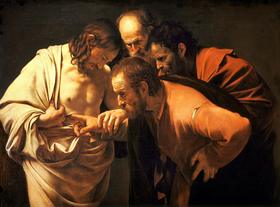
“But he said to them, “Unless I see in his hands the print of the nails, and place my finger in the mark of the nails, and place my hand in his side, I will not believe.” Eight days later, his disciples were again in the house, and Thomas was with them. The doors were shut, but Jesus came and stood among them, and said, “Peace be with you.” Then he said to Thomas, “Put your finger here, and see my hands; and put out your hand, and place it in my side; do not be faithless, but believing.” Thomas answered him, “My Lord and my God!””
““Men of Israel, hear these words: Jesus of Nazareth, a man attested to you by God with mighty works and wonders and signs which God did through him in your midst, as you yourselves know— this Jesus, delivered up according to the definite plan and foreknowledge of God, you crucified and killed by the hands of lawless men. But God raised him up, having loosed the pangs of death, because it was not possible for him to be held by it. … This Jesus God raised up, and of that we all are witnesses.”
“Now the passage of the scripture which he was reading was this: “As a sheep led to the slaughter or a lamb before its shearer is dumb, so he opens not his mouth. In his humiliation justice was denied him. Who can describe his generation? For his life is taken up from the earth.” And the eunuch said to Philip, “About whom, pray, does the prophet say this, about himself or about some one else?” Then Philip opened his mouth, and beginning with this scripture he told him the good news of Jesus.”
“Then after three years I went up to Jerusalem to visit Cephas, and remained with him fifteen days. But I saw none of the other apostles except James the Lord’s brother. (In what I am writing to you, before God, I do not lie!)”
“For I delivered to you as of first importance what I also received, that Christ died for our sins in accordance with the scriptures, that he was buried, that he was raised on the third day in accordance with the scriptures, and that he appeared to Cephas, then to the twelve. Then he appeared to more than five hundred brethren at one time, most of whom are still alive, though some have fallen asleep. Then he appeared to James, then to all the apostles. Last of all, as to one untimely born, he appeared also to me.”
“And as he thus made his defense, Festus said with a loud voice, “Paul, you are mad; your great learning is turning you mad.” But Paul said, “I am not mad, most excellent Festus, but I am speaking the sober truth. For the king knows about these things, and to him I speak freely; for I am persuaded that none of these things has escaped his notice, for this was not done in a corner.”
“For we did not follow cleverly devised myths when we made known to you the power and coming of our Lord Jesus Christ, but we were eyewitnesses of his majesty. For when he received honor and glory from God the Father and the voice was borne to him by the Majestic Glory, “This is my beloved Son, with whom I am well pleased,” we heard this voice borne from heaven, for we were with him on the holy mountain.”
“Inasmuch as many have undertaken to compile a narrative of the things which have been accomplished among us, just as they were delivered to us by those who from the beginning were eyewitnesses and ministers of the word, it seemed good to me also, having followed all things closely for some time past, to write an orderly account for you, most excellent Theoph′ilus, that you may know the truth concerning the things of which you have been informed.”
“That which was from the beginning, which we have heard, which we have seen with our eyes, which we have looked upon and touched with our hands, concerning the word of life— the life was made manifest, and we saw it, and testify to it, and proclaim to you the eternal life which was with the Father and was made manifest to us— that which we have seen and heard we proclaim also to you, so that you may have fellowship with us; and our fellowship is with the Father and with his Son Jesus Christ.”
“Festus was now dead, and Albinus was but upon the road; so he assembled the sanhedrim of judges, and brought before them the brother of Jesus, who was called Christ, whose name was James, and some others, [or, some of his companions]; and when he had formed an accusation against them as breakers of the law, he delivered them to be stoned:”
“Now there was about this time Jesus, a wise man, if it be lawful to call him a man; for he was a doer of wonderful works, a teacher of such men as receive the truth with pleasure. He drew over to him both many of the Jews and many of the Gentiles. He was [the] Christ. And when Pilate, at the suggestion of the principal men amongst us, had condemned him to the cross, … those that loved him at the first did not forsake him; for he appeared to them alive again the third day; … as the divine prophets had foretold these and ten thousand other wonderful things concerning him. And the tribe of Christians, so named from him, are not extinct at this day.”
“Having therefore received their orders, and being fully assured by the resurrection of our Lord Jesus Christ, and established in the word of God, with full assurance of the Holy Ghost, they went forth proclaiming that the kingdom of God was at hand.”
“For what benefit did the Athenians obtain by putting Socrates to death, seeing that they received as retribution for it famine and pestilence? Or the people of Samos by the burning of Pythagoras, seeing that in one hour the whole of their country was covered with sand? Or the Jews by the murder of their Wise King, seeing that from that very time their kingdom was driven away from them? … Nay, Socrates did not die, because of Plato; nor yet Pythagoras, because of the statue of Hera; nor yet the Wise King, because of the new laws which he enacted.”
“Stop your ears, therefore, when any one speaks to you at variance with Jesus Christ, who was descended from David, and was also of Mary; who was truly born, and ate and drank. He was truly persecuted under Pontius Pilate; He was truly crucified, and [truly] died, in the sight of beings in heaven, and on earth, and under the earth. He was also truly raised from the dead,”
“They asserted, however, that the sum and substance of their fault or error had been that they were accustomed to meet on a fixed day before dawn and sing responsively a hymn to Christ as to a god, and to bind themselves by oath, not to some crime, but not to commit fraud, theft, or adultery, not falsify their trust, nor to refuse to return a trust when called upon to do so.”
“Consequently, to get rid of the report, Nero fastened the guilt and inflicted the most exquisite tortures on a class hated for their abominations, called Christians by the populace. Christus, from whom the name had its origin, suffered the extreme penalty during the reign of Tiberius at the hands of one of our procurators, Pontius Pilatus, and a most mischievous superstition, thus checked for the moment, again broke out not only in Judaea, the first source of the evil, but even in Rome,”
“This also the presbyter said: Mark, having become the interpreter of Peter, wrote down accurately, though not in order, whatsoever he remembered of the things said or done by Christ. For he neither heard the Lord nor followed him, but afterward, as I said, he followed Peter, who adapted his teaching to the needs of his hearers, but with no intention of giving a connected account of the Lord's discourses, so that Mark committed no error while he thus wrote some things as he remembered them.”
“Since the Jews constantly made disturbances at the instigation of Chrestus … he expelled them from Rome.”
“But the works of our Saviour were always present, for they were genuine:— those that were healed, and those that were raised from the dead, who were seen not only when they were healed and when they were raised, but were also always present; and not merely while the Saviour was on earth, but also after his death, they were alive for quite a while, so that some of them lived even to our day.”
“you have sent chosen and ordained men throughout all the world to proclaim that a godless and lawless heresy had sprung from one Jesus, a Galilæan deceiver, whom we crucified, but his disciples stole him by night from the tomb, where he was laid when unfastened from the cross, and now deceive men by asserting that he has risen from the dead and ascended to heaven.”
“they revered him [Peregrinus] as a god, made use of him as a lawgiver, and set him down as a protector, next after that other, to be sure, whom they still worship, the man who was crucified in Palestine because he introduced this new cult into the world.”
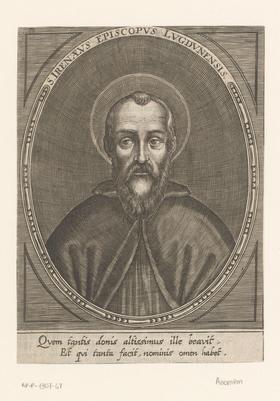
“I am able to describe the very place in which the blessed Polycarp sat as he discoursed, and his goings out and his comings in, and the manner of his life, and his physical appearance, and his discourses to the people, and the accounts which he gave of his intercourse with John and with the others who had seen the Lord. And as he remembered their words, and what he heard from them concerning the Lord, and concerning his miracles and his teaching, having received them from eyewitnesses”
“On the whole world there pressed a most fearful darkness; and the rocks were rent by an earthquake, and many places in Judea and other districts were thrown down. This darkness Thallus, in the third book of his History, calls, as appears to me without reason, an eclipse of the sun. For the Hebrews celebrate the passover on the 14th day according to the moon, and the passion of our Saviour fails on the day before the passover; but an eclipse of the sun takes place only when the moon comes under the sun.”
“but he invents something altogether different, admitting somehow the miraculous works done by Jesus, by means of which He induced the multitude to follow Him as the Christ. And yet he desires to throw discredit on them, as being done by help of magic and not by divine power; for he asserts that he (Jesus), having been brought up as an illegitimate child, and having served for hire in Egypt, and then coming to the knowledge of certain miraculous powers, returned from thence to his own country, and by means of those powers proclaimed himself a god.”
“for us humans and for our salvation he came down from the heavens and became incarnate from the holy Spirit and the virgin Mary, became human and was crucified on our behalf under Pontius Pilate; he suffered and was buried and rose up on the third day in accordance with the scriptures;”
“when Our Predecessor published the Encyclical Letter Providentissimus Deus, hardly a single place in Palestine had begun to be explored by means of relevant excavations. Now, however, this kind of investigation is much more frequent and, since more precise methods and technical skill have been developed in the course of actual experience, it gives us information at once more abundant and more accurate. How much light has been derived from these explorations for the more correct and fuller understanding of the Sacred Books all experts know, as well as all those who devote themselves to these studies.”
“Holy Mother Church has firmly and with absolute constancy held, and continues to hold, that the four Gospels just named, whose historical character the Church unhesitatingly asserts, faithfully hand on what Jesus Christ, while living among men, really did and taught for their eternal salvation until the day He was taken up into heaven”
“We believe and confess that Jesus of Nazareth, born a Jew of a daughter of Israel at Bethlehem at the time of King Herod the Great and the emperor Caesar Augustus, a carpenter by trade, who died crucified in Jerusalem under the procurator Pontius Pilate during the reign of the emperor Tiberius, is the eternal Son of God made man.”
“The unique and altogether singular event of the Incarnation of the Son of God does not mean that Jesus Christ is part God and part man, nor does it imply that he is the result of a confused mixture of the divine and the human. He became truly man while remaining truly God. Jesus Christ is true God and true man.”
“Christ's humanity has no other subject than the divine person of the Son of God, who assumed it and made it his own, from his conception.”
“Given all these testimonies, Christ's Resurrection cannot be interpreted as something outside the physical order, and it is impossible not to acknowledge it as an historical fact. It is clear from the facts that the disciples' faith was drastically put to the test by their master's Passion and death on the cross, which he had foretold. The shock provoked by the Passion was so great that at least some of the disciples did not at once believe in the news of the Resurrection. Far from showing us a community seized by a mystical exaltation, the Gospels present us with disciples demoralized ("looking sad") and frightened.”
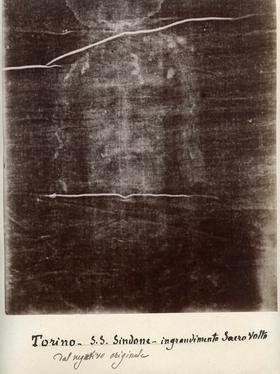
“The Shroud is a challenge to our intelligence. It first of all requires of every person, particularly the researcher, that he humbly grasp the profound message it sends to his reason and his life. The mysterious fascination of the Shroud forces questions to be raised about the sacred Linen and the historical life of Jesus. Since it is not a matter of faith, the Church has no specific competence to pronounce on these questions. She entrusts to scientists the task of continuing to investigate, so that satisfactory answers may be found to the questions connected with this Sheet, which, according to tradition, wrapped the body of our Redeemer after he had been taken down from the cross.”
“For the believer, what counts above all is that the Shroud is a mirror of the Gospel. In fact, if we reflect on the sacred Linen, we cannot escape the idea that the image it presents has such a profound relationship with what the Gospels tell of Jesus' passion and death, that every sensitive person feels inwardly touched and moved at beholding it. Whoever approaches it is also aware that the Shroud does not hold people's hearts to itself, but turns them to him, at whose service the Father's loving providence has put it. Therefore, it is right to foster an awareness of the precious value of this image, which everyone sees and no one at present can explain.”
“Indeed it is a winding-sheet that was wrapped round the body of a man who was crucified, corresponding in every way to what the Gospels tell us of Jesus … The Shroud is an Icon written in blood; the blood of a man who was scourged, crowned with thorns, crucified and whose right side was pierced. The Image impressed upon the Shroud is that of a dead man, but the blood speaks of his life.”
Great miraclesThis timeline sets out some of the public miracles of Christian history in date order, from the ministry of Jesus to the cures of Lourdes. Each entry gives the words of the record and, where the record states them, the witnesses, the inquiry and the ruling of the Church. The last entries give the Church's own account of what miracles are for and how reports of them are weighed.
The inspiration of Scripture“The Bible was written by men, like any other book. Quoting the Bible to show that God inspired it is arguing in a circle.”
The Rosary“The Rosary is the "vain repetition" Jesus forbade. It is not in the Bible, and it is prayer to Mary instead of to God.”
The Church and the Jewish peopleFor many centuries Christians, among them Fathers, councils and popes, spoke of the Jews with contempt and placed them under laws that set them apart: a distinguishing dress, exclusion from public office, forced attendance at sermons, separate quarters. Popes also forbade forced baptism and rejected the charge of ritual murder. This timeline gives those texts in their own words, in date order, and then the Church's own later judgment on that history and her requests for forgiveness.