Each mark is one quotation. Touch the timeline to read it.
The Rosary is a prayer that contemplates the life of Jesus with Mary. It is built from the Our Father, the Hail Mary and the Glory Be, said over mysteries of his life. This timeline shows where its prayers come from in Scripture, how it took form over the centuries, which saints and popes urged it, and how the Church describes it today.
Where it starts with Jesus
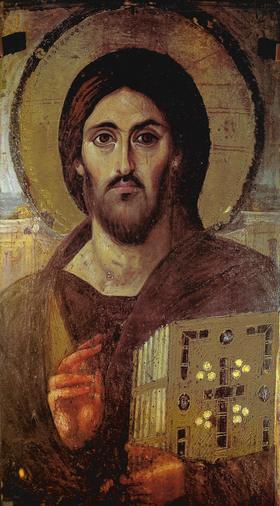
Jesus tells Philip that whoever has seen him has seen the Father. The Rosary starts here in the sense that its aim is to look on his face.
“Jesus said to him, “Have I been with you so long, and yet you do not know me, Philip? He who has seen me has seen the Father; how can you say, ‘Show us the Father’?”
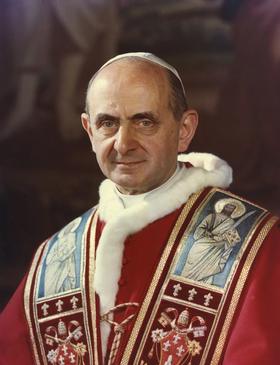
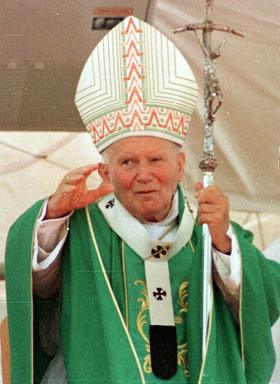
The Rosary names its mysteries from the life of Jesus, from the Annunciation to the Resurrection and the crowning of Mary. Paul VI calls it a Gospel prayer and John Paul II says to recite it is to contemplate the face of Christ with Mary.
How to pray the Rosary
A rosary is a string of beads used to keep count: a crucifix, a short strand of beads, and a loop of five sets of ten beads called decades. Each decade is prayed while thinking about one event in the life of Jesus, called a mystery. Five decades are usually prayed at a time. These are the steps as the bishops of the United States give them.
Make the Sign of the Cross.
Holding the Crucifix, say the Apostles' Creed.
On the first bead, say an Our Father.
Say one Hail Mary on each of the next three beads.
Say the Glory Be
For each of the five decades, announce the Mystery (perhaps followed by a brief reading from Scripture) then say the Our Father.
While fingering each of the ten beads of the decade, next say ten Hail Marys while meditating on the Mystery. Then say a Glory Be. (After finishing each decade, some say the following prayer requested by the Blessed Virgin Mary at Fatima: O my Jesus, forgive us our sins, save us from the fires of hell; lead all souls to Heaven, especially those who have most need of your mercy.)
After saying the five decades, say the Hail, Holy Queen, followed by this dialogue and prayer: V. Pray for us, O holy Mother of God. R. That we may be made worthy of the promises of Christ. Let us pray: O God, whose Only Begotten Son, by his life, Death, and Resurrection, has purchased for us the rewards of eternal life, grant, we beseech thee, that while meditating on these mysteries of the most holy Rosary of the Blessed Virgin Mary, we may imitate what they contain and obtain what they promise, through the same Christ our Lord. Amen.
In the name of the Father
and of the Son
and of the Holy Spirit. Amen.
The Apostles' Creed
I believe in God the Father almighty,
Creator of heaven and earth.
And in Jesus Christ, His only Son,
our Lord, Who was conceived by the Holy Spirit,
born of the Virgin Mary,
suffered under Pontius Pilate,
was crucified, died, and was buried.
He descended into hell; the third day
He rose again from the dead;
He ascended into heaven, and sits at
the right hand of God the Father
almighty, from thence He shall come
to judge the living and the dead.
I believe in the Holy Spirit,
the holy Catholic Church,
the communion of saints,
the forgiveness of sins,
the resurrection of the body
and life everlasting.
Amen.
The Our Father
Our Father who art in heaven,
hallowed be thy name.
Thy kingdom come.
Thy will be done
on earth, as it is in heaven.
Give us this day
our daily bread,
and forgive us our trespasses,
as we forgive those who trespass against us,
and lead us not into temptation,
but deliver us from evil.
The Hail Mary
Hail, Mary, full of grace,
the Lord is with thee.
Blessed art thou among women
and blessed is the fruit of thy womb, Jesus.
Holy Mary, Mother of God,
pray for us sinners,
now and at the hour of our death.
Amen.
The Glory Be
Glory be to the Father
and to the Son
and to the Holy Spirit,
as it was in the beginning
is now, and ever shall be
world without end. Amen.
The Hail, Holy Queen
Hail, Holy Queen, Mother of Mercy,
our life, our sweetness and our hope.
To you do we cry,
poor banished children of Eve.
To you do we send up our sighs,
mourning and weeping in this valley of tears
Turn then, most gracious advocate,
your eyes of mercy toward us,
and after this exile
show unto us the blessed fruit of thy womb,
Jesus.
O clement, O loving,
O sweet Virgin Mary.
Compendium of the Catechism of the Catholic ChurchThe Creed, the Lord's Prayer, and Appendix A, Common Prayers (2005)Read it in the source: vatican.va
The mysteries
There are four sets of five mysteries, and one set is prayed at a time. Each mystery is listed here with the Scripture passage the bishops give for it. Most are events in the life of Jesus as the Gospels tell them.
The Joyful Mysteries
The Five Joyful Mysteries are traditionally prayed on Mondays, Saturdays, and, during the season of Advent, on Sundays
Drafted from primary sources. Every quotation is checked against the page it links to. The tradition that St. Dominic began the Rosary is repeated by several popes quoted here. The Catechism and John Paul II say only that it took form gradually in the second millennium, and the timeline shows both. It is a popular devotion and not part of the liturgy. The requests for the Rosary reported at Lourdes and Fatima are on the timeline of Marian apparitions. The Rosary is also answered as an objection on its own timeline. The fifteen promises of the Rosary are quoted as a tradition from the writings attributed to Bl. Alan de la Roche; they are a private revelation and not a teaching of the Church. The apparition to St. Dominic is quoted from St. Louis de Montfort, who takes it from Bl. Alan; no source from Dominic's own century was found for it. Montfort's book is quoted from the site of the Montfort Missionaries, the order he founded. One text is quoted from a fallback host (tertullian.org).
40 quotations in date order
A work in progress. The quotations below are not all the evidence on this matter. More are being added.
The promise to Abraham: a blessing for all the families of the earth
The Book of Genesis Genesis 12:1-3
“Now the LORD said to Abram, “Go from your country and your kindred and your father’s house to the land that I will show you. And I will make of you a great nation, and I will bless you, and make your name great, so that you will be a blessing. I will bless those who bless you, and him who curses you I will curse; and by you all the families of the earth shall bless themselves.””
Zion told to rejoice: "The Lord your God is in your midst"
The prophet Zephaniah Zephaniah 3:14-17
“Sing aloud, O daughter of Zion; shout, O Israel! Rejoice and exult with all your heart, O daughter of Jerusalem! The Lord has taken away the judgments against you, he has cast out your enemies. The King of Israel, the Lord, is in your midst; you shall fear evil no more. On that day it shall be said to Jerusalem: “Do not fear, O Zion; let not your hands grow weak. The Lord your God is in your midst, a warrior who gives victory;”
“In the sixth month the angel Gabriel was sent from God to a city of Galilee named Nazareth, to a virgin betrothed to a man whose name was Joseph, of the house of David; and the virgin’s name was Mary. And he came to her and said, “Hail, full of grace, the Lord is with you!””
Elizabeth's greeting: "Blessed are you among women"
St. Luke Luke 1:41-42
“And when Elizabeth heard the greeting of Mary, the babe leaped in her womb; and Elizabeth was filled with the Holy Spirit and she exclaimed with a loud cry, “Blessed are you among women, and blessed is the fruit of your womb!”
“…one of his disciples said to him, “Lord, teach us to pray, as John taught his disciples.” And he said to them, “When you pray, say: Father, hallowed be thy name. Thy kingdom come. Give us each day our daily bread; and forgive us our sins, for we ourselves forgive every one who is indebted to us; and lead us not into temptation.””
Palladius The Lausiac History, ch. 20 (Paul), 1 (tr. W. K. Lowther Clarke, 1918)
“But his work and his asceticism consisted in ceaseless prayer. So he had 300 set prayers, and he collected as many pebbles and kept them in his lap and threw out of his lap one pebble at each prayer.”
Our Lady gives the Rosary to St. Dominic, as St. Louis de Montfort retells it from Bl. Alan de la Roche
St. Louis Marie de Montfort The Secret of the Rosary, Second Rose, 11 (written before 1716; Montfort Missionaries)
“It was given to the Church by St. Dominic, who had received it from the Blessed Virgin as a means of converting the Albigensians and other sinners. I will tell you the story of how he received it, which is found in the very well-known book De Dignitate Psalterii, by Blessed Alan de la Roche. … At this point our Lady appeared to him, accompanied by three angels, and she said, “Dear Dominic, do you know which weapon the Blessed Trinity wants to use to reform the world?” … Then our Lady replied, “I want you to know that, in this kind of warfare, the principal weapon has always been the Angelic Psalter, which is the foundation-stone of the New Testament. Therefore, if you want to reach these hardened souls and win them over to God, preach my Psalter.””
St. Dominic and the Rosary, as St. Pius V reports it in 1569
Pope St. Pius V Consueverunt Romani Pontifices (17 September 1569)
“And so Dominic looked to that simple way of praying and beseeching God, accessible to all and wholly pious, which is called the Rosary, or Psalter of the Blessed Virgin Mary, in which the same most Blessed Virgin is venerated by the angelic greeting repeated one hundred and fifty times, that is, according to the number of the Davidic Psalter, and by the Lord’s Prayer with each decade. Interposed with these prayers are certain meditations showing forth the entire life of Our Lord Jesus Christ”
St. Dominic and the Rosary, as Leo XIII reports it
Pope Leo XIII Supremi Apostolatus Officio, 3 (1 September 1883)
“Our merciful God, as you know, raised up against these most direful enemies a most holy man, the illustrious parent and founder of the Dominican Order. … he proceeded undauntedly to attack the enemies of the Catholic Church, not by force of arms; but trusting wholly to that devotion which he was the first to institute under the name of the Holy Rosary, which was disseminated through the length and breadth of the earth by him and his pupils.”
"By her command and counsel": Mary, St. Dominic and the Rosary
Pope Leo XIII Octobri Mense, 8 (22 September 1891)
“Moreover, we may well believe that the Queen of Heaven herself has granted an especial efficacy to this mode of supplication, for it was by her command and counsel that the devotion was begun and spread abroad by the holy Patriarch Dominic as a most potent weapon against the enemies of the faith at an epoch not, indeed, unlike our own, of great danger to our holy religion.”
Mary teaches the Rosary to the Church through St. Dominic
Pope Benedict XV Fausto Appetente Die, 11 (29 June 1921)
“How pleased was the Heavenly Queen with her pious servant may be easily gathered from this, that she used his ministry to teach the Most Holy Rosary to the Church, the Spouse of her Son; that prayer which, being both vocal and mental, in the contemplation especially of the mysteries of religion, while the Lord's Prayer is fifteen times repeated together with as many decades of the Hail Mary, is most adapted to fostering widely piety and every virtue.”
St. Dominic's legacy and the Rosary, as Benedict XVI puts it
Pope Benedict XVI General Audience, 3 February 2010
“In the very first place is Marian devotion which he fostered tenderly and left as a precious legacy to his spiritual sons who, in the history of the Church, have had the great merit of disseminating the prayer of the Holy Rosary, so dear to the Christian people and so rich in Gospel values: a true school of faith and piety.”
The promises of Our Lady of the Rosary, from the writings of Bl. Alan de la Roche
Attributed to Bl. Alan de la Roche General Prayer Promises of Our Lady of the Rosary, 1-4 (EWTN)
“1. Whoever shall faithfully serve me by the recitation of the Rosary shall receive signal graces. 2. I promise my special protection and great benefits to all those who shall recite the Rosary. 3. The Rosary shall be a shield against hell, it destroys vice, decreases sin, and defeats heresies. 4. The Rosary brings forth virtue and makes the souls worthy of divine mercy; it substitutes divine love for human love, it elevates great desires for heavenly things. It is, in short, the means which will make you holy.”
Popes before Pius V on the Rosary, as Leo XIII lists them
Pope Leo XIII Supremi Apostolatus Officio, 5 (1 September 1883)
“Thus Urban IV, testified that “every day the Rosary obtained fresh boon for Christianity.” Sixtus IV declared that this method of prayer “redounded to the honour of God and the Blessed Virgin, and was well suited to obviate impending dangers;” Leo X that “it was instituted to oppose pernicious heresiarchs and heresies;” while Julius III called it “the glory of the Church.””
Pope Leo XIII Supremi Apostolatus Officio, 4 (1 September 1883)
“The efficacy and power of this devotion was also wondrously exhibited in the sixteenth century, when the vast forces of the Turks threatened to impose on nearly the whole of Europe the yoke of superstition and barbarism. At that time the Supreme Pontiff, St. Pius V., after rousing the sentiment of a common defence among all the Christian princes, strove, above all, with the greatest zeal, to obtain for Christendom the favour of the most powerful Mother of God. … And it was to preserve the memory of this great boon thus granted, that the same Most Holy Pontiff desired that a feast in honour of Our Lady of Victories should celebrate the anniversary of so memorable a struggle, the feast which Gregory XIII. dedicated under the title of “The Holy Rosary.””
St. Louis Marie de Montfort The Secret of Mary, 26 (EWTN Library)
“The second consists in entertaining for our Lady deeper feelings of esteem and love, of confidence and veneration. This devotion inspires us to join the confraternities of the Holy Rosary and the Scapular, to say the five or fifteen decades of the Rosary, to venerate our Lady's pictures and shrines, to make her known to others, and to enroll in her sodalities. This devotion, in keeping us from sin, is good, holy and praiseworthy, but it is not as perfect as the third, nor as effective in detaching us from creatures, or in practising that self-denial necessary for union with Jesus Christ.”
Pope Leo XIII Laetitiae Sanctae, 6 (8 September 1893)
“For evils such as these let us seek a remedy in the Rosary, which consists in a fixed order of prayer combined with devout meditation on the life of Christ and His Blessed Mother.”
Pope Benedict XVI Pastoral Visit to Pompeii, Recitation of the Holy Rosary and Meditation, 19 October 2008
“Before entering the Shrine to recite the Holy Rosary with you, I paused briefly before the tomb of Bl. Bartolo Longo and, praying, I asked myself: “Where did this great apostle of Mary find the energy and perseverance he needed to bring such an impressive work, now known across the world, to completion? Was it not in the Rosary, which he accepted as a true gift from Our Lady's Heart?” Yes, that truly was how it happened! The experience of the Saints bears witness to it: this popular Marian prayer is a precious spiritual means to grow in intimacy with Jesus, and to learn at the school of the Blessed Virgin always to fulfil the divine will.”
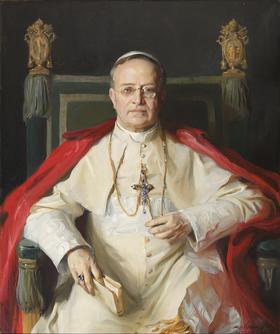
Pope Pius XI Ingravescentibus Malis, 14 (29 September 1937)
“Nevertheless, if men in our century, with its derisive pride, refuse the Holy Rosary, there is an innumerable multitude of holy men of every age and every condition who have always held it dear. They have recited it with great devotion, and in every moment they have used it as a powerful weapon to put the demons to flight, to preserve the integrity of life, to acquire virtue more easily, and in a word to attain real peace among men.”
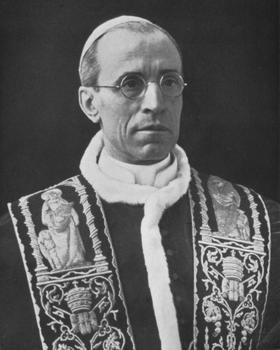
Pope Pius XII Ingruentium Malorum, 8 (15 September 1951)
“What prayers are better adapted and more beautiful than the Lord's prayer and the angelic salutation, which are the flowers with which this mystical crown is formed? With meditation of the Sacred Mysteries added to the vocal prayers, there emerges another very great advantage, so that all, even the most simple and least educated, have in this a prompt and easy way to nourish and preserve their own faith.”
A prayer of meditation on the Incarnation and the Redemption
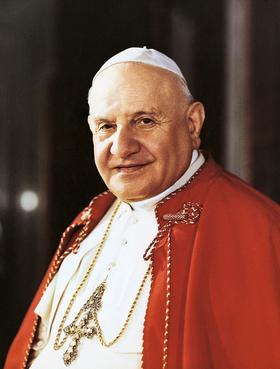
Pope St. John XXIII Grata Recordatio, 2 (26 September 1959)
“For the rosary is a very commendable form of prayer and meditation. In saying it we weave a mystic garland of Ave Maria's, Pater Noster's, and Gloria Patri's. And as we recite these vocal prayers, we meditate upon the principal mysteries of our religion; the Incarnation of Jesus Christ and the Redemption of the human race are proposed, one event after another, for our consideration.”
Pope St. John XXIII Grata Recordatio, 3 (26 September 1959)
“These pleasant memories of Our younger days have not faded or vanished as the years of Our life have passed. On the contrary, We want to declare in complete frankness and simplicity that the years have made Mary's rosary all the dearer to Us. We never fail to recite it each day in its entirety and We intend to recite it with particular devotion during the coming month.”
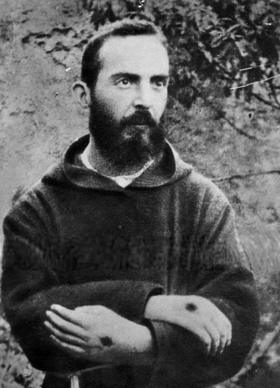
St. Pio of Pietrelcina: "Always say your Rosary and say it well"
St. Pio of Pietrelcina, as the Bishop Emeritus of Foggia reports his words Padre Pio and the Immaculate Heart of Mary (EWTN Library)
““Love our Lady, make others love her. Always say your Rosary and say it well. Satan always tries to destroy this prayer, but he will never succeed. It is the prayer of her who triumphs over everything and everyone.” And two days before he died, he repeated: “Love our Lady and make her loved. Recite the Rosary and recite it always. And recite it as much as you can.””
St. Pio of Pietrelcina: "His days were a Rosary lived"
Pope Benedict XVI Homily at San Giovanni Rotondo, 21 June 2009
“First of all prayer. Like all great men of God Padre Pio himself had become prayer, body and soul. His days were a Rosary lived, that is, a continuous meditation and assimilation of Christ's mysteries in spiritual union with the Virgin Mary.”
“Thus, for instance, the Gospel inspiration of the Rosary has appeared more clearly: the Rosary draws from the Gospel the presentation of the mysteries and its main formulas. As it moves from the angel's joyful greeting and the Virgin's pious assent, the Rosary takes its inspiration from the Gospel to suggest the attitude with which the faithful should recite it.”
“The Rosary considers in harmonious succession the principal salvific events accomplished in Christ, from His virginal conception and the mysteries of His childhood to the culminating moments of the Passover-the blessed passion and the glorious resurrection-and to the effects of this on the infant Church on the day of Pentecost, and on the Virgin Mary when at the end of her earthly life she was assumed body and soul into her heavenly home.”
“b) The Lord's Prayer, or Our Father, which by reason of its immense value is at the basis of Christian prayer and ennobles that prayer in its various expressions. c) The litany-like succession of the Hail Mary, which is made up of the angel's greeting to the Virgin (cf. Lk. 1;28), and of Elizabeth's greeting (cf. Lk. 1:42), followed by the ecclesial supplication, Holy Mary. The continued series of Hail Mary's is the special characteristic of the Rosary, and their number, in the full and typical number of one hundred and fifty, presents a certain analogy with the Psalter and is an element that goes back to the very origin of the exercise of piety.”
“The liturgical feasts dedicated to the Mother of God and Marian prayer, such as the rosary, an “epitome of the whole Gospel,” express this devotion to the Virgin Mary.”
“Hail Mary [or Rejoice, Mary]: the greeting of the angel Gabriel opens this prayer. It is God himself who, through his angel as intermediary, greets Mary. Our prayer dares to take up this greeting to Mary with the regard God had for the lowliness of his humble servant and to exult in the joy he finds in her. … After the angel's greeting, we make Elizabeth's greeting our own.”
“Holy Mary, Mother of God: With Elizabeth we marvel, “and why is this granted me, that the mother of my Lord should come to me?” Because she gives us Jesus, her son, Mary is Mother of God and our mother; we can entrust all our cares and petitions to her: she prays for us as she prayed for herself: “Let it be to me according to your word.””
Congregation for Divine Worship and the Discipline of the Sacraments Directory on Popular Piety and the Liturgy, 197
“The Rosary, or Psalter of the Blessed Virgin Mary, is one of the most excellent prayers to the Mother of God. Thus, “the Roman Pontiffs have repeatedly exhorted the faithful to the frequent recitation of this biblically inspired prayer which is centred on contemplation of the salvific events of Christ's life, and their close association with the his Virgin Mother. The value and efficacy of this prayer have often been attested by saintly Bishops and those advanced in holiness of life”.”
Pope St. John Paul II Rosarium Virginis Mariae, 2 (16 October 2002), quoting his own words of 29 October 1978
““The Rosary is my favourite prayer. A marvellous prayer! Marvellous in its simplicity and its depth. … Against the background of the words Ave Maria the principal events of the life of Jesus Christ pass before the eyes of the soul. They take shape in the complete series of the joyful, sorrowful and glorious mysteries, and they put us in living communion with Jesus through – we might say – the heart of his Mother.”
To recite the Rosary is to contemplate the face of Christ
Pope St. John Paul II Rosarium Virginis Mariae, 3 (16 October 2002)
“To recite the Rosary is nothing other than to contemplate with Mary the face of Christ. As a way of highlighting this invitation, prompted by the forthcoming 120th anniversary of the aforementioned Encyclical of Leo XIII, I desire that during the course of this year the Rosary should be especially emphasized and promoted in the various Christian communities. I therefore proclaim the year from October 2002 to October 2003 the Year of the Rosary.”
Pope St. John Paul II Rosarium Virginis Mariae, 8 (16 October 2002)
“It would be impossible to name all the many Saints who discovered in the Rosary a genuine path to growth in holiness. We need but mention Saint Louis Marie Grignion de Montfort, the author of an excellent work on the Rosary, … and, closer to ourselves, Padre Pio of Pietrelcina, whom I recently had the joy of canonizing. As a true apostle of the Rosary, Blessed Bartolo Longo had a special charism.”
Pope St. John Paul II Rosarium Virginis Mariae, 21 (16 October 2002)
“Moving on from the infancy and the hidden life in Nazareth to the public life of Jesus, our contemplation brings us to those mysteries which may be called in a special way “mysteries of light”. … In proposing to the Christian community five significant moments – “luminous” mysteries – during this phase of Christ's life, I think that the following can be fittingly singled out: (1) his Baptism in the Jordan, (2) his self-manifestation at the wedding of Cana, (3) his proclamation of the Kingdom of God, with his call to conversion, (4) his Transfiguration, and finally, (5) his institution of the Eucharist, as the sacramental expression of the Paschal Mystery.”
“Through the Rosary we allow ourselves to be guided by Mary, the model of faith, in meditating on the mysteries of Christ. Day after day she helps us to assimilate the Gospel, so that it gives a form to our life as a whole.”
Pope Francis Marian Vigil on the occasion of the Jubilee of Mercy, 8 October 2016
“The prayer of the rosary is, in many ways, the synthesis of the history of God's mercy, which becomes a history of salvation for all who let themselves be shaped by grace. The mysteries we have contemplated are concrete events by which God’s intervention on our behalf develops. Through prayer and meditation on the life of Jesus Christ, we see once more his merciful countenance, which he shows to everyone in all the many needs of life.”
“Let us join ourselves spiritually with those gathered at the Shrine in Pompeii for the Supplication to the Virgin of the Holy Rosary. In this month of October, as we contemplate with Mary the mysteries of Christ our Savior, let us deepen our prayer for peace”