Old Testament
Liturgy
Melchizedek brings out bread and wine
The Book of Genesis Genesis 14:18-20
“And Melchiz′edek king of Salem brought out bread and wine; he was priest of God Most High. And he blessed him and said,”
Start page / Liturgy and Prayer
At the Last Supper Jesus took bread and a cup, gave thanks, and told the apostles to do this in memory of him. The Church has done so ever since. This timeline follows the Mass in date order, from the upper room to the present, and marks the points where a prayer, a chant or a custom was added, changed, restored or fixed by law. The councils and popes quoted here also say what in the liturgy comes from Christ and cannot be changed, and what the Church may adapt.
At the Last Supper Jesus takes bread and a cup, gives thanks, and gives them to his disciples as his body and his blood.
“Now as they were eating, Jesus took bread, and blessed, and broke it, and gave it to the disciples and said, “Take, eat; this is my body.” And he took a cup, and when he had given thanks he gave it to them, saying, “Drink of it, all of you; for this is my blood of the covenant, which is poured out for many for the forgiveness of sins.”
JesusMatthew 26:26-28Read it in the source: Bible Gateway, RSV Catholic Edition
Every Mass since has been that supper kept at his command. Prayers, chants and customs have been added, changed and restored over the centuries, and this timeline marks where. At the center are still his words over the bread and the cup.
Drafted from primary sources. Every quotation is checked against the page it links to. Every entry on this page carries the mark "Liturgy", whoever wrote the words; the author is named with each quotation. The pilgrim Egeria and St. Bede are read on full-text libraries (ccel.org and fordham.edu), since the Catholic sites do not carry them. The 1903 letter of St. Pius X is quoted in Italian with our translation, since the Holy See does not publish it in English. Some witnesses often cited are left out because none of the approved sources carries a text that could be checked: the Apostolic Tradition ascribed to Hippolytus, the letter of Innocent I to Decentius, the 1905 decree on frequent Communion, the 1955 reform of Holy Week and the 1969 instruction on Communion in the hand.
A work in progress. The quotations below are not all the evidence on this matter. More are being added.
“And Melchiz′edek king of Salem brought out bread and wine; he was priest of God Most High. And he blessed him and said,”
“This day shall be for you a memorial day, and you shall keep it as a feast to the Lord; throughout your generations you shall observe it as an ordinance for ever.”
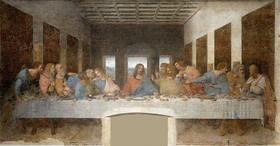
““I have earnestly desired to eat this passover with you before I suffer; … And he took bread, and when he had given thanks he broke it and gave it to them, saying, “This is my body which is given for you. Do this in remembrance of me.” And likewise the cup after supper, saying, “This cup which is poured out for you is the new covenant in my blood.”
“When he was at table with them, he took the bread and blessed, and broke it, and gave it to them. And their eyes were opened and they recognized him; and he vanished out of their sight. They said to each other, “Did not our hearts burn within us while he talked to us on the road, while he opened to us the scriptures?” … Then they told what had happened on the road, and how he was known to them in the breaking of the bread.”
“So those who received his word were baptized, and there were added that day about three thousand souls. And they devoted themselves to the apostles’ teaching and fellowship, to the breaking of bread and the prayers.”
“On the first day of the week, when we were gathered together to break bread, Paul talked with them, intending to depart on the morrow; and he prolonged his speech until midnight.”
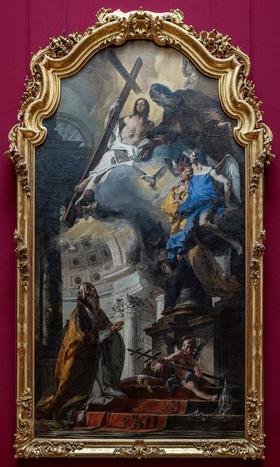
“These things therefore being manifest to us, and since we look into the depths of the divine knowledge, it behooves us to do all things in [their proper] order, which the Lord has commanded us to perform at stated times. He has enjoined offerings [to be presented] and service to be performed [to Him], and that not thoughtlessly or irregularly, but at the appointed times and hours.”
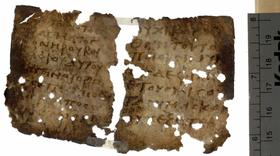
“Now concerning the Thanksgiving (Eucharist), thus give thanks. First, concerning the cup: We thank you, our Father, for the holy vine of David Your servant, which You made known to us through Jesus Your Servant; to You be the glory forever. And concerning the broken bread: We thank You, our Father, for the life and knowledge which You made known to us through Jesus Your Servant; to You be the glory forever. Even as this broken bread was scattered over the hills, and was gathered together and became one, so let Your Church be gathered together from the ends of the earth into Your kingdom”
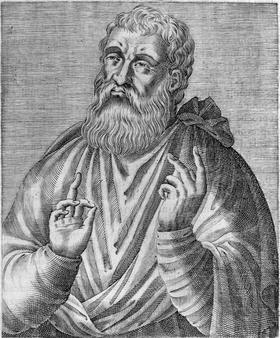
“Having ended the prayers, we salute one another with a kiss. There is then brought to the president of the brethren bread and a cup of wine mixed with water; and he taking them, gives praise and glory to the Father of the universe, through the name of the Son and of the Holy Ghost, and offers thanks at considerable length for our being counted worthy to receive these things at His hands. And when he has concluded the prayers and thanksgivings, all the people present express their assent by saying Amen.”
“And on the day called Sunday, all who live in cities or in the country gather together to one place, and the memoirs of the apostles or the writings of the prophets are read, as long as time permits; then, when the reader has ceased, the president verbally instructs, and exhorts to the imitation of these good things. Then we all rise together and pray, and, as we before said, when our prayer is ended, bread and wine and water are brought, and the president in like manner offers prayers and thanksgivings, according to his ability, and the people assent, saying Amen; and there is a distribution to each, and a participation of that over which thanks have been given, and to those who are absent a portion is sent by the deacons.”
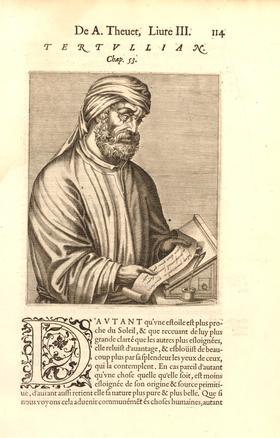
“As often as the anniversary comes round, we make offerings for the dead as birthday honours. We count fasting or kneeling in worship on the Lord's day to be unlawful. We rejoice in the same privilege also from Easter to Whitsunday. We feel pained should any wine or bread, even though our own, be cast upon the ground.”
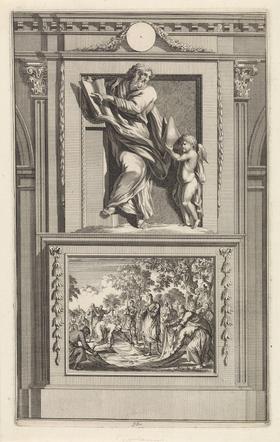
“For this reason also the priest, by way of preface before his prayer, prepares the minds of the brethren by saying, Lift up your hearts, that so upon the people's response, We lift them up unto the Lord, he may be reminded that he himself ought to think of nothing but the Lord.”
“For because Christ bore us all, in that He also bore our sins, we see that in the water is understood the people, but in the wine is showed the blood of Christ. But when the water is mingled in the cup with wine, the people is made one with Christ, and the assembly of believers is associated and conjoined with Him on whom it believes”
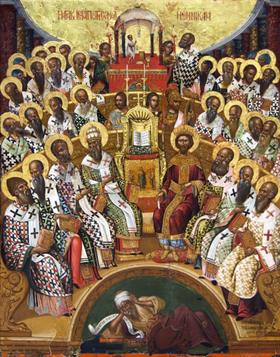
“Forasmuch as there are certain persons who kneel on the Lord's Day and in the days of Pentecost, therefore, to the intent that all things may be uniformly observed everywhere (in every parish), it seems good to the holy Synod that prayer be made to God standing.”
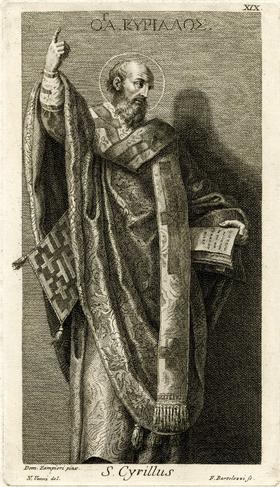
“You have seen then the Deacon who gives to the Priest water to wash, and to the Presbyters who stand round God's altar. He gave it not at all because of bodily defilement … Then the Deacon cries aloud, Receive ye one another; and let us kiss one another.”
“We make mention also of the Seraphim, whom Esaias in the Holy Spirit saw standing around the throne of God, and with two of their wings veiling their face, and with two their feet, while with two they did fly, crying Holy, Holy, Holy, is the Lord of Sabaoth. … Then having sanctified ourselves by these spiritual Hymns, we beseech the merciful God to send forth His Holy Spirit upon the gifts lying before Him; that He may make the Bread the Body of Christ, and the Wine the Blood of Christ”
“In approaching therefore, come not with your wrists extended, or your fingers spread; but make your left hand a throne for the right, as for that which is to receive a King. And having hollowed your palm, receive the Body of Christ, saying over it, Amen.”
“After the sermons of the Bishops, the prayer for the catechumens is to be made first by itself; and after the catechumens have gone out, the prayer for those who are under penance; and, after these have passed under the hand [of the Bishop] and departed, there should then be offered the three prayers of the faithful, the first to be said entirely in silence, the second and third aloud, and then the [kiss of] peace is to be given.”
“The grace of Almighty God, and the love of our Lord Jesus Christ, and the fellowship of the Holy Ghost, be with you all. And let all with one voice say: And with your spirit. The high priest: Lift up your mind. All the people: We lift it up unto the Lord. The high priest: Let us give thanks to the Lord. All the people: It is meet and right so to do.”
“And as the deacon pronounces each name the many little boys who are always standing by, answer with countless voices: Kyrie eleyson, or as we say Miserere Domine.”
“It is guarded thus because the custom is that the people, both faithful and catechumens, come one by one and, bowing down at the table, kiss the sacred wood and pass through.”
“At this time it was instituted that, after the manner of the Eastern Church, hymns and psalms should be sung, lest the people should pine away in the tediousness of sorrow; which custom, retained from then till now, is imitated by many, yea, by almost all of Your congregations throughout the rest of the world.”
“When I visit Rome, I fast on Saturday; when I am here, I do not fast. On the same principle, do you observe the custom prevailing in whatever Church you come to, if you desire neither to give offense by your conduct, nor to find cause of offense in another's.”
“…when any of the greater festivals has brought together a larger congregation than usual, and too great a crowd of the faithful has assembled for one church to hold them all at once, there should be no hesitation about repeating the oblation of the sacrifice: lest, if those only are admitted to this service who come first, those who flock in afterwards, should seem to be rejected”
“Further, we neither have said nor now say the Kyrie Eleison, as it is said by the Greeks: for among the Greeks all say it together; but with us it is said by the clerks, and responded to by the people; and as often as it is said, Christe Eleison is said also, which is not said at all among the Greeks.”
“But the Lord's prayer (orationem Dominicam) we say immediately after the prayer (mox post precem) for this reason, that it was the custom of the apostles to consecrate the host of oblation to (ad) that same prayer only. And it seemed to me very unsuitable that we should say over the oblation a prayer which a scholastic had composed, and should not say the very prayer which our Redeemer composed over His body and blood”
“But I approve of your selecting carefully anything you have found that may be more pleasing to Almighty God, whether in the Roman Church or that of Gaul, or in any Church whatever, and introducing in the Church of the Angli, which is as yet new in the faith, by a special institution, what you have been able to collect from many Churches. For we ought not to love things for places, but places for things.”
“And in the celebration of masses, he added three phrases full of great goodness and perfection: "And dispose our days in thy peace, and preserve us from eternal damnation, and rank us in the number of thy elect, through Christ our Lord."”
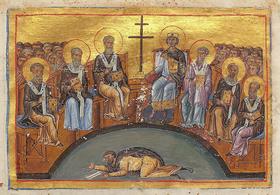
“Therefore we decree that in venerable churches consecrated without relics of the holy martyrs, the installation of relics should take place along with the usual prayers. And if in future any bishop is found out consecrating a church without relics, let him be deposed as someone who has flouted the ecclesiastical traditions.”
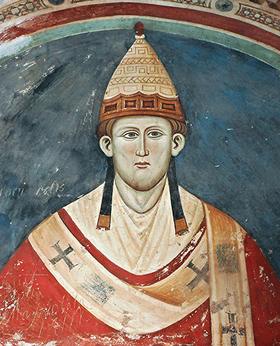
“Since in many places peoples of different languages live within the same city or diocese, having one faith but different rites and customs, we therefore strictly order bishops of such cities and dioceses to provide suitable men who will do the following in the various rites and languages : celebrate the divine services for them, administer the church’s sacraments, and instruct them by word and example.”
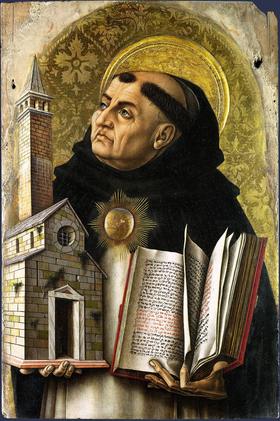
“…the celebration of this mystery is preceded by a certain preparation in order that we may perform worthily that which follows after. The first part of this preparation is Divine praise, and consists in the "Introit" … The second part contains a reference to our present misery, by reason of which we pray for mercy, saying: "Lord, have mercy on us," thrice for the Person of the Father, and "Christ, have mercy on us," thrice for the Person of the Son, and "Lord, have mercy on us," thrice for the Person of the Holy Ghost”
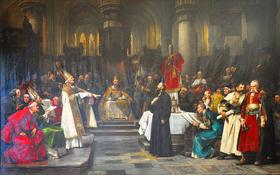
“…this sacrament was received by the faithful under both kinds in the early church, nevertheless later it was received under both kinds only by those confecting it, and by the laity only under the form of bread. For it should be very firmly believed, and in no way doubted, that the whole body and blood of Christ are truly contained under both the form of bread and the form of wine.”
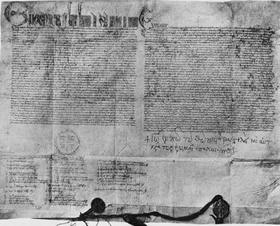
“Also, the body of Christ is truly confected in both unleavened and leavened wheat bread, and priests should confect the body of Christ in either, that is, each priest according to the custom of his western or eastern church.”
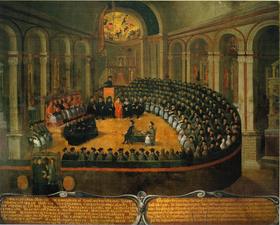
“The holy Synod declares, moreover, that very piously and religiously was this custom introduced into the Church, that this sublime and venerable sacrament be, with special veneration and solemnity, celebrated, every year, on a certain day, and that a festival; and that it be borne reverently and with honour in processions through the streets, and public places.”
“It furthermore declares, that this power has ever been in the Church, that, in the dispensation of the sacraments, their substance being untouched, it may ordain,–or change, what things soever it may judge most expedient, for the profit of those who receive, or for the veneration of the said sacraments, according to the difference of circumstances, times, and places.”
“…the Catholic Church instituted, many years ago, the sacred Canon, so pure from every error, that nothing is contained therein which does not in the highest degree savour of a certain holiness and piety, and raise up unto God the minds of those that offer. For it is composed, out of the very words of the Lord, the traditions of the apostles, and the pious institutions also of holy pontiffs.”
“Although the mass contains great instruction for the faithful people, nevertheless, it has not seemed expedient to the Fathers, that it should be every where celebrated in the vulgar tongue. Wherefore, the ancient usage of each church, and the rite approved of by the holy Roman Church, the mother and mistress of all churches, being in each place retained; … the holy Synod charges pastors, and all who have the cure of souls, that they frequently, during the celebration of mass, expound either by themselves, or others, some portion of those things which are read at mass”
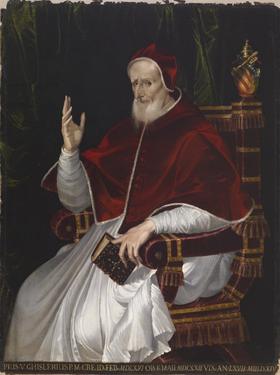
“Besides this, these men consulted the works of ancient and approved authors concerning the same sacred rites; and thus they have restored the Missal itself to the original form and rite of the holy Fathers.”
“This new rite alone is to be used unless approval of the practice of saying Mass differently was given at the very time of the institution and confirmation of the church by Apostolic See at least 200 years ago, or unless there has prevailed a custom of a similar kind which has been continuously followed for a period of not less than 200 years, in which most cases We in no wise rescind their above-mentioned prerogative or custom.”
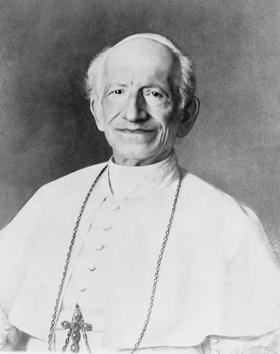
“In point of fact there is more importance than can be believed in preserving the Eastern rites. Their antiquity is august, it is what gives nobility to the different rites, it is a brilliant jewel for the whole Church, it confirms the God-given unity of the Catholic Faith.”
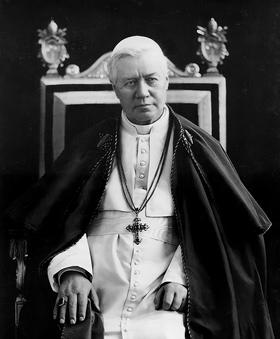
“Since it is Our most ardent desire that the true Christian spirit flourish again in every way and be kept alive in all the faithful, it is necessary to provide before all else for the holiness and dignity of the temple, where the faithful gather to draw that spirit from its first and indispensable source, which is active participation in the most holy mysteries and in the public and solemn prayer of the Church.”
Our translation. The words as written, in Italian:
“Essendo, infatti, Nostro vivissimo desiderio che il vero spirito cristiano rifiorisca per ogni modo e si mantenga nei fedeli tutti, è necessario provvedere prima di ogni altra cosa alla santità e dignità del tempio, dove appunto i fedeli si radunano per attingere tale spirito dalla sua prima ed indispensabile fonte, che è la partecipazione attiva ai sacrosanti misteri e alla preghiera pubblica e solenne della Chiesa.”
“The age of discretion, both for Confession and for Holy Communion, is the time when a child begins to reason, that is about the seventh year, more or less. From that time on begins the obligation of fulfilling the precept of both Confession and Communion.”
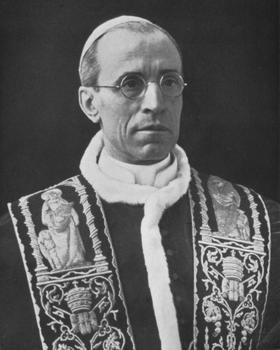
“The sacred liturgy does, in fact, include divine as well as human elements. The former, instituted as they have been by God, cannot be changed in any way by men. But the human components admit of various modifications, as the needs of the age, circumstance and the good of souls may require, and as the ecclesiastical hierarchy, under guidance of the Holy Spirit, may have authorized. This will explain the marvelous variety of Eastern and Western rites.”
“The use of the Latin language, customary in a considerable portion of the Church, is a manifest and beautiful sign of unity, as well as an effective antidote for any corruption of doctrinal truth. In spite of this, the use of the mother tongue in connection with several of the rites may be of much advantage to the people. But the Apostolic See alone is empowered to grant this permission.”
“If the circumstance calls for it as necessary, We grant to the local Ordinaries the right to permit the celebration of Mass in the evening, as we said, but in such wise that the Mass shall not begin before four o’clock in the afternoon”
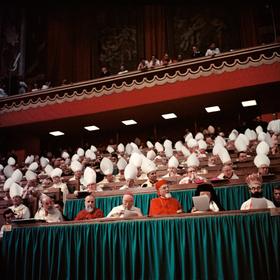
“Lastly, in faithful obedience to tradition, the sacred Council declares that holy Mother Church holds all lawfully acknowledged rites to be of equal right and dignity; that she wishes to preserve them in the future and to foster them in every way.”
“For the liturgy is made up of immutable elements divinely instituted, and of elements subject to change. These not only may but ought to be changed with the passage of time if they have suffered from the intrusion of anything out of harmony with the inner nature of the liturgy or have become unsuited to it.”
“Finally, there must be no innovations unless the good of the Church genuinely and certainly requires them; and care must be taken that any new forms adopted should in some way grow organically from forms already existing.”
“Particular law remaining in force, the use of the Latin language is to be preserved in the Latin rites. 2. But since the use of the mother tongue, whether in the Mass, the administration of the sacraments, or other parts of the liturgy, frequently may be of great advantage to the people, the limits of its employment may be extended. This will apply in the first place to the readings and directives, and to some of the prayers and chants”
“For this purpose the rites are to be simplified, due care being taken to preserve their substance; elements which, with the passage of time, came to be duplicated, or were added with but little advantage, are now to be discarded; other elements which have suffered injury through accidents of history are now to be restored to the vigor which they had in the days of the holy Fathers, as may seem useful or necessary.”
“The dogmatic principles which were laid down by the Council of Trent remaining intact, communion under both kinds may be granted when the bishops think fit, not only to clerics and religious, but also to the laity, in cases to be determined by the Apostolic See”
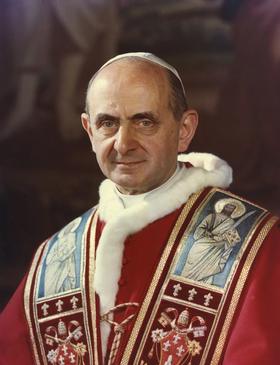
“The major innovation concerns the Eucharistic Prayer. If in the Roman Rite, the first part of this Prayer, the Preface, has preserved diverse formulation in the course of the centuries, the second part, on the contrary, called "Canon of the Action," took on an unchangeable form during the fourth and fifth centuries; conversely, the Eastern liturgies allowed for this variety in their anaphoras. … we have decided to add three new Canons to this Prayer.”
“…the readings for Sunday are divided into a cycle of three years. In addition, for Sunday and feasts, the readings of the Epistle and Gospel are preceded by a reading from the Old Testament or, during Paschaltide, from the Acts of the Apostles.”
“As early as the second century we have the witness of St. Justin Martyr for the basic lines of the order of the Eucharistic celebration. They have stayed the same until our own day for all the great liturgical families.”
“For this reason no sacramental rite may be modified or manipulated at the will of the minister or the community. Even the supreme authority in the Church may not change the liturgy arbitrarily, but only in the obedience of faith and with religious respect for the mystery of the liturgy.”
“the Church sees in the gesture of the king-priest Melchizedek, who "brought out bread and wine," a prefiguring of her own offering.”
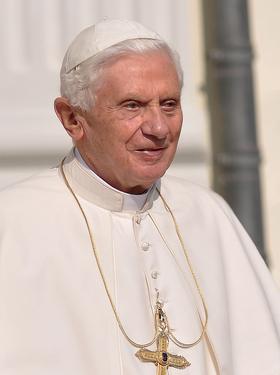
““It was towards this same goal that succeeding Roman Pontiffs directed their energies during the subsequent centuries in order to ensure that the rites and liturgical books were brought up to date and, when necessary, clarified. From the beginning of this century they undertook a more general reform.” Such was the case with our predecessors Clement VIII, Urban VIII, Saint Pius X, Benedict XV, Pius XII and Blessed John XXIII.”
“There is no contradiction between the two editions of the Roman Missal. In the history of the liturgy there is growth and progress, but no rupture. What earlier generations held as sacred, remains sacred and great for us too, and it cannot be all of a sudden entirely forbidden or even considered harmful.”
“Without excluding liturgical celebrations according to the Roman Rite, the Ordinariate has the faculty to celebrate the Holy Eucharist and the other Sacraments, the Liturgy of the Hours and other liturgical celebrations according to the liturgical books proper to the Anglican tradition, which have been approved by the Holy See, so as to maintain the liturgical, spiritual and pastoral traditions of the Anglican Communion within the Catholic Church, as a precious gift nourishing the faith of the members of the Ordinariate and as a treasure to be shared.”
“For this reason Blessed Pope John XXIII, in the days of the Most Holy Second Ecumenical Council of the Vatican, decreed that Saint Joseph’s name be added to the ancient Roman Canon. In response to petitions received from places throughout the world, the Supreme Pontiff Benedict XVI deemed them worthy of implementation and graciously approved them. The Supreme Pontiff Francis likewise has recently confirmed them.”
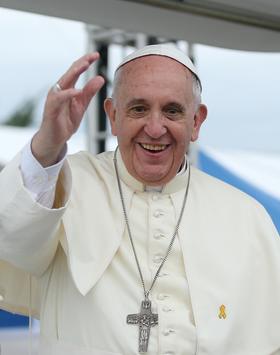
“The great principle, established by the Second Vatican Ecumenical Council, according to which liturgical prayer be accommodated to the comprehension of the people so that it might be understood, required the weighty task of introducing the vernacular language into the liturgy and of preparing and approving the versions of the liturgical books, a charge that was entrusted to the Bishops.”
“The liturgical books promulgated by Saint Paul VI and Saint John Paul II, in conformity with the decrees of Vatican Council II, are the unique expression of the lex orandi of the Roman Rite.”
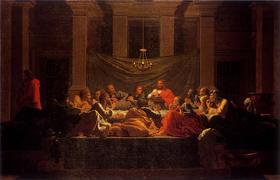 The EucharistThe Eucharist is the sacrament in which the Church receives the body and blood of Christ. This timeline follows the Eucharist as a sacrament received: what Christ gave at the Last Supper, who may come to Communion and how they should prepare, Communion as the bond of the Church, Communion for the dying, and how often the faithful received. It shows where the practice changed, for the age of first Communion, the cup and the frequency of Communion, and what the Church says has stayed the same.The Real Presence“The Eucharist is only a symbol; it is not truly the Body and Blood of Jesus Christ.”
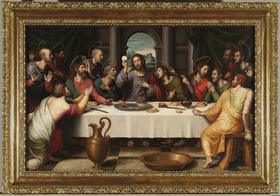 Transubstantiation“After the blessing Jesus still calls the cup "the fruit of the vine," and Paul still calls the bread "bread." So nothing changed. Transubstantiation is a medieval word for a medieval idea.”
 The Mass as sacrifice“Catholics teach that the Mass is a sacrifice offered again and again for the forgiveness of sins. Hebrews says Christ offered himself once for all, so there is no sacrifice left to offer.”Adoring the Eucharist“Catholics bow down to a piece of bread and worship it. The Bible calls that idolatry.”