Old Testament
Scripture
The Ten Commandments Exodus 20:8-10
“Remember the sabbath day, to keep it holy. Six days you shall labor, and do all your work; but the seventh day is a sabbath to the Lord your God;”
Start page / Objections / The Eucharist
Verses cited for this objection: Rom. 14:5, Col. 2:16-17, Eph. 2:8-9
Short answer
The Church does not teach that everyone who misses Mass goes to hell. She teaches that Catholics are bound to take part in Mass on Sundays, and that to stay away deliberately, without a serious reason such as illness or the care of infants, is a grave sin. A sin is mortal only when it is done with full knowledge and deliberate consent, and it leads to hell only if a person persists in it to the end. Christians have gathered on the Lord's day since the time of the apostles, because Jesus told them to do this in remembrance of him.
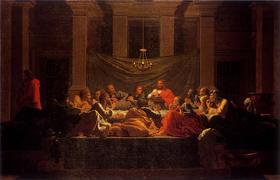
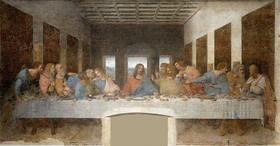
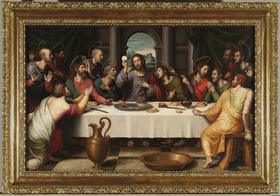
At the Last Supper Jesus gives the apostles his body and blood and tells them to do this in remembrance of him.
“And he took bread, and when he had given thanks he broke it and gave it to them, saying, “This is my body which is given for you. Do this in remembrance of me.” And likewise the cup after supper, saying, “This cup which is poured out for you is the new covenant in my blood.”
JesusLuke 22:19-20Read it in the source: Bible Gateway, RSV Catholic Edition
Sunday Mass is the Church doing what Jesus asked on the day he rose. The duty to be there is a duty to come to him. The Church calls it grave to stay away on purpose because of who is met there, and she asks his mercy for everyone.
Drafted from primary sources. Every quotation is checked against the page it links to.
A work in progress. The quotations below are not all the evidence on this matter. More are being added.
“Remember the sabbath day, to keep it holy. Six days you shall labor, and do all your work; but the seventh day is a sabbath to the Lord your God;”
“So Jesus said to them, “Truly, truly, I say to you, unless you eat the flesh of the Son of man and drink his blood, you have no life in you; he who eats my flesh and drinks my blood has eternal life, and I will raise him up at the last day.”
“and let us consider how to stir up one another to love and good works, not neglecting to meet together, as is the habit of some, but encouraging one another, and all the more as you see the Day drawing near.”
“Let no man deceive himself: if any one be not within the altar, he is deprived of the bread of God. … He, therefore, that does not assemble with the Church, has even by this manifested his pride, and condemned himself.”
“If, therefore, those who were brought up in the ancient order of things have come to the possession of a new hope, no longer observing the Sabbath, but living in the observance of the Lord's Day, on which also our life has sprung up again by Him and by His death”
“I remember that in a former council our brethren decreed that if any layman did not attend divine service in a city in which he was staying three Sundays, that is, for three weeks, he should be deprived of communion.”
“Be not careless of yourselves, neither deprive your Saviour of His own members, neither divide His body nor disperse His members, neither prefer the occasions of this life to the word of God; … And on the day of our Lord's resurrection, which is the Lord's day, meet more diligently, sending praise to God that made the universe by Jesus, and sent Him to us, and condescended to let Him suffer, and raised Him from the dead. Otherwise what apology will he make to God who does not assemble on that day to hear the saving word concerning the resurrection”
“If any bishop, or presbyter, or deacon, or any of those who are enumerated in the list of the clergy, or a layman, has no very grave necessity nor difficult business so as to keep him from church for a very long time, but being in town does not go to church on three consecutive Sundays — three weeks — if he is a cleric let him be deposed, but if a layman let him be cut off.”
“In the New Law the observance of the Lord's day took the place of the observance of the Sabbath, not by virtue of the precept but by the institution of the Church and the custom of Christian people. … And again in the New Law, dispensation is more easily granted than in the Old”
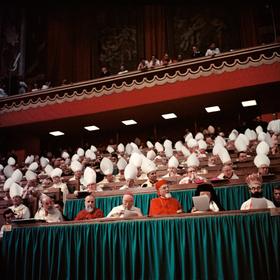
“By a tradition handed down from the apostles which took its origin from the very day of Christ's resurrection, the Church celebrates the paschal mystery every eighth day; with good reason this, then, bears the name of the Lord's day or Sunday. For on this day Christ's faithful are bound to come together into one place”
“If participation in the eucharistic celebration becomes impossible because of the absence of a sacred minister or for another grave cause, it is strongly recommended that the faithful take part in a liturgy of the word if such a liturgy is celebrated in a parish church or other sacred place according to the prescripts of the diocesan bishop or that they devote themselves to prayer for a suitable time alone, as a family, or, as the occasion permits, in groups of families.”
“Sunday is expressly distinguished from the sabbath which it follows chronologically every week; for Christians its ceremonial observance replaces that of the sabbath. In Christ's Passover, Sunday fulfills the spiritual truth of the Jewish sabbath and announces man's eternal rest in God. For worship under the Law prepared for the mystery of Christ, and what was done there prefigured some aspects of Christ:”
“The Sunday Eucharist is the foundation and confirmation of all Christian practice. For this reason the faithful are obliged to participate in the Eucharist on days of obligation, unless excused for a serious reason (for example, illness, the care of infants) or dispensed by their own pastor. Those who deliberately fail in this obligation commit a grave sin.”
“For a sin to be mortal, three conditions must together be met: "Mortal sin is sin whose object is grave matter and which is also committed with full knowledge and deliberate consent."”
“God predestines no one to go to hell; for this, a willful turning away from God (a mortal sin) is necessary, and persistence in it until the end. In the Eucharistic liturgy and in the daily prayers of her faithful, the Church implores the mercy of God, who does not want "any to perish, but all to come to repentance"”
“When, during the persecution of Diocletian, their assemblies were banned with the greatest severity, many were courageous enough to defy the imperial decree and accepted death rather than miss the Sunday Eucharist. This was the case of the martyrs of Abitina, in Proconsular Africa, who replied to their accusers: "Without fear of any kind we have celebrated the Lord's Supper, because it cannot be missed; that is our law"; "We cannot live without the Lord's Supper".”
“It was only later, faced with the half-heartedness or negligence of some, that the Church had to make explicit the duty to attend Sunday Mass: more often than not, this was done in the form of exhortation, but at times the Church had to resort to specific canonical precepts. … The Code of Canon Law of 1917 for the first time gathered this tradition into a universal law. … This legislation has normally been understood as entailing a grave obligation”
 The EucharistThe Eucharist is the sacrament in which the Church receives the body and blood of Christ. This timeline follows the Eucharist as a sacrament received: what Christ gave at the Last Supper, who may come to Communion and how they should prepare, Communion as the bond of the Church, Communion for the dying, and how often the faithful received. It shows where the practice changed, for the age of first Communion, the cup and the frequency of Communion, and what the Church says has stayed the same.The Mass through the centuriesAt the Last Supper Jesus took bread and a cup, gave thanks, and told the apostles to do this in memory of him. The Church has done so ever since. This timeline follows the Mass in date order, from the upper room to the present, and marks the points where a prayer, a chant or a custom was added, changed, restored or fixed by law. The councils and popes quoted here also say what in the liturgy comes from Christ and cannot be changed, and what the Church may adapt.
 The Real Presence“The Eucharist is only a symbol; it is not truly the Body and Blood of Jesus Christ.”
 The Mass as sacrifice“Catholics teach that the Mass is a sacrifice offered again and again for the forgiveness of sins. Hebrews says Christ offered himself once for all, so there is no sacrifice left to offer.”
 Transubstantiation“After the blessing Jesus still calls the cup "the fruit of the vine," and Paul still calls the bread "bread." So nothing changed. Transubstantiation is a medieval word for a medieval idea.”
 Eternal security“Catholics say a saved person can lose his salvation. Jesus says no one can snatch his sheep out of his hand.”