c. 100
Church Father
The Didache Didache, ch. 14
“But every Lord's day gather yourselves together, and break bread, and give thanksgiving after having confessed your transgressions, that your sacrifice may be pure.”
Start page / The ages of the Church
The Early Church, 100 to 325: all 224 quotations on this site dated to it, from every timeline and every kind of source, in date order.
This age runs from the death of the last apostles to the Council of Nicaea. For most of it Christianity was against the law in the Roman empire, and Christians were at times put to death. Its writers are the nearest in time to the apostles. What the writers of the second and third centuries teach cannot have begun with Constantine or in the Middle Ages.
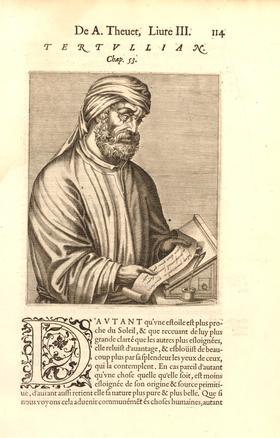
About the year 200, Tertullian challenges new teachers to show that their churches go back to the apostles.
“Let them produce the original records of their churches; let them unfold the roll of their bishops, running down in due succession from the beginning in such a manner that [that first bishop of theirs] bishop shall be able to show for his ordainer and predecessor some one of the apostles or of apostolic men … For this is the manner in which the apostolic churches transmit their registers: as the church of Smyrna, which records that Polycarp was placed therein by John; as also the church of Rome, which makes Clement to have been ordained in like manner by Peter.”
TertullianThe Prescription Against Heretics, ch. 32, c. 200Read it in the source: New Advent
So this is the age to read first when a teaching is said to have been added later.
A work in progress. The quotations below are not all the evidence on this matter. More are being added.
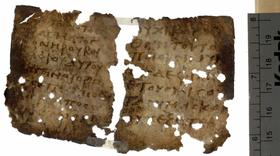
“But every Lord's day gather yourselves together, and break bread, and give thanksgiving after having confessed your transgressions, that your sacrifice may be pure. … For this is that which was spoken by the Lord: In every place and time offer to me a pure sacrifice; for I am a great King, says the Lord, and my name is wonderful among the nations.”
“But every Lord's day gather yourselves together, and break bread, and give thanksgiving after having confessed your transgressions, that your sacrifice may be pure.”
“In the church you shall acknowledge your transgressions, and you shall not come near for your prayer with an evil conscience.”
“But often shall you come together, seeking the things which are befitting to your souls: for the whole time of your faith will not profit you, if you be not made perfect in the last time.”
“And concerning baptism, baptize this way: Having first said all these things, baptize into the name of the Father, and of the Son, and of the Holy Spirit, … in living water. But if you have not living water, baptize into other water; and if you can not in cold, in warm. But if you have not either, pour out water thrice upon the head into the name of Father and Son and Holy Spirit.”
“you shall not murder a child by abortion nor kill that which is begotten.”
“For what benefit did the Athenians obtain by putting Socrates to death, seeing that they received as retribution for it famine and pestilence? Or the people of Samos by the burning of Pythagoras, seeing that in one hour the whole of their country was covered with sand? Or the Jews by the murder of their Wise King, seeing that from that very time their kingdom was driven away from them? … Nay, Socrates did not die, because of Plato; nor yet Pythagoras, because of the statue of Hera; nor yet the Wise King, because of the new laws which he enacted.”
Read it in the source: New Advent
See it on the timeline: The life of Jesus Christ: the record inside and outside the Bible
“Now concerning the Thanksgiving (Eucharist), thus give thanks. First, concerning the cup: We thank you, our Father, for the holy vine of David Your servant, which You made known to us through Jesus Your Servant; to You be the glory forever. And concerning the broken bread: We thank You, our Father, for the life and knowledge which You made known to us through Jesus Your Servant; to You be the glory forever. Even as this broken bread was scattered over the hills, and was gathered together and became one, so let Your Church be gathered together from the ends of the earth into Your kingdom”
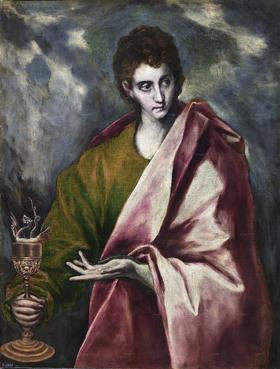
“Devotion to the Apostle John spread from the city of Ephesus where, according to an ancient tradition, he worked for many years and died in the end at an extraordinarily advanced age, during the reign of the Emperor Trajan.”
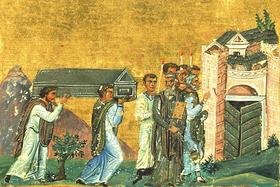
“They abstain from the Eucharist and from prayer, because they confess not the Eucharist to be the flesh of our Saviour Jesus Christ, which suffered for our sins, and which the Father, of His goodness, raised up again.”
“Let no man deceive himself: if any one be not within the altar, he is deprived of the bread of God. … He, therefore, that does not assemble with the Church, has even by this manifested his pride, and condemned himself.”
“For we ought to receive every one whom the Master of the house sends to be over His household, [Matthew 24:45] as we would do Him that sent him. It is manifest, therefore, that we should look upon the bishop even as we would upon the Lord Himself.”
“…the Church which is beloved and enlightened by the will of Him that wills all things which are according to the love of Jesus Christ our God, which also presides in the place of the region of the Romans, worthy of God, worthy of honour, … and which presides over love, is named from Christ, and from the Father”
“Wherever the bishop shall appear, there let the multitude [of the people] also be; even as, wherever Jesus Christ is, there is the Catholic Church.”
“Only request in my behalf both inward and outward strength, that I may not only speak, but [truly] will; and that I may not merely be called a Christian, but really be found to be one. … For our God, Jesus Christ, now that He is with the Father, is all the more revealed [in His glory].”
“For as many as are of God and of Jesus Christ are also with the bishop. And as many as shall, in the exercise of repentance, return into the unity of the Church, these, too, shall belong to God, that they may live according to Jesus Christ. Do not err, my brethren. If any man follows him that makes a schism in the Church, he shall not inherit the kingdom of God.”
“In like manner, let all reverence the deacons as an appointment of Jesus Christ, and the bishop as Jesus Christ, who is the Son of the Father, and the presbyters as the sanhedrim of God, and assembly of the apostles. Apart from these, there is no Church.”
“And as many as shall, in the exercise of repentance, return into the unity of the Church, these, too, shall belong to God, that they may live according to Jesus Christ. Do not err, my brethren. If any man follows him that makes a schism in the Church, he shall not inherit the kingdom of God.”
“In like manner, let all reverence the deacons as an appointment of Jesus Christ, and the bishop as Jesus Christ, who is the Son of the Father, and the presbyters as the sanhedrim of God, and assembly of the apostles. Apart from these, there is no Church.”
“Let no man do anything connected with the Church without the bishop. Let that be deemed a proper Eucharist, which is [administered] either by the bishop, or by one to whom he has entrusted it.”
“It is well to reverence both God and the bishop. He who honours the bishop has been honoured by God”
“Stop your ears, therefore, when any one speaks to you at variance with Jesus Christ, who was descended from David, and was also of Mary; who was truly born, and ate and drank. He was truly persecuted under Pontius Pilate; He was truly crucified, and [truly] died, in the sight of beings in heaven, and on earth, and under the earth. He was also truly raised from the dead,”
Read it in the source: New Advent
See it on the timeline: The life of Jesus Christ: the record inside and outside the Bible
“I do not, as Peter and Paul, issue commandments unto you. They were apostles; I am but a condemned man”
“so that you obey the bishop and the presbytery with an undivided mind, breaking one and the same bread, which is the medicine of immortality, and the antidote to prevent us from dying, but [which causes] that we should live for ever in Jesus Christ.”
“I exhort you to study to do all things with a divine harmony, while your bishop presides in the place of God, and your presbyters in the place of the assembly of the apostles, along with your deacons, who are most dear to me, and are entrusted with the ministry of Jesus Christ”
“But it becomes both men and women who marry, to form their union with the approval of the bishop, that their marriage may be according to God, and not after their own lust.”
“…the above-mentioned Symeon, son of Clopas, an uncle of the Lord, was informed against by the heretics, and was himself in like manner accused for the same cause before the governor Atticus. And after being tortured for many days he suffered martyrdom, and all, including even the proconsul, marveled that, at the age of one hundred and twenty years, he could endure so much. And orders were given that he should be crucified.”
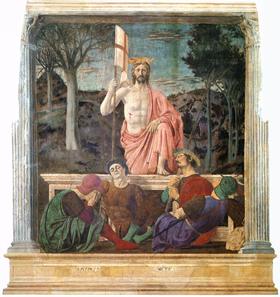
“For I know that after His resurrection also He was still possessed of flesh, and I believe that He is so now. When, for instance, He came to those who were with Peter, He said to them, Lay hold, handle Me, and see that I am not an incorporeal spirit. And immediately they touched Him, and believed, being convinced both by His flesh and spirit. For this cause also they despised death, and were found its conquerors. And after his resurrection He ate and drank with them, as being possessed of flesh, although spiritually He was united to the Father.”
“For if we still live according to the Jewish law, we acknowledge that we have not received grace. For the divinest prophets lived according to Christ Jesus. On this account also they were persecuted, being inspired by His grace to fully convince the unbelieving that there is one God, who has manifested Himself by Jesus Christ His Son, who is His eternal Word, not proceeding forth from silence, and who in all things pleased Him that sent Him.”
“Take heed, then, to have but one Eucharist. For there is one flesh of our Lord Jesus Christ, and one cup to [show forth ] the unity of His blood; one altar; as there is one bishop, along with the presbytery and deacons, my fellow-servants”
“If, therefore, those who were brought up in the ancient order of things have come to the possession of a new hope, no longer observing the Sabbath, but living in the observance of the Lord's Day, on which also our life has sprung up again by Him and by His death”
“I write to the Churches, and impress on them all, that I shall willingly die for God, unless you hinder me. I beseech of you not to show an unseasonable good-will towards me. Allow me to become food for the wild beasts, through whose instrumentality it will be granted me to attain to God. I am the wheat of God, and let me be ground by the teeth of the wild beasts, that I may be found the pure bread of Christ.”
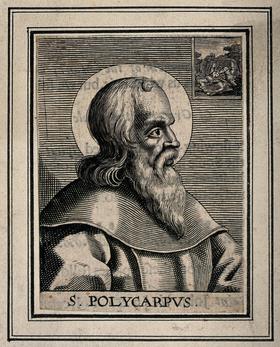
“…knowing that by grace you are saved, not of works, … but by the will of God through Jesus Christ.”
“They asserted, however, that the sum and substance of their fault or error had been that they were accustomed to meet on a fixed day before dawn and sing responsively a hymn to Christ as to a god, and to bind themselves by oath, not to some crime, but not to commit fraud, theft, or adultery, not falsify their trust, nor to refuse to return a trust when called upon to do so.”
Read it in the source: Fordham Sourcebook
See it on the timeline: The life of Jesus Christ: the record inside and outside the Bible
“Consequently, to get rid of the report, Nero fastened the guilt and inflicted the most exquisite tortures on a class hated for their abominations, called Christians by the populace. Christus, from whom the name had its origin, suffered the extreme penalty during the reign of Tiberius at the hands of one of our procurators, Pontius Pilatus, and a most mischievous superstition, thus checked for the moment, again broke out not only in Judaea, the first source of the evil, but even in Rome,”
Read it in the source: Fordham Sourcebook
See it on the timeline: The life of Jesus Christ: the record inside and outside the Bible
“When you can do good, defer it not, because alms delivers from death.”
“For it is well that they should be cut off from the lusts that are in the world, since every lust wars against the spirit; [1 Peter 2:11] and neither fornicators, nor effeminate, nor abusers of themselves with mankind, shall inherit the kingdom of God”
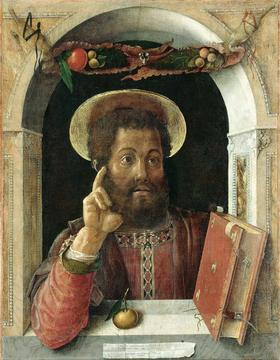
“This also the presbyter said: Mark, having become the interpreter of Peter, wrote down accurately, though not in order, whatsoever he remembered of the things said or done by Christ. For he neither heard the Lord nor followed him, but afterward, as I said, he followed Peter, who adapted his teaching to the needs of his hearers, but with no intention of giving a connected account of the Lord's discourses, so that Mark committed no error while he thus wrote some things as he remembered them.”
Read it in the source: New Advent
See it on the timeline: The life of Jesus Christ: the record inside and outside the Bible
“Since the Jews constantly made disturbances at the instigation of Chrestus … he expelled them from Rome.”
Read it in the source: Fordham Sourcebook
See it on the timeline: The life of Jesus Christ: the record inside and outside the Bible
“If, then, any one came, who had been a follower of the elders, I questioned him in regard to the words of the elders — what Andrew or what Peter said, or what was said by Philip, or by Thomas, or by James, or by John, or by Matthew, or by any other of the disciples of the Lord … For I did not think that what was to be gotten from the books would profit me as much as what came from the living and abiding voice.”
“But the works of our Saviour were always present, for they were genuine:— those that were healed, and those that were raised from the dead, who were seen not only when they were healed and when they were raised, but were also always present; and not merely while the Saviour was on earth, but also after his death, they were alive for quite a while, so that some of them lived even to our day.”
Read it in the source: New Advent
See it on the timeline: The life of Jesus Christ: the record inside and outside the Bible
“But the works of our Saviour were always present, for they were genuine:— those that were healed, and those that were raised from the dead, who were seen not only when they were healed and when they were raised, but were also always present; and not merely while the Saviour was on earth, but also after his death, they were alive for quite a while, so that some of them lived even to our day.”
“They were obliged, he answered, to ascend through water in order that they might be made alive; for, unless they laid aside the deadness of their life, they could not in any other way enter into the kingdom of God. … For, he continued, before a man bears the name of the Son of God he is dead; but when he receives the seal he lays aside his deadness, and obtains life. The seal, then, is the water: they descend into the water dead, and they arise alive.”
“For to those who have been called before these days, the Lord has set repentance. For the Lord, knowing the heart, and foreknowing all things, knew the weakness of men and the manifold wiles of the devil … if any one is tempted by the devil, and sins after that great and holy calling in which the Lord has called His people to everlasting life, he has opportunity to repent but once. But if he should sin frequently after this, and then repent, to such a man his repentance will be of no avail”
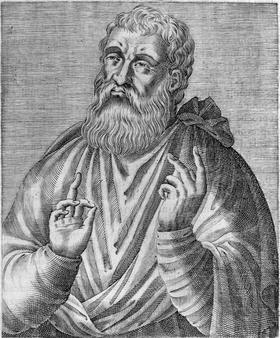
“For Eve, who was a virgin and undefiled, having conceived the word of the serpent, brought forth disobedience and death. But the Virgin Mary received faith and joy, when the angel Gabriel announced the good tidings to her.”
“For not as common bread and common drink do we receive these; but in like manner as Jesus Christ our Saviour, having been made flesh by the Word of God, had both flesh and blood for our salvation, so likewise have we been taught that the food which is blessed by the prayer of His word, and from which our blood and flesh by transmutation are nourished, is the flesh and blood of that Jesus who was made flesh.”
“He then speaks of those Gentiles, namely us, who in every place offer sacrifices to Him, i.e., the bread of the Eucharist, and also the cup of the Eucharist, affirming both that we glorify His name…”
“But when you hear the utterances of the prophets spoken as it were personally, you must not suppose that they are spoken by the inspired themselves, but by the Divine Word who moves them. For sometimes He declares things that are to come to pass, in the manner of one who foretells the future; sometimes He speaks as from the person of God the Lord and Father of all; sometimes as from the person of Christ”
“…this most admirable Polycarp was one, having in our own times been an apostolic and prophetic teacher, and bishop of the Catholic Church which is in Smyrna.”
“And let those who are not found living as He taught, be understood to be no Christians, even though they profess with the lip the precepts of Christ; for not those who make profession, but those who do the works, shall be saved, according to His word: Not every one who says to Me, Lord, Lord, shall enter into the kingdom of heaven, but he that does the will of My Father which is in heaven.”
“Then, the proconsul urging him, and saying, Swear, and I will set you at liberty, reproach Christ; Polycarp declared, Eighty and six years have I served Him, and He never did me any injury: how then can I blaspheme my King and my Saviour?”
“…bread and wine and water are brought, and the president in like manner offers prayers and thanksgivings, according to his ability, and the people assent, saying Amen; and there is a distribution to each, and a participation of that over which thanks have been given, and to those who are absent a portion is sent by the deacons.”
“…the whole multitude both of the heathen and Jews, who dwelt at Smyrna, cried out with uncontrollable fury, and in a loud voice, This is the teacher of Asia, the father of the Christians, and the overthrower of our gods”
“Then they are brought by us where there is water, and are regenerated in the same manner in which we were ourselves regenerated. For, in the name of God, the Father and Lord of the universe, and of our Saviour Jesus Christ, and of the Holy Spirit, they then receive the washing with water. For Christ also said, Unless you be born again, you shall not enter into the kingdom of heaven.”
“Nor do we think that there is one God for us, another for you, but that He alone is God who led your fathers out from Egypt with a strong hand and a high arm. Nor have we trusted in any other (for there is no other), but in Him in whom you also have trusted, the God of Abraham, and of Isaac, and of Jacob.”
“Whatever things were rightly said among all men, are the property of us Christians. … For all the writers were able to see realities darkly through the sowing of the implanted word that was in them. For the seed and imitation impacted according to capacity is one thing, and quite another is the thing itself”
“Having ended the prayers, we salute one another with a kiss. There is then brought to the president of the brethren bread and a cup of wine mixed with water; and he taking them, gives praise and glory to the Father of the universe, through the name of the Son and of the Holy Ghost, and offers thanks at considerable length for our being counted worthy to receive these things at His hands. And when he has concluded the prayers and thanksgivings, all the people present express their assent by saying Amen.”
“As many as are persuaded and believe that what we teach and say is true, and undertake to be able to live accordingly, are instructed to pray and to entreat God with fasting, for the remission of their sins that are past, we praying and fasting with them.”
“of which no one is allowed to partake but the man who believes that the things which we teach are true, and who has been washed with the washing that is for the remission of sins, and unto regeneration, and who is so living as Christ has enjoined.”
“Then, the proconsul urging him, and saying, Swear, and I will set you at liberty, reproach Christ; Polycarp declared, Eighty and six years have I served Him, and He never did me any injury: how then can I blaspheme my King and my Saviour?”
“O Lord God Almighty, the Father of your beloved and blessed Son Jesus Christ, by whom we have received the knowledge of You, the God of angels and powers, and of every creature, and of the whole race of the righteous who live before you, I give You thanks that You have counted me, worthy of this day and this hour, that I should have a part in the number of Your martyrs, in the cup of your Christ, to the resurrection of eternal life, both of soul and body, through the incorruption [imparted] by the Holy Ghost.”
“And as the flame blazed forth in great fury, we, to whom it was given to witness it, beheld a great miracle, and have been preserved that we might report to others what then took place. For the fire, shaping itself into the form of an arch, like the sail of a ship when filled with the wind, encompassed as by a circle the body of the martyr. And he appeared within not like flesh which is burnt, but as bread that is baked, or as gold and silver glowing in a furnace.”
“Trypho: This is what we are amazed at, but those things about which the multitude speak are not worthy of belief; for they are most repugnant to human nature. Moreover, I am aware that your precepts in the so-called Gospel are so wonderful and so great, that I suspect no one can keep them; for I have carefully read them. But this is what we are most at a loss about: that you, professing to be pious, and supposing yourselves better than others, are not in any particular separated from them, and do not alter your mode of living from the nations, in that you observe no festivals or sabbaths, and do not have the rite of circumcision; and further, resting your hopes on a man that was crucified, you yet expect to obtain some good thing from God, while you do not obey His commandments.”
“And on the day called Sunday, all who live in cities or in the country gather together to one place, and the memoirs of the apostles or the writings of the prophets are read, as long as time permits; then, when the reader has ceased, the president verbally instructs, and exhorts to the imitation of these good things. Then we all rise together and pray, and, as we before said, when our prayer is ended, bread and wine and water are brought, and the president in like manner offers prayers and thanksgivings, according to his ability, and the people assent, saying Amen; and there is a distribution to each, and a participation of that over which thanks have been given, and to those who are absent a portion is sent by the deacons.”
“But if some, through weak-mindedness, wish to observe such institutions as were given by Moses, from which they expect some virtue, but which we believe were appointed by reason of the hardness of the people's hearts, along with their hope in this Christ, and [wish to perform] the eternal and natural acts of righteousness and piety, yet choose to live with the Christians and the faithful, as I said before, not inducing them either to be circumcised like themselves, or to keep the Sabbath, or to observe any other such ceremonies, then I hold that we ought to join ourselves to such, and associate with them in all things as kinsmen and brethren.”
“you have sent chosen and ordained men throughout all the world to proclaim that a godless and lawless heresy had sprung from one Jesus, a Galilæan deceiver, whom we crucified, but his disciples stole him by night from the tomb, where he was laid when unfastened from the cross, and now deceive men by asserting that he has risen from the dead and ascended to heaven.”
Read it in the source: New Advent
See it on the timeline: The life of Jesus Christ: the record inside and outside the Bible
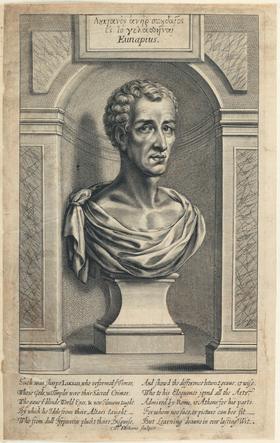
“they revered him [Peregrinus] as a god, made use of him as a lawgiver, and set him down as a protector, next after that other, to be sure, whom they still worship, the man who was crucified in Palestine because he introduced this new cult into the world.”
Read it in the source: tertullian.org
See it on the timeline: The life of Jesus Christ: the record inside and outside the Bible
“Rusticus the prefect said, Unless you obey, you shall be mercilessly punished. Justin said, Through prayer we can be saved on account of our Lord Jesus Christ, even when we have been punished, because this shall become to us salvation and confidence at the more fearful and universal judgment-seat of our Lord and Saviour. Thus also said the other martyrs: Do what you will, for we are Christians, and do not sacrifice to idols.”
“You have thus by such an admonition bound together the planting of Peter and of Paul at Rome and Corinth. For both of them planted and likewise taught us in our Corinth. And they taught together in like manner in Italy, and suffered martyrdom at the same time.”
“For when they know that we cannot endure even to see a man put to death, though justly; who of them can accuse us of murder or cannibalism? Who does not reckon among the things of greatest interest the contests of gladiators and wild beasts, especially those which are given by you? But we, deeming that to see a man put to death is much the same as killing him, have abjured such spectacles. How, then, when we do not even look on, lest we should contract guilt and pollution, can we put people to death?”
“And when we say that those women who use drugs to bring on abortion commit murder, and will have to give an account to God for the abortion, on what principle should we commit murder? For it does not belong to the same person to regard the very fœtus in the womb as a created being, and therefore an object of God's care, and when it has passed into life, to kill it”
“The blessed Pothinus, who had been entrusted with the bishopric of Lyons, was dragged to the judgment seat. He was more than ninety years of age, and very infirm, scarcely indeed able to breathe because of physical weakness; but he was strengthened by spiritual zeal through his earnest desire for martyrdom. … Being asked by the governor, Who was the God of the Christians, he replied, 'If you are worthy, you shall know.'”
“But Blandina was suspended on a stake, and exposed to be devoured by the wild beasts who should attack her. And because she appeared as if hanging on a cross, and because of her earnest prayers, she inspired the combatants with great zeal. For they looked on her in her conflict, and beheld with their outward eyes, in the form of their sister, him who was crucified for them … As none of the wild beasts at that time touched her, she was taken down from the stake, and cast again into prison.”
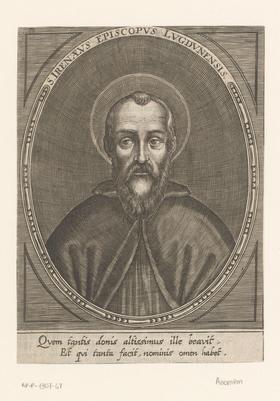
“And thus also it was that the knot of Eve's disobedience was loosed by the obedience of Mary. For what the virgin Eve had bound fast through unbelief, this did the virgin Mary set free through faith.”
“For just as the former was led astray by the word of an angel, so that she fled from God when she had transgressed His word; so did the latter, by an angelic communication, receive the glad tidings that she should sustain (portaret) God, being obedient to His word. … And thus, as the human race fell into bondage to death by means of a virgin, so is it rescued by a virgin; virginal disobedience having been balanced in the opposite scale by virginal obedience.”
“[Eve] … having become disobedient, was made the cause of death, both to herself and to the entire human race; so also did Mary, having a man betrothed [to her], and being nevertheless a virgin, by yielding obedience, become the cause of salvation, both to herself and the whole human race.”
“And if the former did disobey God, yet the latter was persuaded to be obedient to God, in order that the Virgin Mary might become the patroness (advocata) of the virgin Eve.”
“For as the bread, which is produced from the earth, when it receives the invocation of God, is no longer common bread, but the Eucharist, consisting of two realities, earthly and heavenly; so also our bodies, when they receive the Eucharist, are no longer corruptible, having the hope of the resurrection to eternity.”
“He has acknowledged the cup (which is a part of the creation) as His own blood, from which He bedews our blood; and the bread (also a part of the creation) He has established as His own body, from which He gives increase to our bodies.”
“When, therefore, the mingled cup and the manufactured bread receives the Word of God, and the Eucharist of the blood and the body of Christ is made, from which things the substance of our flesh is increased and supported, how can they affirm that the flesh is incapable of receiving the gift of God, which is life eternal, which [flesh] is nourished from the body and blood of the Lord, and is a member of Him?”
“He took that created thing, bread, and gave thanks, and said, This is My body. … And the cup likewise, which is part of that creation to which we belong, He confessed to be His blood, and taught the new oblation of the new covenant; which the Church receiving from the apostles, offers to God throughout all the world…”
“And why should I recount the multitude of prophets, who are numerous, and said ten thousand things consistently and harmoniously? For those who desire it, can, by reading what they uttered, accurately understand the truth, and no longer be carried away by opinion and profitless labour. These, then, whom we have already mentioned, were prophets among the Hebrews, — illiterate, and shepherds, and uneducated.”
“Suppose there arise a dispute relative to some important question among us, should we not have recourse to the most ancient Churches with which the apostles held constant intercourse, and learn from them what is certain and clear in regard to the present question? For how should it be if the apostles themselves had not left us writings? Would it not be necessary, [in that case,] to follow the course of the tradition which they handed down to those to whom they did commit the Churches?”
“To which course many nations of those barbarians who believe in Christ do assent, having salvation written in their hearts by the Spirit, without paper or ink, and, carefully preserving the ancient tradition, believing in one God, the Creator of heaven and earth, and all things therein, by means of Christ Jesus, the Son of God”
“We have learned from none others the plan of our salvation, than from those through whom the Gospel has come down to us, which they did at one time proclaim in public, and, at a later period, by the will of God, handed down to us in the Scriptures, to be the ground and pillar of our faith. For it is unlawful to assert that they preached before they possessed perfect knowledge, as some do even venture to say, boasting themselves as improvers of the apostles. For, after our Lord rose from the dead, [the apostles] were invested with power from on high when the Holy Spirit came down [upon them], were filled from all [His gifts], and had perfect knowledge”
“Wherefore it is incumbent to obey the presbyters who are in the Church — those who, as I have shown, possess the succession from the apostles; those who, together with the succession of the episcopate, have received the certain gift of truth, according to the good pleasure of the Father.”
“And Jeremiah the prophet has pointed out, that as many believers as God has prepared for this purpose, to multiply those left upon earth, should both be under the rule of the saints to minister to this Jerusalem, and that [His] kingdom shall be in it, saying, Look around Jerusalem towards the east, and behold the joy which comes to you from God Himself. Behold, your sons shall come whom you have sent forth: they shall come in a band from the east even unto the west, by the word of that Holy One, rejoicing in that splendour which is from your God.”
“…we are in a position to reckon up those who were by the apostles instituted bishops in the Churches, and [to demonstrate] the succession of these men to our own times … The blessed apostles, then, having founded and built up the Church, committed into the hands of Linus the office of the episcopate. … To him succeeded Anacletus; and after him, in the third place from the apostles, Clement was allotted the bishopric. … In this order, and by this succession, the ecclesiastical tradition from the apostles, and the preaching of the truth, have come down to us.”
“The blessed apostles, then, having founded and built up the Church, committed into the hands of Linus the office of the episcopate. … To him succeeded Anacletus; and after him, in the third place from the apostles, Clement was allotted the bishopric. … In this order, and by this succession, the ecclesiastical tradition from the apostles, and the preaching of the truth, have come down to us.”
“…the very great, the very ancient, and universally known Church founded and organized at Rome by the two most glorious apostles, Peter and Paul; … For it is a matter of necessity that every Church should agree with this Church, on account of its preeminent authority”
“The blessed apostles, then, having founded and built up the Church, committed into the hands of Linus the office of the episcopate. … Soter having succeeded Anicetus, Eleutherius does now, in the twelfth place from the apostles, hold the inheritance of the episcopate.”
“Nor will any one of the rulers in the Churches, however highly gifted he may be in point of eloquence, teach doctrines different from these (for no one is greater than the Master); nor, on the other hand, will he who is deficient in power of expression inflict injury on the tradition. For the faith being ever one and the same, neither does one who is able at great length to discourse regarding it, make any addition to it, nor does one, who can say but little diminish it.”
“The Church, though dispersed throughout the whole world, even to the ends of the earth, has received from the apostles and their disciples this faith: [She believes] in one God, the Father Almighty, Maker of heaven, and earth, and the sea, and all things that are in them; and in one Christ Jesus, the Son of God, who became incarnate for our salvation; and in the Holy Spirit … and to raise up anew all flesh of the whole human race, in order that to Christ Jesus, our Lord, and God, and Saviour, and King, according to the will of the invisible Father, every knee should bow”
“True knowledge is [that which consists in] the doctrine of the apostles, and the ancient constitution of the Church throughout all the world, and the distinctive manifestation of the body of Christ according to the successions of the bishops, by which they have handed down that Church which exists in every place, and has come even unto us”
“Since therefore we have such proofs, it is not necessary to seek the truth among others which it is easy to obtain from the Church; since the apostles, like a rich man [depositing his money] in a bank, lodged in her hands most copiously all things pertaining to the truth: so that every man, whosoever will, can draw from her the water of life.”
“For when any person has been taught from the mouth of another, he is termed the son of him who instructs him, and the latter [is called] his father.”
“We ought not, therefore, as that presbyter remarks, to be puffed up, nor be severe upon those of old time, but ought ourselves to fear, lest perchance, after [we have come to] the knowledge of Christ, if we do things displeasing to God, we obtain no further forgiveness of sins, but be shut out from His kingdom. And therefore it was that Paul said, For if [God] spared not the natural branches, [take heed] lest He also spare not you,”
“For He came to save all through means of Himself — all, I say, who through Him are born again to God — infants, and children, and boys, and youths, and old men. He therefore passed through every age, becoming an infant for infants, thus sanctifying infants”
“While men, indeed, cannot make anything out of nothing, but only out of matter already existing, yet God is in this point pre-eminently superior to men, that He Himself called into being the substance of His creation, when previously it had no existence.”
“For it is a matter of necessity that every Church should agree with this Church, on account of its preeminent authority”
“Matthew also issued a written Gospel among the Hebrews in their own dialect, while Peter and Paul were preaching at Rome, and laying the foundations of the Church. After their departure, Mark, the disciple and interpreter of Peter, did also hand down to us in writing what had been preached by Peter.”
“To this Clement there succeeded Evaristus. Alexander followed Evaristus; then, sixth from the apostles, Sixtus was appointed; after him, Telephorus, who was gloriously martyred; then Hyginus; after him, Pius; then after him, Anicetus. Soter having succeeded Anicetus, Eleutherius does now, in the twelfth place from the apostles, hold the inheritance of the episcopate.”
Read it in the source: New Advent
See it on the timeline: All the popes in order, from St. Peter to today
“Saturninus the proconsul said to Speratus: Do you persist in being a Christian? Speratus said: I am a Christian. And with him they all agreed. Saturninus the proconsul said: Will you have a space to consider? Speratus said: In a matter so straightforward there is no considering. Saturninus the proconsul said: What are the things in your chest? Speratus said: Books and epistles of Paul, a just man.”
“For some do certainly and truly drive out devils, so that those who have thus been cleansed from evil spirits frequently both believe [in Christ], and join themselves to the Church. Others have foreknowledge of things to come: they see visions, and utter prophetic expressions. Others still, heal the sick by laying their hands upon them, and they are made whole. Yea, moreover, as I have said, the dead even have been raised up, and remained among us for many years.”
“all Scripture, which has been given to us by God, shall be found by us perfectly consistent; and the parables shall harmonize with those passages which are perfectly plain; and those statements the meaning of which is clear, shall serve to explain the parables; and through the many diversified utterances [of Scripture] there shall be heard one harmonious melody in us, praising in hymns that God who created all things.”
“But Polycarp also was not only instructed by apostles, and conversed with many who had seen Christ, but was also, by apostles in Asia, appointed bishop of the Church in Smyrna, whom I also saw in my early youth”
“It does not follow because men are endowed with greater and less degrees of intelligence, that they should therefore change the subject-matter [of the faith] itself … But the fact referred to simply implies this, that one may [more accurately than another] bring out the meaning of those things which have been spoken in parables, and accommodate them to the general scheme of the faith”
“For where the Church is, there is the Spirit of God; and where the Spirit of God is, there is the Church, and every kind of grace; but the Spirit is truth.”
“And when I had come to Rome I remained there until Anicetus, whose deacon was Eleutherus. And Anicetus was succeeded by Soter, and he by Eleutherus. In every succession, and in every city that is held which is preached by the law and the prophets and the Lord.”
“For as we are lepers in sin, we are made clean, by means of the sacred water and the invocation of the Lord, from our old transgressions; being spiritually regenerated as new-born babes, even as the Lord has declared: Unless a man be born again through water and the Spirit, he shall not enter into the kingdom of heaven.”
“I am able to describe the very place in which the blessed Polycarp sat as he discoursed, and his goings out and his comings in, and the manner of his life, and his physical appearance, and his discourses to the people, and the accounts which he gave of his intercourse with John and with the others who had seen the Lord. And as he remembered their words, and what he heard from them concerning the Lord, and concerning his miracles and his teaching, having received them from eyewitnesses”
Read it in the source: New Advent
See it on the timeline: The life of Jesus Christ: the record inside and outside the Bible
“Thereupon Victor, who presided over the church at Rome, immediately attempted to cut off from the common unity the parishes of all Asia, with the churches that agreed with them, as heterodox; and he wrote letters and declared all the brethren there wholly excommunicate. … But this did not please all the bishops. And they besought him to consider the things of peace, and of neighborly unity and love.”
“Some, not able to find this peace in the Church, have been used to seek it from the imprisoned martyrs. And so you ought to have it dwelling with you, and to cherish it, and to guard it, that you may be able perhaps to bestow it upon others.”
“In our case, murder being once for all forbidden, we may not destroy even the fœtus in the womb, while as yet the human being derives blood from other parts of the body for its sustenance. To hinder a birth is merely a speedier man-killing; nor does it matter whether you take away a life that is born, or destroy one that is coming to the birth. That is a man which is going to be one; you have the fruit already in its seed.”
“A whole day the zeal of faith will direct its pleadings to this quarter: bewailing that a Christian should come from idols into the Church; should come from an adversary workshop into the house of God; should raise to God the Father hands which are the mothers of idols; should pray to God with the hands which, out of doors, are prayed to in opposition to God; should apply to the Lord's body those hands which confer bodies on demons. … What hands more to be amputated than those in which scandal is done to the Lord's body?”
“Now, what that was which they preached — in other words, what it was which Christ revealed to them — can, as I must here likewise prescribe, properly be proved in no other way than by those very churches which the apostles founded in person, by declaring the gospel to them directly themselves, both vivâ voce, as the phrase is, and subsequently by their epistles.”
“…is it likely that so many churches, and they so great, should have gone astray into one and the same faith? No casualty distributed among many men issues in one and the same result. Error of doctrine in the churches must necessarily have produced various issues. When, however, that which is deposited among many is found to be one and the same, it is not the result of error, but of tradition.”
“Let them produce the original records of their churches; let them unfold the roll of their bishops, running down in due succession from the beginning in such a manner that [that first bishop of theirs] bishop shall be able to show for his ordainer and predecessor some one of the apostles or of apostolic men … For this is the manner in which the apostolic churches transmit their registers: as the church of Smyrna, which records that Polycarp was placed therein by John; as also the church of Rome, which makes Clement to have been ordained in like manner by Peter.”
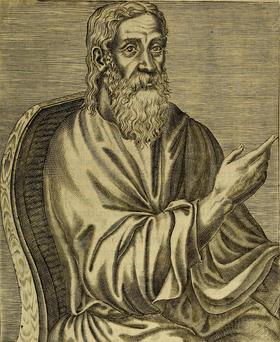
“…the blessed Peter, the chosen, the pre-eminent, the first of the disciples, for whom alone and Himself the Saviour paid tribute…”
“Forasmuch, then, as Peter was rebuked because, after he had lived with the Gentiles, he proceeded to separate himself from their company out of respect for persons, the fault surely was one of conversation, not of preaching.”
“From what has been said, then, it is my opinion that the true Church, that which is really ancient, is one … Therefore in substance and idea, in origin, in pre-eminence, we say that the ancient and Catholic Church is alone, collecting as it does into the unity of the one faith…”
“…is it likely that so many churches, and they so great, should have gone astray into one and the same faith? No casualty distributed among many men issues in one and the same result. Error of doctrine in the churches must necessarily have produced various issues. When, however, that which is deposited among many is found to be one and the same, it is not the result of error, but of tradition.”
“And so it comes to pass that today one man is their bishop, tomorrow another; today he is a deacon who tomorrow is a reader; today he is a presbyter who tomorrow is a layman. For even on laymen do they impose the functions of priesthood.”
“And so they say, Baptism is not necessary for them to whom faith is sufficient; … But now that faith has been enlarged, and has become a faith which believes in His nativity, passion, and resurrection, there has been an amplification added to the sacrament, viz., the sealing act of baptism; the clothing, in some sense, of the faith which before was bare, and which cannot exist now without its proper law.”
“And so, according to the circumstances and disposition, and even age, of each individual, the delay of baptism is preferable; principally, however, in the case of little children. … The Lord does indeed say, Forbid them not to come unto me. Let them come, then, while they are growing up; let them come while they are learning, while they are learning whither to come; let them become Christians when they have become able to know Christ.”
“He also prays in the society of angels, as being already of angelic rank, and he is never out of their holy keeping; and though he pray alone, he has the choir of the saints standing with him.”
“Since, moreover, you are close upon Italy, you have Rome, from which there comes even into our own hands the very authority (of apostles themselves). How happy is its church, on which apostles poured forth all their doctrine along with their blood! Where Peter endures a passion like his Lord's! Where Paul wins his crown in a death like John's”
“We have indeed, likewise, a second font, (itself withal one with the former,) of blood, to wit; concerning which the Lord said, I have to be baptized with a baptism, when He had been baptized already. … This is the baptism which both stands in lieu of the fontal bathing when that has not been received, and restores it when lost.”
“The Passover affords a more than usually solemn day for baptism; when, withal, the Lord's passion, in which we are baptized, was completed. … After that, Pentecost is a most joyous space for conferring baptisms”
“In the next place the hand is laid on us, invoking and inviting the Holy Spirit through benediction. … Then, over our cleansed and blessed bodies willingly descends from the Father that Holiest Spirit.”
“But I can show the trophies of the apostles. For if you will go to the Vatican or to the Ostian way, you will find the trophies of those who laid the foundations of this church.”
“The Gospel according to Mark had this occasion. As Peter had preached the Word publicly at Rome, and declared the Gospel by the Spirit, many who were present requested that Mark, who had followed him for a long time and remembered his sayings, should write them out.”
“Was anything withheld from the knowledge of Peter, who is called the rock on which the church should be built, who also obtained the keys of the kingdom of heaven, with the power of loosing and binding in heaven and on earth?”
“We ought indeed to walk so holily, and with so entire substantiality of faith, as to be confident and secure in regard of our own conscience, desiring that that (gift) may abide in us to the end, yet not presuming (that it will). For he who presumes feels less apprehension; he who feels less apprehension takes less precaution; he who takes less precaution runs more risk.”
“Irenaeus was in all probability born in Smyrna (today, Izmir in Turkey) in about 135-140, where in his youth, he attended the school of Bishop Polycarp, a disciple in his turn of the Apostle John. … The new Pastor devoted himself without reserve to his episcopal ministry which ended in about 202-203, perhaps with martyrdom.”
“For the glory of God is a living man; and the life of man consists in beholding God. For if the manifestation of God which is made by means of the creation, affords life to all living in the earth, much more does that revelation of the Father which comes through the Word, give life to those who see God.”
“And thus exomologesis is a discipline for man's prostration and humiliation, enjoining a demeanor calculated to move mercy. With regard also to the very dress and food, it commands (the penitent) to lie in sackcloth and ashes … to groan, to weep and make outcries unto the Lord your God; to bow before the feet of the presbyters, and kneel to God's dear ones; to enjoin on all the brethren to be ambassadors to bear his deprecatory supplication (before God).”
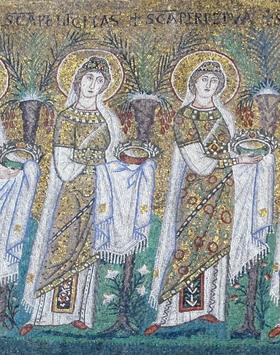
“But I trusted that my prayer would bring help to his suffering; and I prayed for him every day until we passed over into the prison of the camp, … I saw that that place which I had formerly observed to be in gloom was now bright; and Dinocrates, with a clean body well clad, was finding refreshment. … Then I understood that he was translated from the place of punishment.”
“These poisons of his, therefore, God foreseeing, although the gate of forgiveness has been shut and fastened up with the bar of baptism, has permitted it still to stand somewhat open. In the vestibule He has stationed the second repentance for opening to such as knock: but now once for all, because now for the second time; but never more”
“And Hilarianus the procurator, who had just received the power of life and death in the place of the proconsul Minucius Timinianus, who was deceased, said, 'Spare the grey hairs of your father, spare the infancy of your boy, offer sacrifice for the well-being of the emperors.' And I replied, 'I will not do so.' Hilarianus said, 'Are you a Christian?' And I replied, 'I am a Christian.'”
“You who are in such suffering now, what will you do when you are thrown to the beasts, which you despised when you refused to sacrifice? And she replied, Now it is I that suffer what I suffer; but then there will be another in me, who will suffer for me, because I also am about to suffer for Him. Thus she brought forth a little girl, which a certain sister brought up as her daughter.”
“Whence are we to find (words) enough fully to tell the happiness of that marriage which the Church cements, and the oblation confirms, and the benediction signs and seals; (which) angels carry back the news of (to heaven), (which) the Father holds for ratified?”
“And perceiving the man's sympathy for her, she exhorted him to be of good courage, for she would supplicate her Lord for him after her departure, and he would soon receive a reward for the kindness he had shown her. 4. Having said this, she nobly sustained the issue, burning pitch being poured little by little, over various parts of her body, from the sole of her feet to the crown of her head.”
“But the brethren in God coming to him and inquiring the reason of this sudden and remarkable resolution, he is reported to have said that Potamiæna, for three days after her martyrdom, stood beside him by night and placed a crown on his head and said that she had besought the Lord for him and had obtained what she asked, and that soon she would take him with her. 6. Thereupon the brethren gave him the seal of the Lord; and on the next day, after giving glorious testimony for the Lord, he was beheaded.”
“Likewise, when forbidding the similitude to be made of all things which are in heaven, and in earth, and in the waters, He declared also the reasons, as being prohibitory of all material exhibition of a latent idolatry. For He adds: You shall not bow down to them, nor serve them. The form, however, of the brazen serpent which the Lord afterwards commanded Moses to make, afforded no pretext for idolatry, but was meant for the cure of those who were plagued with the fiery serpents.”
“…the flesh feeds on the body and blood of Christ, that the soul likewise may fatten on its God.”
“We take also, in congregations before daybreak, and from the hand of none but the presidents, the sacrament of the Eucharist, which the Lord both commanded to be eaten at meal-times, and enjoined to be taken by all alike.”
“As often as the anniversary comes round, we make offerings for the dead as birthday honours. We count fasting or kneeling in worship on the Lord's day to be unlawful. We rejoice in the same privilege also from Easter to Whitsunday. We feel pained should any wine or bread, even though our own, be cast upon the ground.”
“How many men of rank (to say nothing of common people) have been delivered from devils, and healed of diseases! Even Severus himself, the father of Antonine, was graciously mindful of the Christians; for he sought out the Christian Proculus, surnamed Torpacion, the steward of Euhodias, and in gratitude for his having once cured him by anointing, he kept him in his palace till the day of his death.”
“However, it is a fundamental human right, a privilege of nature, that every man should worship according to his own convictions: one man's religion neither harms nor helps another man. It is assuredly no part of religion to compel religion — to which free-will and not force should lead us — the sacrificial victims even being required of a willing mind.”
Read it in the source: New Advent
See it on the timeline: The Inquisition and the use of force against heresy
“Peter alone do I find — through (the mention of) his mother-in-law — to have been married. Monogamist I am led to presume him by consideration of the Church, which, built upon him, was destined to appoint every grade of her Order from monogamists.”
“Narcissus salutes you, who held the episcopate here before me, and is now associated with me in prayers, being one hundred and sixteen years of age; and he exhorts you, as I do, to be of one mind.”
“They say that the oil once failed while the deacons were watching through the night at the great paschal vigil. Thereupon the whole multitude being dismayed, Narcissus directed those who attended to the lights, to draw water and bring it to him. 3. This being immediately done he prayed over the water, and with firm faith in the Lord, commanded them to pour it into the lamps. And when they had done so, contrary to all expectation by a wonderful and divine power, the nature of the water was changed into that of oil. A small portion of it has been preserved even to our day by many of the brethren there as a memento of the wonder.”
“Indeed, she prays for his soul, and requests refreshment for him meanwhile, and fellowship (with him) in the first resurrection; and she offers (her sacrifice) on the anniversaries of his falling asleep.”
“On the whole world there pressed a most fearful darkness; and the rocks were rent by an earthquake, and many places in Judea and other districts were thrown down. This darkness Thallus, in the third book of his History, calls, as appears to me without reason, an eclipse of the sun. For the Hebrews celebrate the passover on the 14th day according to the moon, and the passion of our Saviour fails on the day before the passover; but an eclipse of the sun takes place only when the moon comes under the sun.”
Read it in the source: New Advent
See it on the timeline: The life of Jesus Christ: the record inside and outside the Bible
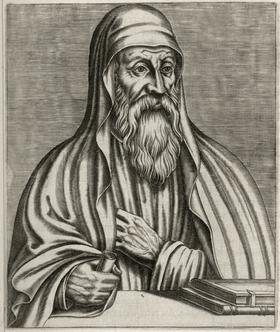
“Now who is there, pray, possessed of understanding, that will regard the statement as appropriate, that the first day, and the second, and the third, in which also both evening and morning are mentioned, existed without sun, and moon, and stars — the first day even without a sky?”
“Whence women, reputed believers, began to resort to drugs for producing sterility, and to gird themselves round, so to expel what was being conceived on account of their not wishing to have a child either by a slave or by any paltry fellow, for the sake of their family and excessive wealth. Behold, into how great impiety that lawless one has proceeded, by inculcating adultery and murder at the same time!”
“For if Mary, as those declare who with sound mind extol her, had no other son but Jesus, and yet Jesus says to His mother, Woman, behold your son, … and not Behold you have this son also, then He virtually said to her, Lo, this is Jesus, whom you bore.”
“And Peter, on whom the Church of Christ is built, against which the gates of hell shall not prevail … left only one epistle of acknowledged genuineness.”
“Peter appears to have preached in Pontus, Galatia, Bithynia, Cappadocia, and Asia to the Jews of the dispersion. And at last, having come to Rome, he was crucified head-downwards; for he had requested that he might suffer in this way.”
“Pontianus, who had been bishop of the church at Rome for six years, was succeeded by Anteros. After he had held the office for a month, Fabianus succeeded him. … For when all the brethren had assembled to select by vote him who should succeed to the episcopate of the church, several renowned and honorable men were in the minds of many, but Fabianus, although present, was in the mind of none.”
Read it in the source: New Advent
See it on the timeline: All the popes in order, from St. Peter to today
“…Tobias (as also Judith), we ought to notice, the Jews do not use. They are not even found in the Hebrew Apocrypha, as I learned from the Jews themselves. However, since the Churches use Tobias, you must know that even in the captivity some of the captives were rich and well to do.”
“One strange story told of him by Gregory of Nyssa is to the effect that, as Gregory was meditating on the great matter of the right way to worship the true God, suddenly two glorious personages made themselves manifest in his room, in the one of whom he recognised the Apostle John, in the other the Virgin. They had come, as the story goes, to solve the difficulties which were making him hesitate in accepting the bishopric. At Mary’s request, the evangelist gave him then all the instruction in doctrine which he was seeking for; and the sum of these supernatural communications being written down by him after the vision vanished, formed the creed which is still preserved among his writings.”
“But some say, basing it on a tradition in the Gospel according to Peter, as it is entitled, or The Book of James, that the brethren of Jesus were sons of Joseph by a former wife, whom he married before Mary. Now those who say so wish to preserve the honour of Mary in virginity to the end, … And I think it in harmony with reason that Jesus was the first-fruit among men of the purity which consists in chastity, and Mary among women; for it were not pious to ascribe to any other than to her the first-fruit of virginity.”
“But we give thanks to the Creator of all, and, along with thanksgiving and prayer for the blessings we have received, we also eat the bread presented to us; and this bread becomes by prayer a sacred body, which sanctifies those who sincerely partake of it.”
“And if we too have said like Peter, You are the Christ, the Son of the living God, not as if flesh and blood had revealed it unto us, but by light from the Father in heaven having shone in our heart, we become a Peter, and to us there might be said by the Word, You are Peter, etc. … For a rock is every disciple of Christ of whom those drank who drank of the spiritual rock which followed them”
“…when we have the favour of God, we have also the good-will of all angels and spirits who are friends of God. For they know who are worthy of the divine approval, and they are not only well disposed to them, but they co-operate with them in their endeavours to please God: they seek His favour on their behalf; with their prayers they join their own prayers and intercessions for them. … These, even when not asked, pray with them”
“but he invents something altogether different, admitting somehow the miraculous works done by Jesus, by means of which He induced the multitude to follow Him as the Christ. And yet he desires to throw discredit on them, as being done by help of magic and not by divine power; for he asserts that he (Jesus), having been brought up as an illegitimate child, and having served for hire in Egypt, and then coming to the knowledge of certain miraculous powers, returned from thence to his own country, and by means of those powers proclaimed himself a god.”
Read it in the source: New Advent
See it on the timeline: The life of Jesus Christ: the record inside and outside the Bible
“Celsus, however, accepting or granting that Jesus foreknew what would befall Him, might think to make light of the admission, as he did in the case of the miracles, when he alleged that they were wrought by means of sorcery; … But this concession he would not make, as being too great a one; and although he somehow granted that Jesus worked miracles, he thought to weaken the force of this by the charge of sorcery.”
“Then they seized also that most admirable virgin, Apollonia, an old woman, and, smiting her on the jaws, broke out all her teeth. And they made a fire outside the city and threatened to burn her alive if she would not join with them in their impious cries. And she, supplicating a little, was released, when she leaped eagerly into the fire and was consumed.”
“We fly to thy protection, O holy Mother of God. Despise not our petitions in our necessities, but deliver us always from all dangers O glorious and blessed Virgin.”
“To Father Cyprian, the presbyters and deacons abiding at Rome, greeting.”
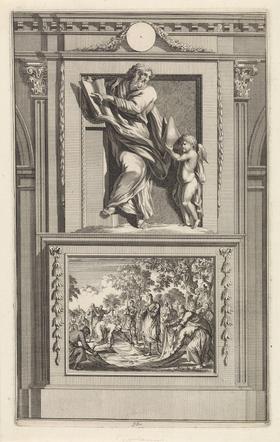
“The bishops our predecessors religiously considering this, and wholesomely providing for it, decided that no brother departing should name a cleric for executor or guardian; and if any one should do this, no offering should be made for him, nor any sacrifice be celebrated for his repose. For he does not deserve to be named at the altar of God in the prayer of the priests, who has wished to call away the priests and ministers from the altar.”
“…they who have received certificates from the martyrs, and may be assisted by their privilege with God, if they should be seized with any misfortune and peril of sickness, should, without waiting for my presence, before any presbyter who might be present, or if a presbyter should not be found and death begins to be imminent, before even a deacon, be able to make confession of their sin, that, with the imposition of hands upon them for repentance, they should come to the Lord with the peace which the martyrs have desired, by their letters to us, to be granted to them.”
“For although in smaller sins sinners may do penance for a set time, and according to the rules of discipline come to public confession, and by imposition of the hand of the bishop and clergy receive the right of communion: now with their time still unfulfilled, while persecution is still raging, while the peace of the Church itself is not [yet] restored, they are admitted to communion”
“After a reign of seven years Philip was succeeded by Decius. On account of his hatred of Philip, he commenced a persecution of the churches, in which Fabianus suffered martyrdom at Rome, and Cornelius succeeded him in the episcopate.”
“For when all the brethren had assembled to select by vote him who should succeed to the episcopate of the church, several renowned and honorable men were in the minds of many, but Fabianus, although present, was in the mind of none. But they relate that suddenly a dove flying down lighted on his head, resembling the descent of the Holy Spirit on the Saviour in the form of a dove. 4. Thereupon all the people, as if moved by one Divine Spirit, with all eagerness and unanimity cried out that he was worthy, and without delay they took him and placed him upon the episcopal seat.”
“And although to all the apostles, after His resurrection, He gives an equal power … yet, that He might set forth unity, He arranged by His authority the origin of that unity, as beginning from one. Assuredly the rest of the apostles were also the same as was Peter, endowed with a like partnership both of honour and power; but the beginning proceeds from unity.”
“This avenger of the Gospel then did not know that there should be one bishop in a catholic church; yet he was not ignorant (for how could he be?) that in it there were forty-six presbyters, seven deacons, seven sub-deacons, forty-two acolyths, fifty-two exorcists, readers, and janitors, and over fifteen hundred widows and persons in distress, all of whom the grace and kindness of the Master nourish.”
“Nor let any deceive themselves by a futile interpretation, in respect of the Lord having said, Wheresoever two or three are gathered together in my name, there am I in the midst of them. … When, therefore, in His commandments He lays it down, and says, Where two or three are gathered together in my name, I am with them, He does not divide men from the Church, seeing that He Himself ordained and made the Church”
“The spouse of Christ cannot be adulterous; she is uncorrupted and pure. She knows one home; she guards with chaste modesty the sanctity of one couch. She keeps us for God.”
“Thus Korah, Dathan, and Abiram, who endeavoured to claim to themselves the power of sacrificing in opposition to Moses and Aaron the priest, underwent immediate punishment for their attempts.”
“I entreat you, beloved brethren, that each one should confess his own sin, while he who has sinned is still in this world, while his confession may be received, while the satisfaction and remission made by the priests are pleasing to the Lord.”
“Whosoever that confessor is, he is not greater, or better, or dearer to God than Solomon, who, although so long as he walked in God's ways, retained that grace which he had received from the Lord, yet after he forsook the Lord's way he lost also the Lord's grace. And therefore it is written, Hold fast that which you have, lest another take your crown. … But assuredly the Lord would not threaten that the crown of righteousness might be taken away, were it not that, when righteousness departs, the crown must also depart.”
“Whoever is separated from the Church and is joined to an adulteress, is separated from the promises of the Church; nor can he who forsakes the Church of Christ attain to the rewards of Christ. He is a stranger; he is profane; he is an enemy. He can no longer have God for his Father, who has not the Church for his mother.”
“Moreover, Cornelius was made bishop by the judgment of God and of His Christ, by the testimony of almost all the clergy, by the suffrage of the people who were then present, and by the assembly of ancient priests and good men, when no one had been made so before him, when the place of Fabian, that is, when the place of Peter and the degree of the sacerdotal throne was vacant”
Read it in the source: New Advent
See it on the timeline: All the popes in order, from St. Peter to today
“…how much are they both greater in faith and better in their fear, who, although bound by no crime of sacrifice to idols or of certificate, yet, since they have even thought of such things, with grief and simplicity confess this very thing to God's priests, and make the conscientious avowal, put off from them the load of their minds, and seek out the salutary medicine even for slight and moderate wounds”
“…they still dare — a false bishop having been appointed for them by, heretics— to set sail and to bear letters from schismatic and profane persons to the throne of Peter, and to the chief church whence priestly unity takes its source; and not to consider that these were the Romans whose faith was praised in the preaching of the apostle, to whom faithlessness could have no access.”
“If a grave and praiseworthy man should promise you anything, you would assuredly have faith in the promiser, and would not think that you should be cheated and deceived by him whom you knew to be steadfast in his words and his deeds. Now God is speaking with you; and do you faithlessly waver in your unbelieving mind? God promises to you, on your departure from this world, immortality and eternity; and do you doubt?”
“Let us on both sides always pray for one another. Let us relieve burdens and afflictions by mutual love, that if any one of us, by the swiftness of divine condescension, shall go hence the first, our love may continue in the presence of the Lord, and our prayers for our brethren and sisters not cease in the presence of the Father's mercy.”
“For this reason also the priest, by way of preface before his prayer, prepares the minds of the brethren by saying, Lift up your hearts, that so upon the people's response, We lift them up unto the Lord, he may be reminded that he himself ought to think of nothing but the Lord.”
“we ask that this bread should be given to us daily, that we who are in Christ, and daily receive the Eucharist for the food of salvation, may not, by the interposition of some heinous sin, by being prevented, as withheld and not communicating, from partaking of the heavenly bread, be separated from Christ's body”
“And because we make mention of His passion in all sacrifices (for the Lord's passion is the sacrifice which we offer), we ought to do nothing else than what He did.”
“The Holy Spirit speaks in the sacred Scriptures, and says, By almsgiving and faith sins are purged. … Moreover, He says again, As water extinguishes fire, so almsgiving quenches sin. [Sirach 3:30]”
“For if Jesus Christ, our Lord and God, is Himself the chief priest of God the Father, and has first offered Himself a sacrifice to the Father, and has commanded this to be done in commemoration of Himself, certainly that priest truly discharges the office of Christ, who imitates that which Christ did; and he then offers a true and full sacrifice in the Church to God the Father, when he proceeds to offer it according to what he sees Christ Himself to have offered.”
“But in respect of the case of the infants, which you say ought not to be baptized within the second or third day after their birth, and that the law of ancient circumcision should be regarded, so that you think that one who is just born should not be baptized and sanctified within the eighth day, we all thought very differently in our council. For in this course which you thought was to be taken, no one agreed; but we all rather judge that the mercy and grace of God is not to be refused to any one born of man.”
“For because Christ bore us all, in that He also bore our sins, we see that in the water is understood the people, but in the wine is showed the blood of Christ. But when the water is mingled in the cup with wine, the people is made one with Christ, and the assembly of believers is associated and conjoined with Him on whom it believes”
“…Novatian is not in the Church; nor can he be reckoned as a bishop, who, succeeding to no one, and despising the evangelical and apostolic tradition, sprang from himself. For he who has not been ordained in the Church can neither have nor hold to the Church in any way.”
“You have asked also, dearest son, what I thought of those who obtain God's grace in sickness and weakness, whether they are to be accounted legitimate Christians, for that they are not to be washed, but sprinkled, with the saving water. In this point, my diffidence and modesty prejudges none, … In the sacraments of salvation, when necessity compels, and God bestows His mercy, the divine methods confer the whole benefit on believers; nor ought it to trouble any one that sick people seem to be sprinkled or affused, when they obtain the Lord's grace”
“viz., that prayer being made for them, and hands being imposed, the Holy Spirit should be invoked and poured out upon them, which now too is done among us, so that they who are baptized in the Church are brought to the prelates of the Church, and by our prayers and by the imposition of hands obtain the Holy Spirit, and are perfected with the Lord's seal.”
“But if not even the baptism of a public confession and blood can profit a heretic to salvation, because there is no salvation out of the Church, how much less shall it be of advantage to him, if in a hiding-place and a cave of robbers, stained with the contagion of adulterous water, he has not only not put off his old sins, but rather heaped up still newer and greater ones!”
“And in this respect I am justly indignant at this so open and manifest folly of Stephen, that he who so boasts of the place of his episcopate, and contends that he holds the succession from Peter, on whom the foundations of the Church were laid, should introduce many other rocks and establish new buildings of many churches; maintaining that there is baptism in them by his authority.”
“And now also, when we had met together, bishops as well of the province of Africa as of Numidia, to the number of seventy-one, we established this same matter once more by our judgment, deciding that there is one baptism which is appointed in the Catholic Church; and that by this those are not re-baptized, but baptized by us, who at any time come from the adulterous and unhallowed water to be washed and sanctified by the truth of the saving water.”
“If any one, therefore, come to you from any heresy whatever, let nothing be innovated (or done) which has not been handed down, to wit, that hands be imposed on him for repentance; since the heretics themselves, in their own proper character, do not baptize such as come to them from one another, but only admit them to communion.”
“The three youths, Ananias, Azarias, and Misäel, equal in age, agreeing in love, steadfast in faith, constant in virtue, stronger than the flames and penalties that urged them, proclaim that they only obey God, that they know Him alone, that they worship Him alone … What, indeed, do we find in the Maccabees of seven brethren, equals alike in their lot of birth and virtues, filling up the number seven in the sacrament of a perfected completion? Seven brethren were thus associating in martyrdom.”
“But know that Xistus was martyred in the cemetery on the eighth day of the Ides of August, and with him four deacons. Moreover, the prefects in the City are daily urging on this persecution; so that, if any are presented to them, they are martyred, and their property claimed by the treasury.”
“Such gold the holy martyr Lawrence preserved for the Lord. For when the treasures of the Church were demanded from him, he promised that he would show them. On the following day he brought the poor together. When asked where the treasures were which he had promised, he pointed to the poor, saying: These are the treasures of the Church. And truly they were treasures, in whom Christ lives, in whom there is faith in Him.”
“And let us not pass by St. Lawrence, who, seeing Xystus his bishop led to martyrdom, began to weep, not at his sufferings but at the fact that he himself was to remain behind. With these words he began to address him: Where, father, are you going without your son? Where, holy priest, are you hastening without your deacon? … However, after three days he was placed upon the gridiron by the tyrant whom he mocked, and was burnt.”
“And now, having with his own hands bound his eyes, he tried to hasten the slowness of the executioner, whose office was to wield the sword, and who with difficulty clasped the blade in his failing right hand with trembling fingers, until the mature hour of glorification strengthened the hand of the centurion with power granted from above to accomplish the death of the excellent man, and at length supplied him with the permitted strength.”
“…there appeared to me, said he, ere yet I was sunk in the repose of slumber, a young man of unusual stature, who, as it were, led me to the praetorium, where I seemed to myself to be led before the tribunal of the proconsul, then sitting. … For, with hand expanded and flattened like a blade, he imitated the stroke of the accustomed punishment, and expressed what he wished to be understood as clearly as by speech — I understood the future sentence of my passion.”
“But where shall I rank the great Gregory, and the words uttered by him? Shall we not place among Apostles and Prophets a man who walked by the same Spirit as they; … who never through all his days diverged from the footprints of the saints; who maintained, as long as he lived, the exact principles of evangelical citizenship?”
“…although only seventeen Christians were handed over to him, he brought the whole people alike in town and country through knowledge to God. He too by Christ's mighty name commanded even rivers to change their course, and caused a lake, which afforded a ground of quarrel to some covetous brethren, to dry up. Moreover his predictions of things to come were such as in no wise to fall short of those of the great prophets. To recount all his wonderful works in detail would be too long a task.”
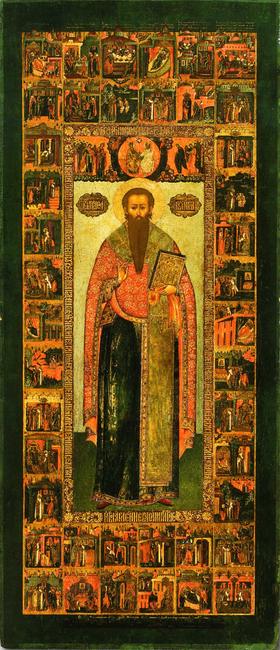
“To recount all his wonderful works in detail would be too long a task. By the superabundance of gifts, wrought in him by the Spirit in all power and in signs and in marvels, he was styled a second Moses by the very enemies of the Church. … To this day he is a great object of admiration to the people of his own neighbourhood, and his memory, established in the churches ever fresh and green, is not dulled by length of time.”
“But as Paul refused to surrender the church building, the Emperor Aurelian was petitioned; and he decided the matter most equitably, ordering the building to be given to those to whom the bishops of Italy and of the city of Rome should adjudge it.”
“In the third century, Saint Sebastian was a young captain of the Praetorian Guard. It is said that he spoke constantly of Christ and tried to convert his companions, to the point that he was ordered to renounce his faith. Since he refused, he was shot with arrows, yet he survived and continued to proclaim Christ fearlessly. In the end, Sebastian was flogged to death.”
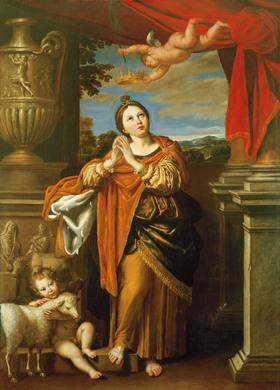
“She is said to have suffered martyrdom when twelve years old. The more hateful was the cruelty, which spared not so tender an age, the greater in truth was the power of faith which found evidence even in that age. … She was fearless under the cruel hands of the executioners, she was unmoved by the heavy weight of the creaking chains, offering her whole body to the sword of the raging soldier, as yet ignorant of death, but ready for it.”
“She was a young defenceless woman, however she faced torture and a violent death with great courage, a courage that came to her from the Risen Christ, with whom she was united, and from the Holy Spirit, who dwelt within her.”
“For when God forbids us to kill, He not only prohibits us from open violence, which is not even allowed by the public laws, but He warns us against the commission of those things which are esteemed lawful among men. Thus it will be neither lawful for a just man to engage in warfare, since his warfare is justice itself, nor to accuse any one of a capital charge, because it makes no difference whether you put a man to death by word, or rather by the sword, since it is the act of putting to death itself which is prohibited.”
“There is no occasion for violence and injury, for religion cannot be imposed by force; the matter must be carried on by words rather than by blows, that the will may be affected. … For religion is to be defended, not by putting to death, but by dying; not by cruelty, but by patient endurance; not by guilt, but by good faith … For if you wish to defend religion by bloodshed, and by tortures, and by guilt, it will no longer be defended, but will be polluted and profaned. For nothing is so much a matter of free-will as religion; in which, if the mind of the worshipper is disinclined to it, religion is at once taken away, and ceases to exist.”
Read it in the source: New Advent
See it on the timeline: The Inquisition and the use of force against heresy
“At about the same time Peter also, who presided most illustriously over the parishes in Alexandria, a divine example of a bishop on account of the excellence of his life and his study of the sacred Scriptures, being seized for no cause and quite unexpectedly, was, as if by command of Maximinus, immediately and without explanation, beheaded. With him also many other bishops of Egypt suffered the same fate.”
“We have resolved to communicate this most fully to your care, in order that you may know that we have granted to these same Christians freedom and full liberty to observe their own religion.”
“Wherefore it is our will that when you receive this letter, if any such things belonged to the Catholic Church of the Christians, in any city or other place, but are now held by citizens or by any others, you shall cause them to be restored immediately to the said churches. For we have already determined that those things which these same churches formerly possessed shall be restored to them.”
“Concerning women who commit fornication, and destroy that which they have conceived, or who are employed in making drugs for abortion, a former decree excluded them until the hour of death, and to this some have assented. Nevertheless, being desirous to use somewhat greater lenity, we have ordained that they fulfil ten years [of penance], according to the prescribed degrees.”
“Concerning the Africans, who use their own law to rebaptize: it has been decided that if anyone comes to the Church from heresy, they are to question him on the creed; and if they see that he was baptized in the Father, and the Son and the Holy Spirit, hands only are to be laid on him, that he may receive the Holy Spirit. But if on being asked he does not answer with this Trinity, let him be baptized.”
Our translation. The words as written, in Latin:
“De Afris, quod propria lege sua utuntur ut rebaptizent, placuit, ut, si ad ecclesiam aliquis de hæresi venerit, interrogent eum symbolum; et si perviderint eum in Patre, et Filio et Spiritu Sancto, esse baptizatum, manus ei tantum imponantur, ut accipiat spiritum sanctum. Quod si interrogatus non responderit hanc Trinitatem, baptizetur.”