Old Testament
Scripture
Exodus Exodus 20:13-15
“You shall not kill. You shall not commit adultery. You shall not steal.”
Start page / Objections / Moral Teaching
Verses cited for this objection: Ex. 20:13, Ps. 139:13-16, Jer. 1:5, Luke 1:41-44
Short answer
The Church teaches that every procured abortion is gravely wrong. She grants that Scripture does not name abortion and says the commandment "You shall not kill" reaches the unborn child. Scripture speaks of the child in the womb as formed, known and called by God. Luke tells that John the Baptist leaped for joy in his mother's womb at Mary's greeting, and that Elizabeth called Mary "the mother of my Lord" before Jesus was born. The Didache, in the first or early second century, forbids killing a child by abortion, and Athenagoras and Tertullian, in the second, call it murder. Penalties differed from place to place, and in the Middle Ages some held that the soul came some weeks after conception. The 1974 Declaration on Procured Abortion says that this opinion changed how the sin and the penalty were judged, and that it was never denied that abortion even in the first days was a grave fault. The Catechism teaches that human life must be respected and protected from the moment of conception. She also speaks with mercy to women who have had an abortion, and says that forgiveness and peace are offered to them.
Jesus says that what is done to the least of his brethren is done to him.
“And the King will answer them, ‘Truly, I say to you, as you did it to one of the least of these my brethren, you did it to me.’”
JesusMatthew 25:40Read it in the source: Bible Gateway, RSV Catholic Edition
The teaching on abortion is about how the weakest are treated. The documents below speak of the unborn child as one whom the Church must defend. They also speak of mercy to the mother, and the Catechism says the Church does not intend to restrict the scope of mercy. Jesus joins the care of the least to himself.
Drafted from primary sources. Every quotation is checked against the page it links to.
A work in progress. The quotations below are not all the evidence on this matter. More are being added.
“You shall not kill. You shall not commit adultery. You shall not steal.”
“For thou didst form my inward parts, thou didst knit me together in my mother’s womb. I praise thee, for thou art fearful and wonderful. Wonderful are thy works! Thou knowest me right well; my frame was not hidden from thee, when I was being made in secret, intricately wrought in the depths of the earth. Thy eyes beheld my unformed substance; in thy book were written, every one of them, the days that were formed for me, when as yet there was none of them.”
“Listen to me, O coastlands, and hearken, you peoples from afar. The Lord called me from the womb, from the body of my mother he named my name.”
“Before I formed you in the womb I knew you, and before you were born I consecrated you; I appointed you a prophet to the nations.”
“for he will be great before the Lord, and he shall drink no wine nor strong drink, and he will be filled with the Holy Spirit, even from his mother’s womb.”
“And when Elizabeth heard the greeting of Mary, the babe leaped in her womb; and Elizabeth was filled with the Holy Spirit and she exclaimed with a loud cry, "Blessed are you among women, and blessed is the fruit of your womb! And why is this granted me, that the mother of my Lord should come to me? For behold, when the voice of your greeting came to my ears, the babe in my womb leaped for joy.”
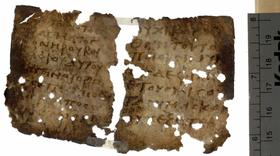
“you shall not murder a child by abortion nor kill that which is begotten.”
“And when we say that those women who use drugs to bring on abortion commit murder, and will have to give an account to God for the abortion, on what principle should we commit murder? For it does not belong to the same person to regard the very fœtus in the womb as a created being, and therefore an object of God's care, and when it has passed into life, to kill it”
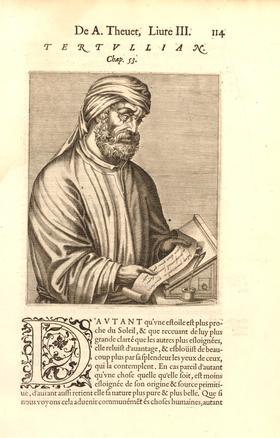
“In our case, murder being once for all forbidden, we may not destroy even the fœtus in the womb, while as yet the human being derives blood from other parts of the body for its sustenance. To hinder a birth is merely a speedier man-killing; nor does it matter whether you take away a life that is born, or destroy one that is coming to the birth. That is a man which is going to be one; you have the fruit already in its seed.”
“Concerning women who commit fornication, and destroy that which they have conceived, or who are employed in making drugs for abortion, a former decree excluded them until the hour of death, and to this some have assented. Nevertheless, being desirous to use somewhat greater lenity, we have ordained that they fulfil ten years [of penance], according to the prescribed degrees.”
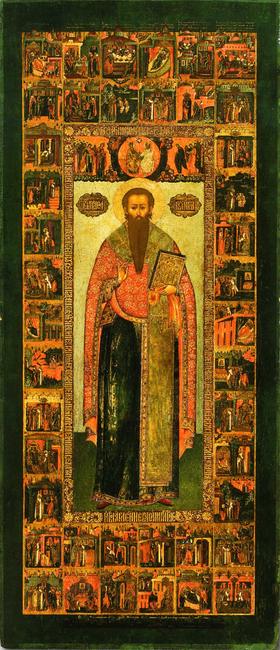
“The woman who purposely destroys her unborn child is guilty of murder. With us there is no nice enquiry as to its being formed or unformed. In this case it is not only the being about to be born who is vindicated, but the woman in her attack upon herself; because in most cases women who make such attempts die. The destruction of the embryo is an additional crime, a second murder, at all events if we regard it as done with intent. The punishment, however, of these women should not be for life, but for the term of ten years. And let their treatment depend not on mere lapse of time, but on the character of their repentance.”
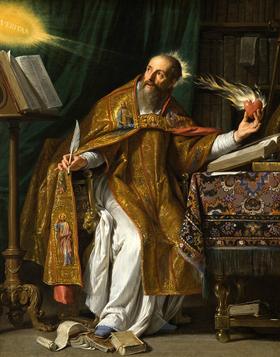
“Now who is there that is not rather disposed to think that unformed abortions perish, like seeds that have never fructified? … And therefore the following question may be very carefully inquired into and discussed by learned men, though I do not know whether it is in man's power to resolve it: At what time the infant begins to live in the womb: whether life exists in a latent form before it manifests itself in the motions of the living being. To deny that the young who are cut out limb by limb from the womb, lest if they were left there dead the mother should die too, have never been alive, seems too audacious.”
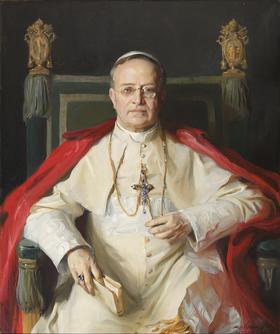
“But another very grave crime is to be noted, Venerable Brethren, which regards the taking of the life of the offspring hidden in the mother's womb. Some wish it to be allowed and left to the will of the father or the mother; others say it is unlawful unless there are weighty reasons which they call by the name of medical, social, or eugenic "indication."”
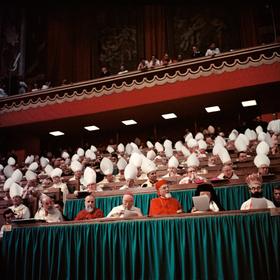
“For God, the Lord of life, has conferred on men the surpassing ministry of safeguarding life in a manner which is worthy of man. Therefore from the moment of its conception life must be guarded with the greatest care while abortion and infanticide are unspeakable crimes.”
“In the course of history, the Fathers of the Church, her Pastors and her Doctors have taught the same doctrine - the various opinions on the infusion of the spiritual soul did not introduce any doubt about the illicitness of abortion. It is true that in the Middle Ages, when the opinion was generally held that the spiritual soul was not present until after the first few weeks, a distinction was made in the evaluation of the sin and the gravity of penal sanctions. Excellent authors allowed for this first period more lenient case solutions which they rejected for following periods. But it was never denied at that time that procured abortion, even during the first days, was objectively grave fault. This condemnation was in fact unanimous.”
“Human life must be respected and protected absolutely from the moment of conception. … Since the first century the Church has affirmed the moral evil of every procured abortion. This teaching has not changed and remains unchangeable. Direct abortion, that is to say, abortion willed either as an end or a means, is gravely contrary to the moral law”
“The Church attaches the canonical penalty of excommunication to this crime against human life. … The Church does not thereby intend to restrict the scope of mercy. Rather, she makes clear the gravity of the crime committed, the irreparable harm done to the innocent who is put to death, as well as to the parents and the whole of society.”
“And even more so, the value of the person from the moment of conception is celebrated in the meeting between the Virgin Mary and Elizabeth, and between the two children whom they are carrying in the womb. It is precisely the children who reveal the advent of the Messianic age: in their meeting, the redemptive power of the presence of the Son of God among men first becomes operative.”
“The texts of Sacred Scripture never address the question of deliberate abortion and so do not directly and specifically condemn it. But they show such great respect for the human being in the mother's womb that they require as a logical consequence that God's commandment "You shall not kill" be extended to the unborn child as well. … Even scientific and philosophical discussions about the precise moment of the infusion of the spiritual soul have never given rise to any hesitation about the moral condemnation of abortion.”
“Given such unanimity in the doctrinal and disciplinary tradition of the Church, Paul VI was able to declare that this tradition is unchanged and unchangeable. Therefore, by the authority which Christ conferred upon Peter and his Successors, in communion with the Bishops-who on various occasions have condemned abortion and who in the aforementioned consultation, albeit dispersed throughout the world, have shown unanimous agreement concerning this doctrine-I declare that direct abortion, that is, abortion willed as an end or as a means, always constitutes a grave moral disorder, since it is the deliberate killing of an innocent human being.”
“I would now like to say a special word to women who have had an abortion. The Church is aware of the many factors which may have influenced your decision, and she does not doubt that in many cases it was a painful and even shattering decision. The wound in your heart may not yet have healed. Certainly what happened was and remains terribly wrong. But do not give in to discouragement and do not lose hope. … The Father of mercies is ready to give you his forgiveness and his peace in the Sacrament of Reconciliation.”
“On account of the intangible value of human life, the Church's magisterium has always spoken out against abortion.”
 Contraception“The Bible nowhere forbids contraception. The ban is a man-made rule that celibate men invented in 1968. Onan was punished for refusing his duty to his brother, not for contraception, and nearly every Protestant church accepts it today.”
 Homosexuality“Homosexuality is not forbidden in Christianity.”
 MatrimonyMatrimony is the sacrament in which a baptized man and woman bind themselves to each other for life, in a covenant the Church sees as a sign of Christ's union with her. This timeline begins with marriage at creation, then with what Christ taught and did, and with Paul's words on the "great mystery". It follows the witness of the Fathers and the way the Church has counted marriage among the sacraments, from Florence and Aquinas to Trent. It shows plainly that Trent, in 1563, began to require that a marriage be made before the parish priest and witnesses. It ends with the modern popes, the Second Vatican Council and the Catechism.