Tradition Timeline Leave an objection

Start page / Objections / Moral Teaching

“The Bible nowhere forbids contraception. The ban is a man-made rule that celibate men invented in 1968. Onan was punished for refusing his duty to his brother, not for contraception, and nearly every Protestant church accepts it today.”

Verses cited for this objection: Gen. 38:8-10, 1 Cor. 7:3-5, Heb. 13:4

Each mark is one quotation. Touch the timeline to read it.
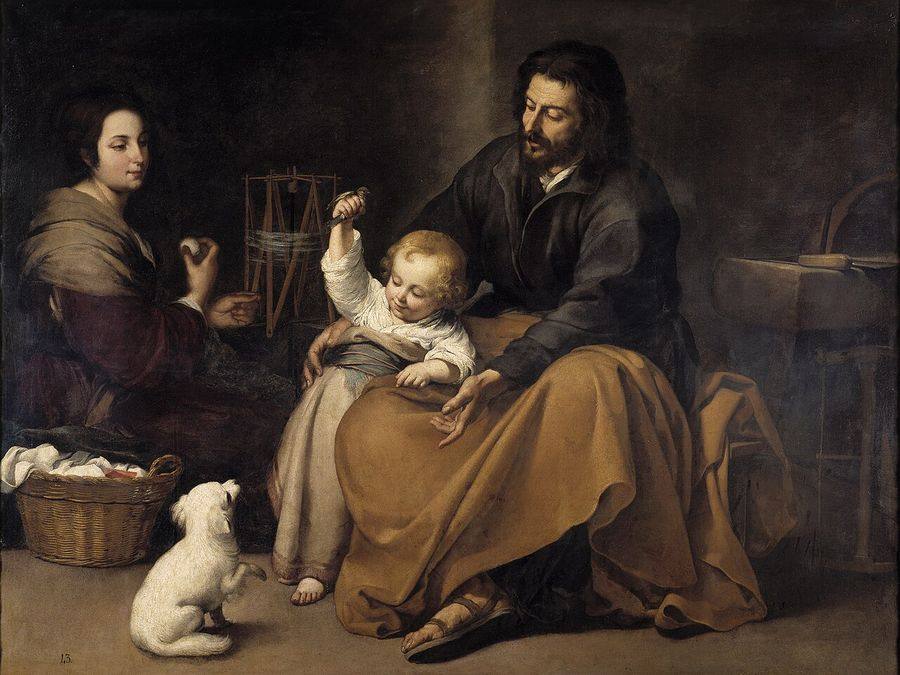
Joseph holds the child Jesus, who lifts a small bird away from a little white dog, while Mary looks up from her spinning
The Holy Family with a Little Bird, by Bartolomé Esteban Murillo, in the Prado, Madrid. Painting: Bartolomé Esteban Murillo, about 1650, Public domain, via Wikimedia Commons. Resized.

Short answer

The Church teaches that husband and wife may not act to make the marital act unable to give life. Paul VI restated this in 1968, and Pius XI had taught it in 1930 as a tradition already old. Christian writers of the third and fourth centuries condemned drugs taken for sterility, and in the fifth St. Augustine condemned attempts to prevent conception within marriage. The Church does not teach that couples must have as many children as possible. She teaches that spouses may space births for serious reasons by keeping to the infertile periods, and that the parents themselves make that judgment before God.

Where it starts with Jesus

Asked about divorce, Jesus goes back to the beginning. God made man and woman, and in marriage the two become one.

“But from the beginning of creation, ‘God made them male and female.’ ‘For this reason a man shall leave his father and mother and be joined to his wife, and the two shall become one.’ So they are no longer two but one. What therefore God has joined together, let not man put asunder.””

JesusMark 10:6-9Read it in the source: Bible Gateway, RSV Catholic Edition

How it points to Jesus

The Church's teaching on contraception comes from this view of marriage, which Jesus gave. Husband and wife are joined by God, and their union is his work before it is theirs. The teaching asks them to receive that union as he made it.

Drafted from primary sources. Every quotation is checked against the page it links to.

17 quotations in date order

A work in progress. The quotations below are not all the evidence on this matter. More are being added.

The Old Testamentbefore Christ
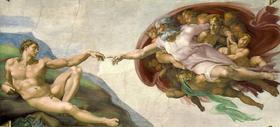
Old TestamentGod, borne by angels, reaches out his finger towards the hand of the reclining Adam
Scripture
Genesis Genesis 1:27-28

“So God created man in his own image, in the image of God he created him; male and female he created them. And God blessed them, and God said to them, "Be fruitful and multiply, and fill the earth and subdue it; and have dominion over the fish of the sea and over the birds of the air and over every living thing that moves upon the earth."”

Read it in the source: Bible Gateway, RSV Catholic Edition

Old Testament
Scripture
Genesis Genesis 38:8-10

“Then Judah said to Onan, "Go in to your brother's wife, and perform the duty of a brother-in-law to her, and raise up offspring for your brother." But Onan knew that the offspring would not be his; so when he went in to his brother's wife he spilled the semen on the ground, lest he should give offspring to his brother. And what he did was displeasing in the sight of the Lord, and he slew him also.”
Read it in the source: Bible Gateway, RSV Catholic Edition

c. 225
Church Father
St. Hippolytus of Rome Refutation of All Heresies, Book 9, ch. 7

“Whence women, reputed believers, began to resort to drugs for producing sterility, and to gird themselves round, so to expel what was being conceived on account of their not wishing to have a child either by a slave or by any paltry fellow, for the sake of their family and excessive wealth. Behold, into how great impiety that lawless one has proceeded, by inculcating adultery and murder at the same time!”

Read it in the source: New Advent

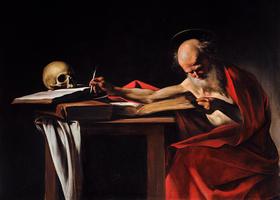
384An old man with a bald head and a red cloak leans over a large book, pen in hand, with a skull resting on another book on the table
Church Father
St. Jerome Letter 22, to Eustochium, 13

“Some go so far as to take potions, that they may insure barrenness, and thus murder human beings almost before their conception. Some, when they find themselves with child through their sin, use drugs to procure abortion”

Read it in the source: New Advent

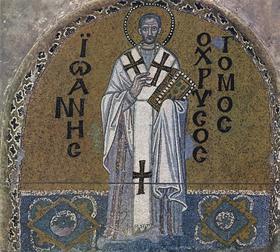
c. 391A gold mosaic of a bishop in white vestments marked with crosses, holding a book, with his name in Greek letters on either side
Church Father
St. John Chrysostom Homily 24 on Romans

“Why sow where the ground makes it its care to destroy the fruit? Where there are many efforts at abortion? Where there is murder before the birth? … You see how drunkenness leads to whoredom, whoredom to adultery, adultery to murder; or rather to a something even worse than murder. For I have no name to give it, since it does not take off the thing born, but prevent its being born. Why then do you abuse the gift of God, and fight with His laws, and follow after what is a curse as if a blessing, and make the chamber of procreation a chamber for murder, and arm the woman that was given for childbearing unto slaughter?”

Read it in the source: New Advent

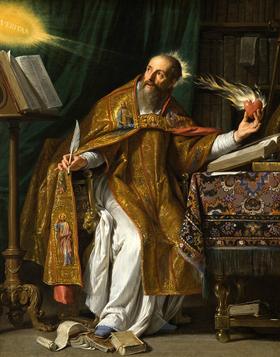
c. 419A bishop in a gold cope sits at a desk with a quill in one hand and a flaming heart in the other, looking up at a burst of light
Church Father
St. Augustine On Marriage and Concupiscence, Book 1, ch. 17

“For although propagation of offspring is not the motive of the intercourse, there is still no attempt to prevent such propagation, either by wrong desire or evil appliance. They who resort to these, although called by the name of spouses, are really not such; they retain no vestige of true matrimony, but pretend the honourable designation as a cloak for criminal conduct. … Sometimes, indeed, this lustful cruelty, or, if you please, cruel lust, resorts to such extravagant methods as to use poisonous drugs to secure barrenness”

Read it in the source: New Advent

The Middle Ages800 to 1500
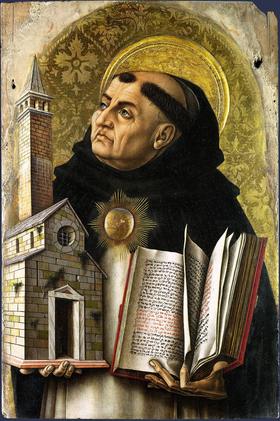
c. 1272A Dominican friar with a tonsure and a gold halo holds an open book and a small church, with a shining sun on his chest
Doctor of the Church
St. Thomas Aquinas Summa Theologiae II-II, q. 154, a. 1, body

“Now this same matter may be discordant with right reason in two ways. First, because it is inconsistent with the end of the venereal act. On this way, as hindering the begetting of children, there is the "vice against nature," which attaches to every venereal act from which generation cannot follow”

Read it in the source: New Advent

The Modern Era1800 to today
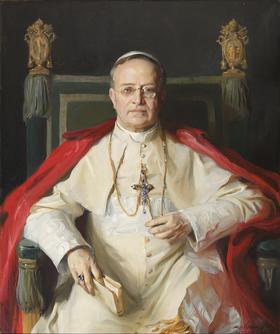
1930A pope in round spectacles sits in a red-backed chair, in a white cassock and a red cape, holding a small book
Magisterium
Pope Pius XI Casti Connubii, 54

“But no reason, however grave, may be put forward by which anything intrinsically against nature may become conformable to nature and morally good. Since, therefore, the conjugal act is destined primarily by nature for the begetting of children, those who in exercising it deliberately frustrate its natural power and purpose sin against nature and commit a deed which is shameful and intrinsically vicious.”

Read it in the source: vatican.va

1930
Magisterium
Pope Pius XI Casti Connubii, 55

“Small wonder, therefore, if Holy Writ bears witness that the Divine Majesty regards with greatest detestation this horrible crime and at times has punished it with death. As St. Augustine notes, "Intercourse even with one's legitimate wife is unlawful and wicked where the conception of the offspring is prevented. Onan, the son of Juda, did this and the Lord killed him for it."”

Read it in the source: vatican.va

1930
Magisterium
Pope Pius XI Casti Connubii, 56

“Since, therefore, openly departing from the uninterrupted Christian tradition some recently have judged it possible solemnly to declare another doctrine regarding this question, the Catholic Church … raises her voice in token of her divine ambassadorship and through Our mouth proclaims anew: any use whatsoever of matrimony exercised in such a way that the act is deliberately frustrated in its natural power to generate life is an offense against the law of God and of nature, and those who indulge in such are branded with the guilt of a grave sin.”

Read it in the source: vatican.va

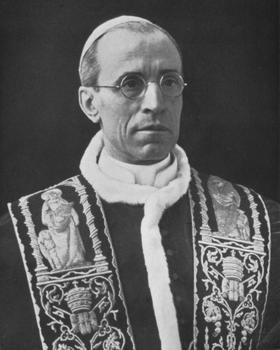
1951A black and white photograph of a thin pope in round spectacles wearing an embroidered stole
Magisterium
Pope Pius XII Address to Midwives, 29 October 1951

“Serious motives … may exempt husband and wife from the obligatory, positive debt for a long period or even for the entire period of matrimonial life. From this it follows that the observance of the natural sterile periods may be lawful, from the moral viewpoint: and it is lawful in the conditions mentioned.”

Read it in the source: EWTN Library

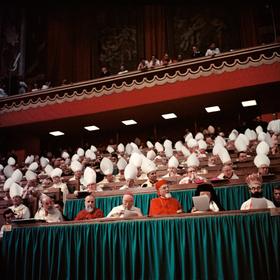
1965Rows of bishops in white mitres and copes sit in tiered stands hung with red and green cloth
Council
Second Vatican Council Gaudium et Spes, 50

“Let them thoughtfully take into account both their own welfare and that of their children, those already born and those which the future may bring. … The parents themselves and no one else should ultimately make this judgment in the sight of God. But in their manner of acting, spouses should be aware that they cannot proceed arbitrarily, but must always be governed according to a conscience dutifully conformed to the divine law itself”

Read it in the source: vatican.va

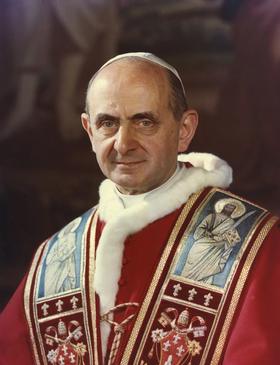
1968A colour photograph of a pope in a red cape trimmed with white fur and an embroidered stole
Magisterium
Pope St. Paul VI Humanae Vitae, 11-12

“The Church, nevertheless, in urging men to the observance of the precepts of the natural law, which it interprets by its constant doctrine, teaches that each and every marital act must of necessity retain its intrinsic relationship to the procreation of human life. … This particular doctrine, often expounded by the magisterium of the Church, is based on the inseparable connection, established by God, which man on his own initiative may not break, between the unitive significance and the procreative significance which are both inherent to the marriage act.”

Read it in the source: vatican.va

1968
Magisterium
Pope St. Paul VI Humanae Vitae, 16

“If therefore there are well-grounded reasons for spacing births, arising from the physical or psychological condition of husband or wife, or from external circumstances, the Church teaches that married people may then take advantage of the natural cycles immanent in the reproductive system and engage in marital intercourse only during those times that are infertile, thus controlling birth in a way which does not in the least offend the moral principles which We have just explained.”

Read it in the source: vatican.va

1992
Magisterium
Catechism of the Catholic Church CCC 2331

“"God created man in his own image . . . male and female he created them"; He blessed them and said, "Be fruitful and multiply"”

Read it in the source: vatican.va

1992
Magisterium
Catechism of the Catholic Church CCC 2368

“A particular aspect of this responsibility concerns the regulation of procreation. For just reasons, spouses may wish to space the births of their children. It is their duty to make certain that their desire is not motivated by selfishness but is in conformity with the generosity appropriate to responsible parenthood.”

Read it in the source: vatican.va

1992
Magisterium
Catechism of the Catholic Church CCC 2370

“Periodic continence, that is, the methods of birth regulation based on self-observation and the use of infertile periods, is in conformity with the objective criteria of morality. These methods respect the bodies of the spouses, encourage tenderness between them, and favor the education of an authentic freedom. In contrast, "every action which, whether in anticipation of the conjugal act, or in its accomplishment, or in the development of its natural consequences, proposes, whether as an end or as a means, to render procreation impossible" is intrinsically evil”

Read it in the source: vatican.va

Related timelines

Homosexuality“Homosexuality is not forbidden in Christianity.”19 quotations, from the Old Testament to 2023Abortion“The Bible never mentions abortion. The Church's ban is recent, and people point to Pius IX in 1869. For centuries great theologians such as Augustine and Aquinas taught that the soul came only some weeks after conception, so early abortion was not treated as killing. The teaching has changed, and it is a man-made rule.”22 quotations, from the Old Testament to 2024MatrimonyMatrimony is the sacrament in which a baptized man and woman bind themselves to each other for life, in a covenant the Church sees as a sign of Christ's union with her. This timeline begins with marriage at creation, then with what Christ taught and did, and with Paul's words on the "great mystery". It follows the witness of the Fathers and the way the Church has counted marriage among the sacraments, from Florence and Aquinas to Trent. It shows plainly that Trent, in 1563, began to require that a marriage be made before the parish priest and witnesses. It ends with the modern popes, the Second Vatican Council and the Catechism.18 quotations, from the Old Testament to 1992Priestly celibacy“The Bible says a bishop should be the husband of one wife, and Peter was married. Requiring priests to be celibate is unbiblical and treats marriage as something unholy.”19 quotations, from the Old Testament to 1992The seven sacramentsThe Church teaches that there are seven sacraments, that Christ instituted them, and that they give the grace they signify. This timeline begins with what Scripture shows of Christ acting through signs and sending the apostles. It then follows the early Fathers who spoke of the mysteries and the sacraments, the lists of seven in the Middle Ages, the definitions of Florence and Trent, and what the Second Vatican Council and the Catechism say today.19 quotations, from the Old Testament to 1992