Tradition Timeline Leave an objection
Each mark is one quotation. Touch the timeline to read it.
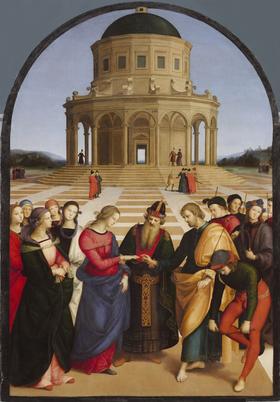
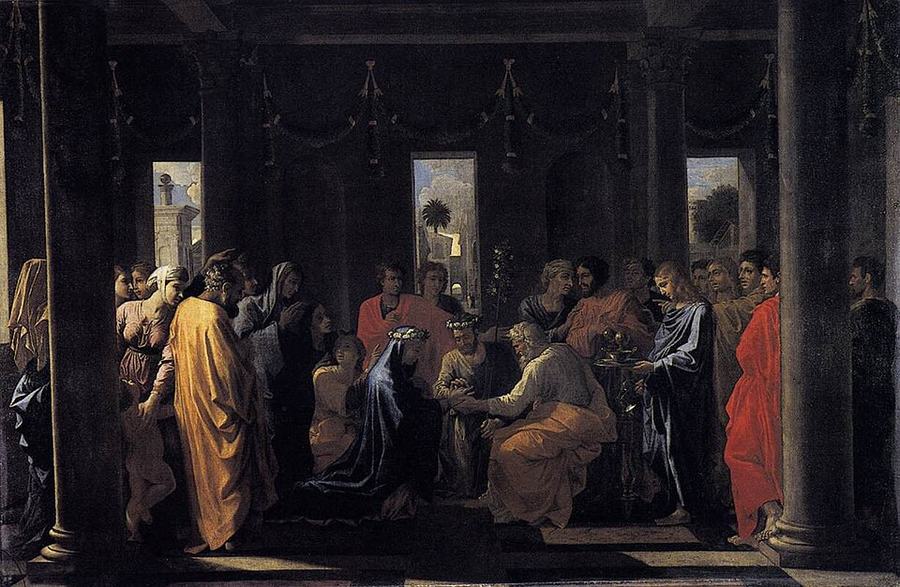
In a columned hall a man and a woman kneel facing each other and join hands before a seated priest, with a crowd of onlookers on both sides
Marriage, from the Seven Sacraments by Nicolas Poussin. A couple join hands before a priest. Painting: Nicolas Poussin, 1647 to 1648, Public domain, via Wikimedia Commons. Resized.

Matrimony is the sacrament in which a baptized man and woman bind themselves to each other for life, in a covenant the Church sees as a sign of Christ's union with her. This timeline begins with marriage at creation, then with what Christ taught and did, and with Paul's words on the "great mystery". It follows the witness of the Fathers and the way the Church has counted marriage among the sacraments, from Florence and Aquinas to Trent. It shows plainly that Trent, in 1563, began to require that a marriage be made before the parish priest and witnesses. It ends with the modern popes, the Second Vatican Council and the Catechism.

Where it starts with Jesus

Jesus answers a question about marriage by going back to what God did in the beginning, and he says that God joins the husband and wife together. He also went to a wedding at Cana, where he did his first sign.

“Have you not read that he who made them from the beginning made them male and female, and said, ‘For this reason a man shall leave his father and mother and be joined to his wife, and the two shall become one’? So they are no longer two but one. What therefore God has joined together, let not man put asunder.”

JesusMatthew 19:4-6Read it in the source: Bible Gateway, RSV Catholic Edition

How it points to Jesus

The Church holds that Christ raised the marriage of the baptized to a sacrament. Paul says the union of husband and wife is a great mystery that refers to Christ and the Church. The entries show the Church teaching, in every age, that the bond is made by God and that it signifies the love of Christ for his Church.

Drafted from primary sources. Every quotation is checked against the page it links to. The moral questions that touch marriage have their own timelines (contraception, homosexuality, celibacy). The Aquinas entry is from the Supplement to the Summa, and the entry notes this.

18 quotations in date order

A work in progress. The quotations below are not all the evidence on this matter. More are being added.

The Old Testamentbefore Christ
Old Testament
Scripture

Marriage at creation

Moses Genesis 2:23-24

“Then the man said, “This at last is bone of my bones and flesh of my flesh; she shall be called Woman, because she was taken out of Man.” Therefore a man leaves his father and his mother and cleaves to his wife, and they become one flesh.”
Read it in the source: Bible Gateway, RSV Catholic Edition

Old Testament
Scripture

God's covenant with Israel as a marriage

The prophet Hosea Hosea 2:19-20

“And I will betroth you to me for ever; I will betroth you to me in righteousness and in justice, in steadfast love, and in mercy. I will betroth you to me in faithfulness; and you shall know the Lord.”

Read it in the source: Bible Gateway, RSV Catholic Edition

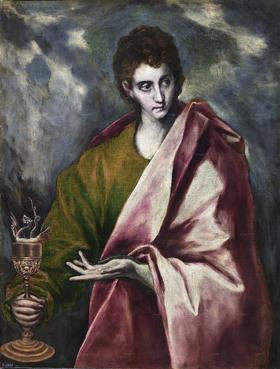
c. 30A young beardless apostle in a green tunic and rose cloak, holding a gold cup from which a small dragon rises
Scripture
St. John John 2:1-2, 11

“On the third day there was a marriage at Cana in Galilee, and the mother of Jesus was there; Jesus also was invited to the marriage, with his disciples. … This, the first of his signs, Jesus did at Cana in Galilee, and manifested his glory; and his disciples believed in him.”

Read it in the source: Bible Gateway, RSV Catholic Edition

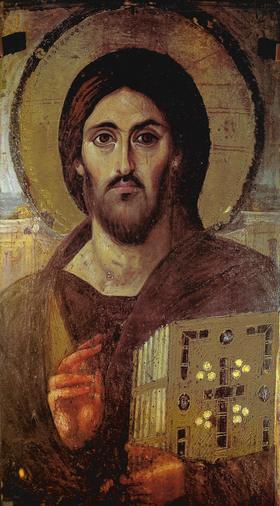
c. 30An ancient painted icon of Christ with a dark beard and a gold halo, his right hand raised in blessing and a jewelled book of the Gospels in his left
Scripture
Jesus Matthew 19:6-8

“So they are no longer two but one. What therefore God has joined together, let not man put asunder.” They said to him, “Why then did Moses command one to give a certificate of divorce, and to put her away?” He said to them, “For your hardness of heart Moses allowed you to divorce your wives, but from the beginning it was not so.”

Read it in the source: Bible Gateway, RSV Catholic Edition

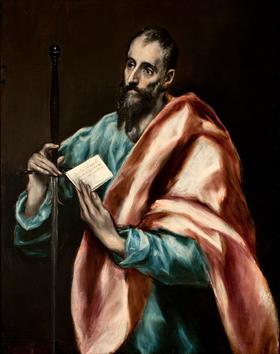
c. 62A bald, bearded apostle in a red cloak over a blue tunic, holding a folded letter in one hand and resting the other on a long sword
Scripture
St. Paul Ephesians 5:25, 31-32

“Husbands, love your wives, as Christ loved the church and gave himself up for her, … “For this reason a man shall leave his father and mother and be joined to his wife, and the two shall become one flesh.” This is a great mystery, and I mean in reference to Christ and the church;”

Read it in the source: Bible Gateway, RSV Catholic Edition

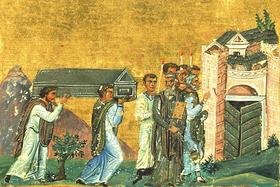
c. 107A manuscript painting on a gold ground of clergy carrying a casket towards a church building
Church Father
St. Ignatius of Antioch Letter to Polycarp, ch. 5

“But it becomes both men and women who marry, to form their union with the approval of the bishop, that their marriage may be according to God, and not after their own lust.”

Read it in the source: New Advent

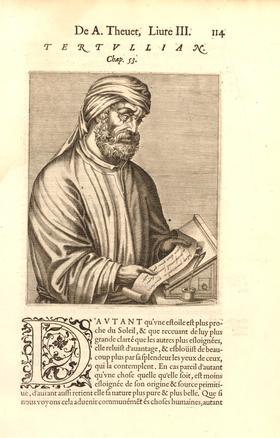
c. 205An engraving of a bearded man in a turban holding a scroll, set in a page of printed French text
Church Father
Tertullian To His Wife, Book 2, ch. 8

“Whence are we to find (words) enough fully to tell the happiness of that marriage which the Church cements, and the oblation confirms, and the benediction signs and seals; (which) angels carry back the news of (to heaven), (which) the Father holds for ratified?”

Read it in the source: New Advent

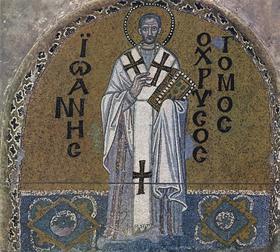
c. 391A gold mosaic of a bishop in white vestments marked with crosses, holding a book, with his name in Greek letters on either side
Church Father
St. John Chrysostom Homily 20 on Ephesians, on Ephesians 5:22-33

“A great mystery indeed! And one that contains some hidden wisdom. Such Moses prophetically showed it to be from the very first; such now also Paul proclaims it, where he says, concerning Christ and the Church.”

Read it in the source: New Advent

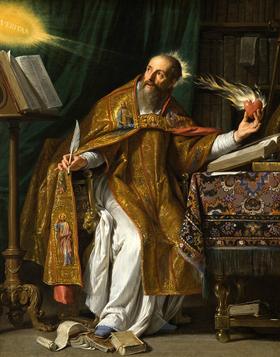
c. 401A bishop in a gold cope sits at a desk with a quill in one hand and a flaming heart in the other, looking up at a burst of light
Church Father
St. Augustine On the Good of Marriage, ch. 32

“Therefore that marriage takes place for the sake of begetting children, the Apostle is a witness thus, I will, says he, that the younger women be married. … But unto the sanctity of the Sacrament that saying, The wife not to depart from her husband, but, in case she shall have departed, to remain unmarried, or to be reconciled to her husband: and let not the husband put away his wife. All these are goods, on account of which marriage is a good; offspring, faith, sacrament.”

Read it in the source: New Advent

The Middle Ages800 to 1500
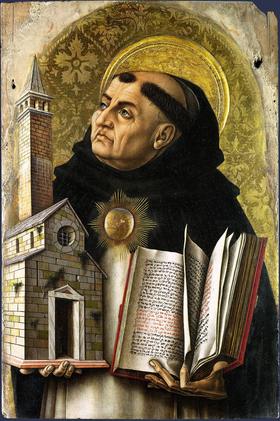
c. 1274A Dominican friar with a tonsure and a gold halo holds an open book and a small church, with a shining sun on his chest
Doctor of the Church
St. Thomas Aquinas Summa Theologiae, Supplement, q. 42, a. 1, I answer that and Reply to Objection 1

“I answer that, A sacrament denotes a sanctifying remedy against sin offered to man under sensible signs. … Wherefore since this is the case in matrimony, it is reckoned among the sacraments. Reply to Objection 1. The words whereby the marriage consent is expressed are the form of this sacrament, and not the priest's blessing, which is a sacramental.”

Read it in the source: New Advent

1439A black and white photograph of a large parchment charter written in two columns, with seals hanging from its lower edge
Council
Council of Florence Decree for the Armenians, Exsultate Deo, 1439

“The seventh is the sacrament of matrimony, which is a sign of the union of Christ and the church according to the words of the apostle: This sacrament is a great one, but I speak in Christ and in the church. The efficient cause of matrimony is usually mutual consent expressed in words about the present. A threefold good is attributed to matrimony. The first is the procreation and bringing up of children for the worship of God. The second is the mutual faithfulness of the spouses towards each other. The third is the indissolubility of marriage, since it signifies the indivisible union of Christ and the church.”

Read it in the source: Papal Encyclicals Online

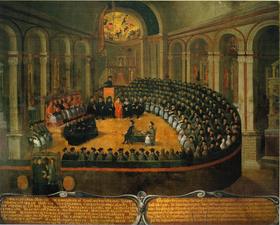
1563Rows of bishops in mitres sit in a great semicircle of benches inside a church, facing the presiding cardinals
Council
Council of Trent Session 24, Canons on the Sacrament of Matrimony, canon 1

“If any one saith, that matrimony is not truly and properly one of the seven sacraments of the evangelic law, (a sacrament) instituted by Christ the Lord; but that it has been invented by men in the Church; and that it does not confer grace; let him be anathema.”

Read it in the source: Papal Encyclicals Online

1563
Council
Council of Trent Session 24, Decree on the Reformation of Marriage, ch. 1 (Tametsi)

“Although it is not to be doubted, that clandestine marriages, made with the free consent of the contracting parties, are valid and true marriages, so long as the Church has not rendered them invalid; … Those who shall attempt to contract marriage otherwise than in the presence of the parish priest, or of some other priest by permission of the said parish priest, or of the Ordinary, and in the presence of two or three witnesses; the holy Synod renders such wholly incapable of thus contracting and declares such contracts invalid and null, as by the present decree It invalidates and annuls them.”

Read it in the source: Papal Encyclicals Online

The Modern Era1800 to today
1930
Magisterium
Pius XI Casti Connubii, 31

“But this accumulation of benefits is completed and, as it were, crowned by that blessing of Christian marriage which in the words of St. Augustine we have called the sacrament, by which is denoted both the indissolubility of the bond and the raising and hallowing of the contract by Christ Himself, whereby He made it an efficacious sign of grace.”

Read it in the source: vatican.va

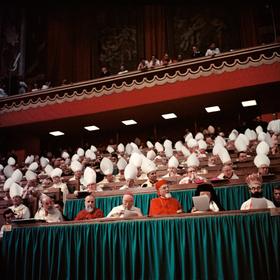
1965Rows of bishops in white mitres and copes sit in tiered stands hung with red and green cloth
Council
Second Vatican Council Gaudium et Spes, 48

“Christ the Lord abundantly blessed this many-faceted love, welling up as it does from the fountain of divine love and structured as it is on the model of His union with His Church. For as God of old made Himself present to His people through a covenant of love and fidelity, so now the Savior of men and the Spouse of the Church comes into the lives of married Christians through the sacrament of matrimony.”

Read it in the source: vatican.va

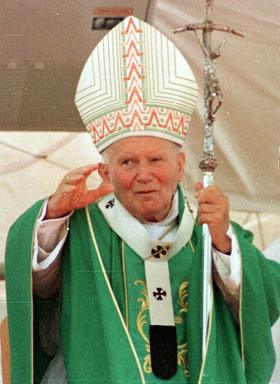
1981An elderly pope in green vestments and a white and gold mitre raises his hand in greeting, holding his staff with the crucifix
Magisterium
St. John Paul II Familiaris Consortio, 13

“Christ renews the first plan that the Creator inscribed in the hearts of man and woman, and in the celebration of the sacrament of matrimony offers a "new heart": thus the couples are not only able to overcome "hardness of heart," but also and above all they are able to share the full and definitive love of Christ, the new and eternal Covenant made flesh.”

Read it in the source: vatican.va

1992
Magisterium
Catechism of the Catholic Church CCC 1623

“In the Latin Church, it is ordinarily understood that the spouses, as ministers of Christ's grace, mutually confer upon each other the sacrament of Matrimony by expressing their consent before the Church. In the Eastern liturgies the minister of this sacrament (which is called "Crowning") is the priest or bishop who, after receiving the mutual consent of the spouses, successively crowns the bridegroom and the bride as a sign of the marriage covenant.”

Read it in the source: vatican.va

1992
Magisterium
Catechism of the Catholic Church CCC 1612

“The nuptial covenant between God and his people Israel had prepared the way for the new and everlasting covenant in which the Son of God, by becoming incarnate and giving his life, has united to himself in a certain way all mankind saved by him, thus preparing for "the wedding-feast of the Lamb."”

Read it in the source: vatican.va

Related timelines

Homosexuality“Homosexuality is not forbidden in Christianity.”19 quotations, from the Old Testament to 2023Abortion“The Bible never mentions abortion. The Church's ban is recent, and people point to Pius IX in 1869. For centuries great theologians such as Augustine and Aquinas taught that the soul came only some weeks after conception, so early abortion was not treated as killing. The teaching has changed, and it is a man-made rule.”22 quotations, from the Old Testament to 2024The seven sacramentsThe Church teaches that there are seven sacraments, that Christ instituted them, and that they give the grace they signify. This timeline begins with what Scripture shows of Christ acting through signs and sending the apostles. It then follows the early Fathers who spoke of the mysteries and the sacraments, the lists of seven in the Middle Ages, the definitions of Florence and Trent, and what the Second Vatican Council and the Catechism say today.19 quotations, from the Old Testament to 1992Contraception“The Bible nowhere forbids contraception. The ban is a man-made rule that celibate men invented in 1968. Onan was punished for refusing his duty to his brother, not for contraception, and nearly every Protestant church accepts it today.”17 quotations, from the Old Testament to 1992BaptismBaptism is the first sacrament, the gateway to life in the Spirit and to the other sacraments. This timeline begins with Christ's own baptism and his command to baptize. It then shows how the Church has baptized and taught baptism in each age: how she prepared those who came, the days she chose, the water and the Trinitarian words, who may baptize, and what the sacrament gives. It shows the dispute over the baptism of those outside the Church, where Pope Stephen and St. Cyprian took opposite sides, and how it was settled. It ends with the Council of Florence, Trent, the Second Vatican Council and the Catechism.20 quotations, from the Old Testament to 1992Priestly celibacy“The Bible says a bishop should be the husband of one wife, and Peter was married. Requiring priests to be celibate is unbiblical and treats marriage as something unholy.”19 quotations, from the Old Testament to 1992