8 timelines
160 quotations, each linked to the page it was checked against.
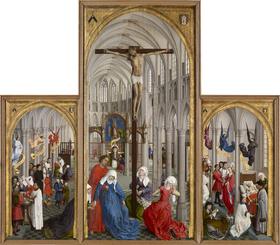 The seven sacramentsThe Church teaches that there are seven sacraments, that Christ instituted them, and that they give the grace they signify. This timeline begins with what Scripture shows of Christ acting through signs and sending the apostles. It then follows the early Fathers who spoke of the mysteries and the sacraments, the lists of seven in the Middle Ages, the definitions of Florence and Trent, and what the Second Vatican Council and the Catechism say today.
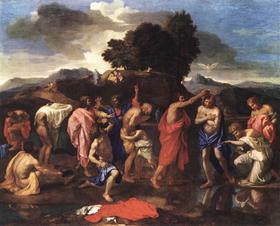 BaptismBaptism is the first sacrament, the gateway to life in the Spirit and to the other sacraments. This timeline begins with Christ's own baptism and his command to baptize. It then shows how the Church has baptized and taught baptism in each age: how she prepared those who came, the days she chose, the water and the Trinitarian words, who may baptize, and what the sacrament gives. It shows the dispute over the baptism of those outside the Church, where Pope Stephen and St. Cyprian took opposite sides, and how it was settled. It ends with the Council of Florence, Trent, the Second Vatican Council and the Catechism.
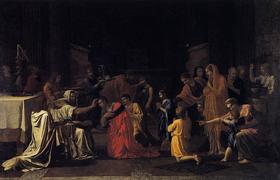 ConfirmationConfirmation is the sacrament in which the baptized receive the gift of the Holy Spirit by the laying on of hands and anointing with chrism. This timeline begins with Christ's promise of the Spirit and the apostles' laying on of hands in Samaria and Ephesus. It follows the anointing after baptism in the early Church, then the way the West came to reserve the sacrament to the bishop and to separate it in time from Baptism, while the East kept the two together. It ends with the present rite and its words.
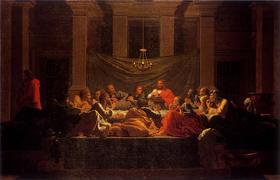 The EucharistThe Eucharist is the sacrament in which the Church receives the body and blood of Christ. This timeline follows the Eucharist as a sacrament received: what Christ gave at the Last Supper, who may come to Communion and how they should prepare, Communion as the bond of the Church, Communion for the dying, and how often the faithful received. It shows where the practice changed, for the age of first Communion, the cup and the frequency of Communion, and what the Church says has stayed the same.
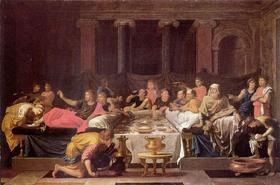 Penance and ReconciliationPenance, also called Reconciliation or Confession, is the sacrament in which the Church, in the Lord's name, forgives sins committed after Baptism. This timeline starts with Christ forgiving sins and giving the apostles that power. It then shows how the Church dealt with grave sin in the first centuries, by a public penance that was often allowed only once, how private and repeated confession became the usual form, and what the councils, a Doctor and the popes have said about it since.
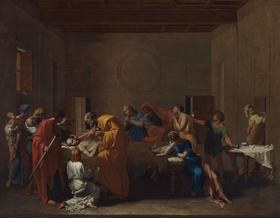 The Anointing of the SickThe Anointing of the Sick is the sacrament in which a priest anoints a seriously ill person with blessed oil and prays over him. This timeline begins with Christ's healing of the sick and the Twelve anointing with oil, and with the passage of James that the Council of Trent names as its promulgation. It then shows a Father of the fourth century, an early prayer for blessing the oil, the long period when the anointing was given mostly to the dying and was called Extreme Unction, the definitions of Florence and Trent, and the return at the Second Vatican Council to anointing the seriously ill, ending with the present rite and the Catechism.
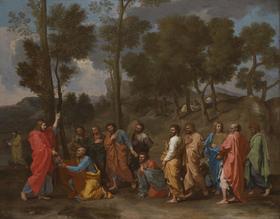 Holy OrdersThe Catechism calls Holy Orders the sacrament through which the mission Christ gave his apostles continues in the Church until the end of time. It has three degrees: bishop, presbyter and deacon. This timeline begins with Christ choosing and sending the Twelve and the laying on of hands in the New Testament. It then follows the three degrees in the Fathers, the rule for ordaining a bishop at Nicaea, the Fathers on the weight of the office, and the teaching of Aquinas, Florence, Trent, Pius XII, the Second Vatican Council and the Catechism.
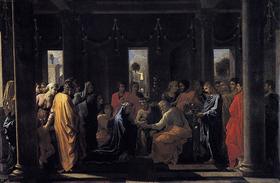 MatrimonyMatrimony is the sacrament in which a baptized man and woman bind themselves to each other for life, in a covenant the Church sees as a sign of Christ's union with her. This timeline begins with marriage at creation, then with what Christ taught and did, and with Paul's words on the "great mystery". It follows the witness of the Fathers and the way the Church has counted marriage among the sacraments, from Florence and Aquinas to Trent. It shows plainly that Trent, in 1563, began to require that a marriage be made before the parish priest and witnesses. It ends with the modern popes, the Second Vatican Council and the Catechism.