Old Testament
Scripture
Melchizedek brings out bread and wine
The Book of Genesis Genesis 14:18
“And Melchiz′edek king of Salem brought out bread and wine; he was priest of God Most High.”
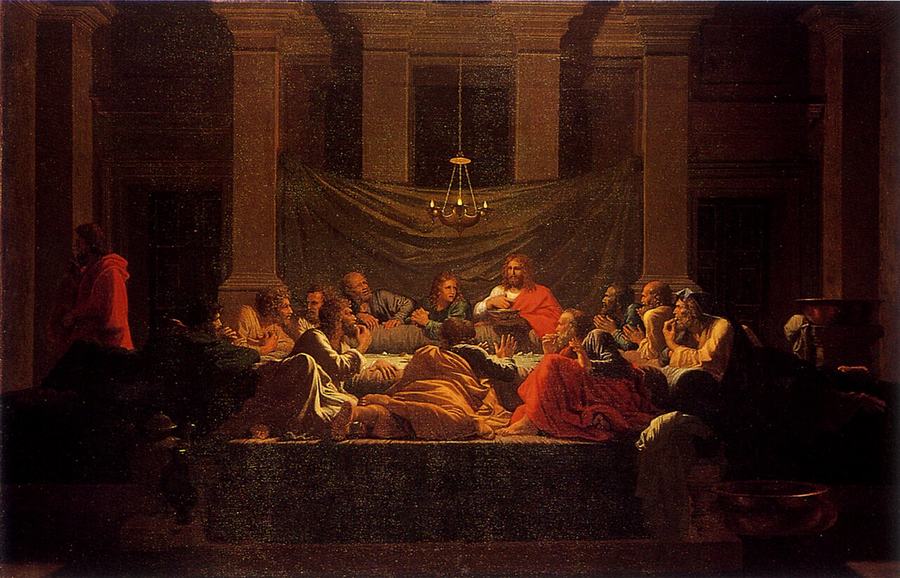
The Eucharist is the sacrament in which the Church receives the body and blood of Christ. This timeline follows the Eucharist as a sacrament received: what Christ gave at the Last Supper, who may come to Communion and how they should prepare, Communion as the bond of the Church, Communion for the dying, and how often the faithful received. It shows where the practice changed, for the age of first Communion, the cup and the frequency of Communion, and what the Church says has stayed the same.
Jesus says that those who eat his flesh and drink his blood abide in him and he in them. At the Last Supper he gave his body and blood to the Twelve and told them to do this in memory of him.
“He who eats my flesh and drinks my blood abides in me, and I in him. As the living Father sent me, and I live because of the Father, so he who eats me will live because of me.”
JesusJohn 6:56-57Read it in the source: Bible Gateway, RSV Catholic Edition
Every entry here is about receiving him: Paul tells the Corinthians how to come to the table, the Fathers and councils say who may receive and when, and the Church's own texts call the Eucharist the source and summit of Christian life. The practice of receiving has changed in the cup, the age of children and the frequency. What the texts treat as given is that the one received is Christ himself.
Drafted from primary sources. Every quotation is checked against the page it links to. The doctrine of the real presence, the sacrifice of the Mass and the adoration of the Eucharist is argued on the objection timelines, and the history of the rite is on the timeline of the Mass through the centuries. Where a practice changed, the text that states the change is quoted and the change is named in the note under it. The decree of St. Pius X on frequent Communion (1905) is left out, because no approved host served a text of it that could be checked.
A work in progress. The quotations below are not all the evidence on this matter. More are being added.
“And Melchiz′edek king of Salem brought out bread and wine; he was priest of God Most High.”
“For I will pass through the land of Egypt that night, and I will smite all the first-born in the land of Egypt, both man and beast; and on all the gods of Egypt I will execute judgments: I am the Lord. The blood shall be a sign for you, upon the houses where you are; and when I see the blood, I will pass over you, and no plague shall fall upon you to destroy you, when I smite the land of Egypt. “This day shall be for you a memorial day, and you shall keep it as a feast to the Lord; throughout your generations you shall observe it as an ordinance for ever.”
“And when the dew had gone up, there was on the face of the wilderness a fine, flake-like thing, fine as hoarfrost on the ground. When the people of Israel saw it, they said to one another, “What is it?” For they did not know what it was. And Moses said to them, “It is the bread which the Lord has given you to eat.”
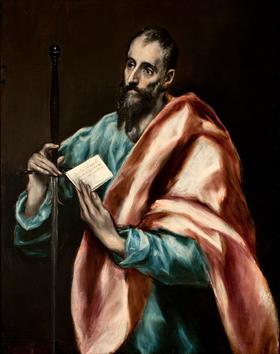
“For I received from the Lord what I also delivered to you, that the Lord Jesus on the night when he was betrayed took bread, and when he had given thanks, he broke it, and said, “This is my body which is for you. Do this in remembrance of me.” In the same way also the cup, after supper, saying, “This cup is the new covenant in my blood. Do this, as often as you drink it, in remembrance of me.” For as often as you eat this bread and drink the cup, you proclaim the Lord’s death until he comes.”
“The cup of blessing which we bless, is it not a participation in the blood of Christ? The bread which we break, is it not a participation in the body of Christ? Because there is one bread, we who are many are one body, for we all partake of the one bread.”
“Whoever, therefore, eats the bread or drinks the cup of the Lord in an unworthy manner will be guilty of profaning the body and blood of the Lord. Let a man examine himself, and so eat of the bread and drink of the cup. For any one who eats and drinks without discerning the body eats and drinks judgment upon himself.”
“so that you obey the bishop and the presbytery with an undivided mind, breaking one and the same bread, which is the medicine of immortality, and the antidote to prevent us from dying, but [which causes] that we should live for ever in Jesus Christ.”
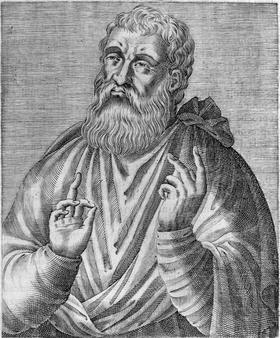
“of which no one is allowed to partake but the man who believes that the things which we teach are true, and who has been washed with the washing that is for the remission of sins, and unto regeneration, and who is so living as Christ has enjoined.”
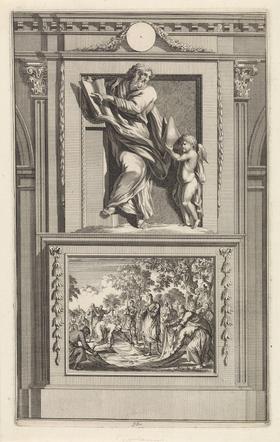
“we ask that this bread should be given to us daily, that we who are in Christ, and daily receive the Eucharist for the food of salvation, may not, by the interposition of some heinous sin, by being prevented, as withheld and not communicating, from partaking of the heavenly bread, be separated from Christ's body”
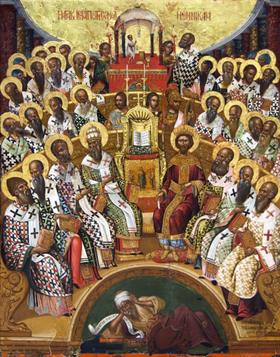
“Concerning the departing, the ancient canonical law is still to be maintained, to wit, that, if any man be at the point of death, he must not be deprived of the last and most indispensable Viaticum. But, if any one should be restored to health again who has received the communion when his life was despaired of, let him remain among those who communicate in prayers only. But in general, and in the case of any dying person whatsoever asking to receive the Eucharist, let the Bishop, after examination made, give it him.”
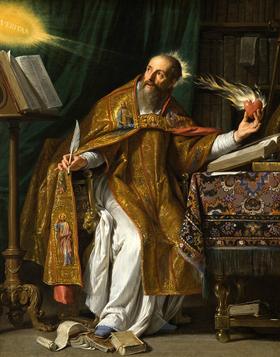
“And thus He would have this meat and drink to be understood as meaning the fellowship of His own body and members, which is the holy Church … The sacrament of this thing, namely, of the unity of the body and blood of Christ, is prepared on the Lord's table in some places daily, in some places at certain intervals of days, and from the Lord's table it is taken, by some to life, by some to destruction”
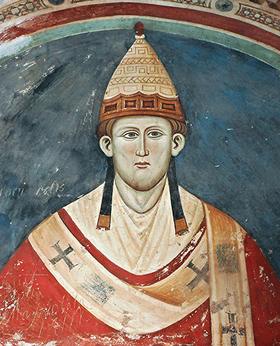
“All the faithful of either sex, after they have reached the age of discernment, should individually confess all their sins in a faithful manner to their own priest at least once a year, and let them take care to do what they can to perform the penance imposed on them. Let them reverently receive the sacrament of the eucharist at least at Easter unless they think, for a good reason and on the advice of their own priest, that they should abstain from receiving it for a time.”
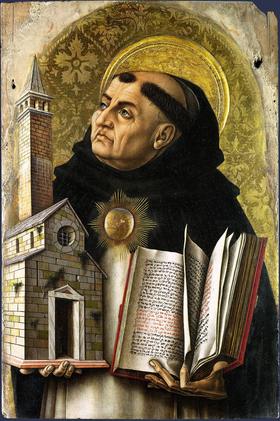
“A thing may prevent the receiving of this sacrament in two ways: first of all in itself, like mortal sin, which is repugnant to what is signified by this sacrament, as stated above (Article 4): secondly, on account of the Church's prohibition; and thus a man is prevented from taking this sacrament after receiving food or drink, for three reasons. First, as Augustine says (Resp. ad Januar., Ep. liv), "out of respect for this sacrament," so that it may enter into a mouth not yet contaminated by any food or drink. Secondly, because of its signification. i.e. to give us to understand that Christ, Who is the reality of this sacrament, and His charity, ought to be first of all established in our hearts, according to Matthew 6:33: "Seek first the kingdom of God." Thirdly, on account of the danger of vomiting and intemperance, which sometimes arise from over-indulging in food, as the Apostle says (1 Corinthians 11:21): "One, indeed, is hungry, and another is drunk."”
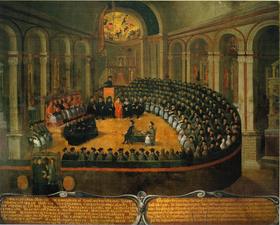
“Wherefore, he who would communicate, ought to recall to mind the precept of the Apostle; Let a man prove himself. Now ecclesiastical usage declares that necessary proof to be, that no one, conscious to himself … of mortal sin, how contrite soever he may seem to himself, ought to approach to the sacred Eucharist without previous sacramental confession.”
“It moreover declares, that although, as hath been already said, our Redeemer, in that last supper, instituted, and delivered to the apostles, this sacrament in two species, yet is to be acknowledged, that Christ whole and entire and a true sacrament are received under either species alone; and that therefore, as regards the fruit thereof, they, who receive one species alone, are not defrauded of any grace necessary to salvation.”
“The sacred and holy Synod would fain indeed that, at each mass, the faithful who are present should communicate, not only in spiritual desire, but also by the sacramental participation of the Eucharist, that thereby a more abundant fruit might be derived to them from this most holy sacrifice”
“The Catholic Church, bearing this in mind, took care even from the beginning to bring the little ones to Christ through Eucharistic Communion, which was administered even to nursing infants. This, as was prescribed in almost all ancient Ritual books, was done at Baptism until the thirteenth century, and this custom prevailed in some places even later. It is still found in the Greek and Oriental Churches. But to remove the danger that infants might eject the Consecrated Host, the custom obtained from the beginning of administering the Eucharist to them under the species of wine only. … This practice later died out in the Latin Church, and children were not permitted to approach the Holy Table until they had come to the use of reason and had some knowledge of this august Sacrament.”
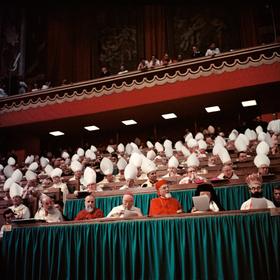
“Taking part in the Eucharistic sacrifice, which is the fount and apex of the whole Christian life, they offer the Divine Victim to God, and offer themselves along with It. … Strengthened in Holy Communion by the Body of Christ, they then manifest in a concrete way that unity of the people of God which is suitably signified and wondrously brought about by this most august sacrament.”
“This catechesis unveils what lay hidden under the letter of the Old Testament: the mystery of Christ. It is called "typological" because it reveals the newness of Christ on the basis of the "figures" (types) which announce him in the deeds, words, and symbols of the first covenant. … Water from the rock was the figure of the spiritual gifts of Christ, and manna in the desert prefigured the Eucharist, "the true bread from heaven."”
“the signs of bread and wine become, in a way surpassing understanding, the Body and Blood of Christ; they continue also to signify the goodness of creation. … the Church sees in the gesture of the king-priest Melchizedek, who "brought out bread and wine," a prefiguring of her own offering.”
“By celebrating the Last Supper with his apostles in the course of the Passover meal, Jesus gave the Jewish Passover its definitive meaning. Jesus' passing over to his father by his death and Resurrection, the new Passover, is anticipated in the Supper and celebrated in the Eucharist, which fulfills the Jewish Passover and anticipates the final Passover of the Church in the glory of the kingdom.”
“The Church obliges the faithful "to take part in the Divine Liturgy on Sundays and feast days" and, prepared by the sacrament of Reconciliation, to receive the Eucharist at least once a year, if possible during the Easter season. But the Church strongly encourages the faithful to receive the holy Eucharist on Sundays and feast days, or more often still, even daily.”
“Since Christ is sacramentally present under each of the species, communion under the species of bread alone makes it possible to receive all the fruit of Eucharistic grace. For pastoral reasons this manner of receiving communion has been legitimately established as the most common form in the Latin rite. But "the sign of communion is more complete when given under both kinds, since in that form the sign of the Eucharistic meal appears more clearly." This is the usual form of receiving communion in the Eastern rites.”
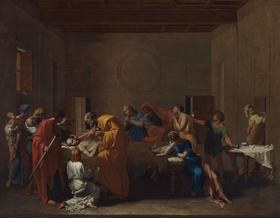 The Anointing of the SickThe Anointing of the Sick is the sacrament in which a priest anoints a seriously ill person with blessed oil and prays over him. This timeline begins with Christ's healing of the sick and the Twelve anointing with oil, and with the passage of James that the Council of Trent names as its promulgation. It then shows a Father of the fourth century, an early prayer for blessing the oil, the long period when the anointing was given mostly to the dying and was called Extreme Unction, the definitions of Florence and Trent, and the return at the Second Vatican Council to anointing the seriously ill, ending with the present rite and the Catechism.
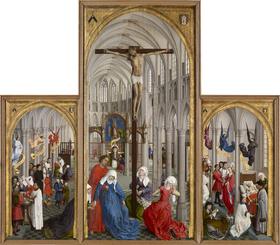 The seven sacramentsThe Church teaches that there are seven sacraments, that Christ instituted them, and that they give the grace they signify. This timeline begins with what Scripture shows of Christ acting through signs and sending the apostles. It then follows the early Fathers who spoke of the mysteries and the sacraments, the lists of seven in the Middle Ages, the definitions of Florence and Trent, and what the Second Vatican Council and the Catechism say today.
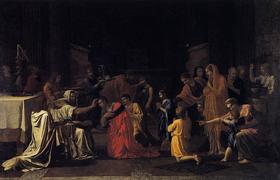 ConfirmationConfirmation is the sacrament in which the baptized receive the gift of the Holy Spirit by the laying on of hands and anointing with chrism. This timeline begins with Christ's promise of the Spirit and the apostles' laying on of hands in Samaria and Ephesus. It follows the anointing after baptism in the early Church, then the way the West came to reserve the sacrament to the bishop and to separate it in time from Baptism, while the East kept the two together. It ends with the present rite and its words.
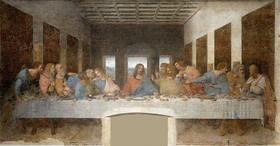 The Real Presence“The Eucharist is only a symbol; it is not truly the Body and Blood of Jesus Christ.”
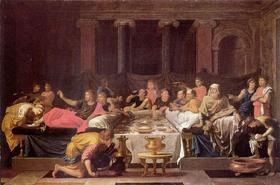 Penance and ReconciliationPenance, also called Reconciliation or Confession, is the sacrament in which the Church, in the Lord's name, forgives sins committed after Baptism. This timeline starts with Christ forgiving sins and giving the apostles that power. It then shows how the Church dealt with grave sin in the first centuries, by a public penance that was often allowed only once, how private and repeated confession became the usual form, and what the councils, a Doctor and the popes have said about it since.
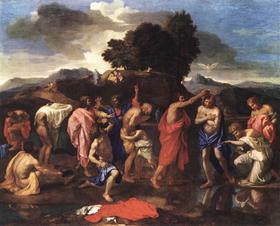 BaptismBaptism is the first sacrament, the gateway to life in the Spirit and to the other sacraments. This timeline begins with Christ's own baptism and his command to baptize. It then shows how the Church has baptized and taught baptism in each age: how she prepared those who came, the days she chose, the water and the Trinitarian words, who may baptize, and what the sacrament gives. It shows the dispute over the baptism of those outside the Church, where Pope Stephen and St. Cyprian took opposite sides, and how it was settled. It ends with the Council of Florence, Trent, the Second Vatican Council and the Catechism.