Tradition Timeline Leave an objection

Start page / The ages of the Church

Reformation and Trent

Reformation and Trent, 1500 to 1800: all 184 quotations on this site dated to it, from every timeline and every kind of source, in date order.

Each mark is one quotation. Touch the timeline to read it.

Why the Reformation and Trent matter

The Protestant Reformation began in 1517. The Council of Trent met from 1545 to 1563 and answered the Reformers point by point. This age holds both sides in their own words: the Reformers and their confessions, and the decrees of the council.

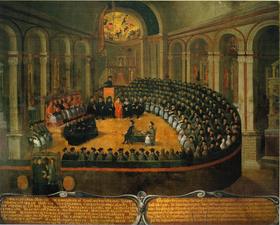
  1. Rows of bishops in mitres sit in a great semicircle of benches inside a church, facing the presiding cardinals

    Against Scripture alone, Trent says in 1546 that the faith is contained in the written books and in the traditions that have come down from the apostles.

    “…this truth and discipline are contained in the written books, and the unwritten traditions which, received by the Apostles from the mouth of Christ himself, or from the Apostles themselves, the Holy Ghost dictating, have come down even unto us, transmitted as it were from hand to hand”

    Council of TrentSession 4, Decree Concerning the Canonical Scriptures, 1546Read it in the source: Papal Encyclicals Online

Most of the objections on this site were first raised in these years.

184 quotations in date order

A work in progress. The quotations below are not all the evidence on this matter. More are being added.

The 1500s1500 to 1599
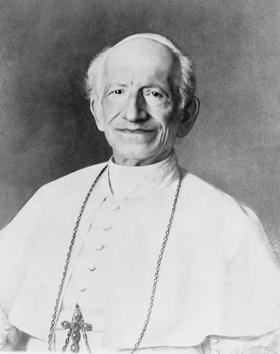
13th to 16th centuriesA black and white photograph of a very old, smiling pope in white with a pectoral cross
Magisterium

Popes before Pius V on the Rosary, as Leo XIII lists them

Pope Leo XIII Supremi Apostolatus Officio, 5 (1 September 1883)

“Thus Urban IV, testified that “every day the Rosary obtained fresh boon for Christianity.” Sixtus IV declared that this method of prayer “redounded to the honour of God and the Blessed Virgin, and was well suited to obviate impending dangers;” Leo X that “it was instituted to oppose pernicious heresiarchs and heresies;” while Julius III called it “the glory of the Church.””

Read it in the source: vatican.va

See it on the timeline: The Rosary

29 September 1504
Miracle

Our Lady of Tirano, Italy

Diocese of Como Santuari diocesani, Tirano – Madonna di Tirano (Diocese of Como shrines website)

“The Sanctuary of Tirano stands exactly at the spot where, on 29 September 1504, the feast of St. Michael, the Virgin Mary appeared to Blessed Mario Homodei, greeting him with the words: "Bene avrai" and expressly asking for a temple to be built in her honour, with the promise of spiritual and bodily health to whoever would invoke her. … For on 10 October 1504, eleven days after the event, Guglielmo Cittadini, vicar of the Bishop of Como, Cardinal Antonio Trivulzio, authorized, with permission to celebrate Mass, the building of a basilicam seu ecclesiam in honour of the Virgin, on the place of the Apparition, where a chapel had already been raised with frantic zeal.”

Our translation. The words as written, in Italian:

“Il Santuario di Tirano sorge proprio nel punto dove, il 29 settembre 1504, festa di S. Michele, la Vergine Maria apparve al beato Mario Homodei, salutandolo con le parole: “Bene avrai” e chiedendo espressamente la costruzione di un tempio in suo onore con la promessa di salute spirituale e corporale a chi l’avesse invocata. … Infatti il 10 ottobre 1504, undici giorni dopo l’evento, Guglielmo Cittadini, vicario del vescovo di Como, cardinale Antonio Trivulzio, autorizzava, con il permesso di celebrare la messa, la costruzione di una basilicam seu ecclesiam in onore della Vergine, sul luogo dell’Apparizione, dove già era stata eretta con frenetico zelo una cappella.”

Witnesses
Blessed Mario Homodei, according to the Diocese of Como's page
Church ruling
On 10 October 1504 the vicar of the Bishop of Como authorized the building of a church at the place of the apparition, according to the same page
Read it in the source: santuari.diocesidicomo.it

See it on the timeline: Marian apparitions

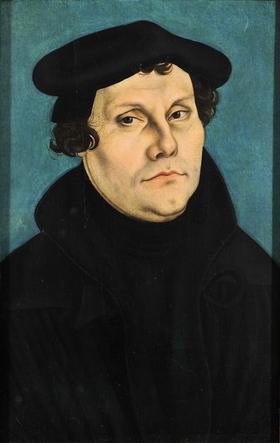
1505 to 1507A portrait of a man in a black cap and black gown against a blue-green background
Magisterium

Luther becomes an Augustinian friar and a priest

Pope Benedict XVI Address to representatives of the Evangelical Church in Germany, Augustinian convent, Erfurt, 23 September 2011

“As we have just heard, this is where Luther studied theology. This is where he celebrated his first Mass. Against his father's wishes, he did not continue the study of Law, but instead he studied theology and set off on the path towards priesthood in the Order of Saint Augustine. And on this path, he was not simply concerned with this or that. What constantly exercised him was the question of God, the deep passion and driving force of his whole life's journey. "How do I receive the grace of God?": this question struck him in the heart and lay at the foundation of all his theological searching and inner struggle.”

Read it in the source: vatican.va

See it on the timeline: Protestantism

9 March 1510
Miracle

Our Lady of Miracles, Motta di Livenza, Italy

Sanctuary-Basilica of the Madonna dei Miracoli, Motta di Livenza L'Apparizione (sanctuary website)

“9 March 1510 is the unforgettable day on which the Mother of God deigned to visit the fortunate land of Motta di Livenza, consecrating it with her merciful APPARITION. The privileged creature to whom the Virgin Mary showed herself was a devout old man, Giovanni Cigana, who for 20 years had recited the Holy Rosary every day and gladly knelt before a wayside shrine of the Madonna, set at the crossroads for Motta, Oderzo and Redigole.”

Our translation. The words as written, in Italian:

“Il 9 Marzo 1510 è il giorno indimenticabile in cui la Madre di Dio si degnò di visitare la fortunata terra di Motta di Livenza, consacrandola con la Sua misericordiosa APPARIZIONE. La creatura privilegiata alla quale si manifestò la Vergine Maria era un pio vecchietto, Giovanni Cigana, che da 20 anni recitava ogni giorno il S. Rosario e si inginocchiava volentieri davanti a un «Capitello» della Madonna, posto all’incrocio delle strade per Motta, Oderzo e Redigole.”

Witnesses
Giovanni Cigana, a devout old man, according to the shrine
Where it can be seen
The Sanctuary-Basilica of the Madonna dei Miracoli, Motta di Livenza

Read it in the source: santuariomotta.it

See it on the timeline: Marian apparitions

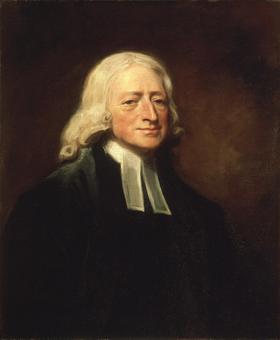
his years as a friarA portrait of a man in a black cap and black gown against a blue-green background
Protestant, Lutheran

A troubled conscience: Luther's own account of his struggle

Martin Luther Preface to the Complete Edition of Luther's Latin Works (1545)

“But I, blameless monk that I was, felt that before God I was a sinner with an extremely troubled conscience. I couldn't be sure that God was appeased by my satisfaction. I did not love, no, rather I hated the just God who punishes sinners. In silence, if I did not blaspheme, then certainly I grumbled vehemently and got angry at God.”

Read it in the source: Fordham Sourcebook

See it on the timeline: Protestantism

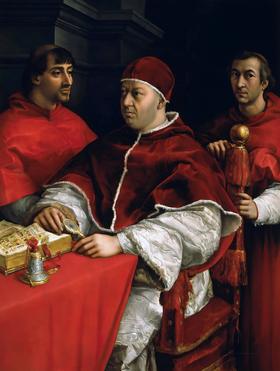
1512-1517A heavy-set pope in a red cap and cape sits at a table with an illuminated book and a magnifying glass, with a cardinal standing on either side
Council

Fifth Lateran Council

Pope Leo X, with the approval of the council Session 8, 19 December 1513

“…with the approval of the sacred council, we condemn and reject all those who insist that the intellectual soul is mortal, or that it is only one among all human beings, and those who suggest doubts on this topic. For the soul not only truly exists of itself and essentially as the form of the human body, as is said in the canon of our predecessor of happy memory, pope Clement V, promulgated in the general council of Vienne, but it is also immortal”

Read it in the source: Papal Encyclicals Online

See it on the timeline: The ecumenical councils

early 1514A portrait of a man in a black cap and black gown against a blue-green background
Protestant, Lutheran

Before indulgences: Luther on disorder at home in the Church

Martin Luther Letter to George Spalatin, January or February 1514

“I often regret and deplore that we Christians have begun to be wise abroad and fools at home. A hundred times worse blasphemies than this exist in the very streets of Jerusalem, and the high places are filled with spiritual idols. We ought to show our excessive zeal in removing these offences which are our real, intestine enemies.”

Read it in the source: Fordham Sourcebook

See it on the timeline: Protestantism

1515
Miracle

Our Lady of Garaison, France

Diocese of Tarbes and Lourdes Notre Dame de Garaison, Un peu d'histoire (diocesan website)

“In the year 1515, at the time when the hawthorn is in flower, the Virgin Mary, "mother of Jesus Christ, our Redeemer", appears three times to a young girl, Anglèze de Sagazan. 25 years later the shrine is built and grows…”

Our translation. The words as written, in French:

“En l’année 1515, au temps où l’aubépine est en fleur, la Vierge Marie « mère de Jésus Christ, notre Rédempteur » apparaît par trois fois à une jeune fille, Anglèze de Sagazan. 25 ans après le sanctuaire est construit et prend de l’ampleur…”

Witnesses
Anglèze de Sagazan, a young girl, according to the diocese

Read it in the source: catholique65.fr

See it on the timeline: Marian apparitions

19 December 1516
Council

Fifth Lateran Council: the pope has authority over councils

Fifth Lateran Council Session 11, bull Pastor aeternus gregem

“For it is clearly established that only the contemporary Roman pontiff, as holding authority over all councils, has the full right and power to summon, transfer and dissolve councils. This we know not only from the witness of holy scripture, the statements of holy fathers and our predecessors as Roman pontiffs, and the decisions of the sacred canons, but also from the declarations of the same councils.”

Read it in the source: Papal Encyclicals Online

See it on the timeline: The tradition of the papacy

Christmas, after his ordination in 1516
Miracle

Our Lady places the Child in the arms of St. Cajetan, St. Mary Major, Rome

St. Cajetan of Thiene Letter to Sister Laura Mignani, as given by Vatican News, Santo del giorno, 7 August

“On 30 September 1516 he was ordained a priest, though it was not his express wish, celebrating his first Mass only at Christmas, in St. Mary Major. In a letter to Sister Laura Mignani, to whom he was bound by spiritual friendship, he wrote: "During the Eucharistic celebration the Virgin appeared to me, and she laid her Child in my arms."”

Our translation. The words as written, in Italian:

“Il 30 settembre 1516 venne ordinato sacerdote, anche se non era un suo espresso desiderio, celebrando la sua prima Messa solo a Natale, in Santa Maria Maggiore. In una lettera a suor Laura Mignani, a cui era legato da amicizia spirituale, scrisse: “Durante la celebrazione eucaristica mi apparve la Vergine, la quale depose tra le mia braccia il suo Bambino”.”

Witnesses
Cajetan himself, in a letter to Sister Laura Mignani, as the page reports it
Where it can be seen
The Basilica of St. Mary Major, Rome, where he celebrated his first Mass, according to the page
Read it in the source: vaticannews.va

See it on the timeline: Marian apparitions

8 April 1516A portrait of a man in a black cap and black gown against a blue-green background
Protestant, Lutheran

Before indulgences: "Thou, Lord Jesus, art my righteousness"

Martin Luther Letter to a fellow Augustinian, Brother George, 8 April 1516

“Now I would like to know whether your soul, tired of her own righteousness, would learn to breathe and confide in the righteousness of Christ. … Therefore, my sweet brother, learn Christ and him crucified; learn to pray to him despairing Of Yourself, saying: Thou, Lord Jesus, art my righteousness, but I am thy sin; thou has taken on thyself what thou wast not, and hast given to me what I was not. Beware of aspiring to such purity that you will not wish to seem to Yourself, or to be, a sinner. For Christ only dwells in sinners.”

Read it in the source: Fordham Sourcebook

See it on the timeline: Protestantism

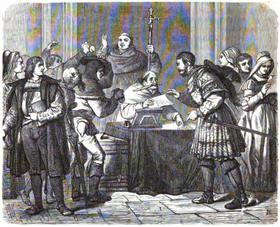
31 October 1517A black and white engraving of a friar at a table with a money chest, surrounded by soldiers and townspeople
Protestant, Lutheran

The indulgence for St. Peter's: what Luther says the people were led to believe

Martin Luther Letter to Albrecht, Archbishop of Mainz, 31 October 1517

“Papal indulgences for the building of St. Peter's are circulating under your most distinguished name, and as regards them, I do not bring accusation against the outcries of the preachers, which I have not heard, so much as I grieve over the wholly false impressions which the people have conceived from them; to wit, -- the unhappy souls believe that if they have purchased letters of indulgence they are sure of their salvation; again, that so soon as they cast their contributions into the money-box, souls fly out of purgatory”

Read it in the source: Fordham Sourcebook

See it on the timeline: Protestantism

31 October 1517
Protestant, Lutheran

Luther's complaint about the archbishop's instruction to the preachers

Martin Luther Letter to Albrecht, Archbishop of Mainz, 31 October 1517

“it is the first and the sole duty of all bishops that the people should learn the Gospel and the love of Christ … it is said in the Instruction to the Commissaries which is issued under your name, Most Reverend Father (doubtless without your knowledge and consent), that one of the chief graces of indulgence is that inestimable gift of God by which man is reconciled to God, and all the penalties of purgatory are destroyed. Again, it is said that contrition is not necessary in those who purchase souls … or buy confessionalia.”

Read it in the source: Fordham Sourcebook

See it on the timeline: Protestantism

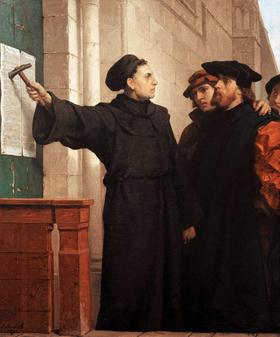
31 October 1517A friar in a black habit nails a paper to a church door with a hammer while onlookers watch
Protestant, Lutheran

The Ninety-five Theses: repentance, and the limits of the pope's pardon

Martin Luther Ninety-five Theses, theses 1 and 5

“When our Lord and Master Jesus Christ said, "Repent" (Mt 4:17), he willed the entire life of believers to be one of repentance. … The pope neither desires nor is able to remit any penalties except those imposed by his own authority or that of the canons.”

Read it in the source: Fordham Sourcebook

See it on the timeline: Protestantism

31 October 1517
Protestant, Lutheran

The Ninety-five Theses: against the indulgence preachers

Martin Luther Ninety-five Theses, theses 21, 27 and 32

“Thus those indulgence preachers are in error who say that a man is absolved from every penalty and saved by papal indulgences. … They preach only human doctrines who say that as soon as the money clinks into the money chest, the soul flies out of purgatory. … Those who believe that they can be certain of their salvation because they have indulgence letters will be eternally damned, together with their teachers.”

Read it in the source: Fordham Sourcebook

See it on the timeline: Protestantism

31 October 1517
Protestant, Lutheran

The Ninety-five Theses: what Christians are to be taught

Martin Luther Ninety-five Theses, theses 36, 43, 71 and 72

“Any truly repentant Christian has a right to full remission of penalty and guilt, even without indulgence letters. … Christians are to be taught that he who gives to the poor or lends to the needy does a better deed than he who buys indulgences. … Let him who speaks against the truth concerning papal indulgences be anathema and accursed. … But let him who guards against the lust and license of the indulgence preachers be blessed.”

Read it in the source: Fordham Sourcebook

See it on the timeline: Protestantism

31 October 1517
Protestant, Lutheran

The Ninety-five Theses: the questions of the laity

Martin Luther Ninety-five Theses, theses 81 and 86

“This unbridled preaching of indulgences makes it difficult even for learned men to rescue the reverence which is due the pope from slander or from the shrewd questions of the laity. … "Why does not the pope, whose wealth is today greater than the wealth of the richest Crassus, build this one basilica of St. Peter with his own money rather than with the money of poor believers?"”

Read it in the source: Fordham Sourcebook

See it on the timeline: Protestantism

1519, by Luther's accountA portrait of a man in a black cap and black gown against a blue-green background
Protestant, Lutheran

Luther's account of how his struggle ended: "the just person lives by faith"

Martin Luther Preface to the Complete Edition of Luther's Latin Works (1545)

“I meditated night and day on those words until at last, by the mercy of God, I paid attention to their context: "The justice of God is revealed in it, as it is written: 'The just person lives by faith.'" I began to understand that in this verse the justice of God is that by which the just person lives by a gift of God, that is by faith. … All at once I felt that I had been born again and entered into paradise itself through open gates.”

Read it in the source: Fordham Sourcebook

See it on the timeline: Protestantism

1520A heavy-set pope in a red cap and cape sits at a table with an illuminated book and a magnifying glass, with a cardinal standing on either side
Magisterium

Leo X condemns the proposition that burning heretics is against the Spirit

Pope Leo X Bull Exsurge Domine, 15 June 1520, condemned proposition 33 and the sentence on the propositions

“33. That heretics be burned is against the will of the Spirit. … we condemn, reprobate, and reject completely each of these theses or errors as either heretical, scandalous, false, offensive to pious ears or seductive of simple minds, and against Catholic truth.”

Read it in the source: Papal Encyclicals Online

See it on the timeline: The Inquisition and the use of force against heresy

15 June 1520Rows of bishops in mitres sit in a great semicircle of benches inside a church, facing the presiding cardinals
Magisterium

The Church's reply: Luther's propositions on indulgences

Pope Leo X Exsurge Domine, condemned propositions 17 to 20

“17. The treasures of the Church, from which the pope grants indulgences, are not the merits of Christ and of the saints. 18. Indulgences are pious frauds of the faithful, and remissions of good works; and they are among the number of those things which are allowed, and not of the number of those which are advantageous. 19. Indulgences are of no avail to those who truly gain them, for the remission of the penalty due to actual sin in the sight of divine justice. 20. They are seduced who believe that indulgences are salutary and useful for the fruit of the spirit.”

Read it in the source: Papal Encyclicals Online

See it on the timeline: Protestantism

15 June 1520
Magisterium

The Church's reply: the forty-one propositions condemned

Pope Leo X Exsurge Domine, the sentence of condemnation

“With the advice and consent of these our venerable brothers, with mature deliberation on each and every one of the above theses, and by the authority of almighty God, the blessed Apostles Peter and Paul, and our own authority, we condemn, reprobate, and reject completely each of these theses or errors as either heretical, scandalous, false, offensive to pious ears or seductive of simple minds, and against Catholic truth.”

Read it in the source: Papal Encyclicals Online

See it on the timeline: Protestantism

15 June 1520
Magisterium

The Church's reply to Luther: propositions on the pope, the Church and purgatory

Pope Leo X Exsurge Domine, condemned propositions 25, 27 and 37

“25. The Roman Pontiff, the successor of Peter, is not the vicar of Christ over all the churches of the entire world, instituted by Christ Himself in blessed Peter. … 27. It is certain that it is not in the power of the Church or the pope to decide upon the articles of faith, and much less concerning the laws for morals or for good works. … 37. Purgatory cannot be proved from Sacred Scripture which is in the canon.”

Read it in the source: Papal Encyclicals Online

See it on the timeline: Protestantism

The full Catholic answer: The office of Peter

August 1520A portrait of a man in a black cap and black gown against a blue-green background
Protestant, Lutheran

No ordained priesthood apart from all believers

Martin Luther To the Christian Nobility of the German Nation, The First Wall

“…all Christians are truly of the Spiritual Estate, and there is no difference among them, save of office alone. … Thus we are all consecrated as priests by baptism, as St. Peter says: "Ye are a royal priesthood, a holy nation" (1 Peter ii. 9)”

Read it in the source: CCEL

See it on the timeline: Protestantism

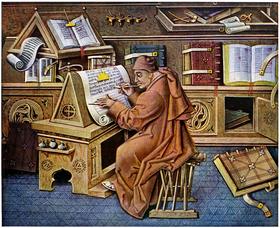
August 1520A manuscript painting of a man in a brown robe writing at a sloping desk in a room full of books
Protestant, Lutheran

Scripture judged by each believer, not by the pope

Martin Luther To the Christian Nobility of the German Nation, The Second Wall

“Therefore it is a wickedly devised fable, and they cannot quote a single letter to confirm it, that it is for the Pope alone to interpret the Scriptures or to confirm the interpretation of them … we should boldly judge what they do and what they leave undone, by our own understanding of the Scriptures, and force them to follow the better understanding, and not their own.”

Read it in the source: CCEL

See it on the timeline: Protestantism

August 1520A portrait of a man in a black cap and black gown against a blue-green background
Protestant, Lutheran

Clergy free to marry

Martin Luther To the Christian Nobility of the German Nation, Twenty-seven Articles, article 14

“Therefore, we teach clearly according to the Apostle, that every town should elect a pious learned citizen from the congregation and charge him with the office of minister; the congregation should support him and he should be left at liberty to marry or not. … My advice is, to restore liberty, and to leave every man free to marry or not to marry.”

Read it in the source: CCEL

See it on the timeline: Protestantism

October 1520
Protestant, Lutheran

No sacrifice in the Mass

Martin Luther On the Babylonish Captivity of the Church, Concerning the Lord's Supper

“We must also get rid of another scandal, which is a much greater and a very specious one; that is, that the mass is universally believed to be a sacrifice offered to God. … Unless we hold the mass to be the promise or testament of Christ, according to the plain meaning of the words, we lose all the gospel and our whole comfort. Let us allow nothing to prevail against those words, even if an angel from heaven taught us otherwise. Now in these words there is nothing about a work or sacrifice.”

Read it in the source: CCEL

See it on the timeline: Protestantism

November 1520
Protestant, Lutheran

Faith alone

Martin Luther Concerning Christian Liberty

“Hence it is clear that, as the soul needs the word alone for life and justification, so it is justified by faith alone and not by any works. For if it could be justified by any other means, it would have no need of the word, nor consequently of faith.”

Read it in the source: CCEL

See it on the timeline: Protestantism

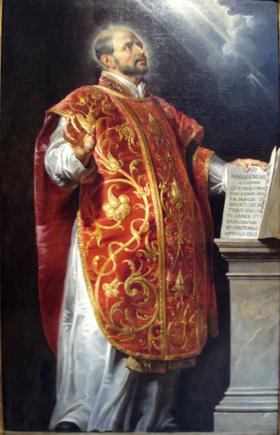
c. 1521, during his recovery at LoyolaA balding priest in a red and gold chasuble looks up into light, his hand on an open book
Miracle

St. Ignatius of Loyola sees Our Lady with the Child Jesus

St. Ignatius of Loyola Autobiography, ch. 1 (ed. J. F. X. O'Conor)

“While watching one night he plainly saw the image of the Blessed Mother of God with the Infant Jesus, at the sight of which, for a considerable time, he received abundant consolation, and felt such contrition for his past life that he thought of nothing else.”

Witnesses
Ignatius himself, whose account is told in the third person

Read it in the source: CCEL

See it on the timeline: Marian apparitions

3 January 1521A heavy-set pope in a red cap and cape sits at a table with an illuminated book and a magnifying glass, with a cardinal standing on either side
Magisterium

Luther is excommunicated

Pope Leo X Bull Decet Romanum Pontificem, II

“Nevertheless Martin himself—and it gives us grievous sorrow and perplexity to say this—the slave of a depraved mind, has scorned to revoke his errors within the prescribed interval and to send us word of such revocation, or to come to us himself; nay, like a stone of stumbling, he has feared not to write and preach worse things than before against us and this Holy See and the Catholic faith, and to lead others on to do the same. He has now been declared a heretic”

Read it in the source: Papal Encyclicals Online

See it on the timeline: Protestantism

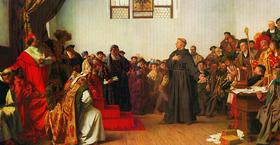
18 April 1521A friar in black stands speaking in the middle of a crowded hall, facing the young emperor on his throne
Protestant, Lutheran

Luther at the Diet of Worms

Martin Luther Answer before the Emperor Charles V at the Diet of Worms, as translated in Schaff, History of the Christian Church, vol. 7, § 55

“Unless I am refuted and convicted by testimonies of the Scriptures or by clear arguments (since I believe neither the Pope nor the Councils alone; it being evident that they have often erred and contradicted themselves), I am conquered by the Holy Scriptures quoted by me, and my conscience is bound in the word of God: I can not and will not recant any thing, since it is unsafe and dangerous to do any thing against the conscience.”

Read it in the source: CCEL

See it on the timeline: Protestantism

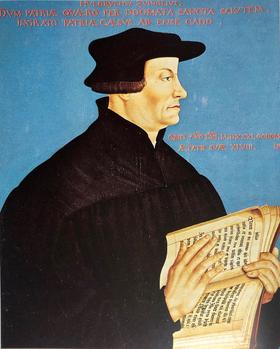
January 1523A man in profile in a black cap and gown, holding an open book, against a blue background
Protestant, Reformed

The Mass as a memorial, not a sacrifice

Ulrich Zwingli The Sixty-seven Articles, article 18

“Christ, who offered himself once on the cross, is the sacrifice and victim that makes satisfaction for ever for the sins of all the faithful. From this it follows that the Mass is not a sacrifice, but a commemoration of the sacrifice offered once on the cross and, as it were, a seal of the redemption through Christ …”

Our translation. The words as written, in Latin:

“Christus qui sese semel in cruce obtulit hostia est et victima satisfaciens in æternum pro peccatis omnium fidelium. Ex quo colligitur, missam non esse sacrificium, sed sacrificii in cruce semel oblati commemorationem et quasi sigillum redemptionis per Christum …”

Read it in the source: CCEL

See it on the timeline: Protestantism

January 1523
Protestant, Reformed

No prayer to the saints

Ulrich Zwingli The Sixty-seven Articles, article 20

“God gives us all things through Christ and in the name of Christ. From this it follows that outside this life we need no intercessor but Christ.”

Our translation. The words as written, in Latin:

“Omnia nobis per Christum et in nomine Christi præstat Deus. Hinc sequitur, nobis extra hanc vitam intercessore præter Christum nullo opus esse.”

Read it in the source: CCEL

See it on the timeline: Protestantism

January 1523
Protestant, Reformed

No purgatory

Ulrich Zwingli The Sixty-seven Articles, article 57

“Holy Scripture knows of no purgatory after this life.”

Our translation. The words as written, in Latin:

“Scriptura sacra purgatorium post hanc vitam nullum novit.”

Read it in the source: CCEL

See it on the timeline: Protestantism

January 1528
Protestant, Reformed

The Lord's Supper without a bodily presence

Berthold Haller and Franz Kolb, revised by Ulrich Zwingli The Ten Theses of Berne, thesis 4

“That the body and blood of Christ are received essentially and bodily in the bread of the Eucharist cannot be shown from Holy Scripture.”

Our translation. The words as written, in Latin:

“Quod corpus et sanguis Christi essentialiter et corporaliter in pane Eucharistiæ percipiatur, ex Scriptura Sacra non potest demonstrari.”

Read it in the source: CCEL

See it on the timeline: Protestantism

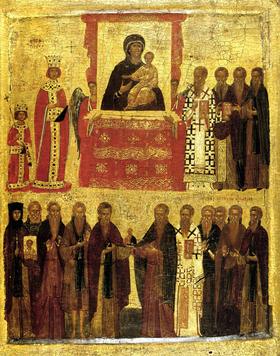
January 1528A gold icon in two rows: above, an image of the Virgin and Child on a stand between an empress and a patriarch; below, a line of saints holding icons
Protestant, Reformed

Images removed from churches

Berthold Haller and Franz Kolb, revised by Ulrich Zwingli The Ten Theses of Berne, thesis 8

“To make images for worship is contrary to the Word of God contained in the books of the Old and New Testament. Therefore, where they are set up with danger of being adored, they are to be removed.”

Our translation. The words as written, in Latin:

“Imagines fabricare cultus gratia, Dei Verbo, Veteris et Novi Testamenti libris comprehenso repugnat. Idcirco si sub periculo adorationis proponantur, abolendæ.”

Read it in the source: CCEL

See it on the timeline: Protestantism

October 1529A portrait of a man in a black cap and black gown against a blue-green background
Protestant, Lutheran

The Reformers divided on the Lord's Supper

Martin Luther, Ulrich Zwingli and the other theologians at Marburg The Marburg Articles, article 15

“…the sacrament of the altar is the sacrament of the very body and very blood of Jesus Christ; and that the spiritual manducation of this body and blood is specially necessary to every true Christian. … And although at present we are not agreed on the question whether the real body and blood of Christ are corporally present in the bread and wine, yet both parties shall cherish Christian charity for one another, so far as the conscience of each will permit”

Read it in the source: CCEL

See it on the timeline: Protestantism

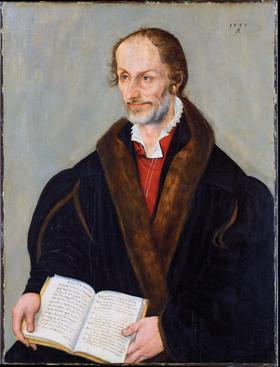
1530A thin man with a short beard, in a fur-collared black gown, holding an open book
Protestant, Lutheran

The Lutheran confession rejects the denial of the presence

Philip Melanchthon and the Lutheran princes Augsburg Confession, Article 10

“Of the Supper of the Lord they teach that the [true] body and blood of Christ are truly present [under the form of bread and wine], and are [there] communicated to those that eat in the Lord's Supper [and receive]. And they disapprove of those that teach otherwise [wherefore also the opposite doctrine is rejected].”

Read it in the source: CCEL

See it on the timeline: Protestantism

1530
Protestant, Lutheran

Protestants divided: baptism necessary for salvation, in the Lutheran confession

Philip Melanchthon and the Lutheran princes Augsburg Confession, Article 9

“Of Baptism they teach that it is necessary to salvation, and that by Baptism the grace of God is offered, and that children are to be baptized, who by Baptism, being offered to God, are received into God's favor.”

Read it in the source: CCEL

See it on the timeline: Protestantism

1530
Protestant, Lutheran

Protestants divided: who may minister. The Lutheran confession requires a regular call

Philip Melanchthon and the Lutheran princes Augsburg Confession, Article 14

“…they teach that no man should publicly … in the Church teach, or administer the Sacraments, except he be rightly called [without a regular call].”

Read it in the source: CCEL

See it on the timeline: Protestantism

1530
Protestant, Lutheran

Baptism for believers only, as the Lutherans recorded it

Philip Melanchthon and the Lutheran princes Augsburg Confession, Article 9

“They condemn the Anabaptists who allow not the Baptism of children, and affirm that children are saved without Baptism.”

Read it in the source: CCEL

See it on the timeline: Protestantism

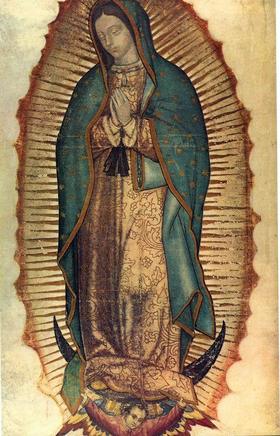
1531The Virgin Mary in a rose robe and a blue-green mantle covered with stars, her hands joined, surrounded by rays of light and standing on a crescent moon
Miracle

Our Lady of Guadalupe, Mexico

Pope St. John Paul II Homily at the canonization of Juan Diego Cuauhtlatoatzin, Mexico City, 31 July 2002, 3

“It is moving to read the accounts of Guadalupe, sensitively written and steeped in tenderness. In them the Virgin Mary, the handmaid "who glorified the Lord" (Lk 1:46), reveals herself to Juan Diego as the Mother of the true God. As a sign, she gives him precious roses, and as he shows them to the Bishop, he discovers the blessed image of Our Lady imprinted on his tilma.”

Witnesses
Juan Diego, according to the accounts the Pope cites
Church ruling
John Paul II canonized Juan Diego at the Basilica of Our Lady of Guadalupe on 31 July 2002

Read it in the source: vatican.va

See it on the timeline: Marian apparitions

1531
Miracle

Our Lady of Guadalupe, Mexico

Pope St. John Paul II Apostolic Exhortation Ecclesia in America, 11 (22 January 1999)

“The appearance of Mary to the native Juan Diego on the hill of Tepeyac in 1531 had a decisive effect on evangelization. Its influence greatly overflows the boundaries of Mexico, spreading to the whole Continent.”

Witnesses
Juan Diego, on the hill of Tepeyac, in 1531

Read it in the source: vatican.va

See it on the timeline: Marian apparitions

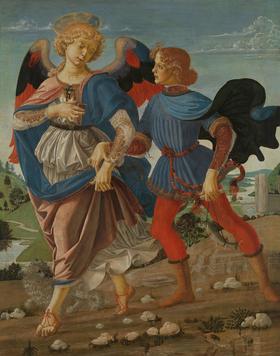
1534A boy carrying a fish walks arm in arm with a winged angel, with a small dog at their feet
Protestant, Lutheran

The seven books: Luther's German Bible prints them apart as "Apocrypha"

Martin Luther German Bible of 1534, heading of the Apocrypha, as translated in Schaff, History of the Christian Church, vol. 7, § 62

“books not equal to the Holy Scriptures, yet useful and good to read”

Read it in the source: CCEL

See it on the timeline: Protestantism

undated; printed 1566
Protestant, Lutheran

Why the seven books were set apart: Luther's own judgments on them

Martin Luther, as written down by his table companions Table Talk, Of God's Word, XXIV (translated by William Hazlitt)

“The author of the book of Ecclesiasticus preaches the law well, but he is no prophet. … The book of Judith is not a history. It accords not with geography. I believe it is a poem, like the legends of the saints … I take the book of Tobit to be a comedy concerning women, an example for house-government. I am so great an enemy to the second book of the Maccabees, and to Esther, that I wish they had not come to us at all, for they have too many heathen unnaturalities.”

Read it in the source: CCEL

See it on the timeline: Protestantism

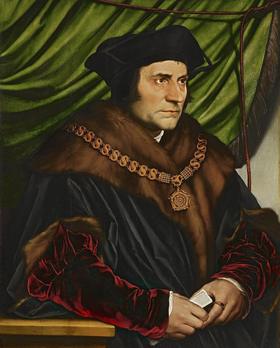
1535A man in a black cap and a fur-collared coat with red velvet sleeves, wearing a gold chain of office
Saint

St. Thomas More, statesman and martyr

Pope John Paul II Apostolic Letter proclaiming St. Thomas More Patron of Statesmen and Politicians, 3 (31 October 2000)

“Thomas More did not allow himself to waver, and he refused to take the oath requested of him, since this would have involved accepting a political and ecclesiastical arrangement that prepared the way for uncontrolled despotism. … Condemned by the Court, he was beheaded. … And with John Fisher, he was canonized by Pius XI in 1935, on the fourth centenary of his martyrdom.”

Read it in the source: vatican.va

See it on the timeline: Saints through the centuries

1535
Saint

St. Thomas More, statesman and martyr

Pope John Paul II Apostolic Letter proclaiming St. Thomas More Patron of Statesmen and Politicians, 4 (31 October 2000)

“In this context, it is helpful to turn to the example of Saint Thomas More, who distinguished himself by his constant fidelity to legitimate authority and institutions precisely in his intention to serve not power but the supreme ideal of justice. His life teaches us that government is above all an exercise of virtue. Unwavering in this rigorous moral stance, this English statesman placed his own public activity at the service of the person, especially if that person was weak or poor”

Read it in the source: vatican.va

See it on the timeline: Saints of reform and mission, 1500 to 1800

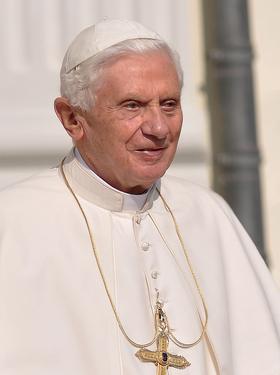
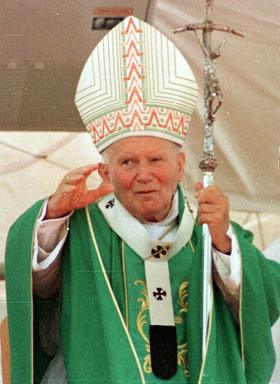
18 March 1536A white-haired pope in a white cassock and skullcap, smiling
Miracle

Our Lady of Mercy, Savona, Italy

Pope Benedict XVI Homily at Mass in Savona, 17 May 2008

“Dear friends, how can I fail to rejoice with you here in Savona for the fact that this is the very Name with which the Virgin Mary introduced herself, appearing on 18 March 1536 to a peasant, a son of this land? "Our Lady of Mercy" is the title by which she is venerated”

Witnesses
A peasant of Savona, unnamed on this page
Read it in the source: vatican.va

See it on the timeline: Marian apparitions

1537
Magisterium
Pope Paul III Bull Sublimis Deus, 1537

“the said Indians and all other people who may later be discovered by Christians, are by no means to be deprived of their liberty or the possession of their property, even though they be outside the faith of Jesus Christ; and that they may and should, freely and legitimately, enjoy their liberty and the possession of their property; nor should they be in any way enslaved; should the contrary happen, it shall be null and have no effect.”

Read it in the source: Papal Encyclicals Online

See it on the timeline: Violence in the Church's history

1537A manuscript painting of a man in a brown robe writing at a sloping desk in a room full of books
Protestant, Lutheran

Scripture alone

Martin Luther Smalcald Articles, Part II, Article II, Of the Mass

“For it will not do to frame articles of faith from the works or words of the holy Fathers … The rule is: The Word of God shall establish articles of faith, and no one else, not even an angel.”

Read it in the source: CCEL

See it on the timeline: Protestantism

1540
Saint

St. Angela Merici, founder of the Company of St. Ursula

Dicastery for the Causes of Saints Profile of St. Angela Merici, biography

“On 25 November 1535, then, together with twelve collaborators, she founds the "Company of the dimesse of Saint Ursula" ("dimesse" because they are without the traditional habit of nuns), with an original Rule of life: to be outside the cloister in order to devote themselves to the instruction and education of young women, in obedience to the bishop and to the Church.”

Our translation. The words as written, in Italian:

“Il 25 novembre 1535, dunque, insieme a dodici collaboratrici, fonda la “Compagnia delle dimesse di Sant’Orsola”, (“dimesse” perché prive del tradizionale abito monacale), con una Regola di vita originale: essere fuori dal chiostro per dedicarsi all’istruzione ed educazione delle giovani donne, in obbedienza al vescovo e alla Chiesa.”

Read it in the source: Dicastery for the Causes of Saints

See it on the timeline: Saints of reform and mission, 1500 to 1800

13 December 1545Rows of bishops in mitres sit in a great semicircle of benches inside a church, facing the presiding cardinals
Council

The Council of Trent opens

Council of Trent Session 1, Decree touching the opening of the Council

“Doth it please you,–unto the praise and glory of the holy and undivided Trinity, Father, and Son, and Holy Ghost ; for the increase and exaltation of the Christian faith and religion; for the extirpation of heresies; for the peace and union of the Church; for the reformation of the Clergy and Christian people; for the depression and extinction of the enemies of the Christian name,–to decree and declare that the sacred and general council of Trent do begin, and hath begun?”

Read it in the source: Papal Encyclicals Online

See it on the timeline: Protestantism

1546
Council
Council of Trent Session 5, Decree concerning Original Sin, closing paragraph

“This same holy Synod doth nevertheless declare, that it is not its intention to include in this decree, where original sin is treated of, the blessed and immaculate Virgin Mary, the mother of God; but that the constitutions of Pope Sixtus IV., of happy memory, are to be observed, under the pains contained in the said constitutions, which it renews.”

Read it in the source: Papal Encyclicals Online

See it on the timeline: Mary without sin

1546
Council
Council of Trent Session 4, Decree Concerning the Canonical Scriptures

“…this truth and discipline are contained in the written books, and the unwritten traditions which, received by the Apostles from the mouth of Christ himself, or from the Apostles themselves, the Holy Ghost dictating, have come down even unto us, transmitted as it were from hand to hand”

Read it in the source: Papal Encyclicals Online

See it on the timeline: Scripture and Tradition

1546
Council
Council of Trent Session 4, Decree Concerning the Edition, and the Use, of the Sacred Books

“…no one, relying on his own skill, shall,–in matters of faith, and of morals pertaining to the edification of Christian doctrine, –wresting the sacred Scripture to his own senses, presume to interpret the said sacred Scripture contrary to that sense which holy mother Church,–whose it is to judge of the true sense and interpretation of the holy Scriptures,–hath held and doth hold”

Read it in the source: Papal Encyclicals Online

See it on the timeline: The Magisterium

1546
Council
Council of Trent Session 4, Decree Concerning the Canonical Scriptures

“…Tobias, Judith, Esther, Job, the Davidical Psalter, consisting of a hundred and fifty psalms; the Proverbs, Ecclesiastes, the Canticle of Canticles, Wisdom, Ecclesiasticus, Isaias, Jeremias, with Baruch; Ezechiel, Daniel; … two books of the Machabees, the first and the second. … But if any one receive not, as sacred and canonical, the said books entire with all their parts, as they have been used to be read in the Catholic Church, and as they are contained in the old Latin vulgate edition; and knowingly and deliberately contemn the traditions aforesaid; let him be anathema.”

Read it in the source: Papal Encyclicals Online

See it on the timeline: The Old Testament canon

8 April 1546
Council

The Church's reply on the seven books

Council of Trent Session 4, Decree Concerning the Canonical Scriptures

“And it has thought it meet that a list of the sacred books be inserted in this decree, lest a doubt may arise in any one’s mind, which are the books that are received by this Synod. They are as set down here below: of the Old Testament: … Tobias, Judith, Esther, Job, the Davidical Psalter, consisting of a hundred and fifty psalms; the Proverbs, Ecclesiastes, the Canticle of Canticles, Wisdom, Ecclesiasticus, Isaias, Jeremias, with Baruch; … two books of the Machabees, the first and the second.”

Read it in the source: Papal Encyclicals Online

See it on the timeline: Protestantism

The full Catholic answer: The Old Testament canon

17 June 1546
Council

Reform at Trent: bishops must preach the Gospel, and alms-collectors may not preach

Council of Trent Session 5, Decree on Reformation, ch. 2

“But seeing that the preaching of the Gospel is no less necessary to the Christian commonwealth than the reading thereof; and whereas this is the principal duty of bishops; the same holy Synod hath resolved and decreed, that all bishops, archbishops, primates, and all other prelates of the churches be bound personally–if they be not lawfully hindered–to preach the holy Gospel of Jesus Christ. … Those who quest for alms–who are also commonly called Questors-of whatsoever condition they may be, shall not in any way presume, either personally, or by another, to preach”

Read it in the source: Papal Encyclicals Online

See it on the timeline: Protestantism

1547
Council
Council of Trent Session 6, Canon 23 on Justification

“[If any one saith] … that he is able, during his whole life, to avoid all sins, even those that are venial,-except by a special privilege from God, as the Church holds in regard of the Blessed Virgin; let him be anathema.”

Read it in the source: Papal Encyclicals Online

See it on the timeline: Mary without sin

1547
Council
Council of Trent Session 6, Decree on Justification, ch. 7

“…the meritorious cause is His most beloved only-begotten, our Lord Jesus Christ, who, when we were enemies, for the exceeding charity wherewith he loved us, merited Justification for us by His most holy Passion on the wood of the cross, and made satisfaction for us unto God the Father”

Read it in the source: Papal Encyclicals Online

See it on the timeline: Are Catholics Christians?

1547
Council
Council of Trent Session 6, Decree on Justification, ch. 8

“…we are therefore said to be justified freely, because that none of those things which precede justification-whether faith or works-merit the grace itself of justification. For, if it be a grace, it is not now by works, otherwise, as the same Apostle says, grace is no more grace.”

Read it in the source: Papal Encyclicals Online

See it on the timeline: Faith and works

1547
Council
Council of Trent Session 6, Decree on Justification, ch. 16

“For since Christ Jesus Himself, as the head into the members and the vine into the branches, continually infuses strength into those justified, which strength always precedes, accompanies and follows their good works, and without which they could not in any manner be pleasing and meritorious before God, … far be it that a Christian should either trust or glory in himself and not in the Lord, whose bounty toward all men is so great that He wishes the things that are His gifts to be their merits.”

Read it in the source: EWTN Library

See it on the timeline: Faith and works

1547
Council
Council of Trent Session 6, Canons on Justification, canon 1

“If any one saith, that man may be justified before God by his own works, whether done through the teaching of human nature, or that of the law, without the grace of God through Jesus Christ; let him be anathema.”

Read it in the source: Papal Encyclicals Online

See it on the timeline: Faith and works

1547
Council
Council of Trent Session 6, Decree on Justification, ch. 9

“For even as no pious person ought to doubt of the mercy of God, of the merit of Christ, and of the virtue and efficacy of the sacraments, even so each one, when he regards himself, and his own weakness and indisposition, may have fear and apprehension touching his own grace; seeing that no one can know with a certainty of faith, which cannot be subject to error, that he has obtained the grace of God.”

Read it in the source: Papal Encyclicals Online

See it on the timeline: Assurance of salvation

1547
Council
Council of Trent Session 6, Decree on Justification, ch. 13

“…let no one herein promise himself any thing as certain with an absolute certainty; though all ought to place and repose a most firm hope in God's help. For God, unless men be themselves wanting to His grace, as he has begun the good work, so will he perfect it, working (in them) to will and to accomplish.”

Read it in the source: Papal Encyclicals Online

See it on the timeline: Assurance of salvation

1547
Council
Council of Trent Session 6, Decree on Justification, ch. 14

“As regards those who, by sin, have fallen from the received grace of Justification, they may be again justified, when, God exciting them, through the sacrament of Penance they shall have attained to the recovery, by the merit of Christ, of the grace lost: for this manner of Justification is of the fallen the reparation: which the holy Fathers have aptly called a second plank after the shipwreck of grace lost.”

Read it in the source: Papal Encyclicals Online

See it on the timeline: Eternal security

1547
Council
Council of Trent Session 6, Canons on Justification, canon 23

“[If] any one saith, that a man once justified can sin no more, nor lose grace, and that therefore he that falls and sins was never truly justified; … let him be anathema.”

Read it in the source: Papal Encyclicals Online

See it on the timeline: Eternal security

1547
Council
Council of Trent Session 6, Decree on Justification, ch. 4

“…a translation, from that state wherein man is born a child of the first Adam, to the state of grace, and of the adoption of the sons of God, through the second Adam, Jesus Christ, our Saviour. And this translation, since the promulgation of the Gospel, cannot be effected, without the laver of regeneration, or the desire thereof, as it is written; unless a man be born again of water and the Holy Ghost, he cannot enter into the Kingdom of God.”

Read it in the source: Papal Encyclicals Online

See it on the timeline: Baptism and salvation

1547
Council
Council of Trent Session 7, Canons on Baptism, canon 13

“If any one saith, that little children, for that they have not actual faith, are not, after having received baptism, to be reckoned amongst the faithful; and that, for this cause, they are to be rebaptized when they have attained to years of discretion; … let him be anathema.”

Read it in the source: Papal Encyclicals Online

See it on the timeline: Infant baptism

1545-1563
Council

Council of Trent

Council of Trent Session 6, Decree on Justification, ch. 7

“This disposition, or preparation, is followed by Justification itself, which is not remission of sins merely, but also the sanctification and renewal of the inward man, through the voluntary reception of the grace, and of the gifts, whereby man of unjust becomes just, and of an enemy a friend, that so he may be an heir according to hope of life everlasting.”

Read it in the source: Papal Encyclicals Online

See it on the timeline: The ecumenical councils

1547
Council
Council of Trent Session 7, Decree on the Sacraments, Canon 1 (3 March 1547)

“If any one saith, that the sacraments of the New Law were not all instituted by Jesus Christ, our Lord; or, that they are more, or less, than seven, to wit, Baptism, Confirmation, the Eucharist, Penance, Extreme Unction, Order, and Matrimony; or even that any one of these seven is not truly and properly a sacrament; let him be anathema.”

Read it in the source: Papal Encyclicals Online

See it on the timeline: The seven sacraments

1547
Council
Council of Trent Session 7, Canons on Baptism, canon 4

“If any one saith, that the baptism which is even given by heretics in the name of the Father, and of the Son, and of the Holy Ghost, with the intention of doing what the Church doth, is not true baptism; let him be anathema.”

Read it in the source: Papal Encyclicals Online

See it on the timeline: Baptism

1547
Council
Council of Trent Session 7, Canons on Confirmation, Canon 3

“If any one saith, that the ordinary minister of holy confirmation is not the bishop alone, but any simple priest soever; let him be anathema.”

Read it in the source: Papal Encyclicals Online

See it on the timeline: Confirmation

1547
Council

The Church's reply on faith alone

Council of Trent Session 6, Canons on Justification, canon 9

“If any one saith, that by faith alone the impious is justified; in such wise as to mean, that nothing else is required to co-operate in order to the obtaining the grace of Justification, and that it is not in any way necessary, that he be prepared and disposed by the movement of his own will; let him be anathema.”

Read it in the source: Papal Encyclicals Online

See it on the timeline: Protestantism

The full Catholic answer: Faith and works

1547
Council
Council of Trent Session 7, Decree on the Sacraments, Canon 6 (3 March 1547)

“If any one saith, that the sacraments of the New Law do not contain the grace which they signify; or, that they do not confer that grace on those who do not place an obstacle thereunto; as though they were merely outward signs of grace or justice received through faith, and certain marks of the Christian profession, whereby believers are distinguished amongst men from unbelievers; let him be anathema.”

Read it in the source: Papal Encyclicals Online

See it on the timeline: The seven sacraments

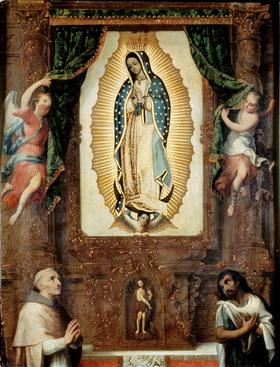
1548A painted altarpiece with the image of Our Lady of Guadalupe at the centre, angels at the sides and two men kneeling at the bottom corners
Saint

St. Juan Diego Cuauhtlatoatzin, layman of Mexico

Pope John Paul II Homily at the Canonization of Juan Diego Cuauhtlatoatzin, Mexico City, 4 (31 July 2002)

“In accepting the Christian message without forgoing his indigenous identity, Juan Diego discovered the profound truth of the new humanity, in which all are called to be children of God. Thus he facilitated the fruitful meeting of two worlds and became the catalyst for the new Mexican identity, closely united to Our Lady of Guadalupe, whose mestizo face expresses her spiritual motherhood which embraces all Mexicans.”

Read it in the source: vatican.va

See it on the timeline: Saints of reform and mission, 1500 to 1800

1551Rows of bishops in mitres sit in a great semicircle of benches inside a church, facing the presiding cardinals
Council
Council of Trent Session 13, Canons on the Most Holy Sacrament of the Eucharist, canon 1

“If any one denieth, that, in the sacrament of the most holy Eucharist, are contained truly, really, and substantially, the body and blood together with the soul and divinity of our Lord Jesus Christ, and consequently the whole Christ; but saith that He is only therein as in a sign, or in figure, or virtue; let him be anathema.”

Read it in the source: Papal Encyclicals Online

See it on the timeline: The Real Presence

1551
Council
Council of Trent Session 13, Decree on the Eucharist, ch. 1

“For neither are these things mutually repugnant,-that our Saviour Himself always sitteth at the right hand of the Father in heaven, according to the natural mode of existing, and that, nevertheless, He be, in many other places, sacramentally present to us in his own substance, by a manner of existing, which, though we can scarcely express it in words, yet can we, by the understanding illuminated by faith, conceive, and we ought most firmly to believe, to be possible unto God”

Read it in the source: Papal Encyclicals Online

See it on the timeline: The Real Presence and the Ascension

1551
Council
Council of Trent Session 13, Decree on the Eucharist, ch. 4

“And because that Christ, our Redeemer, declared that which He offered under the species of bread to be truly His own body, therefore has it ever been a firm belief in the Church of God, and this holy Synod doth now declare it anew, that, by the consecration of the bread and of the wine, a conversion is made of the whole substance of the bread into the substance of the body of Christ our Lord, and of the whole substance of the wine into the substance of His blood; which conversion is, by the holy Catholic Church, suitably and properly called Transubstantiation.”

Read it in the source: Papal Encyclicals Online

See it on the timeline: Transubstantiation

1551
Council
Council of Trent Session 13, Decree on the Eucharist, ch. 5

“Wherefore, there is no room left for doubt, that all the faithful of Christ may, according to the custom ever received in the Catholic Church, render in veneration the worship of latria, which is due to the true God, to this most holy sacrament. For not therefore is it the less to be adored on this account, that it was instituted by Christ, the Lord, in order to be received: for we believe that same God to be present therein, of whom the eternal Father, when introducing him into the world, says; And let all the angels of God adore him; whom the Magi falling down, adored; who, in fine, as the Scripture testifies, was adored by the apostles in Galilee.”

Read it in the source: Papal Encyclicals Online

See it on the timeline: Adoring the Eucharist

1551
Council
Council of Trent Session 14, On the Sacrament of Penance, ch. 5

“…our Lord Jesus Christ, when about to ascend from earth to heaven, left priests His own vicars, as presidents and judges, unto whom all the mortal crimes, into which the faithful of Christ may have fallen, should be carried, in order that, in accordance with the power of the keys, they may pronounce the sentence of forgiveness or retention of sins.”

Read it in the source: Papal Encyclicals Online

See it on the timeline: Confession to a priest

1551
Council
Council of Trent Session 14, On the Sacrament of Penance, ch. 8

“But neither is this satisfaction, which we discharge for our sins, so our own, as not to be through Jesus Christ. For we who can do nothing of ourselves, as of ourselves, can do all things, He cooperating, who strengthens us. Thus, man has not wherein to glory, but all our glorying is in Christ: in whom we live; in whom we merit; in whom we satisfy; bringing forth fruits worthy of penance, which from him have their efficacy; by him are offered to the Father; and through him are accepted by the Father.”

Read it in the source: Papal Encyclicals Online

See it on the timeline: Indulgences

1551
Liturgy

The feast and procession of Corpus Christi

Council of Trent Session 13, Decree on the Most Holy Eucharist, ch. 5

“The holy Synod declares, moreover, that very piously and religiously was this custom introduced into the Church, that this sublime and venerable sacrament be, with special veneration and solemnity, celebrated, every year, on a certain day, and that a festival; and that it be borne reverently and with honour in processions through the streets, and public places.”

Read it in the source: Papal Encyclicals Online

See it on the timeline: The Mass through the centuries

1551
Council
Council of Trent Session 13, Decree on the Eucharist, ch. 7

“Wherefore, he who would communicate, ought to recall to mind the precept of the Apostle; Let a man prove himself. Now ecclesiastical usage declares that necessary proof to be, that no one, conscious to himself … of mortal sin, how contrite soever he may seem to himself, ought to approach to the sacred Eucharist without previous sacramental confession.”

Read it in the source: Papal Encyclicals Online

See it on the timeline: The Eucharist

1551
Council
Council of Trent Session 14, On the Sacrament of Penance, ch. 5

“For the rest, as to the manner of confessing secretly to a priest alone, although Christ has not forbidden that a person may,–in punishment of his sins, and for his own [humiliation], as well for an example to others as for the edification of the Church that has been scandalized,–confess his sins publicly, nevertheless this is not commanded by a divine precept; neither would it very prudent to enjoin by any human law, that sins, especially such as are secret, should be made known by a public confession.”

Read it in the source: Papal Encyclicals Online

See it on the timeline: Penance and Reconciliation

1551
Council
Council of Trent Session 14, Doctrine on Extreme Unction, ch. 1

“Now, this sacred unction of the sick was instituted by Christ our Lord, as truly and properly a sacrament of the new law, insinuated indeed in Mark, but recommended and promulgated to the faithful by James the Apostle, and brother of the Lord.”

Read it in the source: Papal Encyclicals Online

See it on the timeline: The Anointing of the Sick

1551
Council
Council of Trent Session 14, Doctrine on Extreme Unction, ch. 3

“It is also declared, that this unction is to be applied to the sick, but to those especially who lie in such danger as to seem to be about to depart this life: whence also it is called the sacrament of the departing. And if the sick should, after having received this unction, recover, they may again be aided by the succour of this sacrament, when they fall into another like danger of death.”

Read it in the source: Papal Encyclicals Online

See it on the timeline: The Anointing of the Sick

1551
Council

The Church's reply on the words "This is my body"

Council of Trent Session 13, Decree on the Eucharist, ch. 1

“…He testified, in express and clear words, that He gave them His own very Body, and His own Blood; words which,-recorded by the holy Evangelists, and afterwards repeated by Saint Paul, whereas they carry with them that proper and most manifest meaning in which they were understood by the Fathers,-it is indeed a crime the most unworthy that they should be wrested, by certain contentions and wicked men, to fictitious and imaginary tropes, whereby the verity of the flesh and blood of Christ is denied, contrary to the universal sense of the Church”

Read it in the source: Papal Encyclicals Online

See it on the timeline: Protestantism

The full Catholic answer: The Real Presence

1551
Council
Council of Trent Session 13, Canons on the Most Holy Sacrament of the Eucharist, canon 6

“If any one saith, that, in the holy sacrament of the Eucharist, Christ, the only-begotten Son of God, is not to be adored with the worship, even external of latria; and is, consequently, neither to be venerated with a special festive solemnity, nor to be solemnly borne about in processions, according to the laudable and universal rite and custom of holy church; or, is not to be proposed publicly to the people to be adored, and that the adorers thereof are idolators; let him be anathema.”

Read it in the source: Papal Encyclicals Online

See it on the timeline: Adoring the Eucharist

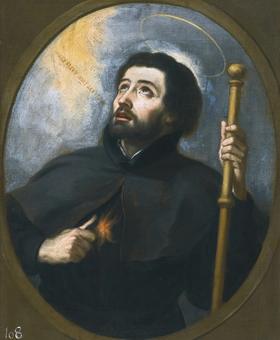
1552A bearded priest in black looks up to heaven with a pilgrim's staff, a flame at his breast
Saint

St. Francis Xavier, missionary in Asia

Pope Benedict XVI Address to the Fathers and Brothers of the Society of Jesus, 22 April 2006

“St Francis Xavier, whom my Predecessor Pius XI, of venerable memory, proclaimed the "Patron of Catholic Missions", saw as his own mission "opening new ways of access" to the Gospel "in the immense Continent of Asia". His apostolate in the Orient lasted barely 10 years, but in the four and half centuries that the Society of Jesus has existed it has proven wonderfully fruitful, for his example inspired a multitude of missionary vocations among young Jesuits”

Read it in the source: vatican.va

See it on the timeline: Saints of reform and mission, 1500 to 1800

1556A balding priest in a red and gold chasuble looks up into light, his hand on an open book
Saint

St. Ignatius of Loyola, founder of the Society of Jesus

Pope Benedict XVI Address to the Fathers and Brothers of the Society of Jesus, 22 April 2006

“St Ignatius of Loyola was first and foremost a man of God who in his life put God, his greatest glory and his greatest service, first. He was a profoundly prayerful man for whom the daily celebration of the Eucharist was the heart and crowning point of his day. Thus, he left his followers a precious spiritual legacy that must not be lost or forgotten.”

Read it in the source: vatican.va

See it on the timeline: Saints of reform and mission, 1500 to 1800

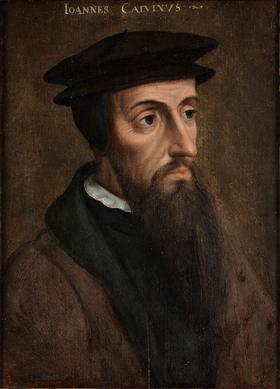
1559A man with a long dark beard in a black cap and a fur-collared gown, seen in three-quarter profile
Protestant, Reformed

The rock as Peter's confession, used against the papal office

John Calvin Institutes of the Christian Religion 4.6.6

“…how futilely those argue who, out of the mere name of Peter, would rear up a governing power over the whole Church. … Peter had confessed in his own name, and that of his brethren, that Christ was the Son of God (Mt. 16:16). On this rock Christ builds his Church, because it is the only foundation; as Paul says, "Other foundation than this can no man lay" (1 Cor. 3:11).”

Read it in the source: CCEL

See it on the timeline: Protestantism

1559
Protestant, Reformed

The elect cannot lose salvation ("once saved, always saved")

John Calvin Institutes of the Christian Religion 3.24.6

“But Christ has freed us from anxiety on this head; for the following promises undoubtedly have respect to the future … Again, when he declares, "Every plant which my heavenly Father has not planted shall be rooted up," (Mt. 15:13), he intimates conversely that those who have their root in God can never be deprived of their salvation.”

Read it in the source: CCEL

See it on the timeline: Protestantism

1561A boy carrying a fish walks arm in arm with a winged angel, with a small dog at their feet
Protestant, Reformed

The seven books: a Reformed confession lists them as apocryphal

Guido de Brès Belgic Confession, Article 6

“We distinguish between these holy books and the apocryphal ones, which are the third and fourth books of Esdras; the books of Tobit, Judith, Wisdom, Jesus Sirach, Baruch … and the two books of Maccabees. The church may certainly read these books and learn from them as far as they agree with the canonical books. But they do not have such power and virtue that one could confirm from their testimony any point of faith or of the Christian religion.”

Read it in the source: Fordham Sourcebook

See it on the timeline: Protestantism

1562Rows of bishops in mitres sit in a great semicircle of benches inside a church, facing the presiding cardinals
Council
Council of Trent Session 22, Doctrine on the Sacrifice of the Mass, ch. 1

“…that He might leave, to His own beloved Spouse the Church, a visible sacrifice, such as the nature of man requires, whereby that bloody sacrifice, once to be accomplished on the cross, might be represented, and the memory thereof remain even unto the end of the world, and its salutary virtue be applied to the remission of those sins which we daily commit…”

Read it in the source: Papal Encyclicals Online

See it on the timeline: The Mass as sacrifice

1562
Council
Council of Trent Session 22, Doctrine on the Sacrifice of the Mass, ch. 1

“…He delivered (His own body and blood) to be received by His apostles, whom He then constituted priests of the New Testament; and by those words, Do this in commemoration of me, He commanded them and their successors in the priesthood, to offer (them); even as the Catholic Church has always understood and taught.”

Read it in the source: Papal Encyclicals Online

See it on the timeline: The priest and the Eucharist

1562
Council
Council of Trent Session 21, Decree on Reformation, ch. 9

“Whereas many remedies, heretofore applied by divers councils in their day, as well by that of Lateran, and of Lyons, as by that of Vienne, against the wicked abuses of questors of alms, have become in later times useless; yea, rather the depravity of such is, to the great scandal and complaint of all the faithful, found daily so to increase the more, as that there seems to be no longer any hope left of their amendment; (the Synod) ordains that, in all parts of Christendom soever, their name and use be henceforth utterly abolished … that so all men may at length truly understand, that these heavenly treasures of the Church are administered, not for gain, but for godliness.”

Read it in the source: Papal Encyclicals Online

See it on the timeline: Indulgences

1562
Liturgy

What the Church may change and what she may not

Council of Trent Session 21, Doctrine on Communion under both kinds, ch. 2

“It furthermore declares, that this power has ever been in the Church, that, in the dispensation of the sacraments, their substance being untouched, it may ordain,–or change, what things soever it may judge most expedient, for the profit of those who receive, or for the veneration of the said sacraments, according to the difference of circumstances, times, and places.”

Read it in the source: Papal Encyclicals Online

See it on the timeline: The Mass through the centuries

1562
Council
Council of Trent Session 21, Doctrine on Communion under both kinds, ch. 3

“It moreover declares, that although, as hath been already said, our Redeemer, in that last supper, instituted, and delivered to the apostles, this sacrament in two species, yet is to be acknowledged, that Christ whole and entire and a true sacrament are received under either species alone; and that therefore, as regards the fruit thereof, they, who receive one species alone, are not defrauded of any grace necessary to salvation.”

Read it in the source: Papal Encyclicals Online

See it on the timeline: The Eucharist

16 July 1562
Council

Reform at Trent: the office of the alms-collectors abolished

Council of Trent Session 21, Decree on Reformation, ch. 9

“Whereas many remedies, heretofore applied by divers councils in their day, as well by that of Lateran, and of Lyons, as by that of Vienne, against the wicked abuses of questors of alms, have become in later times useless; yea, rather the depravity of such is, to the great scandal and complaint of all the faithful, found daily so to increase the more, as that there seems to be no longer any hope left of their amendment; (the Synod) ordains that, in all parts of Christendom soever, their name and use be henceforth utterly abolished”

Read it in the source: Papal Encyclicals Online

See it on the timeline: Protestantism

1562
Liturgy

The Roman Canon

Council of Trent Session 22, Doctrine on the Sacrifice of the Mass, ch. 4

“…the Catholic Church instituted, many years ago, the sacred Canon, so pure from every error, that nothing is contained therein which does not in the highest degree savour of a certain holiness and piety, and raise up unto God the minds of those that offer. For it is composed, out of the very words of the Lord, the traditions of the apostles, and the pious institutions also of holy pontiffs.”

Read it in the source: Papal Encyclicals Online

See it on the timeline: The Mass through the centuries

1562
Council
Council of Trent Session 22, Doctrine on the Sacrifice of the Mass, ch. 6

“The sacred and holy Synod would fain indeed that, at each mass, the faithful who are present should communicate, not only in spiritual desire, but also by the sacramental participation of the Eucharist, that thereby a more abundant fruit might be derived to them from this most holy sacrifice”

Read it in the source: Papal Encyclicals Online

See it on the timeline: The Eucharist

1562
Liturgy

The language of the Mass

Council of Trent Session 22, Doctrine on the Sacrifice of the Mass, ch. 8

“Although the mass contains great instruction for the faithful people, nevertheless, it has not seemed expedient to the Fathers, that it should be every where celebrated in the vulgar tongue. Wherefore, the ancient usage of each church, and the rite approved of by the holy Roman Church, the mother and mistress of all churches, being in each place retained; … the holy Synod charges pastors, and all who have the cure of souls, that they frequently, during the celebration of mass, expound either by themselves, or others, some portion of those things which are read at mass”

Read it in the source: Papal Encyclicals Online

See it on the timeline: The Mass through the centuries

1563
Council
Council of Trent Session 25, On the Invocation and Veneration of Saints

“…it is good and useful suppliantly to invoke them, and to have recourse to their prayers, aid, and help for obtaining benefits from God, through His Son, Jesus Christ our Lord, who is our alone Redeemer and Saviour.”

Read it in the source: Papal Encyclicals Online

See it on the timeline: Honor given to Mary

1563
Council
Council of Trent Session 23, The True and Catholic Doctrine on the Sacrament of Order, ch. 4

“…bishops, who have succeeded to the place of the apostles, … are placed, as the same apostle says, by the Holy Ghost, to rule the Church of God; that they are superior to priests; administer the sacrament of Confirmation; ordain the ministers of the Church”

Read it in the source: Papal Encyclicals Online

See it on the timeline: Apostolic succession

1563
Council
Council of Trent Session 23, Doctrine concerning the Sacrament of Order, ch. 4

“And if anyone should assert that all Christians without distinction are priests of the New Testament, or that they are all inter se endowed with an equal spiritual power, he seems to do nothing else than derange the ecclesiastical hierarchy … as if, contrary to the teaching of St. Paul, all are apostles, all prophets, all evangelists, all pastors, all doctors.”

Read it in the source: EWTN Library

See it on the timeline: The ordained priesthood

1563
Council
Council of Trent Session 24, Canons on the Sacrament of Matrimony, canon 9

“If any one saith, that clerics constituted in sacred orders, or Regulars, who have solemnly professed chastity, are able to contract marriage, and that being contracted it is valid, notwithstanding the ecclesiastical law, or vow; and that the contrary is no thing else than to condemn marriage … let him be anathema”

Read it in the source: Papal Encyclicals Online

See it on the timeline: Priestly celibacy

1563
Council
Council of Trent Session 25, Decree Concerning Purgatory

“Whereas the Catholic Church, instructed by the Holy Ghost, has, from the sacred writings and the ancient tradition of the Fathers, taught, in sacred councils, and very recently in this oecumenical Synod, that there is a Purgatory, and that the souls there detained are helped by the suffrages of the faithful, … but principally by the acceptable sacrifice of the altar; … While those things which tend to a certain kind of curiosity or superstition, or which savour of filthy lucre, let them prohibit as scandals and stumbling-blocks of the faithful.”

Read it in the source: Papal Encyclicals Online

See it on the timeline: Purgatory

1563
Council
Council of Trent Session 25, Decree Concerning Indulgences

“Whereas the power of conferring Indulgences was granted by Christ to the Church; and she has, even in the most ancient times, used the said power, delivered unto her of God … And being desirous that the abuses which have crept therein, and by occasion of which this honourable name of Indulgences is blasphemed by heretics, be amended and corrected, It ordains generally by this decree, that all evil gains for the obtaining thereof, whence a most prolific cause of abuses amongst the Christian people has been derived, be wholly abolished.”

Read it in the source: Papal Encyclicals Online

See it on the timeline: Indulgences

1563
Council
Council of Trent Session 25, On the Invocation, Veneration, and Relics, of Saints, and on Sacred Images

“…the saints, who reign together with Christ, offer up their own prayers to God for men … but that they think impiously, who deny that the saints, who enjoy eternal happiness in heaven, are to be invocated; or who assert either that they do not pray for men; or, that the invocation of them to pray for each of us even in particular, is idolatry; or, that it is repugnant to the word of God; and is opposed to the honour of the one mediator of God and men, Christ Jesus”

Read it in the source: Papal Encyclicals Online

See it on the timeline: Praying to saints

1563
Council
Council of Trent Session 25, On the Invocation, Veneration, and Relics, of Saints, and on Sacred Images

“Moreover, that the images of Christ, of the Virgin Mother of God, and of the other saints, are to be had and retained particularly in temples, and that due honour and veneration are to be given them; not that any divinity, or virtue, is believed to be in them, on account of which they are to be worshipped; or that anything is to be asked of them; or, that trust is to be reposed in images … but because the honour which is shown them is referred to the prototypes which those images represent”

Read it in the source: Papal Encyclicals Online

See it on the timeline: Images and statues

1563
Council
Council of Trent Session 23, Doctrine on the Sacrament of Order, ch. 3

“Whereas, by the testimony of Scripture, by Apostolic tradition, and the unanimous consent of the Fathers, it is clear that grace is conferred by sacred ordination, which is performed by words and outward signs, no one ought to doubt that Order is truly and properly one of the seven sacraments of holy Church. For the apostle says; I admonish thee that thou stir up the grace of God, which is in thee by the imposition of my hands.”

Read it in the source: Papal Encyclicals Online

See it on the timeline: Holy Orders

1563
Council
Council of Trent Session 24, Canons on the Sacrament of Matrimony, canon 1

“If any one saith, that matrimony is not truly and properly one of the seven sacraments of the evangelic law, (a sacrament) instituted by Christ the Lord; but that it has been invented by men in the Church; and that it does not confer grace; let him be anathema.”

Read it in the source: Papal Encyclicals Online

See it on the timeline: Matrimony

1563
Council
Council of Trent Session 24, Decree on the Reformation of Marriage, ch. 1 (Tametsi)

“Although it is not to be doubted, that clandestine marriages, made with the free consent of the contracting parties, are valid and true marriages, so long as the Church has not rendered them invalid; … Those who shall attempt to contract marriage otherwise than in the presence of the parish priest, or of some other priest by permission of the said parish priest, or of the Ordinary, and in the presence of two or three witnesses; the holy Synod renders such wholly incapable of thus contracting and declares such contracts invalid and null, as by the present decree It invalidates and annuls them.”

Read it in the source: Papal Encyclicals Online

See it on the timeline: Matrimony

4 December 1563
Council

The Council of Trent on indulgences: the power kept, the trade abolished

Council of Trent Session 25, Decree concerning Indulgences

“Whereas the power of conferring Indulgences was granted by Christ to the Church; and she has, even in the most ancient times, used the said power, delivered unto her of God; the sacred holy Synod teaches, and enjoins, that the use of Indulgences, for the Christian people most salutary, and approved of … by the authority of sacred Councils, is to be retained in the Church; and It condemns with anathema those who either assert, that they are useless; or who deny that there is in the Church the power of granting them. … And being desirous that the abuses which have crept therein, and by occasion of which this honourable name of Indulgences is blasphemed by heretics, be amended and corrected, It ordains generally by this decree, that all evil gains for the obtaining thereof,–whence a most prolific cause of abuses amongst the Christian people has been derived,–be wholly abolished.”

Read it in the source: Papal Encyclicals Online

See it on the timeline: Protestantism

1569An old pope with a white beard, in a red cap and cape, sits on a throne and raises his right hand in blessing
Magisterium
Pope St. Pius V Consueverunt Romani Pontifices, 1

“And so Dominic looked to that simple way of praying and beseeching God, accessible to all and wholly pious, which is called the Rosary, or Psalter of the Blessed Virgin Mary, in which the same most Blessed Virgin is venerated by the angelic greeting repeated one hundred and fifty times, that is, according to the number of the Davidic Psalter, and by the Lord’s Prayer with each decade. Interposed with these prayers are certain meditations showing forth the entire life of Our Lord Jesus Christ…”

Read it in the source: Papal Encyclicals Online

See it on the timeline: The Rosary

1569
Doctor of the Church

St. John of Avila, priest and Doctor

St. John of Avila Letter 160, as quoted by Benedict XVI, Apostolic Letter proclaiming St. John of Avila a Doctor of the Church, 7 October 2012

“Open your little heart to that breadth of love by which the Father gave us his Son, and with him gave us himself, and the Holy Spirit, and all things besides”

Read it in the source: vatican.va

See it on the timeline: The Doctors of the Church

1570An old pope with a white beard, in a red cap and cape, sits on a throne and raises his right hand in blessing
Liturgy

The Roman Missal of St. Pius V

Pope St. Pius V Quo Primum, 14 July 1570

“Besides this, these men consulted the works of ancient and approved authors concerning the same sacred rites; and thus they have restored the Missal itself to the original form and rite of the holy Fathers.”

Read it in the source: Papal Encyclicals Online

See it on the timeline: The Mass through the centuries

16th century
Miracle

Our Lady of Good Health, Vailankanni, India

Dicastery for the Doctrine of the Faith Letter to the Bishop of Thanjavur, The love of Mary at Vailankanni, 1 August 2024

“The feast of the Sanctuary of Our Lady of Good Health in Vailankanni, a devotion dating back to the 16 century, is approaching. There are beautiful traditions ascribed to the encounters that the Virgin had with poor and sick boys at this place of worship. … The first account, which is ancient, is filled with rich symbolism because the boy to whom Mary showed herself offered her the milk he had brought with him for the Child she was carrying in her arms.”

Witnesses
A boy, in the first account, which the letter calls ancient; the letter gives no names
Church ruling
None stated. The letter is signed by the Prefect of the Dicastery and passes on the Pope's appreciation and blessing for the September celebrations
Where it can be seen
Sanctuary of Our Lady of Good Health in Vailankanni, India

Read it in the source: vatican.va

See it on the timeline: Marian apparitions

1570An old pope with a white beard, in a red cap and cape, sits on a throne and raises his right hand in blessing
Liturgy

One Missal for the Latin Church, with rites older than 200 years kept

Pope St. Pius V Quo Primum, 14 July 1570

“This new rite alone is to be used unless approval of the practice of saying Mass differently was given at the very time of the institution and confirmation of the church by Apostolic See at least 200 years ago, or unless there has prevailed a custom of a similar kind which has been continuously followed for a period of not less than 200 years, in which most cases We in no wise rescind their above-mentioned prerogative or custom.”

Read it in the source: Papal Encyclicals Online

See it on the timeline: The Mass through the centuries

7 October 1571A black and white photograph of a very old, smiling pope in white with a pectoral cross
Magisterium

Lepanto and the feast of the Rosary

Pope Leo XIII Supremi Apostolatus Officio, 4 (1 September 1883)

“The efficacy and power of this devotion was also wondrously exhibited in the sixteenth century, when the vast forces of the Turks threatened to impose on nearly the whole of Europe the yoke of superstition and barbarism. At that time the Supreme Pontiff, St. Pius V., after rousing the sentiment of a common defence among all the Christian princes, strove, above all, with the greatest zeal, to obtain for Christendom the favour of the most powerful Mother of God. … And it was to preserve the memory of this great boon thus granted, that the same Most Holy Pontiff desired that a feast in honour of Our Lady of Victories should celebrate the anniversary of so memorable a struggle, the feast which Gregory XIII. dedicated under the title of “The Holy Rosary.””

Read it in the source: vatican.va

See it on the timeline: The Rosary

1571A boy carrying a fish walks arm in arm with a winged angel, with a small dog at their feet
Protestant, Anglican

The seven books: the Church of England reads them but proves no doctrine from them

Church of England Thirty-nine Articles of Religion, Article 6

“And the other Books (as Hierome saith) the Church doth read for example of life and instruction of manners; but yet doth it not apply them to establish any doctrine; such are these following: … The Book of Tobias, The Book of Judith, The rest of the Book of Esther, The Book of Wisdom, Jesus the Son of Sirach, Baruch the Prophet, … The First Book of Maccabees, The Second Book of Maccabees.”

Read it in the source: Fordham Sourcebook

See it on the timeline: Protestantism

1582A Carmelite nun kneels before Christ, who stands in a red cloak, while people below reach up out of flames
Saint

St. Teresa of Avila, Carmelite reformer and Doctor

Pope Benedict XVI General Audience, 2 February 2011

“She died on the night of 15 October 1582 in Alba de Tormes, after setting up the Carmelite Convent in Burgos, while on her way back to Avila. Her last humble words were: “After all I die as a child of the Church”, and “O my Lord and my Spouse, the hour that I have longed for has come. It is time to meet one another”.”

Read it in the source: vatican.va

See it on the timeline: Saints of reform and mission, 1500 to 1800

1582
Doctor of the Church

St. Teresa of Avila, Carmelite reformer and Doctor

St. Teresa of Avila The Book of Her Life 8, 5, as quoted in CCC 2709

“Contemplative prayer [oracion mental] in my opinion is nothing else than a close sharing between friends; it means taking time frequently to be alone with him who we know loves us.”

Read it in the source: vatican.va

See it on the timeline: The Doctors of the Church

1584A cardinal in a red cap and cape, seen in sharp profile, with a strong hooked nose
Saint

St. Charles Borromeo, Archbishop of Milan

Pope Benedict XVI Angelus, 4 November 2007

“His figure stands out in the 16th century as a model of an exemplary Pastor because of his charity, doctrine, apostolic zeal and above all, his prayer. "Souls are won", he said, "on one's knees". … In 1576, when the plague was raging in Milan, he visited, comforted and spent all his money on the sick. His motto consisted in one word: "Humilitas".”

Read it in the source: vatican.va

See it on the timeline: Saints of reform and mission, 1500 to 1800

1591A young Carmelite friar in a white cloak holds a cross, with a skull beside him
Saint

St. John of the Cross, Carmelite and Doctor

Pope Benedict XVI General Audience, 16 February 2011

“John faced great suffering with exemplary serenity and patience. He died in the night between 13 and 14 December 1591, while his confreres were reciting Matins. He took his leave of them saying: “Today I am going to sing the Office in Heaven”. His mortal remains were translated to Segovia. He was beatified by Clement X in 1675 and canonized by Benedict XIII in 1726.”

Read it in the source: vatican.va

See it on the timeline: Saints of reform and mission, 1500 to 1800

1591
Doctor of the Church

St. John of the Cross, Carmelite and Doctor

St. John of the Cross The Ascent of Mount Carmel, as quoted in CCC 65

“In giving us his Son, his only Word (for he possesses no other), he spoke everything to us at once in this sole Word - and he has no more to say. . . because what he spoke before to the prophets in parts, he has now spoken all at once by giving us the All Who is His Son.”

Read it in the source: vatican.va

See it on the timeline: The Doctors of the Church

1595An old priest with a white beard, in a red chasuble, kneels with open arms before the Virgin and Child
Saint

St. Philip Neri, founder of the Oratory

Pope Francis Message on the Fifth Centenary of the Birth of St. Philip Neri, 26 May 2015

“His existential path was deeply marked by the relationship with the person of Jesus Christ and by the commitment to guide to Him the souls entrusted to his spiritual care. On the point of death he advised: “He who wishes for anything but Christ, does not know what he wishes; he who asks for anything but Christ, does not know what he is asking”.”

Read it in the source: vatican.va

See it on the timeline: Saints of reform and mission, 1500 to 1800

1595
Council

The Union of Brest: Eastern bishops enter communion with Rome

The bishops of the metropolitanate of Kiev Articles Concerning Union With The Roman Church (Union of Brest), article 1

“Since there is a quarrel between the Romans and Greeks about the procession of the Holy Spirit, which greatly impede unity really for no other reason than that we do not wish to understand one another—we ask that we should not be compelled to any other creed but that we should remain with that which was handed down to us in the Holy Scriptures, in the Gospel, and in the writings of the holy Greek Doctors, that is, that the Holy Spirit proceeds, not from two sources and not by a double procession, but from one origin, from the Father through the Son.”

Read it in the source: EWTN Library

See it on the timeline: The East-West Schism

1597An engraved oval portrait of an old priest with a thin beard, his hands joined, with his name in Latin around the frame
Saint

St. Peter Canisius, Jesuit and Doctor

Pope Benedict XVI General Audience, 9 February 2011

“There were at least 200 editions of this Catechism in his lifetime alone! And hundreds of editions succeeded one another until the 20th century. So it was that still in my father’s generation people in Germany were calling the Catechism simply “the Canisius”. He really was the Catechist of Germany for centuries, he formed people’s faith for centuries.”

Read it in the source: vatican.va

See it on the timeline: Saints of reform and mission, 1500 to 1800

1597
Doctor of the Church

St. Peter Canisius, Jesuit and Doctor

St. Peter Canisius Journal, 4 September 1549, as quoted by Benedict XVI, General Audience, 9 February 2011

“In the end, as if you were opening to me the heart of the Most Sacred Body, which it seemed to me I saw before me, you commanded me to drink from that source, inviting me, as it were, to draw the waters of my salvation from your founts, O my Saviour”

Read it in the source: vatican.va

See it on the timeline: The Doctors of the Church

The 1600s1600 to 1699
1606
Saint

St. Turibius of Mogrovejo, Archbishop of Lima

Pope Francis Address to the Bishops of Peru, Lima, 21 January 2018

“We see him from the time in which he accepted the mandate to come to these lands with the mission to be a father and a shepherd. He left the security of familiar surroundings in order to enter a completely new universe, unknown and filled with challenges. He journeyed towards a promised land guided by faith as “the assurance of things hoped for” (Heb 11:1).”

Read it in the source: vatican.va

See it on the timeline: Saints of reform and mission, 1500 to 1800

canonized 1608
Miracle

St. Frances of Rome, wife, mother and foundress

Dicastery for the Causes of Saints Profile of St. Frances of Rome, biography

“When for example her father-in-law, exasperated by the continual "withdrawals" in favour of the beggars, takes the keys of the storerooms from her and empties the family granary, a few days later, where only the chaff had been left, there are again hundredweights of excellent wheat. And no one had bought it back.”

Our translation. The words as written, in Italian:

“Quando per esempio il suocero, esasperato dai continui “prelievi” a favore dei mendicanti, le toglie le chiavi delle dispense e svuota il granaio di famiglia, qualche giorno dopo lì dov’era rimasta solo la pula ci sono di nuovo quintali di ottimo frumento. E nessuno lo aveva ricomprato.”

Church ruling
Canonized by Pope Paul V on 29 May 1608

Read it in the source: Dicastery for the Causes of Saints

See it on the timeline: Saints of the high Middle Ages, 1050 to 1500

1608A white-haired pope in a white cassock and skullcap, smiling
Miracle

Our Lady of Šiluva, Lithuania

Pope Benedict XVI Letter to Cardinal Joachim Meisner, Special Envoy to Šiluva, 3 July 2008

“The four-hundredth year is now approaching since the time when the Mother of God is said to have appeared at Šiluva in Lithuania. … In the year 1608 the Mother of God herself is said to have appeared to some shepherds.”

Our translation. The words as written, in Latin:

“Quadringentesimus iam appetit annus ex quo tempore Dei Mater Šiluvae in Lituania apparuisse perhibetur. … Anno autem MDCVIII ipsa Deipara quibusdam pastoribus apparuisse fertur”

Witnesses
Some shepherds, according to the letter
Church ruling
None stated. The Pope names Cardinal Meisner his envoy to the celebration of the 400th anniversary

Read it in the source: vatican.va

See it on the timeline: Marian apparitions

1608
Miracle

The miracle of Faverney

Cardinal André Vingt-Trois, Archbishop of Paris Homily for the fourth centenary of the miracle of Faverney, Faverney, 25 May 2008

“the business of the monstrance rising above the flames, if it had taken place only in front of a few rather sleepy monks, one could have said afterwards that it was a fine hoax; but since there were thousands of witnesses, who were not all asleep, and some of whom were even fasting, then unless one is badly informed one cannot say that it is a hoax. Too many people saw it. It is not a hoax, it is a prodigy.”

Our translation. The words as written, in French:

“le « coup » de l’ostensoir qui monte au-dessus des flammes, s’il s’était déroulé seulement devant quelques moines un peu endormis, on aurait pu dire ensuite que c’était une belle supercherie, mais comme il y a eu des milliers de témoins, qui n’étaient pas tous endormis, et dont certains même étaient à jeun, à moins d’être mal renseigné, on ne peut pas dire qu’il s’agit d’une supercherie. Trop de gens ont vu. Ce n’est pas une supercherie, c’est un prodige.”

Witnesses
Thousands, according to the homily and the introduction on the page
Investigation
None is described on this page

Read it in the source: dioceseparis.fr

See it on the timeline: Eucharistic miracles

1610
Saint

St. Francis Solano, Franciscan missionary in South America

Dicastery for the Causes of Saints Profile of St. Francisco Solano, summary

“A priest and missionary of the Order of Friars Minor, who for the salvation of souls travelled the length and breadth of the regions of South America and worked, by preaching and by witness, to teach the indigenous peoples and the Spanish colonists themselves the newness of the Christian life”

Our translation. The words as written, in Italian:

“Sacerdote e missionario dell’Ordine dei Frati Minori, che per la salvezza delle anime percorse in lungo e in largo le regioni dell’America Meridionale e si adoperò con la predicazione e la testimonianza per insegnare ai popoli indigeni e agli stessi coloni spagnoli la novità della vita cristiana”

Read it in the source: Dicastery for the Causes of Saints

See it on the timeline: Saints of reform and mission, 1500 to 1800

1615An engraved portrait of an elderly cardinal with a short beard wearing a biretta, his hand resting on a book
Doctor of the Church

Bellarmine: the Fathers read the sun as moving

St. Robert Bellarmine Letter to Paolo Antonio Foscarini, 12 April 1615, second point

“Second. I say that, as you know, the Council [of Trent] prohibits expounding the Scriptures contrary to the common agreement of the holy Fathers. And if Your Reverence would read not only the Fathers but also the commentaries of modern writers on Genesis, Psalms, Ecclesiastes and Josue, you would find that all agree in explaining literally (ad litteram) that the sun is in the heavens and moves swiftly around the earth, and that the earth is far from the heavens and stands immobile in the center of the universe. Now consider whether in all prudence the Church could encourage giving to Scripture a sense contrary to the holy Fathers and all the Latin and Greek commentators.”

Read it in the source: Fordham Sourcebook

See it on the timeline: The Galileo case

1615
Doctor of the Church

Bellarmine: if it were demonstrated, Scripture would have to be explained with caution

St. Robert Bellarmine Letter to Paolo Antonio Foscarini, 12 April 1615, third point

“Third. I say that if there were a true demonstration that the sun was in the center of the universe and the earth in the third sphere, and that the sun did not travel around the earth but the earth circled the sun, then it would be necessary to proceed with great caution in explaining the passages of Scripture which seemed contrary, and we would rather have to say that we did not understand them than to say that something was false which has been demonstrated.But I do not believe that there is any such demonstration; none has been shown to me.”

Read it in the source: Fordham Sourcebook

See it on the timeline: The Galileo case

1616An old man with a white beard in a black gown and white collar, holding a telescope
Magisterium

The Congregation of the Index rules against the motion of the earth

Congregation of the Index Decree of the Congregation of the Index, 1616

“because it has come to the attention of this Congregation that the Pythagorean doctrine which is false and contrary to Holy Scripture, which teaches the motion of the earth and the immobility of the sun, and which is taught by Nicholas Copernicus in De Revolutionibus Orbium Caelestium and by Diego de Zuniga's On Job, is now being spread and accepted by many … Therefore, so that this opinion may not spread any further to the prejudice of Catholic truth, it ( the Sacred Congregation ) decrees that the said Nicholas Copernicus' De Revolutionibus Orbium, and Diego de Zuniga's On Job, be suspended until corrected; but that the book of the Carmelite Father, Paolo Foscarini, be prohibited and condemned, and that all other books likewise, in which the same is taught, be prohibited.”

Read it in the source: Fordham Sourcebook

See it on the timeline: The Galileo case

1617A Dominican nun crowned with roses stands in a niche as the Christ Child appears above her
Saint

St. Rose of Lima, Dominican tertiary

Dicastery for the Causes of Saints Profile of St. Rose of Lima, biography

“In her mother's house she set up a kind of shelter for the needy, where she cared for abandoned children and old people, above all those of Indian origin. From childhood Rose longed to consecrate herself to God in the cloistered life, but she remained a "virgin in the world" and as a Dominican tertiary she shut herself in a cell of a few square metres, built in the garden of her mother's house”

Our translation. The words as written, in Italian:

“Nella casa materna creò una sorta di ricovero per i bisognosi, dove assisteva bambini ed anziani abbandonati, soprattutto di origine india. Già da piccola Rosa aspirò a consacrarsi a Dio nella vita claustrale, ma rimase “vergine nel mondo” e da terziaria domenicana si rinchiuse in una cella di pochi metri quadrati, costruita nel giardino della casa materna”

Read it in the source: Dicastery for the Causes of Saints

See it on the timeline: Saints of reform and mission, 1500 to 1800

1619
Doctor of the Church

St. Lawrence of Brindisi, Capuchin and Doctor

St. Lawrence of Brindisi As quoted by Benedict XVI, General Audience, 23 March 2011

“is a light for the mind and a fire for the will, so that man may know and love God. For the inner man, who lives through the living grace of God’s Spirit, it is bread and water, but bread sweeter than honey and water better than wine or milk”

Read it in the source: vatican.va

See it on the timeline: The Doctors of the Church

1621An engraved portrait of an elderly cardinal with a short beard wearing a biretta, his hand resting on a book
Saint

St. Robert Bellarmine, cardinal and Doctor

Pope Benedict XVI General Audience, 23 February 2011

“He died in Rome on 17 September 1621. Pope Pius XI beatified him in 1923, canonized him in 1930 and proclaimed him a Doctor of the Church in 1931. St Robert Bellarmine carried out an important role in the Church of the last decades of the 16th century and the first of decades of 17th. His Controversiae were a reference point, still valid, for Catholic ecclesiology on questions concerning Revelation, the nature of the Church, the sacraments and theological anthropology.”

Read it in the source: vatican.va

See it on the timeline: Saints of reform and mission, 1500 to 1800

1621
Doctor of the Church

St. Robert Bellarmine, cardinal and Doctor

St. Robert Bellarmine The Ascent of the Mind to God, as quoted by Benedict XVI, General Audience, 23 February 2011

“O soul, your example is God, infinite beauty, light without shadow, splendour that exceeds that of the moon and the sun. … For this reason you must conclude: whoever finds God finds everything, whoever loses God loses everything”

Read it in the source: vatican.va

See it on the timeline: The Doctors of the Church

1622An engraved portrait of a bald, bearded bishop, with a French caption beneath
Saint

St. Francis de Sales, bishop and Doctor

Pope Benedict XVI General Audience, 2 March 2011

“To Philotea, the ideal person to whom he dedicated his Introduction to a Devout Life (1607), Francis de Sales addressed an invitation that might well have seemed revolutionary at the time. It is the invitation to belong completely to God, while living to the full her presence in the world and the tasks proper to her state. “My intention is to teach those who are living in towns, in the conjugal state, at court” (Preface to The Introduction to a Devout Life).”

Read it in the source: vatican.va

See it on the timeline: Saints of reform and mission, 1500 to 1800

canonized 1622A bearded priest in black looks up to heaven with a pilgrim's staff, a flame at his breast
Miracle

St. Francis Xavier, missionary in Asia

Pope Pius XI Apostolic Letter Meditantibus Nobis, on the third centenary of the canonization of Ignatius of Loyola and Francis Xavier, as given in the Dicastery's profile of St. Francis Xavier

“Indeed, if Francis undertook such long journeys by land and sea again and again; if he was the first to carry the name of Jesus into Japan, which may rightly be called the island of Martyrs; if he faced immense dangers and bore incredible labours; if he poured the saving water of Baptism on countless brows; if, finally, he worked so many miracles of every kind, Francis himself declared that he owed all this, after God, to Ignatius, "father of his soul", as he called him”

Our translation. The words as written, in Italian:

“Infatti, se Francesco intraprese più volte così lunghi viaggi per terra e per mare; se portò per primo il nome di Gesù nel Giappone, che a buon diritto si può appellare isola dei Martiri; se affrontò pericoli immensi e sostenne incredibili fatiche; se versò l’acqua salutare del Battesimo su innumerabili fronti; se infine operò tanti miracoli di ogni genere, tutto ciò lo stesso Francesco affermava di doverlo, dopo Dio, ad Ignazio, « padre dell’anima sua », come lo chiamava”

Read it in the source: Dicastery for the Causes of Saints

See it on the timeline: Saints of reform and mission, 1500 to 1800

1622An engraved portrait of a bald, bearded bishop, with a French caption beneath
Doctor of the Church

St. Francis de Sales, bishop and Doctor

St. Francis de Sales Letter to St. Jane Frances de Chantal, 14 October 1604, as quoted by Benedict XVI, General Audience, 2 March 2011

“this is the rule of our obedience, which I write for you in capital letters: do all through love, nothing through constraint; love obedience more than you fear disobedience. I leave you the spirit of freedom, not that which excludes obedience, which is the freedom of the world, but that liberty that excludes violence, anxiety and scruples”

Read it in the source: vatican.va

See it on the timeline: The Doctors of the Church

1623
Saint

St. Josaphat, Archbishop of Polotsk and martyr

Pope Pius XI Encyclical Ecclesiam Dei, 13 (12 November 1923)

““Lord, grant me the grace to shed my blood for the unity of the church and in behalf of obedience to the Holy See.” On Sunday, November 13, 1623, his desire was realized. … He was set upon and killed in a most barbarous fashion. Despite his wounds he did not cease till his dying breath to implore God’s pardon for his murderers.”

Read it in the source: Papal Encyclicals Online

See it on the timeline: Saints of reform and mission, 1500 to 1800

22 June 1633A man in black stands in a great hall before a long table of churchmen in red and white
Magisterium

Galileo judged vehemently suspected of heresy

The Cardinals of the Holy Office Sentence of the Tribunal of the Supreme Inquisition against Galileo Galilei, 22 June 1633

“We say, pronounce, sentence, and declare, that thou, the said Galileo, by the things deduced during this trial, and by thee confessed as above, hast rendered thyself vehemently suspected of heresy by this Holy Office, that is, of having believed and held a doctrine which is false, and contrary to the Holy Scriptures, to wit: that the Sun is the centre of the universe, and that it does not move from east to west, and that the Earth moves and is not the centre of the universe: and that an opinion may be held and defended as probable after having been declared and defined as contrary to Holy Scripture; and in consequence thou hast incurred all the censures and penalties of the Sacred Canons, and other Decrees both general and particular, against such offenders imposed and promulgated.”

Read it in the source: Fordham Sourcebook

See it on the timeline: The Galileo case

22 June 1633An old man with a white beard in a black gown and white collar, holding a telescope
Magisterium

The book banned and Galileo sentenced to prison

The Cardinals of the Holy Office Sentence of the Tribunal of the Supreme Inquisition against Galileo Galilei, 22 June 1633

“And to the end that this thy grave error and transgression remain not entirely unpunished, and that thou mayst be more cautious in the future, and an example to others to abstain from and avoid similar offences, "We order that by a public edict the book of DIALOGUES OF GALILEO GALILEI be prohibited, and We condemn thee to the prison of this Holy Office during Our will and pleasure; and as a salutary penance We enjoin on thee that for the space of three years thou shalt recite once a week the Seven Penitential Psalms”

Read it in the source: Fordham Sourcebook

See it on the timeline: The Galileo case

1639
Saint

St. Martin de Porres, Dominican brother of Lima

Dicastery for the Causes of Saints Profile of St. Martin de Porres, biography

“Being of mixed race, he was received into the Order of the Dominican Fathers only as a tertiary and then as a cooperator brother. He accepted this condition, living a life of the greatest humility, radiant with love. He devoted himself with self-denial to the poor and to the sick, giving them medical care, thanks to what he had learned first in a pharmacy and then as the pupil of a barber-surgeon, according to the custom of that time.”

Our translation. The words as written, in Italian:

“Egli, essendo meticcio, fu accolto nell’Ordine dei Padri Domenicani solo come terziario e poi come fratello cooperatore. Accettò questa condizione vivendo un’esistenza di massima umiltà, irradiata dall’amore. Si dedicò con abnegazione ai poveri, ai malati, riservando loro cure sanitarie, grazie alle nozioni apprese dapprima in una farmacia e poi come allievo di un barbiere-chirurgo, secondo l’usanza di quel tempo.”

Read it in the source: Dicastery for the Causes of Saints

See it on the timeline: Saints of reform and mission, 1500 to 1800

1647A boy carrying a fish walks arm in arm with a winged angel, with a small dog at their feet
Protestant, Reformed

The seven books: the Westminster Confession gives them no authority in the church

Westminster Assembly of Divines Westminster Confession of Faith, ch. 1, Of the Holy Scripture, III

“The books commonly called Apocrypha, not being of divine inspiration, are no part of the Canon of the Scripture; and therefore are of no authority in the Church of God, nor to be any otherwise approved, or made use of, than other human writings.”

Read it in the source: CCEL

See it on the timeline: Protestantism

1642 to 1649
Saint

Sts. Jean de Brébeuf, Isaac Jogues and companions, martyrs of North America

Pope John Paul II Homily at the Shrine of the Martyrs, Huronia, 4 (15 September 1984)

“Six of them were Jesuit priests from France: Jean de Brébeuf, Isaac Jogues, Gabriel Lalemant, Antoine Daniel, Charles Garnier and Noël Chabanel. Fired with love for Christ and inspired by Saint Ignatius of Loyola, Saint Francis Xavier and other great saints of the Society of Jesus, these priests came to the New World to proclaim the Gospel of Jesus Christ to the native peoples of this land. And they persevered to the end despite difficulties of every sort.”

Read it in the source: vatican.va

See it on the timeline: Saints of reform and mission, 1500 to 1800

1651 to 1652
Miracle

Our Lady of Coromoto, Venezuela

EWTN Nuestra Señora de Coromoto - 8 de septiembre - Venezuela (EWTN, Santos)

“According to tradition, in the year 1651 the Most Holy Virgin appeared to the chief of the Coromotos and to his family and spoke to them in their language, saying: "Come out of the forest and go where the white people are, so that you may receive the water on your head and be able to enter heaven." … On 8 September 1652 the Virgin appeared again to the Indian, surrounded by a luminous aura. … On 1 May 1942 she was declared Patroness of Venezuela by the national episcopate of that country.”

Our translation. The words as written, in Spanish:

“Según cuenta la tradición, en el año 1651, la Santísima Virgen se le apareció al cacique de los Coromotos y a su familia, les habló en su idioma diciendo: "Salgan del bosque y vayan donde están los blancos para que reciban el agua sobre la cabeza y puedan entrar en el cielo". … El 8 de septiembre de 1652, la Virgen nuevamente se le apareció al indígena, rodeada de un aura luminosa. … El 1º de mayo de 1942 fue declarada Patrona de Venezuela por el Episcopado Nacional de ese país.”

Witnesses
The chief of the Coromotos and his family, according to the tradition the page relates
Church ruling
The page says the bishops of Venezuela declared her Patroness of Venezuela on 1 May 1942; it cites no inquiry into the apparitions themselves

Read it in the source: EWTN Library

See it on the timeline: Marian apparitions

1654
Saint

St. Peter Claver, Jesuit among the enslaved at Cartagena

Dicastery for the Causes of Saints Profile of St. Peter Claver, biography

“Every month, when the arrival of new slaves was reported, packed into the ships, Peter Claver went out to sea in his boat to meet them, bringing them food, help and comfort. He awakened in each one the sense of his own human dignity, brought the unbaptized to the faith, and raised all to the knowledge and practice of the virtues of the Gospel.”

Our translation. The words as written, in Italian:

“Ogni mese, quando veniva segnalato l’arrivo di nuovi schiavi, stipati nelle navi, Pietro Claver usciva in mare con il suo battello per incontrarli, portando loro cibo, soccorso e conforto. Svegliava in ciascuno il senso della propria dignità umana, portava alla fede i non battezzati, elevava tutti alla conoscenza e alla pratica delle virtù evangeliche.”

Read it in the source: Dicastery for the Causes of Saints

See it on the timeline: Saints of reform and mission, 1500 to 1800

1660An old priest with a short white beard, in a black skullcap and black cassock with a white collar
Saint

St. Vincent de Paul, priest and servant of the poor

Pope Francis Message to the Vincentian Family on the Fourth Centenary of the Charism, 27 September 2017

“On one occasion in particular, he was deeply touched by meeting the gaze of a man pleading for mercy and by the faces of a destitute family. There he saw Jesus himself looking at him, unsettling his heart and asking him no longer to live for himself, but to serve him unreservedly in the poor. Vincent would later call the poor “our lords and masters” (Correspondance, entretiens, documents XI, 349). His life then became one of unflagging service, even to his dying breath.”

Read it in the source: vatican.va

See it on the timeline: Saints of reform and mission, 1500 to 1800

1663
Saint

St. Joseph of Cupertino, Franciscan priest

Dicastery for the Causes of Saints Profile of St. Joseph of Cupertino, summary

“A priest of the Order of Friars Minor Conventual who, in spite of the difficulties he faced during his life, shone for poverty, humility and charity towards those in need of God”

Our translation. The words as written, in Italian:

“Sacerdote dell’Ordine dei Frati Minori Conventuali, che, nonostante le difficoltà affrontate durante la sua vita, rifulse per povertà, umiltà e carità verso i bisognosi di Dio”

Read it in the source: Dicastery for the Causes of Saints

See it on the timeline: Saints of reform and mission, 1500 to 1800

1664 to 1718
Miracle

Our Lady of Laus, France

Sanctuary of Our Lady of Laus History of Laus (sanctuary website)

“From the next day, a "beautiful lady" appears to her daily for four months at the Vallon des Fours, near Saint-Etienne. … On 29 August the beautiful lady reveals her identity: "I am Lady Mary, the Mother of my very dear Son." At the end of September, after a month's absence, Mary shows herself again, but on the other side of the valley, at Pindreau: "Go to Laus, you will find there a chapel from which sweet odours will come, and there you will speak to me very often."”

Our translation. The words as written, in French:

“À partir du lendemain, une « belle dame » lui apparaît quotidiennement pendant quatre mois au Vallon des fours, à proximité de Saint-Etienne. … Le 29 août, la belle dame révèle son identité : « Je suis Dame Marie, la Mère de mon très cher Fils. » Fin septembre, après un mois d’absence, Marie se manifeste à nouveau, mais de l’autre côté de la vallée, à Pindreau : « Allez au Laus, vous y trouverez une chapelle d’où s’exhaleront de bonnes odeurs, et là très souvent vous me parlerez ».”

Witnesses
Benoîte Rencurel, a shepherdess born in 1647, who died on 28 December 1718

Read it in the source: sanctuaire-notredamedulaus.com

See it on the timeline: Marian apparitions

1664 to 1718
Miracle

Our Lady of Laus, France

Sanctuary of Our Lady of Laus History of Laus, on the official recognition of 4 May 2008 (sanctuary website)

“On 15 January 2007 the summary of their report is sent to Bishop di Falco Léandri, who submits his judgment to the Congregation for the Doctrine of the Faith. After the Congregation's assent, the Bishop of Gap and Embrun promulgates the decree of recognition on 4 May 2008, during a Mass celebrated at the sanctuary in the presence of the apostolic nuncio to France (Archbishop Fortunato Baldelli), several cardinals and many bishops.”

Our translation. The words as written, in French:

“Le 15 janvier 2007, la synthèse de leur rapport est envoyée à Mgr di Falco Léandri, qui soumet son jugement à la Congrégation pour la doctrine de la foi. Après l'assentiment de cette dernière, l'évêque de Gap et d'Embrun promulgue le décret de reconnaissance le 4 mai 2008, au cours d'une messe célébrée au sanctuaire en présence du nonce apostolique en France (Mgr Fortunato Baldelli), de plusieurs cardinaux et de nombreux évêques.”

Investigation
Three commissions, theological, historical and scientific, set up after a reply from the Congregation for the Doctrine of the Faith dated 22 November 2005
Church ruling
The Archbishop of Embrun authorized the pilgrimage in September 1665. Decree of recognition promulgated by the Bishop of Gap and Embrun, Jean-Michel di Falco Léandri, on 4 May 2008, after the assent of the Congregation for the Doctrine of the Faith

Read it in the source: sanctuaire-notredamedulaus.com

See it on the timeline: Marian apparitions

canonized 1671A Dominican nun crowned with roses stands in a niche as the Christ Child appears above her
Miracle

St. Rose of Lima, Dominican tertiary

Dicastery for the Causes of Saints Profile of St. Rose of Lima, biography

“To her are attributed mortifications and bodily penances of every kind, but also many conversions and as many miracles. One above all: the invasion of Lima by Dutch pirates in 1615, which did not take place. While she was still alive, Rose was examined by a mixed commission of religious and scientists, who judged her mystical experiences to be true "gifts of grace"”

Our translation. The words as written, in Italian:

“Le si attribuiscono infatti mortificazioni e castighi corporali di ogni genere ma anche tante conversioni e altrettanti i miracoli. Uno fra tutti, la mancata invasione dei pirati olandesi a Lima nel 1615. Quando ancora era in vita, Rosa venne esaminata da una commissione mista di religiosi e scienziati che giudicarono le sue esperienze mistiche come veri e propri "doni di grazia"”

Read it in the source: Dicastery for the Causes of Saints

See it on the timeline: Saints of reform and mission, 1500 to 1800

1672
Orthodox

The Synod of Jerusalem answers Calvinism

Dositheus, Patriarch of Jerusalem, and the Synod of Jerusalem Confession of Dositheus, Decree 17

“We believe further that after the consecration of the bread and of the wine the substance of the bread and of the wine no longer remains, but the very body and blood of the Lord under the appearance and form of bread and wine, that is, under the accidents of the bread.”

Our translation. The words as written, in Latin:

“Item facta panis et vini consecratione nec panis nec vini manere amplius substantiam credimus, sed ipsum corpus et sanguinem Domini sub panis et vini specie et figura, id est, sub panis accidentibus.”

Read it in the source: CCEL

See it on the timeline: The East-West Schism

1675
Protestant, Quaker

Protestants divided: ministers need no human commission, in the Quaker propositions

Robert Barclay Theses Theologicae (the Confession of the Society of Friends), Tenth Proposition, Concerning the Ministry

“Moreover, those who have this authority may and ought to preach the gospel, though without human commission or literature; as, on the other hand, those who want the authority of this divine gift, however learned or authorized by the commissions of men and churches, are to be esteemed but as deceivers, and not true ministers of the gospel.”

Read it in the source: CCEL

See it on the timeline: Protestantism

1675
Protestant, Quaker

Protestants divided: no water baptism, in the Quaker propositions

Robert Barclay Theses Theologicae (the Confession of the Society of Friends), Twelfth Proposition, Concerning Baptism

“And this baptism is a pure and spiritual thing, to wit, the baptism of the Spirit and Fire, by which we are buried with him, that, being washed and purged from our sins, we may 'walk in newness of life;' of which the baptism of John was a figure, which was commanded for a time, and not to continue forever. … As to the baptism of infants, it is a mere human tradition, for which neither precept nor practice is to be found in all the Scripture.”

Read it in the source: CCEL

See it on the timeline: Protestantism

1677
Protestant, Baptist

Baptism as a sign, for believers only

Particular Baptist churches of London Second London Confession (printed by Schaff as the Baptist Confession of 1688), Of Baptism, 1-2

“Baptism is an ordinance of the New Testament ordained by Jesus Christ to be unto the party baptized a sign of his fellowship with him in his death and resurrection; of his being engrafted into him; of remission of sins; and of his giving up unto God, through Jesus Christ, to live and walk in newness of life. 2. Those who do actually profess repentance towards God, faith in and obedience to our Lord Jesus, are the only proper subjects of this ordinance.”

Read it in the source: CCEL

See it on the timeline: Protestantism

1680A young woman in a dark blue shawl and a long tunic stands holding a small cross, with a river and a church behind her
Saint

St. Kateri Tekakwitha, Mohawk virgin

Pope Benedict XVI Homily at the Mass of Canonization, 21 October 2012

“Kateri Tekakwitha was born in today’s New York state in 1656 to a Mohawk father and a Christian Algonquin mother who gave to her a sense of the living God. She was baptized at twenty years of age and, to escape persecution, she took refuge in Saint Francis Xavier Mission near Montreal. There she worked, faithful to the traditions of her people, although renouncing their religious convictions until her death at the age of twenty-four.”

Read it in the source: vatican.va

See it on the timeline: Saints of reform and mission, 1500 to 1800

1690A nun in a black veil with a halo holds up a small picture of a heart surrounded by thorns
Saint

St. Margaret Mary Alacoque, Visitation nun

Pope Francis Encyclical Dilexit Nos, 119 (24 October 2024)

“Saint Margaret Mary Alacoque reported a remarkable series of apparitions of Christ between the end of December 1673 and June of 1675. Fundamental to these was a declaration of love that stood out in the first apparition. Jesus said: “My divine Heart is so inflamed with love for men, and for you in particular, that, no longer able to contain in itself the flames of its ardent charity, it must pour them out through you and be manifested to them, in order to enrich them with its precious treasures which I now reveal to you”.”

Read it in the source: vatican.va

See it on the timeline: Saints of reform and mission, 1500 to 1800

The 1700s1700 to 1799
1701
Saint

St. Stanislaus Papczyński, founder of the Marian Fathers

Dicastery for the Causes of Saints Profile of St. Stanislaus of Jesus and Mary, biography

“He died on 17 September 1701, in the convent, saying the words: "Into your hands, Lord, I commend my spirit", blessing his brethren, urging them to keep the rule and the constitutions, and expressing his ardent desire to be united with Christ.”

Our translation. The words as written, in Italian:

“Morì il 17 settembre 1701, nel convento, pronunciando le parole: “Nelle tue mani, Signore, consegno il mio spirito”, benedicendo i suoi confratelli, esortandoli all’osservanza della regola e delle costituzioni ed esprimendo il desiderio ardente di unirsi a Cristo.”

Read it in the source: Dicastery for the Causes of Saints

See it on the timeline: Saints of reform and mission, 1500 to 1800

d. 1716
Saint

St. Louis Marie de Montfort

St. Louis Marie de Montfort The Secret of Mary, 26 (EWTN Library)

“The second consists in entertaining for our Lady deeper feelings of esteem and love, of confidence and veneration. This devotion inspires us to join the confraternities of the Holy Rosary and the Scapular, to say the five or fifteen decades of the Rosary, to venerate our Lady's pictures and shrines, to make her known to others, and to enroll in her sodalities. This devotion, in keeping us from sin, is good, holy and praiseworthy, but it is not as perfect as the third, nor as effective in detaching us from creatures, or in practising that self-denial necessary for union with Jesus Christ.”

Read it in the source: EWTN Library

See it on the timeline: The Rosary

1716
Saint

St. Louis-Marie Grignion de Montfort, missionary preacher

Pope John Paul II Letter to the Montfort Religious Family (published 13 January 2004)

“the motto Totus tuus is inspired by the teaching of St Louis Marie Grignion de Montfort (cf. Gift and Mystery, pp. 42-43; Rosarium Virginis Mariae, n. 15). These two words express total belonging to Jesus through Mary: "Tuus totus ego sum, et omnia mea tua sunt", St Louis Marie wrote, and he translates his words: "I am all yours, and all that I have is yours, O most loving Jesus, through Mary, your most holy Mother" (Treatise on True Devotion, n. 233).”

Read it in the source: vatican.va

See it on the timeline: Saints of reform and mission, 1500 to 1800

canonized 1726
Miracle

St. Francis Solano, Franciscan missionary in South America

Dicastery for the Causes of Saints Profile of St. Francisco Solano, on the miracles attributed to the saint

“Countless miracles were attributed to him by authors of his own time and later, and these are said to have been included also in the depositions for his canonization. Miraculous events had already taken place in Spain: he licked the sores of a child suffering from bubonic plague (some say leprosy) and the next day the child was healed. … In America: in the town of Trancas, he planted his staff in the ground and made water spring up during a terrible drought”

Our translation. The words as written, in Italian:

“Innumerevoli miracoli gli furono attribuiti da autori contemporanei e successivi, e questi sarebbero stati inclusi anche nelle dichiarazioni per la sua canonizzazione. Eventi miracolosi si erano già verificati in Spagna: leccò le piaghe di un bambino affetto da peste bubbonica – alcuni dicono lebbra – e il giorno dopo il bambino guarì. … In America: nella città di Trancas, piantò il suo bastone nel terreno e fece sgorgare l'acqua durante una terribile siccità”

Read it in the source: Dicastery for the Causes of Saints

See it on the timeline: Saints of reform and mission, 1500 to 1800

14-17 August 1730A view over the tiled roofs of a hill town, with a large brick church on the skyline
Miracle

The preserved Hosts of Siena

Archbishop Antonio Buoncristiani of Siena Prodigio Eucaristico di Siena. La storia in sintesi (1730-2014), Gli avvenimenti

“On the eve of the Assumption in 1730, while the whole population was crowded into the Cathedral for the "Procession of the Candles and Tributes", the historic civic homage of the City of Siena to its Patroness, some criminals got into the Church of St Francis of the Conventual Friars Minor where, having broken the little door of the Tabernacle, they took the ciborium, which held about 350 hosts consecrated shortly before. … On 17 August the Holy Hosts were found in the alms box of the nearby Collegiate Church of St Mary in Provenzano, among coins, dust and cobwebs; after official verification by the Church authority, they were carried back in procession to the Church of St Francis”

Our translation. The words as written, in Italian:

“Alla vigilia dell’Assunta del 1730, mentre l’intera popolazione era assiepata in Cattedrale per la celebrazione del "Corteo dei Ceri e dei Censi", omaggio civile storico della Città di Siena alla sua Patrona, alcuni malfattori si introdussero nella Chiesa di San Francesco dei Frati Minori Conventuali dove, rotta la porticina del Tabernacolo, si impossessarono della Pisside che conteneva circa 350 particole da poco consacrate. … Il 17 agosto le SS. Particole vennero ritrovate nella cassetta delle elemosine della vicina Collegiata di S. Maria in Provenzano, fra soldi, polvere e ragnatele; dopo l’ufficiale verifica dell’Autorità ecclesiastica, vennero riportate processionalmente nella Chiesa di San Francesco”

Investigation
Church authority verified the Hosts when they were found in 1730. The page records later official examinations in 1789, 1799, 1815, 1854, 1914, 1922, 1950, 1952 and 2014
Church ruling
The Archbishop of Siena calls the preservation a "prodigio" in these notes. The page cites no decree of the Holy See on it
Where it can be seen
The Basilica of St Francis in Siena

Read it in the source: arcidiocesi.siena.it

See it on the timeline: Eucharistic miracles

examined 10 June 1914
Miracle

The preserved Hosts of Siena

The scientific commission of 1914 Minutes of the examination of 10 June 1914, as quoted by Archbishop Antonio Buoncristiani, Prodigio Eucaristico di Siena. La storia in sintesi (1730-2014)

“Another fragment of a Host, placed on a platinum plate moistened with a few drops of a saturated solution of iodine in water, quickly and wholly took on a fine blue colour, a sure proof of the presence of normal starch in the Host. … In conclusion we answer the questions put to us: 1. The Hosts, to judge from the sample examined, are really made of a paste containing starch, that is, the chief component of unleavened bread; 2. The Hosts themselves are in a good state of preservation”

Our translation. The words as written, in Italian:

“Un altro frammento di Particola, messo su lastra di platino, umettata con alcune gocce di soluzione acquosa satura di jodio, assunse rapidamente ed in toto un bel colore azzurro, prova non dubbia della presenza di amido normale nella Particola. … Concludendo rispondiamo ai quesiti: 1° - Le Particole - come dal campione esaminato - sono realmente costituite da una pasta contenente amido, idest il precipuo componente del pane azimo; 2° - Le Particole stesse sono in stato di buona conservazione”

Investigation
Ordered by Archbishop Prospero Scaccia of Siena and carried out on 10 June 1914 before Church and lay witnesses. Blessed Giuseppe Toniolo of the University of Pisa attended as legal expert. The minutes are kept in the Archiepiscopal Archive
Scientific study
Dr. Siro Grimaldi, professor of food chemistry, Dr. Luigi Simonetta, Dr. Carlo Raimondi and Dr. Mansueto Delaini, all of the University of Siena. They found starch and a good state of preservation, 184 years after 1730

Read it in the source: arcidiocesi.siena.it

See it on the timeline: Eucharistic miracles

visited 14 September 1980
Miracle

The preserved Hosts of Siena

Pope St. John Paul II Address to the clergy and religious, Siena Cathedral, 14 September 1980, 3

“A second thought is linked to the act of Eucharistic worship that we have just carried out: the adoration of the "most holy hosts", which have been kept in the Basilica of St Francis for two and a half centuries. The Eucharist is the vital centre, it is the heart of the Church, which draws from it without ceasing the faith, the grace and the strength she needs on her journey through history.”

Our translation. The words as written, in Italian:

“Un secondo pensiero si collega all’atto di culto eucaristico, che abbiamo ora compiuto: l’adorazione delle “santissime particole”, che sono conservate nella Basilica di san Francesco da due secoli e mezzo. L’eucaristia è il centro vitale, è il cuore della Chiesa, la quale da essa attinge incessantemente la fede, la grazia, l’energia che le sono necessarie nel suo itinerario attraverso la storia.”

Church ruling
None in this address. The Pope speaks of the adoration of the Hosts as an act of Eucharistic worship that he had just carried out
Where it can be seen
The Basilica of St Francis in Siena

Read it in the source: vatican.va

See it on the timeline: Eucharistic miracles

examined 10 September 2014
Miracle

The preserved Hosts of Siena

Archdiocese of Siena (Fr. Emanuele Salvatori, chancellor) Ricognizione al Prodigio Eucaristico delle SS. Particole, minutes, 10 September 2014

“The count therefore gave 225 (two hundred and twenty-five) Hosts, as at the examination of 1952, besides 13 (thirteen) fragments of various sizes … The purpose of the operation was to measure the level of microbial presence on the various surfaces. The full report of the data and of the operations carried out is attached to these minutes. From the partial results, however, one could already note a markedly greater microbial presence on the surfaces of the cylinder than on that of the Host.”

Our translation. The words as written, in Italian:

“Dalla conta risultavano quindi 225 (duecentoventicinque) Ostie, come dalla ricognizione del 1952, oltre a 13 (tredici) frammenti di varie dimensioni … L’operazione aveva come fine la misurazione del tasso di presenza microbica sulle varie superfici. Il referto completo dei dati e delle operazioni eseguite è riscontrabile in allegato al presente verbale. Già dai risultati parziali si poteva tuttavia notare una presenza microbica nettamente maggiore sulle superfici del cilindro, anziché su quella dell’Ostia.”

Investigation
Archbishop Antonio Buoncristiani, by decree no. 52/2014 of 19 August 2014, after the nulla osta of the Congregation for the Doctrine of the Faith. He presided over a commission of clergy, Conventual Franciscans, two professors of the University of Siena and others, who signed the minutes
Scientific study
Dr. Cristiano Riminesi of the National Research Council's institute for the conservation of cultural heritage in Florence, helped by an architect, a biologist and a physician. Non-invasive tests only: swabs, a portable microscope, an ATP bioluminescence check and a culture test
Where it can be seen
The Basilica of St Francis in Siena. After the examination the crystal cylinder was resealed with the archbishop's seal

Read it in the source: arcidiocesi.siena.it

See it on the timeline: Eucharistic miracles

examined 10 September 2014
Miracle

The preserved Hosts of Siena

Archbishop Antonio Buoncristiani of Siena Decree proclaiming the Eucharistic Year, 2014

“As is now known, on 10 September last, with the consent of the Congregation for the Doctrine of the Faith, I judged it right to carry out a new "recognition" of the Holy Hosts kept in the Basilica of St Francis in Siena, and was able to establish, also by "non-invasive" scientific tests, their perfect preservation with a total absence of microbial contamination.”

Our translation. The words as written, in Italian:

“Come è ormai noto, il 10 settembre scorso, con il consenso della Congregazione per la Dottrina della Fede, ho ritenuto opportuno procedere ad una nuova "ricognizione" delle SS. Particole custodite nella Basilica di San Francesco in Siena, potendone constatare - anche con esperimenti scientifici "non invasivi" - la loro perfetta conservazione con la totale assenza di contaminazioni microbiche.”

Investigation
Carried out by the archbishop on 10 September 2014 with the consent of the Congregation for the Doctrine of the Faith
Scientific study
Non-invasive tests. The archbishop states perfect preservation and a total absence of microbial contamination. The minutes quoted above give a partial, comparative result. He also recalls the 1914 finding of unleavened bread in a good state of preservation
Church ruling
The archbishop calls the fact "prodigioso" in this decree. The decree does not report a ruling by the Holy See

Read it in the source: arcidiocesi.siena.it

See it on the timeline: Eucharistic miracles

1739
Saint

St. Angelo of Acri, Capuchin preacher

Dicastery for the Causes of Saints Profile of St. Angelo of Acri, biography

“Adorned with all the virtues, he lived in the heroic exercise of love for God and for neighbour: by his contemporaries he was called "the apostle of the Calabrias". He died at Acri on 30 October 1739.”

Our translation. The words as written, in Italian:

“Adorno di tutte le virtù, visse nell’esercizio eroico dell’amore verso Dio e verso il prossimo: dai contemporanei fu chiamato “l’apostolo delle Calabrie”. Morì in Acri il 30 ottobre 1739.”

Read it in the source: Dicastery for the Causes of Saints

See it on the timeline: Saints of reform and mission, 1500 to 1800

1751A pope in a red fur-lined cap and cape and a gold embroidered stole
Magisterium

Benedict XIV tells the Polish bishops to enforce the old restrictions

Pope Benedict XIV Encyclical A quo primum, 14 June 1751, no. 5

“In this matter, as in all others, We adopt the same norm of action as did the Roman Pontiffs who were Our venerable predecessors. … The same Pope [Innocent III] stated that it was fitting for Jews to serve Christians rather than vice versa and added: “Let not the sons of the free woman be servants of the sons of the handmaid; but as servants rejected by their lord for whose death they evilly conspired, let them realize that the result of this deed is to make them servants of those whom Christ’s death made free,” as we read in his decretal Etsi Judaeos.”

Read it in the source: Papal Encyclicals Online

See it on the timeline: The Church and the Jewish people

1755
Saint

St. Gerard Majella, Redemptorist brother

Dicastery for the Causes of Saints Profile of St. Gerard Majella, biography

“After much insistence, and after taking leave of his mother with the words "Mamma, I am going to become a Saint", Father Cafaro at last accepted him on trial and sent him to Deliceto, with a letter of introduction that described him as a "useless subject", because of his weak health.”

Our translation. The words as written, in Italian:

“Dopo tanta insistenza, e dopo aver salutato sua madre con un “Mamma vado a farmi Santo”, Padre Cafaro finalmente lo accettò in prova e lo inviò a Deliceto, con una lettera di presentazione che lo descriveva come “soggetto inutile”, per via della sua debole salute.”

Read it in the source: Dicastery for the Causes of Saints

See it on the timeline: Saints of reform and mission, 1500 to 1800

canonized 1767
Miracle

St. Joseph of Cupertino, Franciscan priest

Dicastery for the Causes of Saints Profile of St. Joseph of Cupertino, biography

“Such episodes do not escape the Inquisition of Naples, which summons him to try to learn whether or not the young man from Copertino is abusing the credulity of the people. Right in front of the judges assembled in the Monastery of San Gregorio Armeno, Joseph has a levitation. He is therefore cleared of every charge, but the Holy Office confines him in isolation, far from the crowds.”

Our translation. The words as written, in Italian:

“Tali episodi non sfuggono all’Inquisizione di Napoli che lo convoca per cercare di capire se il giovane da Copertino stia abusando della credulità popolare o meno. Proprio davanti ai giudici schierati nel Monastero di San Gregorio Armeno, Giuseppe ha una levitazione. Viene quindi assolto da ogni accusa, ma il Sant’Uffizio lo confina in isolamento, lontano dalle folle.”

Read it in the source: Dicastery for the Causes of Saints

See it on the timeline: Saints of reform and mission, 1500 to 1800

1771
Saint

St. Marguerite d'Youville, founder of the Grey Nuns of Montreal

Dicastery for the Causes of Saints Profile of St. Marie-Marguerite d'Youville, biography

“While watching over the education of her two sons, who will become priests, on 21 November 1737 she takes a blind woman into her house. Then, with three companions who share her ideals, on 31 December of the same year she consecrates herself to God to serve him in the person of the destitute.”

Our translation. The words as written, in Italian:

“Pur vegliando all'educazione dei due figli, che diventeranno sacerdoti, il 21 novembre 1737 accoglie nella sua casa una cieca. Quindi, con tre compagne che condividono i suoi ideali, il 31 dicembre dello stesso anno si consacra a Dio per servirlo nella persona dei diseredati.”

Read it in the source: Dicastery for the Causes of Saints

See it on the timeline: Saints of reform and mission, 1500 to 1800

1784A portrait of a friar in a brown Franciscan habit with a tonsure
Saint

St. Junípero Serra, Franciscan missionary in California

Pope Francis Homily at the Mass of Canonization, Washington, D.C., 23 September 2015

“Father Serra had a motto which inspired his life and work, not just a saying, but above all a reality which shaped the way he lived: siempre adelante! Keep moving forward! For him, this was the way to continue experiencing the joy of the Gospel, to keep his heart from growing numb, from being anesthetized.”

Read it in the source: vatican.va

See it on the timeline: Saints of reform and mission, 1500 to 1800

1784An old man with long white hair in a black gown with white preaching bands
Protestant, Methodist

Protestants divided: grace can be lost, in the Methodist articles

John Wesley Methodist Articles of Religion, Article 12, Of Sin after Justification

“Wherefore, the grant of repentance is not to be denied to such as fall into sin after justification: after we have received the Holy Ghost, we may depart from grace given, and fall into sin, and, by the grace of God, rise again …”

Read it in the source: CCEL

See it on the timeline: Protestantism

1787
Saint

St. Alphonsus Liguori, bishop and Doctor

Pope Benedict XVI General Audience, 30 March 2011

“On learning of his death in 1787, which occurred after great suffering, the Pontiff exclaimed: “he was a saint!”. And he was not mistaken: Alphonsus was canonized in 1839 and in 1871 he was declared a Doctor of the Church. This title suited him for many reason. First of all, because he offered a rich teaching of moral theology, which expressed adequately the Catholic doctrine, to the point that Pope Pius XII proclaimed him “Patron of all confessors and moral theologians”.”

Read it in the source: vatican.va

See it on the timeline: Saints of reform and mission, 1500 to 1800

1787
Doctor of the Church

St. Alphonsus Liguori, bishop and Doctor

St. Alphonsus Liguori The Great Means of Prayer, as quoted by Benedict XVI, General Audience, 30 March 2011

“God does not deny anyone the grace of prayer, with which one obtains help to overcome every form of concupiscence and every temptation. And I say, and I will always repeat as long as I live, that the whole of our salvation lies in prayer”

Read it in the source: vatican.va

See it on the timeline: The Doctors of the Church

1798An elderly pope in green vestments and a white and gold mitre raises his hand in greeting, holding his staff with the crucifix
Miracle

Our Lady of La Vang, Vietnam

Pope St. John Paul II Letter to Cardinal Paul Joseph Pham Dình Tung for the bicentenary of the apparitions at La Vang, 16 December 1997

“At the beginning of the jubilee celebrations for the 200th anniversary of the Virgin Mary’s apparitions in La Vang, I warmly join in the joy and thanksgiving of the Bishops of Viêt Nam and the members of their Dioceses. In this shrine, so dear to the heart of Catholics in your country, it is a message of hope among spiritual and physical tribulations which the Mother of the Lord gave to her children in 1798, announcing to them: “Have trust, be willing to suffer hardship and sorrow. I have already granted your prayers. Henceforth all those who come to pray to me in this spot will see their wishes fulfilled”.”

Witnesses
Catholics of Viêt Nam, whom the Pope calls her children; no one is named on this page
Church ruling
None stated. The letter marks the jubilee of the 200th anniversary

Read it in the source: vatican.va

See it on the timeline: Marian apparitions