Tradition Timeline Leave an objection

Start page / Sacraments

The Anointing of the Sick

Each mark is one quotation. Touch the timeline to read it.
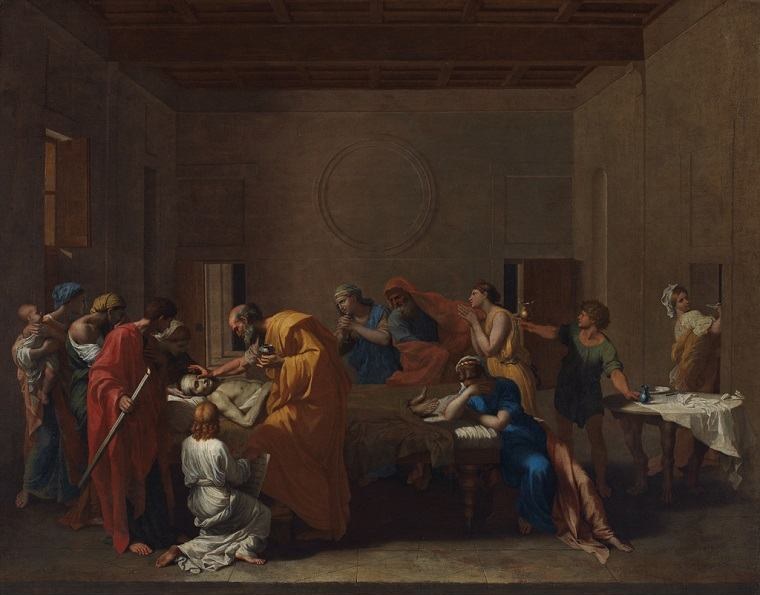
A dying man lies on a bed in a bare room while a priest in a yellow robe bends over him to anoint him and his family stand and kneel around the bed
Extreme Unction, from the Seven Sacraments by Nicolas Poussin, in the Fitzwilliam Museum, Cambridge. A priest anoints a dying man. Painting: Nicolas Poussin, 1638, Public domain, via Wikimedia Commons. Resized.

The Anointing of the Sick is the sacrament in which a priest anoints a seriously ill person with blessed oil and prays over him. This timeline begins with Christ's healing of the sick and the Twelve anointing with oil, and with the passage of James that the Council of Trent names as its promulgation. It then shows a Father of the fourth century, an early prayer for blessing the oil, the long period when the anointing was given mostly to the dying and was called Extreme Unction, the definitions of Florence and Trent, and the return at the Second Vatican Council to anointing the seriously ill, ending with the present rite and the Catechism.

Where it starts with Jesus

Jesus sends the Twelve out with a command to heal the sick. Mark records that they anointed many sick people with oil and healed them.

“Heal the sick, raise the dead, cleanse lepers, cast out demons.”

JesusMatthew 10:8Read it in the source: Bible Gateway, RSV Catholic Edition

How it points to Jesus

The Church holds that the sacrament was instituted by Christ and that through it he still cares for the sick. The entries below show what the Church has said that anointing gives and who may receive it. The prayers of the rite ask that the sick person be healed and saved by the Lord.

Drafted from primary sources. Every quotation is checked against the page it links to. The early evidence is thin on the hosts the site allows. The Apostolic Tradition, the Sacramentary of Serapion, Origen's Homilies on Leviticus and the text of Innocent I's letter to Decentius could not be read on an approved host, so Innocent's letter and the early blessing of the oil are shown as Paul VI describes them in 1972, and the Fathers are represented by one witness, John Chrysostom. The change of practice is shown at its dates: Florence (1439) and Trent (1551) speak of anointing when death is expected or near, and the Second Vatican Council (1963) says the sacrament is not for the dying only.

19 quotations in date order

A work in progress. The quotations below are not all the evidence on this matter. More are being added.

The Old Testamentbefore Christ
Old Testament
Scripture

The Lord who heals

The Book of Exodus Exodus 15:26

“saying, “If you will diligently hearken to the voice of the Lord your God, and do that which is right in his eyes, and give heed to his commandments and keep all his statutes, I will put none of the diseases upon you which I put upon the Egyptians; for I am the Lord, your healer.””
Read it in the source: Bible Gateway, RSV Catholic Edition

Old Testament
Scripture

The servant who bears our sicknesses

The prophet Isaiah Isaiah 53:4-5

“Surely he has borne our griefs and carried our sorrows; yet we esteemed him stricken, smitten by God, and afflicted. But he was wounded for our transgressions, he was bruised for our iniquities; upon him was the chastisement that made us whole, and with his stripes we are healed.”

Read it in the source: Bible Gateway, RSV Catholic Edition

c. 30
Scripture
Mark Mark 6:12-13

“So they went out and preached that men should repent. And they cast out many demons, and anointed with oil many that were sick and healed them.”

Read it in the source: Bible Gateway, RSV Catholic Edition

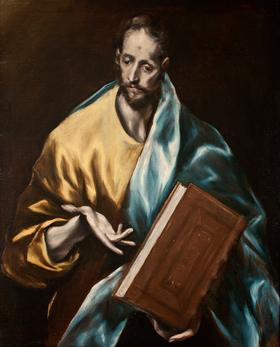
c. 50 to 62A bearded apostle in a yellow tunic and blue cloak holding a large closed book
Scripture
St. James James 5:14-16

“Is any among you sick? Let him call for the elders of the church, and let them pray over him, anointing him with oil in the name of the Lord; and the prayer of faith will save the sick man, and the Lord will raise him up; and if he has committed sins, he will be forgiven.”

Read it in the source: Bible Gateway, RSV Catholic Edition

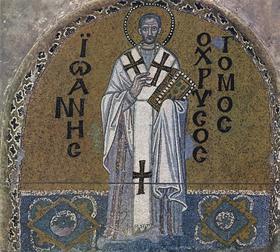
c. 386A gold mosaic of a bishop in white vestments marked with crosses, holding a book, with his name in Greek letters on either side
Church Father
St. John Chrysostom On the Priesthood, Book 3, ch. 6

“For not only at the time of regeneration, but afterwards also, they have authority to forgive sins. Is any sick among you? it is said, let him call for the elders of the Church and let them pray over him, anointing him with oil in the name of the Lord. And the prayer of faith shall save the sick, and the Lord will raise him up: and if he have committed sins they shall be forgiven him.”

Read it in the source: New Advent

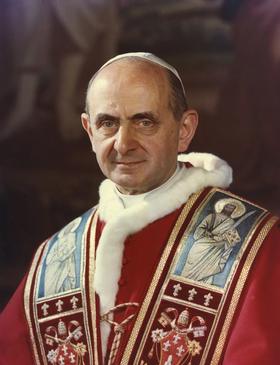
416A colour photograph of a pope in a red cape trimmed with white fur and an embroidered stole
Magisterium

Innocent I writes to Decentius of Gubbio

Pope Paul VI Apostolic Constitution Sacram Unctionem Infirmorum (1972)

“From ancient times testimonies of the Anointing of the Sick are found in the Church's Tradition, particularly her liturgical Tradition, both in the East and in the West. Especially worthy of note in this regard are the Letter which Innocent I, our predecessor, addressed to Decentius, Bishop of Gubbio, and the venerable prayer used for blessing the Oil of the Sick: "Send forth, 0 Lord, your Holy Spirit, the Paraclete," which was inserted in the Eucharistic Prayer and is still preserved in the Roman Pontifical.”

Read it in the source: vatican.va

The Middle Ages800 to 1500
Middle Ages
Magisterium

The Roman custom of anointing the five senses

Pope Paul VI Apostolic Constitution Sacram Unctionem Infirmorum (1972)

“During the Middle Ages, in the Roman Church there prevailed the custom of anointing the sick on the five senses, using the formula: "Per istam Sanctam unctionem et suam Piissimam misericordiam, indulgeat tibi Dominus quidquid deliquisti," adapted to each sense.”

Read it in the source: vatican.va

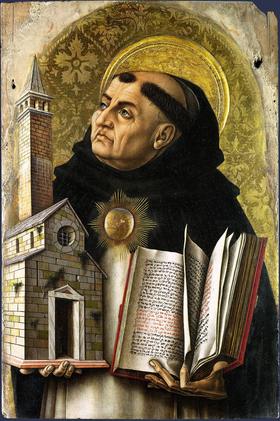
1274A Dominican friar with a tonsure and a gold halo holds an open book and a small church, with a shining sun on his chest
Doctor of the Church
St. Thomas Aquinas Summa Theologiae, Supplement, Q. 30, Art. 1, I answer that

“Now this sacrament is conferred by way of a kind of medicament, even as Baptism is conferred by way of washing, and the purpose of a medicament is to expel sickness. Hence the chief object of the institution of this sacrament is to cure the sickness of sin. Therefore, just as Baptism is a spiritual regeneration, and Penance, a spiritual resurrection, so Extreme Unction is a spiritual healing or cure.”

Read it in the source: New Advent

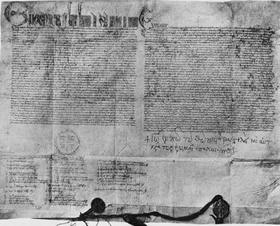
1439A black and white photograph of a large parchment charter written in two columns, with seals hanging from its lower edge
Council
Council of Florence Decree for the Armenians (Exultate Deo), 1439

“The fifth sacrament is extreme unction. Its matter is olive oil blessed by a priest. This sacrament should not be given to the sick unless death is expected.”

Read it in the source: Papal Encyclicals Online

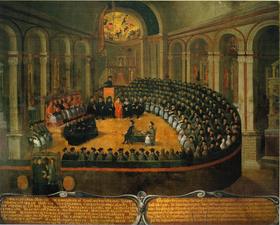
1551Rows of bishops in mitres sit in a great semicircle of benches inside a church, facing the presiding cardinals
Council
Council of Trent Session 14, Doctrine on Extreme Unction, ch. 1

“Now, this sacred unction of the sick was instituted by Christ our Lord, as truly and properly a sacrament of the new law, insinuated indeed in Mark, but recommended and promulgated to the faithful by James the Apostle, and brother of the Lord.”

Read it in the source: Papal Encyclicals Online

1551
Council
Council of Trent Session 14, Doctrine on Extreme Unction, ch. 3

“It is also declared, that this unction is to be applied to the sick, but to those especially who lie in such danger as to seem to be about to depart this life: whence also it is called the sacrament of the departing. And if the sick should, after having received this unction, recover, they may again be aided by the succour of this sacrament, when they fall into another like danger of death.”

Read it in the source: Papal Encyclicals Online

The Modern Era1800 to today
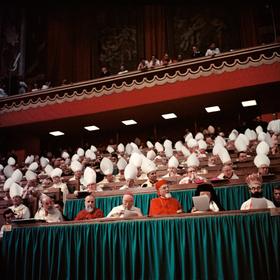
1963Rows of bishops in white mitres and copes sit in tiered stands hung with red and green cloth
Council
Second Vatican Council Sacrosanctum Concilium 73

“"Extreme unction," which may also and more fittingly be called "anointing of the sick," is not a sacrament for those only who are at the point of death. Hence, as soon as any one of the faithful begins to be in danger of death from sickness or old age, the fitting time for him to receive this sacrament has certainly already arrived.”

Read it in the source: vatican.va

1964
Council
Second Vatican Council Lumen Gentium 11

“By the sacred anointing of the sick and the prayer of her priests the whole Church commends the sick to the suffering and glorified Lord, asking that He may lighten their suffering and save them”

Read it in the source: vatican.va

1972A colour photograph of a pope in a red cape trimmed with white fur and an embroidered stole
Magisterium
Pope Paul VI Apostolic Constitution Sacram Unctionem Infirmorum, 30 November 1972, as quoted in CCC 1513

“The sacrament of Anointing of the Sick is given to those who are seriously ill by anointing them on the forehead and hands with duly blessed oil - pressed from olives or from other plants - saying, only once: "Through this holy anointing may the Lord in his love and mercy help you with the grace of the Holy Spirit. May the Lord who frees you from sin save you and raise you up."”

Read it in the source: vatican.va

1992
Magisterium
Catechism of the Catholic Church CCC 1512

“From ancient times in the liturgical traditions of both East and West, we have testimonies to the practice of anointings of the sick with blessed oil. Over the centuries the Anointing of the Sick was conferred more and more exclusively on those at the point of death. Because of this it received the name "Extreme Unction." Notwithstanding this evolution the liturgy has never failed to beg the Lord that the sick person may recover his health if it would be conducive to his salvation.”

Read it in the source: vatican.va

1992
Magisterium
Catechism of the Catholic Church CCC 1520

“A particular gift of the Holy Spirit. the first grace of this sacrament is one of strengthening, peace and courage to overcome the difficulties that go with the condition of serious illness or the frailty of old age.”

Read it in the source: vatican.va

1992
Magisterium
Catechism of the Catholic Church CCC 1524

“In addition to the Anointing of the Sick, the Church offers those who are about to leave this life the Eucharist as viaticum.”

Read it in the source: vatican.va

1992
Magisterium
Catechism of the Catholic Church CCC 1502

“The man of the Old Testament lives his sickness in the presence of God. It is before God that he laments his illness, and it is of God, Master of life and death, that he implores healing. Illness becomes a way to conversion; God's forgiveness initiates the healing. It is the experience of Israel that illness is mysteriously linked to sin and evil, and that faithfulness to God according to his law restores life: "For I am the Lord, your healer." The prophet intuits that suffering can also have a redemptive meaning for the sins of others. Finally Isaiah announces that God will usher in a time for Zion when he will pardon every offense and heal every illness.”

Read it in the source: vatican.va

1992
Magisterium
Catechism of the Catholic Church CCC 1505

“Moved by so much suffering Christ not only allows himself to be touched by the sick, but he makes their miseries his own: "He took our infirmities and bore our diseases." But he did not heal all the sick. His healings were signs of the coming of the Kingdom of God.”

Read it in the source: vatican.va

Related timelines

The seven sacramentsThe Church teaches that there are seven sacraments, that Christ instituted them, and that they give the grace they signify. This timeline begins with what Scripture shows of Christ acting through signs and sending the apostles. It then follows the early Fathers who spoke of the mysteries and the sacraments, the lists of seven in the Middle Ages, the definitions of Florence and Trent, and what the Second Vatican Council and the Catechism say today.19 quotations, from the Old Testament to 1992Penance and ReconciliationPenance, also called Reconciliation or Confession, is the sacrament in which the Church, in the Lord's name, forgives sins committed after Baptism. This timeline starts with Christ forgiving sins and giving the apostles that power. It then shows how the Church dealt with grave sin in the first centuries, by a public penance that was often allowed only once, how private and repeated confession became the usual form, and what the councils, a Doctor and the popes have said about it since.20 quotations, from the Old Testament to 1992BaptismBaptism is the first sacrament, the gateway to life in the Spirit and to the other sacraments. This timeline begins with Christ's own baptism and his command to baptize. It then shows how the Church has baptized and taught baptism in each age: how she prepared those who came, the days she chose, the water and the Trinitarian words, who may baptize, and what the sacrament gives. It shows the dispute over the baptism of those outside the Church, where Pope Stephen and St. Cyprian took opposite sides, and how it was settled. It ends with the Council of Florence, Trent, the Second Vatican Council and the Catechism.20 quotations, from the Old Testament to 1992The EucharistThe Eucharist is the sacrament in which the Church receives the body and blood of Christ. This timeline follows the Eucharist as a sacrament received: what Christ gave at the Last Supper, who may come to Communion and how they should prepare, Communion as the bond of the Church, Communion for the dying, and how often the faithful received. It shows where the practice changed, for the age of first Communion, the cup and the frequency of Communion, and what the Church says has stayed the same.23 quotations, from the Old Testament to 1992ConfirmationConfirmation is the sacrament in which the baptized receive the gift of the Holy Spirit by the laying on of hands and anointing with chrism. This timeline begins with Christ's promise of the Spirit and the apostles' laying on of hands in Samaria and Ephesus. It follows the anointing after baptism in the early Church, then the way the West came to reserve the sacrament to the bishop and to separate it in time from Baptism, while the East kept the two together. It ends with the present rite and its words.21 quotations, from the Old Testament to 1992Holy OrdersThe Catechism calls Holy Orders the sacrament through which the mission Christ gave his apostles continues in the Church until the end of time. It has three degrees: bishop, presbyter and deacon. This timeline begins with Christ choosing and sending the Twelve and the laying on of hands in the New Testament. It then follows the three degrees in the Fathers, the rule for ordaining a bishop at Nicaea, the Fathers on the weight of the office, and the teaching of Aquinas, Florence, Trent, Pius XII, the Second Vatican Council and the Catechism.20 quotations, from the Old Testament to 22 May 1994