Tradition Timeline Leave an objection

Start page / Kinds of source

The Councils

All 251 quotations on this site filed under “Council”, from every timeline, in date order.

Each mark is one quotation. Touch the timeline to read it.

Why the councils matter

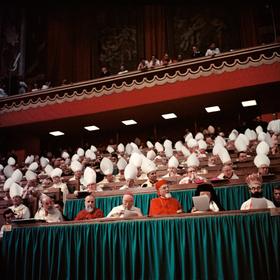
A council is a meeting of bishops to settle a question of faith or of discipline. When a dispute has divided Christians, a council has been the usual way the Church settled it, and its decrees say in exact words what she holds. The Catholic Church counts twenty-one ecumenical councils, from Nicaea in 325 to the Second Vatican Council, which closed in 1965.

  1. The pattern is in the New Testament. When the first great dispute arose, the apostles and elders met at Jerusalem and sent out a decision.

    “For it has seemed good to the Holy Spirit and to us to lay upon you no greater burden than these necessary things: that you abstain from what has been sacrificed to idols and from blood and from what is strangled and from unchastity.”

    The apostles and elders at JerusalemActs 15:28-29, c. 49Read it in the source: Bible Gateway, RSV Catholic Edition

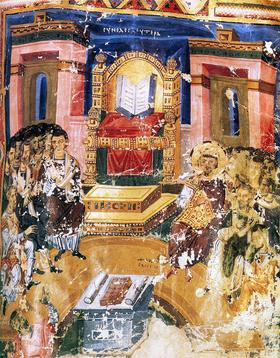
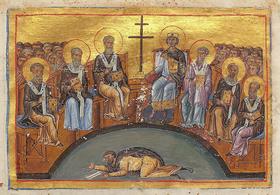
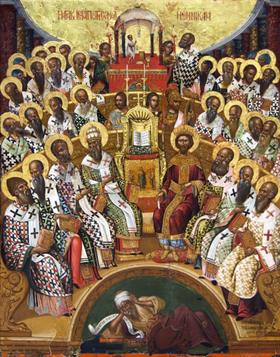
  2. A crowded icon of haloed bishops in bright vestments seated in rows around a throne that holds an open book

    The first ecumenical council, at Nicaea in 325, answered those who denied that the Son is God.

    “We believe in one God, the Father Almighty, maker of all things visible and invisible; and in one Lord Jesus Christ, the Son of God, the only-begotten of his Father, of the substance of the Father, God of God, Light of Light, very God of very God, begotten (γεννηθέντα), not made, being of one substance (ὁμοούσιον, consubstantialem) with the Father.”

    First Council of NicaeaThe Nicene Creed, 325Read it in the source: New Advent

Each entry on this row names the council, the year and the decree or canon quoted. Local councils are quoted here as well as the ecumenical ones, and each is named as what it was.

The councils: all 24 quotations

251 quotations in date order

A work in progress. The quotations below are not all the evidence on this matter. More are being added.

314
Council
Council of Ancyra Council of Ancyra, canon 21

“Concerning women who commit fornication, and destroy that which they have conceived, or who are employed in making drugs for abortion, a former decree excluded them until the hour of death, and to this some have assented. Nevertheless, being desirous to use somewhat greater lenity, we have ordained that they fulfil ten years [of penance], according to the prescribed degrees.”

Read it in the source: New Advent

See it on the timeline: Abortion

314
Council
Council of Arles Canon 8, as quoted in an editor's note to Basil's canonical letters, NPNF 2nd series, vol. 8

“Concerning the Africans, who use their own law to rebaptize: it has been decided that if anyone comes to the Church from heresy, they are to question him on the creed; and if they see that he was baptized in the Father, and the Son and the Holy Spirit, hands only are to be laid on him, that he may receive the Holy Spirit. But if on being asked he does not answer with this Trinity, let him be baptized.”

Our translation. The words as written, in Latin:

“De Afris, quod propria lege sua utuntur ut rebaptizent, placuit, ut, si ad ecclesiam aliquis de hæresi venerit, interrogent eum symbolum; et si perviderint eum in Patre, et Filio et Spiritu Sancto, esse baptizatum, manus ei tantum imponantur, ut accipiat spiritum sanctum. Quod si interrogatus non responderit hanc Trinitatem, baptizetur.”

Read it in the source: CCEL

See it on the timeline: Baptism
325A crowded icon of haloed bishops in bright vestments seated in rows around a throne that holds an open book
Council
First Council of Nicaea Canon 6

“The ancient customs of Egypt, Libya and Pentapolis shall be maintained, according to which the bishop of Alexandria has authority over all these places since a similar custom exists with reference to the bishop of Rome. Similarly in Antioch and the other provinces the prerogatives of the churches are to be preserved.”

Read it in the source: Papal Encyclicals Online

See it on the timeline: Constantine and the Church

325
Council
First Council of Nicaea Canon 18

“It has come to the attention of this holy and great synod that in some places and cities deacons give communion to presbyters, although neither canon nor custom allows this, namely that those who have no authority to offer should give the body of Christ to those who do offer.”

Read it in the source: Papal Encyclicals Online

See it on the timeline: The priest and the Eucharist

325
Council
First Council of Nicaea Canon 12

“In every case, however, their disposition and the nature of their penitence should be examined. For those who through their fear and tears and perseverance and good works give evidence of their conversion by deeds and not by outward show, when they have completed their appointed term as hearers, may properly take part in the prayers, and the bishop is competent to decide even more favourably in their regard. But those who have taken the matter lightly, and have thought that the outward form of entering the church is all that is required for their conversion, must complete their term to the full.”

Read it in the source: Papal Encyclicals Online

See it on the timeline: Indulgences

325
Council

First Council of Nicaea

First Council of Nicaea The Nicene Creed

“We believe in one God, the Father Almighty, maker of all things visible and invisible; and in one Lord Jesus Christ, the Son of God, the only-begotten of his Father, of the substance of the Father, God of God, Light of Light, very God of very God, begotten (γεννηθέντα), not made, being of one substance (ὁμοούσιον, consubstantialem) with the Father.”

Read it in the source: New Advent

See it on the timeline: The ecumenical councils

325
Council

Council of Nicaea: the custom of the bishop of Rome

First Council of Nicaea Canon 6

“Let the ancient customs in Egypt, Libya and Pentapolis prevail, that the Bishop of Alexandria have jurisdiction in all these, since the like is customary for the Bishop of Rome also. Likewise in Antioch and the other provinces, let the Churches retain their privileges.”

Read it in the source: New Advent

See it on the timeline: The tradition of the papacy

325
Council
First Council of Nicaea Canon 13

“Concerning the departing, the ancient canonical law is still to be maintained, to wit, that, if any man be at the point of death, he must not be deprived of the last and most indispensable Viaticum. But, if any one should be restored to health again who has received the communion when his life was despaired of, let him remain among those who communicate in prayers only. But in general, and in the case of any dying person whatsoever asking to receive the Eucharist, let the Bishop, after examination made, give it him.”

Read it in the source: New Advent

See it on the timeline: The Eucharist

325
Council
First Council of Nicaea Canon 11

“Concerning those who have fallen without compulsion, without the spoiling of their property, without danger or the like, as happened during the tyranny of Licinius, the Synod declares that, though they have deserved no clemency, they shall be dealt with mercifully. As many as were communicants, if they heartily repent, shall pass three years among the hearers; for seven years they shall be prostrators; and for two years they shall communicate with the people in prayers, but without oblation.”

Read it in the source: New Advent

See it on the timeline: Penance and Reconciliation

325
Council
First Council of Nicaea Canon 13

“Concerning the departing, the ancient canonical law is still to be maintained, to wit, that, if any man be at the point of death, he must not be deprived of the last and most indispensable Viaticum.”

Read it in the source: New Advent

See it on the timeline: Penance and Reconciliation

325
Council
First Council of Nicaea Canon 4

“It is by all means desirable that a bishop should be appointed by all the bishops of the province. But if this is difficult because of some pressing necessity or the length of the journey involved, let at least three come together and perform the ordination, but only after the absent bishops have taken part in the vote and given their written consent. But in each province the right of confirming the proceedings belongs to the metropolitan bishop.”

Read it in the source: Papal Encyclicals Online

See it on the timeline: Holy Orders

325
Council

The Son of God, begotten not made

First Council of Nicaea The Creed of the 318 Fathers

“We believe in one God the Father all powerful, maker of all things both seen and unseen. And in one Lord Jesus Christ, the Son of God, the only-begotten begotten from the Father”

Read it in the source: Papal Encyclicals Online

See it on the timeline: Islam and the Church

c. 340
Council
Synod of Gangra Canon 1

“If any one shall condemn marriage, or abominate and condemn a woman who is a believer and devout, and sleeps with her own husband, as though she could not enter the Kingdom [of heaven] let him be anathema.”

Read it in the source: New Advent

See it on the timeline: Priestly celibacy

c. 343
Council
Council of Sardica Canon 11 (Greek text)

“I remember that in a former council our brethren decreed that if any layman did not attend divine service in a city in which he was staying three Sundays, that is, for three weeks, he should be deprived of communion.”

Read it in the source: New Advent

See it on the timeline: The Sunday Mass obligation

c. 343
Council
Council of Sardica Canon 3 (Latin text)

“But if judgment have gone against a bishop in any cause, and he think that he has a good case, in order that the question may be reopened, let us, if it be your pleasure, honour the memory of St. Peter the Apostle, and let those who tried the case write to Julius, the bishop of Rome, and if he shall judge that the case should be retried, let that be done, and let him appoint judges”

Read it in the source: New Advent

See it on the timeline: Papal supremacy

343
Council

Council of Sardica: appeals go to the bishop of Rome

Council of Sardica Canon 3

“let us, if it seem good to your charity, honour the memory of Peter the Apostle, and let those who gave judgment write to Julius, the bishop of Rome, so that, if necessary, the case may be retried by the bishops of the neighbouring provinces and let him appoint arbiters”

Read it in the source: New Advent

See it on the timeline: The tradition of the papacy

343
Council

A deposed bishop may appeal to the bishop of Rome

Council of Sardica Canon 5 (the Greek text)

“Decreed, that if any bishop is accused, and the bishops of the same region assemble and depose him from his office, and he appealing, so to speak, takes refuge with the most blessed bishop of the Roman church, and he be willing to give him a hearing, and think it right to renew the examination of his case, let him be pleased to write to those fellow bishops who are nearest the province that they may examine the particulars with care and accuracy and give their votes on the matter in accordance with the word of truth.”

Read it in the source: New Advent

See it on the timeline: The East-West Schism

381A worn manuscript painting of bishops seated on either side of an empty throne that holds an open book
Council
First Council of Constantinople The exposition of the 150 fathers (the Nicene Creed)

“And in one Lord Jesus Christ, the only-begotten Son of God, begotten from the Father before all the ages, light from light, true God from true God, begotten not made, consubstantial with the Father, through whom all things came to be; for us humans and for our salvation he came down from the heavens and became incarnate from the holy Spirit and the virgin Mary, became human and was crucified on our behalf under Pontius Pilate; he suffered and was buried and rose up on the third day in accordance with the scriptures”

Read it in the source: Papal Encyclicals Online

See it on the timeline: Are Catholics Christians?

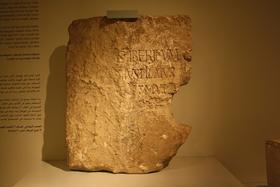
381A block of pale limestone with part of a carved Latin inscription, lit in a museum case
Council

The Creed names the governor

First Council of Constantinople The Creed of the 150 Fathers

“for us humans and for our salvation he came down from the heavens and became incarnate from the holy Spirit and the virgin Mary, became human and was crucified on our behalf under Pontius Pilate; he suffered and was buried and rose up on the third day in accordance with the scriptures;”

Read it in the source: Papal Encyclicals Online

See it on the timeline: The life of Jesus Christ: the record inside and outside the Bible

381A worn manuscript painting of bishops seated on either side of an empty throne that holds an open book
Council

First Council of Constantinople

First Council of Constantinople The exposition of the 150 fathers (the Creed)

“And in the Spirit, the holy, the lordly and life-giving one, proceeding forth from the Father, co-worshipped and co-glorified with Father and Son, the one who spoke through the prophets; in one, holy, catholic and apostolic church.”

Read it in the source: Papal Encyclicals Online

See it on the timeline: The ecumenical councils

381
Council

First Council of Constantinople: New Rome ranked after Rome

First Council of Constantinople Canon 3

“Because it is new Rome, the bishop of Constantinople is to enjoy the privileges of honour after the bishop of Rome.”

Read it in the source: Papal Encyclicals Online

See it on the timeline: The tradition of the papacy

381A crowded icon of haloed bishops in bright vestments seated in rows around a throne that holds an open book
Council

The Creed both sides received

First Council of Constantinople The exposition of the 150 fathers (the Creed)

“And in the Spirit, the holy, the lordly and life-giving one, proceeding forth from the Father, co-worshipped and co-glorified with Father and Son, the one who spoke through the prophets; in one, holy, catholic and apostolic church.”

Read it in the source: Papal Encyclicals Online

See it on the timeline: The East-West Schism

418
Council
Council of Carthage Canon 110 of the African Code

“Likewise it seemed good that whosoever denies that infants newly from their mother's wombs should be baptized, or says that baptism is for remission of sins, but that they derive from Adam no original sin, which needs to be removed by the laver of regeneration … let him be anathema. … For on account of this rule of faith (regulam fidei) even infants, who could have committed as yet no sin themselves, therefore are truly baptized for the remission of sins, in order that what in them is the result of generation may be cleansed by regeneration.”

Read it in the source: New Advent

See it on the timeline: Infant baptism

419
Council
Council of Carthage Canon 24 (Greek 27), Code of Canons of the African Church

“Item, that besides the Canonical Scriptures nothing be read in church under the name of divine Scripture. But the Canonical Scriptures are as follows: … The Five books of Solomon. … Tobit. Judith. Esther. Ezra, ij. books. Macchabees, ij. books. … Let this be sent to our brother and fellow bishop, Boniface, and to the other bishops of those parts, that they may confirm this canon, for these are the things which we have received from our fathers to be read in church.”

Read it in the source: New Advent

See it on the timeline: The Old Testament canon

419
Council
Council of Carthage Canon 3

“…those three grades, which by a sort of bond are joined to chastity by their consecration, to wit bishops, presbyters, and deacons, so it seemed that it was becoming that the sacred rulers and priests of God as well as the Levites, or those who served at the divine sacraments, should be continent altogether, by which they would be able with singleness of heart to ask what they sought from the Lord: so that what the apostles taught and antiquity kept, that we might also keep.”

Read it in the source: New Advent

See it on the timeline: Priestly celibacy

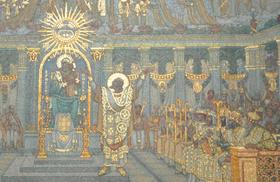
431A mosaic in blue and gold of a bishop speaking before an assembly, with a shining image above
Council
Council of Ephesus Second Letter of Cyril to Nestorius, approved by the council

“So have they dared to call the holy virgin, mother of God, not as though the nature of the Word or his godhead received the origin of their being from the holy virgin, but because there was born from her his holy body rationally ensouled, with which the Word was hypostatically united and is said to have been begotten in the flesh.”

Read it in the source: Papal Encyclicals Online

See it on the timeline: Honor given to Mary

431
Council
Philip, legate of the Apostolic See, at the Council of Ephesus Acts of the Council, Session III

“There is no doubt, and in fact it has been known in all ages, that the holy and most blessed Peter, prince (ἔξαρχος) and head of the Apostles, pillar of the faith, and foundation (θεμέλιος) of the Catholic Church, received the keys of the kingdom from our Lord Jesus Christ, the Saviour and Redeemer of the human race, and that to him was given the power of loosing and binding sins: who down even to today and forever both lives and judges in his successors. The holy and most blessed pope Cœlestine, according to due order, is his successor and holds his place”

Read it in the source: New Advent

See it on the timeline: The office of Peter

431A mosaic in blue and gold of a bishop speaking before an assembly, with a shining image above
Council

Council of Ephesus

St. Cyril of Alexandria Second Letter of Cyril to Nestorius, declared by the council to be in agreement with Nicaea

“This is the account of the true faith everywhere professed. So shall we find that the holy fathers believed. So have they dared to call the holy virgin, mother of God, not as though the nature of the Word or his godhead received the origin of their being from the holy virgin, but because there was born from her his holy body rationally ensouled, with which the Word was hypostatically united and is said to have been begotten in the flesh.”

Read it in the source: Papal Encyclicals Online

See it on the timeline: The ecumenical councils

431
Council

Council of Ephesus: the pope as Peter's successor

Philip, legate of Pope Celestine, at the Council of Ephesus Acts of the Council, Session III

“The holy and most blessed pope Cœlestine, according to due order, is his successor and holds his place, and us he sent to supply his place in this holy synod”

Read it in the source: New Advent

See it on the timeline: The tradition of the papacy

431
Council

The Council of Ephesus: the letter of Pope Celestine

Council of Ephesus Session I, Decree of the Council against Nestorius

“Compelled thereto by the canons and by the letter … of our most holy father and fellow-servant Cœlestine, the Roman bishop, we have come, with many tears, to this sorrowful sentence against him, namely, that our Lord Jesus Christ, whom he has blasphemed, decrees by the holy Synod that Nestorius be excluded from the episcopal dignity, and from all priestly communion.”

Read it in the source: New Advent

See it on the timeline: The East-West Schism

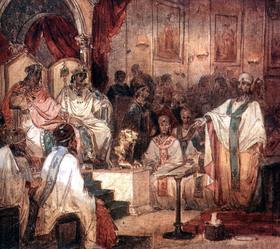
451A painted sketch of bishops in white vestments gathered around a table before a throne
Council
Council of Chalcedon Acts of the Council, Session II

“After the reading of the foregoing epistle, the most reverend bishops cried out: This is the faith of the fathers, this is the faith of the Apostles. So we all believe, thus the orthodox believe. Anathema to him who does not thus believe. Peter has spoken thus through Leo. So taught the Apostles. Piously and truly did Leo teach, so taught Cyril.”

Read it in the source: New Advent

See it on the timeline: Papal infallibility

451
Council

Council of Chalcedon

Council of Chalcedon Definition of the faith

“So, following the saintly fathers, we all with one voice teach the confession of one and the same Son, our Lord Jesus Christ: the same perfect in divinity and perfect in humanity, the same truly God and truly man, of a rational soul and a body; consubstantial with the Father as regards his divinity, and the same consubstantial with us as regards his humanity; like us in all respects except for sin; … one and the same Christ, Son, Lord, only-begotten, acknowledged in two natures which undergo no confusion, no change, no division, no separation; at no point was the difference between the natures taken away through the union, but rather the property of both natures is preserved and comes together into a single person and a single subsistent being”

Read it in the source: Papal Encyclicals Online

See it on the timeline: The ecumenical councils

451
Council

Council of Chalcedon, canon 28: a different reason for Rome's rank

Council of Chalcedon Canon 28

“For the Fathers rightly granted privileges to the throne of old Rome, because it was the royal city. And the One Hundred and Fifty most religious Bishops, actuated by the same consideration, gave equal privileges (ἴσα πρεσβεῖα) to the most holy throne of New Rome”

Read it in the source: New Advent

See it on the timeline: The tradition of the papacy

451
Council

The Council of Chalcedon: "Peter has spoken thus through Leo"

Council of Chalcedon Acts of the Council, Session II, after the reading of the Tome of Leo

“After the reading of the foregoing epistle, the most reverend bishops cried out: This is the faith of the fathers, this is the faith of the Apostles. So we all believe, thus the orthodox believe. Anathema to him who does not thus believe. Peter has spoken thus through Leo. So taught the Apostles. Piously and truly did Leo teach, so taught Cyril. Everlasting be the memory of Cyril. Leo and Cyril taught the same thing”

Read it in the source: New Advent

See it on the timeline: The East-West Schism

451
Council

Council of Chalcedon asks Leo to accept the canon

Council of Chalcedon Letter of the council to Pope Leo, ch. 4 (Letter 98 among Leo's letters)

“We have ratified also the canon of the 150 holy Fathers who met at Constantinople in the time of the great Theodosius of holy memory, which ordains that after your most holy and Apostolic See, the See of Constantinople shall take precedence, being placed second … Accordingly, we entreat you, honour our decision by your assent”

Read it in the source: New Advent

See it on the timeline: The tradition of the papacy

451
Council

Rome and New Rome: the twenty-eighth canon of Chalcedon

Council of Chalcedon Canon 28

“The fathers rightly accorded prerogatives to the see of older Rome, since that is an imperial city; and moved by the same purpose the 150 most devout bishops apportioned equal prerogatives to the most holy see of new Rome, reasonably judging that the city which is honoured by the imperial power and senate and enjoying privileges equalling older imperial Rome, should also be elevated to her level in ecclesiastical affairs and take second place after her.”

Read it in the source: Papal Encyclicals Online

See it on the timeline: The East-West Schism

529
Council
Second Council of Orange Conclusion

“We also believe and confess to our benefit that in every good work it is not we who take the initiative and are then assisted through the mercy of God, but God himself first inspires in us both faith in him and love for him without any previous good works of our own that deserve reward, so that we may both faithfully seek the sacrament of baptism, and after baptism be able by his help to do what is pleasing to him.”

Read it in the source: EWTN Library

See it on the timeline: Faith and works

553
Council
Second Council of Constantinople Anathemas against the Three Chapters, second anathema

“If anyone will not confess that the Word of God has two nativities, that which is before all ages from the Father, outside time and without a body, and secondly that nativity of these latter days when the Word of God came down from the heavens and was made flesh of holy and glorious Mary, mother of God and ever-virgin, and was born from her: let him be anathema.”

Read it in the source: Papal Encyclicals Online

See it on the timeline: Perpetual virginity

553
Council
Second Council of Constantinople Sentence against the Three Chapters

“The holy fathers, who have gathered at intervals in the four holy councils, have followed the examples of antiquity. They dealt with heresies and current problems by debate in common, since it was established as certain that when the disputed question is set out by each side in communal discussions, the light of truth drives out the shadows of lying. The truth cannot be made clear in any other way when there are debates about questions of faith, since everyone requires the assistance of his neighbour.”

Read it in the source: Papal Encyclicals Online

See it on the timeline: The authority of the Fathers

553
Council

Second Council of Constantinople

Second Council of Constantinople Anathemas against the Three Chapters, tenth anathema

“If anyone does not confess his belief that our lord Jesus Christ, who was crucified in his human flesh, is truly God and the Lord of glory and one of the members of the holy Trinity: let him be anathema.”

Read it in the source: Papal Encyclicals Online

See it on the timeline: The ecumenical councils

675
Council

A council in Spain professes the Spirit "proceeding from both"

Eleventh Council of Toledo Symbol of Faith, On the Holy Spirit (no. 310 on the linked page)

“We also believe that the Holy Spirit, the third person in the Trinity, is God, one and equal with God the Father and the Son, of one substance and of one nature, not, however, begotten nor created but proceeding from both, and that He is the Spirit of both.”

Read it in the source: Fordham Sourcebook

See it on the timeline: The East-West Schism

681
Council

Third Council of Constantinople: Pope Honorius anathematized

Third Council of Constantinople Session XIII, the sentence against the Monothelites

“…as well as the letter of the latter [Honorius] to the same Sergius, we find that these documents are quite foreign to the apostolic dogmas, to the declarations of the holy Councils, and to all the accepted Fathers, and that they follow the false teachings of the heretics; therefore we entirely reject them, and execrate them as hurtful to the soul. … And with these we define that there shall be expelled from the holy Church of God and anathematized Honorius who was some time Pope of Old Rome, because of what we found written by him to Sergius, that in all respects he followed his view and confirmed his impious doctrines.”

Read it in the source: New Advent

See it on the timeline: Have popes been heretics?

680-681
Council

Third Council of Constantinople

Third Council of Constantinople Exposition of faith

“And we proclaim equally two natural volitions or wills in him and two natural principles of action which undergo no division, no change, no partition, no confusion, in accordance with the teaching of the holy fathers. And the two natural wills not in opposition, as the impious heretics said, far from it, but his human will following, and not resisting or struggling, rather in fact subject to his divine and all powerful will.”

Read it in the source: Papal Encyclicals Online

See it on the timeline: The ecumenical councils

681
Council

Third Council of Constantinople: Pope Honorius condemned

Third Council of Constantinople Session XIII, the sentence against the Monothelites

“And with these we define that there shall be expelled from the holy Church of God and anathematized Honorius who was some time Pope of Old Rome, because of what we found written by him to Sergius, that in all respects he followed his view and confirmed his impious doctrines.”

Read it in the source: New Advent

See it on the timeline: The tradition of the papacy

681
Council

The Third Council of Constantinople writes to Pope Agatho

Third Council of Constantinople Letter of the Council to St. Agatho

“Therefore to you, as to the bishop of the first see of the Universal Church, we leave what must be done, since you willingly take for your standing ground the firm rock of the faith, as we know from having read your true confession in the letter sent by your fatherly beatitude to the most pious emperor: and we acknowledge that this letter was divinely written … as by the Chief of the Apostles, and through it we have cast out the heretical sect of many errors which had recently sprung up”

Read it in the source: New Advent

See it on the timeline: The East-West Schism

681
Council

Third Council of Constantinople: "Peter spoke through Agatho"

Third Council of Constantinople Address of the council to the Emperor (Prosphoneticus)

“But the highest prince of the Apostles fought with us: for we had on our side his imitator and the successor in his see, who also had set forth in his letter the mystery of the divine word … For the ancient city of Rome handed you a confession of divine character, and a chart from the sunsetting raised up the day of dogmas, and made the darkness manifest, and Peter spoke through Agatho”

Read it in the source: New Advent

See it on the timeline: The tradition of the papacy

692
Council
Council in Trullo (Quinisext Council) Canon 80

“If any bishop, or presbyter, or deacon, or any of those who are enumerated in the list of the clergy, or a layman, has no very grave necessity nor difficult business so as to keep him from church for a very long time, but being in town does not go to church on three consecutive Sundays — three weeks — if he is a cleric let him be deposed, but if a layman let him be cut off.”

Read it in the source: New Advent

See it on the timeline: The Sunday Mass obligation

692
Council

Council in Trullo: Constantinople given equal privileges

Council in Trullo (Quinisext Council) Canon 36

“Renewing the enactments by the 150 Fathers assembled at the God-protected and imperial city, and those of the 630 who met at Chalcedon; we decree that the see of Constantinople shall have equal privileges with the see of Old Rome, and shall be highly regarded in ecclesiastical matters as that is, and shall be second after it.”

Read it in the source: New Advent

See it on the timeline: The tradition of the papacy

692
Council

The Council in Trullo: married clergy, against the Roman rule

Council in Trullo (Quinisext Council) Canon 13

“Since we know it to be handed down as a rule of the Roman Church that those who are deemed worthy to be advanced to the diaconate or presbyterate should promise no longer to cohabit with their wives, we, preserving the ancient rule and apostolic perfection and order, will that the lawful marriages of men who are in holy orders be from this time forward firm, by no means dissolving their union with their wives nor depriving them of their mutual intercourse at a convenient time.”

Read it in the source: New Advent

See it on the timeline: The East-West Schism

The full Catholic answer: Priestly celibacy

692
Council

Council in Trullo: a Roman custom forbidden

Council in Trullo (Quinisext Council) Canon 55

“Since we understand that in the city of the Romans, in the holy fast of Lent they fast on the Saturdays, contrary to the ecclesiastical observance which is traditional, it seemed good to the holy synod that also in the Church of the Romans the canon shall immovably stands fast which says: If any cleric shall be found to fast on a Sunday or Saturday (except on one occasion only) he is to be deposed; and if he is a layman he shall be cut off.”

Read it in the source: New Advent

See it on the timeline: The tradition of the papacy

754
Council

A council at Constantinople forbids the holy images

The iconoclast council of 754 Definition of the council of 754, as read out at Session 6 of the Second Council of Nicaea

“Supported by the Holy Scriptures and the Fathers, we declare unanimously, in the name of the Holy Trinity, that there shall be rejected and removed and cursed out of the Christian Church every likeness which is made out of any material and color whatever by the evil art of painters. Whoever in future dares to make such a thing, or to venerate it, or set it up in a church, or in a private house, or possesses it in secret, shall, if bishop, presbyter, or deacon, be deposed; if monk or layman, be anathematised”

Read it in the source: New Advent

See it on the timeline: The East-West Schism

The full Catholic answer: Images and statues

787
Council
Second Council of Nicaea Definition of the council

“The more frequently they are seen in representational art, the more are those who see them drawn to remember and long for those who serve as models, and to pay these images the tribute of salutation and respectful veneration. Certainly this is not the full adoration (latria) in accordance with our faith, which is properly paid only to the divine nature … Indeed, the honour paid to an image traverses it, reaching the model, and he who venerates the image, venerates the person represented in that image.”

Read it in the source: Papal Encyclicals Online

See it on the timeline: Images and statues

787
Council

Second Council of Nicaea

Second Council of Nicaea Definition of the council

“…we decree with full precision and care that, like the figure of the honoured and life-giving cross, the revered and holy images, whether painted or made of mosaic or of other suitable material, are to be exposed in the holy churches of God … Certainly this is not the full adoration {latria} in accordance with our faith, which is properly paid only to the divine nature … Indeed, the honour paid to an image traverses it, reaching the model, and he who venerates the image, venerates the person represented in that image.”

Read it in the source: Papal Encyclicals Online

See it on the timeline: The ecumenical councils

787
Council

The Second Council of Nicaea receives the pope's letter

St. Tarasius, Patriarch of Constantinople Second Council of Nicaea, Session 2, after the reading of Pope Hadrian's letters

“The divine Apostle Paul, who was filled with the light of Christ, and who has begotten us through the gospel, in writing to the Romans, commending their zeal for the true faith which they had in Christ our true God, thus said: Your faith has gone forth into all the world. It is necessary to follow out this witness, and he that would contradict it is without good sense. Wherefore Hadrian, the ruler of Old Rome, since he was a sharer of these things, thus borne witness to, wrote expressly and truly to our religious Emperors, and to our humility, confirming admirably and beautifully the ancient tradition of the Catholic Church.”

Read it in the source: New Advent

See it on the timeline: The East-West Schism

The Middle Ages800 to 1500
869-870
Council

Fourth Council of Constantinople

Fourth Council of Constantinople Canon 2

“So, having both the most blessed pope Nicholas as the instrument of the holy Spirit and his successor, the most holy pope Hadrian, we declare and order that everything which has been expounded and promulgated by them in a synod at various times, both for the defence and well-being of the church of Constantinople and of its chief priest, namely Ignatius, its most holy patriarch, as well as for the expulsion and condemnation of Photius, the upstart and usurper, should be maintained and observed together with the canons there set forth, unchanged and unaltered”

Read it in the source: Papal Encyclicals Online

See it on the timeline: The ecumenical councils

869-870
Council

Fourth Council of Constantinople: the pope's judgment on Photius upheld

Fourth Council of Constantinople Canon 2

“So, having both the most blessed pope Nicholas as the instrument of the holy Spirit and his successor, the most holy pope Hadrian, we declare and order that everything which has been expounded and promulgated by them in a synod at various times, both for the defence and well-being of the church of Constantinople and of its chief priest, namely Ignatius, its most holy patriarch, as well as for the expulsion and condemnation of Photius, the upstart and usurper, should be maintained and observed”

Read it in the source: Papal Encyclicals Online

See it on the timeline: The tradition of the papacy

869-870
Council

The dispute with Photius

Fourth Council of Constantinople Canon 21

“Furthermore, nobody else should compose or edit writings or tracts against the most holy pope of old Rome, on the pretext of making incriminating charges, as Photius did recently and Dioscorus a long time ago. Whoever shows such great arrogance and audacity, after the manner of Photius and Dioscorus, and makes false accusations in writing or speech against the see of Peter, the chief of the apostles, let him receive a punishment equal to theirs.”

Read it in the source: Papal Encyclicals Online

See it on the timeline: The East-West Schism

1123
Council
First Lateran Council Canon 10

“To those who set out for Jerusalem and offer effective help towards the defence of the christian people and overcoming the tyranny of the infidels, we grant the remission of their sins, and we place their houses and families and all their goods under the protection of blessed Peter and the Roman church, just as has been decreed by our lord pope Urban.”

Read it in the source: Papal Encyclicals Online

See it on the timeline: Violence in the Church's history

1123
Council

First Lateran Council

First Lateran Council Canon 8

“We further resolve, in accordance with the statute of the most blessed pope Stephen, that lay persons, however religious they may be, have no power to dispose of any ecclesiastical business; but following the apostolic canons, let the bishop have the care of all ecclesiastical matters, and let him manage them as in the sight of God.”

Read it in the source: Papal Encyclicals Online

See it on the timeline: The ecumenical councils

1139
Council
Second Lateran Council Canon 7

“…we decree that where bishops, priests, deacons, subdeacons, canons regular, monks and professed lay brothers have presumed to take wives and so transgress this holy precept, they are to be separated from their partners. For we do not deem there to be a marriage which, it is agreed, has been contracted against ecclesiastical law.”

Read it in the source: Papal Encyclicals Online

See it on the timeline: Priestly celibacy

1139
Council

Second Lateran Council

Second Lateran Council Canon 30

“We render void the ordinances enacted by Peter Leoni and other schismatics and heretics, and deem them null.”

Read it in the source: Papal Encyclicals Online

See it on the timeline: The ecumenical councils

1179
Council

Third Lateran Council

Third Lateran Council Canon 1

“Therefore we decree that if by chance, through some enemy sowing tares, there cannot be full agreement among the cardinals on a successor to the papacy, and though two thirds are in agreement a third party is unwilling to agree with them or presumes to appoint someone else for itself, that person shall be held as Roman pontiff who has been chosen and received by the two thirds.”

Read it in the source: Papal Encyclicals Online

See it on the timeline: The ecumenical councils

1179
Council

Third Lateran Council: election by two thirds of the cardinals

Third Lateran Council Canon 1

“Although clear enough decrees have been handed down by our predecessors to avoid dissension in the choice of a sovereign pontiff, nevertheless in spite of these, because through wicked and reckless ambition the church has often suffered serious division, we too, in order to avoid this evil, on the advice of our brethren and with the approval of the sacred council, have decided that some addition must be made. … that person shall be held as Roman pontiff who has been chosen and received by the two thirds.”

Read it in the source: Papal Encyclicals Online

See it on the timeline: All the popes in order, from St. Peter to today

1179
Council

The Third Lateran Council calls for arms against the Cathars

Third Lateran Council Canon 27

“As St. Leo says, though the discipline of the church should be satisfied with the judgment of the priest and should not cause the shedding of blood, yet it is helped by the laws of catholic princes so that people often seek a salutary remedy when they fear that a corporal punishment will overtake them. For this reason, since in Gascony and the regions of Albi and Toulouse and in other places the loathsome heresy of those whom some call the Cathars, others the Patarenes, others the Publicani, and others by different names, has grown so strong … we declare that they and their defenders and those who receive them are under anathema, and we forbid under pain of anathema that anyone should keep or support them in their houses or lands or should trade with them. … Meanwhile we receive under the protection of the church, as we do those who visit the Lord’s sepulchre, those who fired by their faith have taken upon themselves the task of driving out these heretics, and we decree that they should remain undisturbed from all disquiet both in their property and persons.”

Read it in the source: Papal Encyclicals Online

See it on the timeline: The Inquisition and the use of force against heresy

1215A medieval wall painting of a young beardless pope in a tall pointed tiara and a pallium marked with crosses
Council
Fourth Lateran Council Constitution 1, On the Catholic Faith

“His body and blood are truly contained in the sacrament of the altar under the forms of bread and wine, the bread and wine having been changed in substance, by God's power, into his body and blood, so that in order to achieve this mystery of unity we receive from God what he received from us.”

Read it in the source: Papal Encyclicals Online

See it on the timeline: Transubstantiation

1215
Council
Fourth Lateran Council Constitution 18, Clerics to dissociate from shedding blood

“No cleric may decree or pronounce a sentence involving the shedding of blood, or carry out a punishment involving the same, or be present when such punishment is carried out. … A cleric may not write or dictate letters which require punishments involving the shedding of blood, in the courts of princes this responsibility should be entrusted to laymen and not to clerics. Moreover no cleric may be put in command of mercenaries or crossbowmen or suchlike men of blood”

Read it in the source: Papal Encyclicals Online

See it on the timeline: Violence in the Church's history

1215
Council
Fourth Lateran Council Constitution 1, Confession of Faith

“His body and blood are truly contained in the sacrament of the altar under the forms of bread and wine … Nobody can effect this sacrament except a priest who has been properly ordained according to the church's keys, which Jesus Christ himself gave to the apostles and their successors.”

Read it in the source: Papal Encyclicals Online

See it on the timeline: The priest and the Eucharist

1215
Council
Fourth Lateran Council Constitution 21

“All the faithful of either sex, after they have reached the age of discernment, should individually confess all their sins in a faithful manner to their own priest at least once a year … The priest shall be discerning and prudent, so that like a skilled doctor he may pour wine and oil over the wounds of the injured one.”

Read it in the source: Papal Encyclicals Online

See it on the timeline: Confession to a priest

1215
Council
Fourth Lateran Council Constitution 62

“Let those who are sent to seek alms be modest and discreet, and let them not stay in taverns or other unsuitable places or incur useless or excessive expenses, being careful above all not to wear the garb of false religion. Moreover, because the keys of the church are brought into contempt and satisfaction through penance loses its force through indiscriminate and excessive indulgences, which certain prelates of churches do not fear to grant, we therefore decree that when a basilica is dedicated, the indulgence shall not be for more than one year”

Read it in the source: Papal Encyclicals Online

See it on the timeline: Indulgences

1215
Council
Fourth Lateran Council Constitution 1, Confession of Faith

“There is indeed one universal church of the faithful, outside of which nobody at all is saved, in which Jesus Christ is both priest and sacrifice.”

Read it in the source: Papal Encyclicals Online

See it on the timeline: Other religions

1215
Council
Fourth Lateran Council Constitution 1, Confession of Faith

“…one principle of all things, creator of all things invisible and visible, spiritual and corporeal; who by his almighty power at the beginning of time created from nothing both spiritual and corporeal creatures, that is to say angelic and earthly, and then created human beings composed as it were of both spirit and body in common.”

Read it in the source: Papal Encyclicals Online

See it on the timeline: Evolution and Genesis

1215
Council

Fourth Lateran Council

Fourth Lateran Council Constitution 1, Confession of Faith

“His body and blood are truly contained in the sacrament of the altar under the forms of bread and wine, the bread and wine having been changed in substance, by God’s power, into his body and blood, so that in order to achieve this mystery of unity we receive from God what he received from us.”

Read it in the source: Papal Encyclicals Online

See it on the timeline: The ecumenical councils

1215
Council

Fourth Lateran Council: a primacy of ordinary power

Fourth Lateran Council Constitution 5

“Renewing the ancient privileges of the patriarchal sees, we decree, with the approval of this sacred universal synod, that after the Roman church, which through the Lord's disposition has a primacy of ordinary power over all other churches inasmuch as it is the mother and mistress of all Christ's faithful, the church of Constantinople shall have the first place”

Read it in the source: Papal Encyclicals Online

See it on the timeline: The tradition of the papacy

1215
Council
Fourth Lateran Council Constitution 21

“All the faithful of either sex, after they have reached the age of discernment, should individually confess all their sins in a faithful manner to their own priest at least once a year, and let them take care to do what they can to perform the penance imposed on them. Let them reverently receive the sacrament of the eucharist at least at Easter unless they think, for a good reason and on the advice of their own priest, that they should abstain from receiving it for a time.”

Read it in the source: Papal Encyclicals Online

See it on the timeline: The Eucharist

1215
Council
Fourth Lateran Council Constitution 21

“Let him take the utmost care, however, not to betray the sinner at all by word or sign or in any other way. If the priest needs wise advice, let him seek it cautiously without any mention of the person concerned. For if anyone presumes to reveal a sin disclosed to him in confession, we decree that he is not only to be deposed from his priestly office but also to be confined to a strict monastery to do perpetual penance.”

Read it in the source: Papal Encyclicals Online

See it on the timeline: Penance and Reconciliation

1215
Council

The Fourth Lateran Council: the condemned handed to the secular power

Fourth Lateran Council Constitution 3, On Heretics

“We condemn all heretics, whatever names they may go under. … Let those condemned be handed over to the secular authorities present, or to their bailiffs, for due punishment. Clerics are first to be degraded from their orders. The goods of the condemned are to be confiscated, if they are lay persons … We add further that each archbishop or bishop, either in person or through his archdeacon or through suitable honest persons, should visit twice or at least once in the year any parish of his in which heretics are said to live. There he should compel three or more men of good repute, or even if it seems expedient the whole neighbourhood, to swear that if anyone knows of heretics there or of any persons who hold secret conventicles or who differ in their life and habits from the normal way of living of the faithful, then he will take care to point them out to the bishop.”

Read it in the source: Papal Encyclicals Online

See it on the timeline: The Inquisition and the use of force against heresy

1215
Council

The Fourth Lateran Council on the Greeks

Fourth Lateran Council Constitution 4, On the pride of the Greeks towards the Latins

“For, after the Greek church together with certain associates and supporters withdrew from the obedience of the apostolic see, the Greeks began to detest the Latins so much that, among other wicked things which they committed out of contempt for them, when Latin priests celebrated on their altars they would not offer sacrifice on them until they had washed them, as if the altars had been defiled thereby. The Greeks even had the temerity to rebaptize those baptized by the Latins; and some, as we are told, still do not fear to do this.”

Read it in the source: Papal Encyclicals Online

See it on the timeline: The East-West Schism

1215
Council

Three centuries before Luther: a council warns against the misuse of indulgences

Fourth Lateran Council Constitution 62

“Let those who are sent to seek alms be modest and discreet, and let them not stay in taverns or other unsuitable places or incur useless or excessive expenses, being careful above all not to wear the garb of false religion. Moreover, because the keys of the church are brought into contempt and satisfaction through penance loses its force through indiscriminate and excessive indulgences, which certain prelates of churches do not fear to grant, we therefore decree that when a basilica is dedicated, the indulgence shall not be for more than one year”

Read it in the source: Papal Encyclicals Online

See it on the timeline: Protestantism

1215
Council

Fourth Lateran Council: Jews to be marked out by their dress

Fourth Lateran Council Constitution 68, Jews appearing in public

“In order that the offence of such a damnable mixing may not spread further, under the excuse of a mistake of this kind, we decree that such persons of either sex, in every christian province and at all times, are to be distinguished in public from other people by the character of their dress … They shall not appear in public at all on the days of lamentation and on passion Sunday”

Read it in the source: Papal Encyclicals Online

See it on the timeline: The Church and the Jewish people

1215
Council

Fourth Lateran Council: Jews barred from public office

Fourth Lateran Council Constitution 69, Jews not to hold public offices

“It would be too absurd for a blasphemer of Christ to exercise power over Christians. We therefore renew in this canon, on account of the boldness of the offenders, what the council of Toledo providently decreed in this matter : we forbid Jews to be appointed to public offices, since under cover of them they are very hostile to Christians.”

Read it in the source: Papal Encyclicals Online

See it on the timeline: The Church and the Jewish people

1245
Council

First Council of Lyons

Pope Innocent IV, in the presence of the council Bull deposing the Emperor Frederick II, 17 July 1245

“We therefore, after careful discussion with our brother cardinals and the sacred council on his wicked transgressions already mentioned and many more besides, since though unworthy we hold on earth the place of Jesus Christ, and to us in the person of the blessed apostle Peter has been said, whatever you bind on earth etc., denounce the said prince, who has made himself so unworthy of the empire and kingdoms and every honour and dignity and who also, because of his crimes, has been cast out by God from kingdom and empire; we mark him out as bound by his sins, an outcast and deprived by our Lord of every honour and dignity; and we deprive him of them by our sentence.”

Read it in the source: Papal Encyclicals Online

See it on the timeline: The ecumenical councils

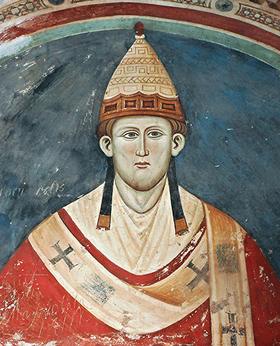
1274A medieval wall painting of a pope's head in a tall white tiara with a jewelled band, against a blue ground
Council

Second Council of Lyons

Second Council of Lyons Constitution II, 1, On the supreme Trinity and the catholic faith

“We profess faithfully and devotedly that the holy Spirit proceeds eternally from the Father and the Son, not as from two principles, but as from one principle; not by two spirations, but by one single spiration.”

Read it in the source: Papal Encyclicals Online

See it on the timeline: The ecumenical councils

1274
Council
Michael VIII Palaeologus, Emperor of the Romans Profession of faith, Second Council of Lyons, 1274 (DS 860)

“The same Holy Roman Church also holds and teaches that there are seven sacraments of the Church: one is baptism, which has been mentioned above; another is the sacrament of confirmation which bishops confer by the laying on of hands while they anoint the reborn; then penance, the Eucharist, the sacrament of order, matrimony and extreme unction which, according to the doctrine of the Blessed James, … is administered to the sick.”

Read it in the source: Fordham Sourcebook

See it on the timeline: The seven sacraments

1274A medieval wall painting of a pope's head in a tall white tiara with a jewelled band, against a blue ground
Council

The Second Council of Lyons on the procession of the Spirit

Second Council of Lyons Constitution II, 1, On the supreme Trinity and the catholic faith

“We profess faithfully and devotedly that the holy Spirit proceeds eternally from the Father and the Son, not as from two principles, but as from one principle; not by two spirations, but by one single spiration. This the holy Roman church, mother and mistress of all the faithful, has till now professed, preached and taught; this she firmly holds, preaches, professes and teaches; this is the unchangeable and true belief of the orthodox fathers and doctors, Latin and Greek alike.”

Read it in the source: Papal Encyclicals Online

See it on the timeline: The East-West Schism

1274
Council

The Second Council of Lyons: the emperor's profession on the primacy

Emperor Michael VIII Palaeologus Profession of faith read at the Second Council of Lyons, 1274, as quoted by the First Vatican Council, Pastor Aeternus, ch. 4 (1870)

“The holy Roman church possesses the supreme and full primacy and principality over the whole catholic church. She truly and humbly acknowledges that she received this from the Lord himself in blessed Peter, the prince and chief of the apostles, whose successor the Roman pontiff is, together with the fullness of power. And since before all others she has the duty of defending the truth of the faith, so if any questions arise concerning the faith, it is by her judgment that they must be settled.”

Read it in the source: Papal Encyclicals Online

See it on the timeline: The East-West Schism

The full Catholic answer: Papal supremacy

1311-1312
Council

Council of Vienne

Pope Clement V, with the approval of the council Decrees, 1

“Moreover, with the approval of the said council, we reject as erroneous and contrary to the truth of the catholic faith every doctrine or proposition rashly asserting that the substance of the rational or intellectual soul is not of itself and essentially the form of the human body, or casting doubt on this matter.”

Read it in the source: Papal Encyclicals Online

See it on the timeline: The ecumenical councils

1311-1312
Council

The Council of Vienne on abuses by inquisitors

Council of Vienne Decrees, no. 26

“The apostolic see has received many complaints that some inquisitors, appointed by it to suppress heresy, have overstepped the limits of the power given to them. They occasionally so enlarge their authority that what has been wisely provided by the apostolic see for the growth of the faith, oppresses the innocent under pretext of piety and results in harm to the faithful. … The bishop, however, without the inquisitor, or the inquisitor without the diocesan bishop or his officer or the delegate of the chapter when the see is vacant, may not commit to harsh or close imprisonment, which seems more like punishment than custody, or subject anyone to torture or pronounce sentence on anyone, if they can have access to each other within eight days after seeking it”

Read it in the source: Papal Encyclicals Online

See it on the timeline: The Inquisition and the use of force against heresy

1312
Council

The Council of Vienne founds schools of Arabic

Council of Vienne Decree on schools of languages (Constitution 24)

“we decree that in each of these places there should be catholic scholars with adequate knowledge of Hebrew, Arabic and Chaldaic. There are to be two experts for each language in each place. They shall direct the schools, make faithful translations of books from these languages into Latin, and teach others those languages with all earnestness”

Read it in the source: Papal Encyclicals Online

See it on the timeline: Islam and the Church

1312
Council

The Council of Vienne forbids the Muslim call to prayer in Christian lands

Council of Vienne Decree on the Saracens (Constitution 25)

“It is an insult to the holy name and a disgrace to the christian faith that in certain parts of the world subject to christian princes where Saracens live, sometimes apart, sometimes intermingled with Christians, the Saracen priests commonly called Zabazala, in their temples or mosques, in which the Saracens meet to adore the infidel Mahomet, loudly invoke and extol his name each day at certain hours from a high place, in the hearing of both Christians and Saracens and there make public declarations in his honour.”

Read it in the source: Papal Encyclicals Online

See it on the timeline: Islam and the Church

6 April 1415A man in a dark robe stands alone in the middle of a hall crowded with seated bishops and cardinals
Council

Council of Constance: a council above the pope

Council of Constance Session 5, decree Haec sancta

“First it declares that, legitimately assembled in the holy Spirit, constituting a general council and representing the catholic church militant, it has power immediately from Christ; and that everyone of whatever state or dignity, even papal, is bound to obey it in those matters which pertain to the faith, the eradication of the said schism and the general reform of the said church of God in head and members.”

Read it in the source: Papal Encyclicals Online

See it on the timeline: The tradition of the papacy

1415
Council

John Hus handed to the secular court at Constance

Council of Constance Session 15, 6 July 1415, sentence against John Hus

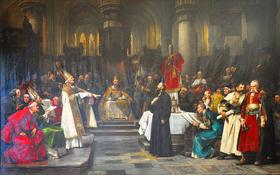
“this holy synod of Constance therefore declares and decrees that the same John Hus is to be deposed and degraded from the order of the priesthood and from the other orders held by him. … This holy synod of Constance, seeing that God’s church has nothing more that it can do, relinquishes John Hus to the judgment of the secular authority and decrees that he is to be relinquished to the secular court.”

Read it in the source: Papal Encyclicals Online

See it on the timeline: The Inquisition and the use of force against heresy

1414-1418
Council

Council of Constance

Council of Constance Session 37, 26 July 1417, sentence against Peter de Luna (Benedict XIII)

“This same holy synod, moreover, as a precautionary measure, since according to himself he actually holds the papacy, deprives, deposes and casts out the said Peter from the papacy and from being the supreme pontiff of the Roman church and from every title, rank, honour, dignity, benefice and office whatsoever. It forbids him to act henceforth as the pope or as the supreme and Roman pontiff.”

Read it in the source: Papal Encyclicals Online

See it on the timeline: The ecumenical councils

1434
Council

Council of Basel: forced sermons, distinguishing dress, separate quarters

Council of Basel Session 19, 7 September 1434, Decree on Jews and neophytes

“They should not be given other public offices, or admitted to any academic degrees, or allowed to have on lease lands or other ecclesiastical rents. … They are to be compelled, under severe penalties, to wear some garment whereby they can be clearly distinguished from Christians. In order to prevent too much intercourse, they should be made to dwell in areas, in the cities and towns, which are apart from the dwellings of Christians and as far distant as possible from churches.”

Read it in the source: Papal Encyclicals Online

See it on the timeline: The Church and the Jewish people

1439A black and white photograph of a large parchment charter written in two columns, with seals hanging from its lower edge
Council
Council of Florence Session 6, 6 July 1439, definition of union with the Greeks (Laetentur Caeli)

“We also define that the holy apostolic see and the Roman pontiff holds the primacy over the whole world and the Roman pontiff is the successor of blessed Peter prince of the apostles, and that he is the true vicar of Christ, the head of the whole church and the father and teacher of all Christians, and to him was committed in blessed Peter the full power of tending, ruling and governing the whole church, as is contained also in the acts of ecumenical councils and in the sacred canons.”

Read it in the source: Papal Encyclicals Online

See it on the timeline: Papal supremacy

1439
Council
Council of Florence Session 6 (6 July 1439), Definition

“Also, if truly penitent people die in the love of God before they have made satisfaction for acts and omissions by worthy fruits of repentance, their souls are cleansed after death by cleansing pains; and the suffrages of the living faithful avail them in giving relief from such pains, that is, sacrifices of masses, prayers, almsgiving and other acts of devotion which have been customarily performed by some of the faithful for others of the faithful in accordance with the church's ordinances.”

Read it in the source: Papal Encyclicals Online

See it on the timeline: Purgatory

1439
Council

Council of Florence

Council of Florence Session 6, 6 July 1439, definition of union with the Greeks

“We also define that the holy apostolic see and the Roman pontiff holds the primacy over the whole world and the Roman pontiff is the successor of blessed Peter prince of the apostles, and that he is the true vicar of Christ, the head of the whole church and the father and teacher of all Christians, and to him was committed in blessed Peter the full power of tending, ruling and governing the whole church, as is contained also in the acts of ecumenical councils and in the sacred canons.”

Read it in the source: Papal Encyclicals Online

See it on the timeline: The ecumenical councils

6 July 1439
Council

Council of Florence: the primacy defined

Council of Florence Session 6, Laetentur Caeli, definition of union with the Greeks

“We also define that the holy apostolic see and the Roman pontiff holds the primacy over the whole world and the Roman pontiff is the successor of blessed Peter prince of the apostles, and that he is the true vicar of Christ, the head of the whole church and the father and teacher of all Christians, and to him was committed in blessed Peter the full power of tending, ruling and governing the whole church, as is contained also in the acts of ecumenical councils and in the sacred canons.”

Read it in the source: Papal Encyclicals Online

See it on the timeline: The tradition of the papacy

1439
Council
Council of Florence, Pope Eugenius IV Bull Exsultate Deo (Decree for the Armenians), 22 November 1439

“There are seven sacraments of the new Law, namely baptism, confirmation, Eucharist, penance, extreme unction, orders and matrimony, which differ greatly from the sacraments of the old Law. The latter were not causes of grace, but only prefigured the grace to be given through the passion of Christ; whereas the former, ours, both contain grace and bestow it on those who worthily receive them.”

Read it in the source: Papal Encyclicals Online

See it on the timeline: The seven sacraments

1439
Council
Council of Florence Decree for the Armenians (Exsultate Deo), on baptism

“Holy baptism holds the first place among all the sacraments, for it is the gate of the spiritual life; through it we become members of Christ and of the body of the church. Since death came into the world through one person, unless we are born again of water and the spirit, we cannot, as Truth says, enter the kingdom of heaven. The matter of this sacrament is true and natural water, either hot or cold. The form is: I baptize you in the name of the Father and of the Son and of the holy Spirit.”

Read it in the source: Papal Encyclicals Online

See it on the timeline: Baptism
1439
Council
Council of Florence Decree for the Armenians (Exsultate Deo), on baptism

“The minister of this sacrament is a priest, who is empowered to baptize in virtue of his office. But in case of necessity not only a priest or a deacon, but even a lay man or a woman, even a pagan and a heretic, can baptize provided he or she uses the form of the church and intends to do what the church does. The effect of this sacrament is the remission of all original and actual guilt, also of all penalty that is owed for that guilt.”

Read it in the source: Papal Encyclicals Online

See it on the timeline: Baptism
1439
Council
Council of Florence Decree for the Armenians (Exsultate Deo), 1439

“The second sacrament is confirmation. Its matter is chrism made from oil and balsam blessed by a bishop, the oil symbolizing the gleaming brightness of conscience and balsam symbolizing the odour of a good reputation. The form is: I sign you with the sign of the cross and I confirm you with the chrism of salvation in the name of the Father and of the Son and of the holy Spirit. The ordinary minister is a bishop. Whereas a simple priest can use other unctions, only a bishop ought to confer this one, because it is said only of the apostles, whose place is held by bishops, that they gave the holy Spirit by the imposition of hands”

Read it in the source: Papal Encyclicals Online

See it on the timeline: Confirmation

1439
Council
Council of Florence Exsultate Deo, Decree for the Armenians

“The fourth sacrament is penance. Its matter is the acts of the penitent, which are threefold. The first is contrition of heart, which includes sorrow for sin committed, with the resolve not to sin again. The second is oral confession, which implies integral confession to the priest of all sins that are remembered. The third is satisfaction for sins in accordance with the judgment of the priest which is ordinarily done by prayer, fasting and almsgiving. The form of this sacrament are the words of absolution which the priest pronounces when he says: I absolve you.”

Read it in the source: Papal Encyclicals Online

See it on the timeline: Penance and Reconciliation

1439
Council
Council of Florence Exsultate Deo, Decree for the Armenians, on the sacrament of orders

“The sixth is the sacrament of orders. Its matter is the object by whose handing over the order is conferred. So the priesthood is bestowed by the handing over of a chalice with wine and a paten with bread; the diaconate by the giving of the book of the gospels; the subdiaconate by the handing over of an empty chalice with an empty paten on it; and similarly for the other orders by allotting things connected with their ministry. The form for a priest is: Receive the power of offering sacrifice in the church for the living and the dead, in the name of the Father and of the Son and of the holy Spirit. The forms for the other orders are contained in full in the Roman pontifical. The ordinary minister of this sacrament is a bishop. The effect is an increase of grace to make the person a suitable minister of Christ.”

Read it in the source: Papal Encyclicals Online

See it on the timeline: Holy Orders

1439
Council
Council of Florence Decree for the Armenians, Exsultate Deo, 1439

“The seventh is the sacrament of matrimony, which is a sign of the union of Christ and the church according to the words of the apostle: This sacrament is a great one, but I speak in Christ and in the church. The efficient cause of matrimony is usually mutual consent expressed in words about the present. A threefold good is attributed to matrimony. The first is the procreation and bringing up of children for the worship of God. The second is the mutual faithfulness of the spouses towards each other. The third is the indissolubility of marriage, since it signifies the indivisible union of Christ and the church.”

Read it in the source: Papal Encyclicals Online

See it on the timeline: Matrimony

6 July 1439
Council

The Council of Florence: union declared with the emperor and the Eastern patriarchs' deputies

Council of Florence Session 6, 6 July 1439, Laetentur caeli, opening

“With the agreement of our most dear son John Palaeologus, illustrious emperor of the Romans, of the deputies of our venerable brothers the patriarchs and of other representatives of the eastern church, to the following. Let the heavens be glad and let the earth rejoice. For, the wall that divided the western and the eastern church has been removed, peace and harmony have returned, since the corner-stone, Christ, who made both one, has joined both sides with a very strong bond of love and peace”

Read it in the source: Papal Encyclicals Online

See it on the timeline: The East-West Schism

1439
Council

The Council of Florence: the procession of the Spirit

Council of Florence Session 6, 6 July 1439, Laetentur caeli

“We declare that when holy doctors and fathers say that the holy Spirit proceeds from the Father through the Son, this bears the sense that thereby also the Son should be signified, according to the Greeks indeed as cause, and according to the Latins as principle of the subsistence of the holy Spirit, just like the Father. … We define also that the explanation of those words “and from the Son” was licitly and reasonably added to the creed for the sake of declaring the truth and from imminent need.”

Read it in the source: Papal Encyclicals Online

See it on the timeline: The East-West Schism

1439
Council

The Council of Florence: the primacy of the Roman pontiff

Council of Florence Session 6, 6 July 1439, Laetentur caeli

“We also define that the holy apostolic see and the Roman pontiff holds the primacy over the whole world and the Roman pontiff is the successor of blessed Peter prince of the apostles, and that he is the true vicar of Christ, the head of the whole church and the father and teacher of all Christians, and to him was committed in blessed Peter the full power of tending, ruling and governing the whole church, as is contained also in the acts of ecumenical councils and in the sacred canons.”

Read it in the source: Papal Encyclicals Online

See it on the timeline: The East-West Schism

1442
Council
Council of Florence Session 11, Bull of union with the Copts

“It professes that one and the same God is the author of the old and the new Testament … It accepts and venerates their books, whose titles are as follows. … Tobit, Judith, Esther, Job, Psalms of David, Proverbs, Ecclesiastes, Song of Songs, Wisdom, Ecclesiasticus, Isaiah, Jeremiah, Baruch, Ezechiel, Daniel; … two books of the Maccabees”

Read it in the source: Papal Encyclicals Online

See it on the timeline: The Old Testament canon

1442
Council
Council of Florence Session 11, Bull of union with the Copts (Cantate Domino)

“It firmly believes, professes and preaches that all those who are outside the catholic church, not only pagans but also Jews or heretics and schismatics, cannot share in eternal life and will go into the everlasting fire which was prepared for the devil and his angels, unless they are joined to the catholic church before the end of their lives … and that nobody can be saved, no matter how much he has given away in alms and even if he has shed his blood in the name of Christ, unless he has persevered in the bosom and the unity of the catholic church.”

Read it in the source: Papal Encyclicals Online

See it on the timeline: No salvation outside the Church

4 February 1442A large printed Bible lying open in a display case, each page in two columns of black type
Council

Before the Reformation: the Old Testament books a council named

Council of Florence Session 11, Bull of union with the Copts

“It accepts and venerates their books, whose titles are as follows. … Tobit, Judith, Esther, Job, Psalms of David, Proverbs, Ecclesiastes, Song of Songs, Wisdom, Ecclesiasticus, Isaiah, Jeremiah, Baruch, Ezechiel, Daniel; … two books of the Maccabees”

Read it in the source: Papal Encyclicals Online

See it on the timeline: Protestantism

The full Catholic answer: The Old Testament canon

1512-1517A heavy-set pope in a red cap and cape sits at a table with an illuminated book and a magnifying glass, with a cardinal standing on either side
Council

Fifth Lateran Council

Pope Leo X, with the approval of the council Session 8, 19 December 1513

“…with the approval of the sacred council, we condemn and reject all those who insist that the intellectual soul is mortal, or that it is only one among all human beings, and those who suggest doubts on this topic. For the soul not only truly exists of itself and essentially as the form of the human body, as is said in the canon of our predecessor of happy memory, pope Clement V, promulgated in the general council of Vienne, but it is also immortal”

Read it in the source: Papal Encyclicals Online

See it on the timeline: The ecumenical councils

19 December 1516
Council

Fifth Lateran Council: the pope has authority over councils

Fifth Lateran Council Session 11, bull Pastor aeternus gregem

“For it is clearly established that only the contemporary Roman pontiff, as holding authority over all councils, has the full right and power to summon, transfer and dissolve councils. This we know not only from the witness of holy scripture, the statements of holy fathers and our predecessors as Roman pontiffs, and the decisions of the sacred canons, but also from the declarations of the same councils.”

Read it in the source: Papal Encyclicals Online

See it on the timeline: The tradition of the papacy

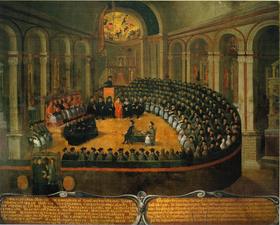
13 December 1545Rows of bishops in mitres sit in a great semicircle of benches inside a church, facing the presiding cardinals
Council

The Council of Trent opens

Council of Trent Session 1, Decree touching the opening of the Council

“Doth it please you,–unto the praise and glory of the holy and undivided Trinity, Father, and Son, and Holy Ghost ; for the increase and exaltation of the Christian faith and religion; for the extirpation of heresies; for the peace and union of the Church; for the reformation of the Clergy and Christian people; for the depression and extinction of the enemies of the Christian name,–to decree and declare that the sacred and general council of Trent do begin, and hath begun?”

Read it in the source: Papal Encyclicals Online

See it on the timeline: Protestantism

1546
Council
Council of Trent Session 5, Decree concerning Original Sin, closing paragraph

“This same holy Synod doth nevertheless declare, that it is not its intention to include in this decree, where original sin is treated of, the blessed and immaculate Virgin Mary, the mother of God; but that the constitutions of Pope Sixtus IV., of happy memory, are to be observed, under the pains contained in the said constitutions, which it renews.”

Read it in the source: Papal Encyclicals Online

See it on the timeline: Mary without sin

1546
Council
Council of Trent Session 4, Decree Concerning the Canonical Scriptures

“…this truth and discipline are contained in the written books, and the unwritten traditions which, received by the Apostles from the mouth of Christ himself, or from the Apostles themselves, the Holy Ghost dictating, have come down even unto us, transmitted as it were from hand to hand”

Read it in the source: Papal Encyclicals Online

See it on the timeline: Scripture and Tradition

1546
Council
Council of Trent Session 4, Decree Concerning the Edition, and the Use, of the Sacred Books

“…no one, relying on his own skill, shall,–in matters of faith, and of morals pertaining to the edification of Christian doctrine, –wresting the sacred Scripture to his own senses, presume to interpret the said sacred Scripture contrary to that sense which holy mother Church,–whose it is to judge of the true sense and interpretation of the holy Scriptures,–hath held and doth hold”

Read it in the source: Papal Encyclicals Online

See it on the timeline: The Magisterium

1546
Council
Council of Trent Session 4, Decree Concerning the Canonical Scriptures

“…Tobias, Judith, Esther, Job, the Davidical Psalter, consisting of a hundred and fifty psalms; the Proverbs, Ecclesiastes, the Canticle of Canticles, Wisdom, Ecclesiasticus, Isaias, Jeremias, with Baruch; Ezechiel, Daniel; … two books of the Machabees, the first and the second. … But if any one receive not, as sacred and canonical, the said books entire with all their parts, as they have been used to be read in the Catholic Church, and as they are contained in the old Latin vulgate edition; and knowingly and deliberately contemn the traditions aforesaid; let him be anathema.”

Read it in the source: Papal Encyclicals Online

See it on the timeline: The Old Testament canon

8 April 1546
Council

The Church's reply on the seven books

Council of Trent Session 4, Decree Concerning the Canonical Scriptures

“And it has thought it meet that a list of the sacred books be inserted in this decree, lest a doubt may arise in any one’s mind, which are the books that are received by this Synod. They are as set down here below: of the Old Testament: … Tobias, Judith, Esther, Job, the Davidical Psalter, consisting of a hundred and fifty psalms; the Proverbs, Ecclesiastes, the Canticle of Canticles, Wisdom, Ecclesiasticus, Isaias, Jeremias, with Baruch; … two books of the Machabees, the first and the second.”

Read it in the source: Papal Encyclicals Online

See it on the timeline: Protestantism

The full Catholic answer: The Old Testament canon

17 June 1546
Council

Reform at Trent: bishops must preach the Gospel, and alms-collectors may not preach

Council of Trent Session 5, Decree on Reformation, ch. 2

“But seeing that the preaching of the Gospel is no less necessary to the Christian commonwealth than the reading thereof; and whereas this is the principal duty of bishops; the same holy Synod hath resolved and decreed, that all bishops, archbishops, primates, and all other prelates of the churches be bound personally–if they be not lawfully hindered–to preach the holy Gospel of Jesus Christ. … Those who quest for alms–who are also commonly called Questors-of whatsoever condition they may be, shall not in any way presume, either personally, or by another, to preach”

Read it in the source: Papal Encyclicals Online

See it on the timeline: Protestantism

1547
Council
Council of Trent Session 6, Canon 23 on Justification

“[If any one saith] … that he is able, during his whole life, to avoid all sins, even those that are venial,-except by a special privilege from God, as the Church holds in regard of the Blessed Virgin; let him be anathema.”

Read it in the source: Papal Encyclicals Online

See it on the timeline: Mary without sin

1547
Council
Council of Trent Session 6, Decree on Justification, ch. 7

“…the meritorious cause is His most beloved only-begotten, our Lord Jesus Christ, who, when we were enemies, for the exceeding charity wherewith he loved us, merited Justification for us by His most holy Passion on the wood of the cross, and made satisfaction for us unto God the Father”

Read it in the source: Papal Encyclicals Online

See it on the timeline: Are Catholics Christians?

1547
Council
Council of Trent Session 6, Decree on Justification, ch. 8

“…we are therefore said to be justified freely, because that none of those things which precede justification-whether faith or works-merit the grace itself of justification. For, if it be a grace, it is not now by works, otherwise, as the same Apostle says, grace is no more grace.”

Read it in the source: Papal Encyclicals Online

See it on the timeline: Faith and works

1547
Council
Council of Trent Session 6, Decree on Justification, ch. 16

“For since Christ Jesus Himself, as the head into the members and the vine into the branches, continually infuses strength into those justified, which strength always precedes, accompanies and follows their good works, and without which they could not in any manner be pleasing and meritorious before God, … far be it that a Christian should either trust or glory in himself and not in the Lord, whose bounty toward all men is so great that He wishes the things that are His gifts to be their merits.”

Read it in the source: EWTN Library

See it on the timeline: Faith and works

1547
Council
Council of Trent Session 6, Canons on Justification, canon 1

“If any one saith, that man may be justified before God by his own works, whether done through the teaching of human nature, or that of the law, without the grace of God through Jesus Christ; let him be anathema.”

Read it in the source: Papal Encyclicals Online

See it on the timeline: Faith and works

1547
Council
Council of Trent Session 6, Decree on Justification, ch. 9

“For even as no pious person ought to doubt of the mercy of God, of the merit of Christ, and of the virtue and efficacy of the sacraments, even so each one, when he regards himself, and his own weakness and indisposition, may have fear and apprehension touching his own grace; seeing that no one can know with a certainty of faith, which cannot be subject to error, that he has obtained the grace of God.”

Read it in the source: Papal Encyclicals Online

See it on the timeline: Assurance of salvation

1547
Council
Council of Trent Session 6, Decree on Justification, ch. 13

“…let no one herein promise himself any thing as certain with an absolute certainty; though all ought to place and repose a most firm hope in God's help. For God, unless men be themselves wanting to His grace, as he has begun the good work, so will he perfect it, working (in them) to will and to accomplish.”

Read it in the source: Papal Encyclicals Online

See it on the timeline: Assurance of salvation

1547
Council
Council of Trent Session 6, Decree on Justification, ch. 14

“As regards those who, by sin, have fallen from the received grace of Justification, they may be again justified, when, God exciting them, through the sacrament of Penance they shall have attained to the recovery, by the merit of Christ, of the grace lost: for this manner of Justification is of the fallen the reparation: which the holy Fathers have aptly called a second plank after the shipwreck of grace lost.”

Read it in the source: Papal Encyclicals Online

See it on the timeline: Eternal security

1547
Council
Council of Trent Session 6, Canons on Justification, canon 23

“[If] any one saith, that a man once justified can sin no more, nor lose grace, and that therefore he that falls and sins was never truly justified; … let him be anathema.”

Read it in the source: Papal Encyclicals Online

See it on the timeline: Eternal security

1547
Council
Council of Trent Session 6, Decree on Justification, ch. 4

“…a translation, from that state wherein man is born a child of the first Adam, to the state of grace, and of the adoption of the sons of God, through the second Adam, Jesus Christ, our Saviour. And this translation, since the promulgation of the Gospel, cannot be effected, without the laver of regeneration, or the desire thereof, as it is written; unless a man be born again of water and the Holy Ghost, he cannot enter into the Kingdom of God.”

Read it in the source: Papal Encyclicals Online

See it on the timeline: Baptism and salvation
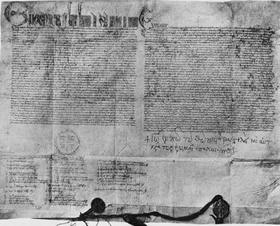
1547
Council
Council of Trent Session 7, Canons on Baptism, canon 13

“If any one saith, that little children, for that they have not actual faith, are not, after having received baptism, to be reckoned amongst the faithful; and that, for this cause, they are to be rebaptized when they have attained to years of discretion; … let him be anathema.”

Read it in the source: Papal Encyclicals Online

See it on the timeline: Infant baptism

1545-1563
Council

Council of Trent

Council of Trent Session 6, Decree on Justification, ch. 7

“This disposition, or preparation, is followed by Justification itself, which is not remission of sins merely, but also the sanctification and renewal of the inward man, through the voluntary reception of the grace, and of the gifts, whereby man of unjust becomes just, and of an enemy a friend, that so he may be an heir according to hope of life everlasting.”

Read it in the source: Papal Encyclicals Online

See it on the timeline: The ecumenical councils

1547
Council
Council of Trent Session 7, Decree on the Sacraments, Canon 1 (3 March 1547)

“If any one saith, that the sacraments of the New Law were not all instituted by Jesus Christ, our Lord; or, that they are more, or less, than seven, to wit, Baptism, Confirmation, the Eucharist, Penance, Extreme Unction, Order, and Matrimony; or even that any one of these seven is not truly and properly a sacrament; let him be anathema.”

Read it in the source: Papal Encyclicals Online

See it on the timeline: The seven sacraments

1547
Council
Council of Trent Session 7, Canons on Baptism, canon 4

“If any one saith, that the baptism which is even given by heretics in the name of the Father, and of the Son, and of the Holy Ghost, with the intention of doing what the Church doth, is not true baptism; let him be anathema.”

Read it in the source: Papal Encyclicals Online

See it on the timeline: Baptism
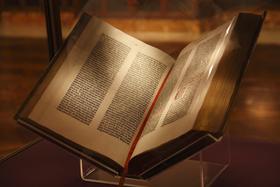
1547
Council
Council of Trent Session 7, Canons on Confirmation, Canon 3

“If any one saith, that the ordinary minister of holy confirmation is not the bishop alone, but any simple priest soever; let him be anathema.”

Read it in the source: Papal Encyclicals Online

See it on the timeline: Confirmation

1547
Council

The Church's reply on faith alone

Council of Trent Session 6, Canons on Justification, canon 9

“If any one saith, that by faith alone the impious is justified; in such wise as to mean, that nothing else is required to co-operate in order to the obtaining the grace of Justification, and that it is not in any way necessary, that he be prepared and disposed by the movement of his own will; let him be anathema.”

Read it in the source: Papal Encyclicals Online

See it on the timeline: Protestantism

The full Catholic answer: Faith and works

1547
Council
Council of Trent Session 7, Decree on the Sacraments, Canon 6 (3 March 1547)

“If any one saith, that the sacraments of the New Law do not contain the grace which they signify; or, that they do not confer that grace on those who do not place an obstacle thereunto; as though they were merely outward signs of grace or justice received through faith, and certain marks of the Christian profession, whereby believers are distinguished amongst men from unbelievers; let him be anathema.”

Read it in the source: Papal Encyclicals Online

See it on the timeline: The seven sacraments

1551
Council
Council of Trent Session 13, Canons on the Most Holy Sacrament of the Eucharist, canon 1

“If any one denieth, that, in the sacrament of the most holy Eucharist, are contained truly, really, and substantially, the body and blood together with the soul and divinity of our Lord Jesus Christ, and consequently the whole Christ; but saith that He is only therein as in a sign, or in figure, or virtue; let him be anathema.”

Read it in the source: Papal Encyclicals Online

See it on the timeline: The Real Presence

1551
Council
Council of Trent Session 13, Decree on the Eucharist, ch. 1

“For neither are these things mutually repugnant,-that our Saviour Himself always sitteth at the right hand of the Father in heaven, according to the natural mode of existing, and that, nevertheless, He be, in many other places, sacramentally present to us in his own substance, by a manner of existing, which, though we can scarcely express it in words, yet can we, by the understanding illuminated by faith, conceive, and we ought most firmly to believe, to be possible unto God”

Read it in the source: Papal Encyclicals Online

See it on the timeline: The Real Presence and the Ascension

1551
Council
Council of Trent Session 13, Decree on the Eucharist, ch. 4

“And because that Christ, our Redeemer, declared that which He offered under the species of bread to be truly His own body, therefore has it ever been a firm belief in the Church of God, and this holy Synod doth now declare it anew, that, by the consecration of the bread and of the wine, a conversion is made of the whole substance of the bread into the substance of the body of Christ our Lord, and of the whole substance of the wine into the substance of His blood; which conversion is, by the holy Catholic Church, suitably and properly called Transubstantiation.”

Read it in the source: Papal Encyclicals Online

See it on the timeline: Transubstantiation

1551
Council
Council of Trent Session 13, Decree on the Eucharist, ch. 5

“Wherefore, there is no room left for doubt, that all the faithful of Christ may, according to the custom ever received in the Catholic Church, render in veneration the worship of latria, which is due to the true God, to this most holy sacrament. For not therefore is it the less to be adored on this account, that it was instituted by Christ, the Lord, in order to be received: for we believe that same God to be present therein, of whom the eternal Father, when introducing him into the world, says; And let all the angels of God adore him; whom the Magi falling down, adored; who, in fine, as the Scripture testifies, was adored by the apostles in Galilee.”

Read it in the source: Papal Encyclicals Online

See it on the timeline: Adoring the Eucharist

1551
Council
Council of Trent Session 14, On the Sacrament of Penance, ch. 5

“…our Lord Jesus Christ, when about to ascend from earth to heaven, left priests His own vicars, as presidents and judges, unto whom all the mortal crimes, into which the faithful of Christ may have fallen, should be carried, in order that, in accordance with the power of the keys, they may pronounce the sentence of forgiveness or retention of sins.”

Read it in the source: Papal Encyclicals Online

See it on the timeline: Confession to a priest

1551
Council
Council of Trent Session 14, On the Sacrament of Penance, ch. 8

“But neither is this satisfaction, which we discharge for our sins, so our own, as not to be through Jesus Christ. For we who can do nothing of ourselves, as of ourselves, can do all things, He cooperating, who strengthens us. Thus, man has not wherein to glory, but all our glorying is in Christ: in whom we live; in whom we merit; in whom we satisfy; bringing forth fruits worthy of penance, which from him have their efficacy; by him are offered to the Father; and through him are accepted by the Father.”

Read it in the source: Papal Encyclicals Online

See it on the timeline: Indulgences

1551
Council
Council of Trent Session 13, Decree on the Eucharist, ch. 7

“Wherefore, he who would communicate, ought to recall to mind the precept of the Apostle; Let a man prove himself. Now ecclesiastical usage declares that necessary proof to be, that no one, conscious to himself … of mortal sin, how contrite soever he may seem to himself, ought to approach to the sacred Eucharist without previous sacramental confession.”

Read it in the source: Papal Encyclicals Online

See it on the timeline: The Eucharist

1551
Council
Council of Trent Session 14, On the Sacrament of Penance, ch. 5

“For the rest, as to the manner of confessing secretly to a priest alone, although Christ has not forbidden that a person may,–in punishment of his sins, and for his own [humiliation], as well for an example to others as for the edification of the Church that has been scandalized,–confess his sins publicly, nevertheless this is not commanded by a divine precept; neither would it very prudent to enjoin by any human law, that sins, especially such as are secret, should be made known by a public confession.”

Read it in the source: Papal Encyclicals Online

See it on the timeline: Penance and Reconciliation

1551
Council
Council of Trent Session 14, Doctrine on Extreme Unction, ch. 1

“Now, this sacred unction of the sick was instituted by Christ our Lord, as truly and properly a sacrament of the new law, insinuated indeed in Mark, but recommended and promulgated to the faithful by James the Apostle, and brother of the Lord.”

Read it in the source: Papal Encyclicals Online

See it on the timeline: The Anointing of the Sick

1551
Council
Council of Trent Session 14, Doctrine on Extreme Unction, ch. 3

“It is also declared, that this unction is to be applied to the sick, but to those especially who lie in such danger as to seem to be about to depart this life: whence also it is called the sacrament of the departing. And if the sick should, after having received this unction, recover, they may again be aided by the succour of this sacrament, when they fall into another like danger of death.”

Read it in the source: Papal Encyclicals Online

See it on the timeline: The Anointing of the Sick

1551
Council

The Church's reply on the words "This is my body"

Council of Trent Session 13, Decree on the Eucharist, ch. 1

“…He testified, in express and clear words, that He gave them His own very Body, and His own Blood; words which,-recorded by the holy Evangelists, and afterwards repeated by Saint Paul, whereas they carry with them that proper and most manifest meaning in which they were understood by the Fathers,-it is indeed a crime the most unworthy that they should be wrested, by certain contentions and wicked men, to fictitious and imaginary tropes, whereby the verity of the flesh and blood of Christ is denied, contrary to the universal sense of the Church”

Read it in the source: Papal Encyclicals Online

See it on the timeline: Protestantism

The full Catholic answer: The Real Presence

1551
Council
Council of Trent Session 13, Canons on the Most Holy Sacrament of the Eucharist, canon 6

“If any one saith, that, in the holy sacrament of the Eucharist, Christ, the only-begotten Son of God, is not to be adored with the worship, even external of latria; and is, consequently, neither to be venerated with a special festive solemnity, nor to be solemnly borne about in processions, according to the laudable and universal rite and custom of holy church; or, is not to be proposed publicly to the people to be adored, and that the adorers thereof are idolators; let him be anathema.”

Read it in the source: Papal Encyclicals Online

See it on the timeline: Adoring the Eucharist

1562
Council
Council of Trent Session 22, Doctrine on the Sacrifice of the Mass, ch. 1

“…that He might leave, to His own beloved Spouse the Church, a visible sacrifice, such as the nature of man requires, whereby that bloody sacrifice, once to be accomplished on the cross, might be represented, and the memory thereof remain even unto the end of the world, and its salutary virtue be applied to the remission of those sins which we daily commit…”

Read it in the source: Papal Encyclicals Online

See it on the timeline: The Mass as sacrifice

1562
Council
Council of Trent Session 22, Doctrine on the Sacrifice of the Mass, ch. 1

“…He delivered (His own body and blood) to be received by His apostles, whom He then constituted priests of the New Testament; and by those words, Do this in commemoration of me, He commanded them and their successors in the priesthood, to offer (them); even as the Catholic Church has always understood and taught.”

Read it in the source: Papal Encyclicals Online

See it on the timeline: The priest and the Eucharist

1562
Council
Council of Trent Session 21, Decree on Reformation, ch. 9

“Whereas many remedies, heretofore applied by divers councils in their day, as well by that of Lateran, and of Lyons, as by that of Vienne, against the wicked abuses of questors of alms, have become in later times useless; yea, rather the depravity of such is, to the great scandal and complaint of all the faithful, found daily so to increase the more, as that there seems to be no longer any hope left of their amendment; (the Synod) ordains that, in all parts of Christendom soever, their name and use be henceforth utterly abolished … that so all men may at length truly understand, that these heavenly treasures of the Church are administered, not for gain, but for godliness.”

Read it in the source: Papal Encyclicals Online

See it on the timeline: Indulgences

1562
Council
Council of Trent Session 21, Doctrine on Communion under both kinds, ch. 3

“It moreover declares, that although, as hath been already said, our Redeemer, in that last supper, instituted, and delivered to the apostles, this sacrament in two species, yet is to be acknowledged, that Christ whole and entire and a true sacrament are received under either species alone; and that therefore, as regards the fruit thereof, they, who receive one species alone, are not defrauded of any grace necessary to salvation.”

Read it in the source: Papal Encyclicals Online

See it on the timeline: The Eucharist

16 July 1562
Council

Reform at Trent: the office of the alms-collectors abolished

Council of Trent Session 21, Decree on Reformation, ch. 9

“Whereas many remedies, heretofore applied by divers councils in their day, as well by that of Lateran, and of Lyons, as by that of Vienne, against the wicked abuses of questors of alms, have become in later times useless; yea, rather the depravity of such is, to the great scandal and complaint of all the faithful, found daily so to increase the more, as that there seems to be no longer any hope left of their amendment; (the Synod) ordains that, in all parts of Christendom soever, their name and use be henceforth utterly abolished”

Read it in the source: Papal Encyclicals Online

See it on the timeline: Protestantism

1562
Council
Council of Trent Session 22, Doctrine on the Sacrifice of the Mass, ch. 6

“The sacred and holy Synod would fain indeed that, at each mass, the faithful who are present should communicate, not only in spiritual desire, but also by the sacramental participation of the Eucharist, that thereby a more abundant fruit might be derived to them from this most holy sacrifice”

Read it in the source: Papal Encyclicals Online

See it on the timeline: The Eucharist

1563
Council
Council of Trent Session 25, On the Invocation and Veneration of Saints

“…it is good and useful suppliantly to invoke them, and to have recourse to their prayers, aid, and help for obtaining benefits from God, through His Son, Jesus Christ our Lord, who is our alone Redeemer and Saviour.”

Read it in the source: Papal Encyclicals Online

See it on the timeline: Honor given to Mary

1563
Council
Council of Trent Session 23, The True and Catholic Doctrine on the Sacrament of Order, ch. 4

“…bishops, who have succeeded to the place of the apostles, … are placed, as the same apostle says, by the Holy Ghost, to rule the Church of God; that they are superior to priests; administer the sacrament of Confirmation; ordain the ministers of the Church”

Read it in the source: Papal Encyclicals Online

See it on the timeline: Apostolic succession

1563
Council
Council of Trent Session 23, Doctrine concerning the Sacrament of Order, ch. 4

“And if anyone should assert that all Christians without distinction are priests of the New Testament, or that they are all inter se endowed with an equal spiritual power, he seems to do nothing else than derange the ecclesiastical hierarchy … as if, contrary to the teaching of St. Paul, all are apostles, all prophets, all evangelists, all pastors, all doctors.”

Read it in the source: EWTN Library

See it on the timeline: The ordained priesthood

1563
Council
Council of Trent Session 24, Canons on the Sacrament of Matrimony, canon 9

“If any one saith, that clerics constituted in sacred orders, or Regulars, who have solemnly professed chastity, are able to contract marriage, and that being contracted it is valid, notwithstanding the ecclesiastical law, or vow; and that the contrary is no thing else than to condemn marriage … let him be anathema”

Read it in the source: Papal Encyclicals Online

See it on the timeline: Priestly celibacy

1563
Council
Council of Trent Session 25, Decree Concerning Purgatory

“Whereas the Catholic Church, instructed by the Holy Ghost, has, from the sacred writings and the ancient tradition of the Fathers, taught, in sacred councils, and very recently in this oecumenical Synod, that there is a Purgatory, and that the souls there detained are helped by the suffrages of the faithful, … but principally by the acceptable sacrifice of the altar; … While those things which tend to a certain kind of curiosity or superstition, or which savour of filthy lucre, let them prohibit as scandals and stumbling-blocks of the faithful.”

Read it in the source: Papal Encyclicals Online

See it on the timeline: Purgatory

1563
Council
Council of Trent Session 25, Decree Concerning Indulgences

“Whereas the power of conferring Indulgences was granted by Christ to the Church; and she has, even in the most ancient times, used the said power, delivered unto her of God … And being desirous that the abuses which have crept therein, and by occasion of which this honourable name of Indulgences is blasphemed by heretics, be amended and corrected, It ordains generally by this decree, that all evil gains for the obtaining thereof, whence a most prolific cause of abuses amongst the Christian people has been derived, be wholly abolished.”

Read it in the source: Papal Encyclicals Online

See it on the timeline: Indulgences

1563
Council
Council of Trent Session 25, On the Invocation, Veneration, and Relics, of Saints, and on Sacred Images

“…the saints, who reign together with Christ, offer up their own prayers to God for men … but that they think impiously, who deny that the saints, who enjoy eternal happiness in heaven, are to be invocated; or who assert either that they do not pray for men; or, that the invocation of them to pray for each of us even in particular, is idolatry; or, that it is repugnant to the word of God; and is opposed to the honour of the one mediator of God and men, Christ Jesus”

Read it in the source: Papal Encyclicals Online

See it on the timeline: Praying to saints

1563
Council
Council of Trent Session 25, On the Invocation, Veneration, and Relics, of Saints, and on Sacred Images

“Moreover, that the images of Christ, of the Virgin Mother of God, and of the other saints, are to be had and retained particularly in temples, and that due honour and veneration are to be given them; not that any divinity, or virtue, is believed to be in them, on account of which they are to be worshipped; or that anything is to be asked of them; or, that trust is to be reposed in images … but because the honour which is shown them is referred to the prototypes which those images represent”

Read it in the source: Papal Encyclicals Online

See it on the timeline: Images and statues

1563
Council
Council of Trent Session 23, Doctrine on the Sacrament of Order, ch. 3

“Whereas, by the testimony of Scripture, by Apostolic tradition, and the unanimous consent of the Fathers, it is clear that grace is conferred by sacred ordination, which is performed by words and outward signs, no one ought to doubt that Order is truly and properly one of the seven sacraments of holy Church. For the apostle says; I admonish thee that thou stir up the grace of God, which is in thee by the imposition of my hands.”

Read it in the source: Papal Encyclicals Online

See it on the timeline: Holy Orders

1563
Council
Council of Trent Session 24, Canons on the Sacrament of Matrimony, canon 1

“If any one saith, that matrimony is not truly and properly one of the seven sacraments of the evangelic law, (a sacrament) instituted by Christ the Lord; but that it has been invented by men in the Church; and that it does not confer grace; let him be anathema.”

Read it in the source: Papal Encyclicals Online

See it on the timeline: Matrimony

1563
Council
Council of Trent Session 24, Decree on the Reformation of Marriage, ch. 1 (Tametsi)

“Although it is not to be doubted, that clandestine marriages, made with the free consent of the contracting parties, are valid and true marriages, so long as the Church has not rendered them invalid; … Those who shall attempt to contract marriage otherwise than in the presence of the parish priest, or of some other priest by permission of the said parish priest, or of the Ordinary, and in the presence of two or three witnesses; the holy Synod renders such wholly incapable of thus contracting and declares such contracts invalid and null, as by the present decree It invalidates and annuls them.”

Read it in the source: Papal Encyclicals Online

See it on the timeline: Matrimony

4 December 1563
Council

The Council of Trent on indulgences: the power kept, the trade abolished

Council of Trent Session 25, Decree concerning Indulgences

“Whereas the power of conferring Indulgences was granted by Christ to the Church; and she has, even in the most ancient times, used the said power, delivered unto her of God; the sacred holy Synod teaches, and enjoins, that the use of Indulgences, for the Christian people most salutary, and approved of … by the authority of sacred Councils, is to be retained in the Church; and It condemns with anathema those who either assert, that they are useless; or who deny that there is in the Church the power of granting them. … And being desirous that the abuses which have crept therein, and by occasion of which this honourable name of Indulgences is blasphemed by heretics, be amended and corrected, It ordains generally by this decree, that all evil gains for the obtaining thereof,–whence a most prolific cause of abuses amongst the Christian people has been derived,–be wholly abolished.”

Read it in the source: Papal Encyclicals Online

See it on the timeline: Protestantism

1595
Council

The Union of Brest: Eastern bishops enter communion with Rome

The bishops of the metropolitanate of Kiev Articles Concerning Union With The Roman Church (Union of Brest), article 1

“Since there is a quarrel between the Romans and Greeks about the procession of the Holy Spirit, which greatly impede unity really for no other reason than that we do not wish to understand one another—we ask that we should not be compelled to any other creed but that we should remain with that which was handed down to us in the Holy Scriptures, in the Gospel, and in the writings of the holy Greek Doctors, that is, that the Holy Spirit proceeds, not from two sources and not by a double procession, but from one origin, from the Father through the Son.”

Read it in the source: EWTN Library

See it on the timeline: The East-West Schism

The Modern Era1800 to today
1870A black and white engraving of hundreds of bishops seated in tiers on either side of a hall, with the pope enthroned at the far end
Council
First Vatican Council Dei Filius, ch. 2, On Revelation

“These books the church holds to be sacred and canonical not because she subsequently approved them by her authority after they had been composed by unaided human skill, nor simply because they contain revelation without error, but because, being written under the inspiration of the holy Spirit, they have God as their author, and were as such committed to the church.”

Read it in the source: Papal Encyclicals Online

See it on the timeline: The inspiration of Scripture

1870
Council
First Vatican Council Dei Filius, ch. 2, On Revelation

“Now since the decree on the interpretation of holy scripture, profitably made by the council of Trent, with the intention of constraining rash speculation, has been wrongly interpreted by some, we renew that decree and declare its meaning to be as follows: that in matters of faith and morals, belonging as they do to the establishing of christian doctrine, that meaning of holy scripture must be held to be the true one, which holy mother church held and holds, since it is her right to judge of the true meaning and interpretation of holy scripture. In consequence, it is not permissible for anyone to interpret holy scripture in a sense contrary to this, or indeed against the unanimous consent of the fathers.”

Read it in the source: Papal Encyclicals Online

See it on the timeline: The authority of the Fathers

1870
Council
First Vatican Council Pastor Aeternus, ch. 1

“It was to Simon alone, to whom he had already said You shall be called Cephas, that the Lord, after his confession, You are the Christ, the son of the living God, spoke these words: Blessed are you, Simon Bar-Jona. For flesh and blood has not revealed this to you, but my Father who is in heaven. And I tell you, you are Peter, and on this rock I will build my church”

Read it in the source: Papal Encyclicals Online

See it on the timeline: Peter the rock

1870
Council
First Vatican Council Pastor Aeternus, ch. 3

“This power of the supreme pontiff by no means detracts from that ordinary and immediate power of episcopal jurisdiction, by which bishops, who have succeeded to the place of the apostles by appointment of the holy Spirit, tend and govern individually the particular flocks which have been assigned to them. On the contrary, this power of theirs is asserted, supported and defended by the supreme and universal pastor; for St Gregory the Great says: "My honour is the honour of the whole church. My honour is the steadfast strength of my brethren. Then do I receive true honour, when it is denied to none of those to whom honour is due."”

Read it in the source: Papal Encyclicals Online

See it on the timeline: Papal supremacy

1870
Council
First Vatican Council Pastor Aeternus, ch. 4

“For the holy Spirit was promised to the successors of Peter not so that they might, by his revelation, make known some new doctrine, but that, by his assistance, they might religiously guard and faithfully expound the revelation or deposit of faith transmitted by the apostles.”

Read it in the source: Papal Encyclicals Online

See it on the timeline: Papal infallibility

1870
Council
First Vatican Council Pastor Aeternus, ch. 4

“The Roman pontiffs, too, … defined as doctrines to be held those things which, by God’s help, they knew to be in keeping with sacred scripture and the apostolic traditions.”

Read it in the source: Papal Encyclicals Online

See it on the timeline: Have popes been heretics?

1870
Council
First Vatican Council Pastor Aeternus, ch. 2

“That which our lord Jesus Christ, the prince of shepherds and great shepherd of the sheep, established in the blessed apostle Peter, for the continual salvation and permanent benefit of the church, must of necessity remain for ever, by Christ’s authority, in the church which, founded as it is upon a rock, will stand firm until the end of time”

Read it in the source: Papal Encyclicals Online

See it on the timeline: Constantine and the Church

1870
Council
First Vatican Council Dei Filius, ch. 4, On faith and reason

“For the doctrine of the faith which God has revealed is put forward not as some philosophical discovery capable of being perfected by human intelligence, but as a divine deposit committed to the spouse of Christ to be faithfully protected and infallibly promulgated. … May understanding, knowledge and wisdom increase as ages and centuries roll along, and greatly and vigorously flourish, in each and all, in the individual and the whole church: but this only in its own proper kind, that is to say, in the same doctrine, the same sense, and the same understanding”

Read it in the source: Papal Encyclicals Online

See it on the timeline: Doctrines defined later

1870
Council
First Vatican Council Pastor Aeternus, ch. 4

“For the holy Spirit was promised to the successors of Peter not so that they might, by his revelation, make known some new doctrine, but that, by his assistance, they might religiously guard and faithfully expound the revelation or deposit of faith transmitted by the apostles.”

Read it in the source: Papal Encyclicals Online

See it on the timeline: Was the Church corrupted early?

1870
Council
First Vatican Council Dei Filius, ch. 2, On Revelation

“The same holy mother church holds and teaches that God, the source and end of all things, can be known with certainty from the consideration of created things, by the natural power of human reason … It was, however, pleasing to his wisdom and goodness to reveal himself and the eternal laws of his will to the human race by another, and that a supernatural, way.”

Read it in the source: Papal Encyclicals Online

See it on the timeline: Islam and the one God

1869-1870
Council

First Vatican Council

First Vatican Council Pastor Aeternus, ch. 4, the definition

“…we teach and define as a divinely revealed dogma that when the Roman pontiff speaks EX CATHEDRA, that is, when, in the exercise of his office as shepherd and teacher of all Christians, in virtue of his supreme apostolic authority, he defines a doctrine concerning faith or morals to be held by the whole church, he possesses, by the divine assistance promised to him in blessed Peter, that infallibility which the divine Redeemer willed his church to enjoy in defining doctrine concerning faith or morals.”

Read it in the source: Papal Encyclicals Online

See it on the timeline: The ecumenical councils

18 July 1870
Council

First Vatican Council: the primacy given to Peter by Christ

First Vatican Council Pastor Aeternus, ch. 1

“We teach and declare that, according to the gospel evidence, a primacy of jurisdiction over the whole church of God was immediately and directly promised to the blessed apostle Peter and conferred on him by Christ the lord.”

Read it in the source: Papal Encyclicals Online

See it on the timeline: The tradition of the papacy

18 July 1870
Council

First Vatican Council: whoever succeeds to the chair of Peter

First Vatican Council Pastor Aeternus, ch. 2

“Therefore whoever succeeds to the chair of Peter obtains by the institution of Christ himself, the primacy of Peter over the whole church. So what the truth has ordained stands firm, and blessed Peter perseveres in the rock-like strength he was granted, and does not abandon that guidance of the church which he once received”

Read it in the source: Papal Encyclicals Online

See it on the timeline: All the popes in order, from St. Peter to today

1870
Council

Vatican I: faith and reason cannot really disagree

First Vatican Council Dogmatic Constitution Dei Filius, chapter 4, On faith and reason

“Even though faith is above reason, there can never be any real disagreement between faith and reason, since it is the same God who reveals the mysteries and infuses faith, and who has endowed the human mind with the light of reason. God cannot deny himself, nor can truth ever be in opposition to truth. The appearance of this kind of specious contradiction is chiefly due to the fact that either the dogmas of faith are not understood and explained in accordance with the mind of the church, or unsound views are mistaken for the conclusions of reason.”

Read it in the source: Papal Encyclicals Online

See it on the timeline: The Galileo case

1870
Council

The First Vatican Council: the pope's jurisdiction over the whole Church

First Vatican Council Session 4, Pastor Aeternus, ch. 3, canon

“if anyone says that the Roman pontiff has merely an office of supervision and guidance, and not the full and supreme power of jurisdiction over the whole church, and this not only in matters of faith and morals, but also in those which concern the discipline and government of the church dispersed throughout the whole world; or that he has only the principal part, but not the absolute fullness, of this supreme power; or that this power of his is not ordinary and immediate both over all and each of the churches and over all and each of the pastors and faithful: let him be anathema.”

Read it in the source: Papal Encyclicals Online

See it on the timeline: The East-West Schism

1870
Council

The First Vatican Council: papal infallibility

First Vatican Council Session 4, Pastor Aeternus, ch. 4

“we teach and define as a divinely revealed dogma that when the Roman pontiff speaks EX CATHEDRA, that is, when, in the exercise of his office as shepherd and teacher of all Christians, in virtue of his supreme apostolic authority, he defines a doctrine concerning faith or morals to be held by the whole church, he possesses, by the divine assistance promised to him in blessed Peter, that infallibility which the divine Redeemer willed his church to enjoy in defining doctrine concerning faith or morals.”

Read it in the source: Papal Encyclicals Online

See it on the timeline: The East-West Schism

1870
Council
First Vatican Council Pastor Aeternus, ch. 4, the definition

“…we teach and define as a divinely revealed dogma that when the Roman pontiff speaks EX CATHEDRA, that is, when, in the exercise of his office as shepherd and teacher of all Christians, in virtue of his supreme apostolic authority, he defines a doctrine concerning faith or morals to be held by the whole church, he possesses, by the divine assistance promised to him in blessed Peter, that infallibility which the divine Redeemer willed his church to enjoy in defining doctrine concerning faith or morals. Therefore, such definitions of the Roman pontiff are of themselves, and not by the consent of the church, irreformable.”

Read it in the source: Papal Encyclicals Online

See it on the timeline: Papal infallibility

1870
Council
First Vatican Council Pastor Aeternus, ch. 4

“This gift of truth and never-failing faith was therefore divinely conferred on Peter and his successors in this see so that they might discharge their exalted office for the salvation of all, and so that the whole flock of Christ might be kept away by them from the poisonous food of error and be nourished with the sustenance of heavenly doctrine.”

Read it in the source: Papal Encyclicals Online

See it on the timeline: Have popes been heretics?

18 July 1870
Council

First Vatican Council: full and supreme power of jurisdiction

First Vatican Council Pastor Aeternus, ch. 3, canon

“So, then, if anyone says that the Roman pontiff has merely an office of supervision and guidance, and not the full and supreme power of jurisdiction over the whole church, and this not only in matters of faith and morals, but also in those which concern the discipline and government of the church dispersed throughout the whole world … let him be anathema.”

Read it in the source: Papal Encyclicals Online

See it on the timeline: The tradition of the papacy

18 July 1870
Council

First Vatican Council: the bishops keep their own authority

First Vatican Council Pastor Aeternus, ch. 3

“This power of the supreme pontiff by no means detracts from that ordinary and immediate power of episcopal jurisdiction, by which bishops, who have succeeded to the place of the apostles by appointment of the holy Spirit, tend and govern individually the particular flocks which have been assigned to them. On the contrary, this power of theirs is asserted, supported and defended by the supreme and universal pastor; for St Gregory the Great says: "My honour is the honour of the whole church.”

Read it in the source: Papal Encyclicals Online

See it on the timeline: The tradition of the papacy

18 July 1870
Council

First Vatican Council: papal infallibility defined

First Vatican Council Pastor Aeternus, ch. 4, the definition

“we teach and define as a divinely revealed dogma that when the Roman pontiff speaks EX CATHEDRA, that is, when, in the exercise of his office as shepherd and teacher of all Christians, in virtue of his supreme apostolic authority, he defines a doctrine concerning faith or morals to be held by the whole church, he possesses, by the divine assistance promised to him in blessed Peter, that infallibility which the divine Redeemer willed his church to enjoy in defining doctrine concerning faith or morals.”

Read it in the source: Papal Encyclicals Online

See it on the timeline: The tradition of the papacy

1963Rows of bishops in white mitres and copes sit in tiered stands hung with red and green cloth
Council
Second Vatican Council Sacrosanctum Concilium 106

“By a tradition handed down from the apostles which took its origin from the very day of Christ's resurrection, the Church celebrates the paschal mystery every eighth day; with good reason this, then, bears the name of the Lord's day or Sunday. For on this day Christ's faithful are bound to come together into one place”

Read it in the source: vatican.va

See it on the timeline: The Sunday Mass obligation

1963
Council
Second Vatican Council Sacrosanctum Concilium 125

“The practice of placing sacred images in churches so that they may be venerated by the faithful is to be maintained. Nevertheless their number should be moderate and their relative positions should reflect right order. For otherwise they may create confusion among the Christian people and foster devotion of doubtful orthodoxy.”

Read it in the source: vatican.va

See it on the timeline: Images and statues

1963
Council
Second Vatican Council Sacrosanctum Concilium 59

“The purpose of the sacraments is to sanctify men, to build up the body of Christ, and, finally, to give worship to God; because they are signs they also instruct. They not only presuppose faith, but by words and objects they also nourish, strengthen, and express it; that is why they are called "sacraments of faith." They do indeed impart grace”

Read it in the source: vatican.va

See it on the timeline: The seven sacraments

1963
Council
Second Vatican Council Sacrosanctum Concilium 64

“The catechumenate for adults, comprising several distinct steps, is to be restored and to be taken into use at the discretion of the local ordinary. By this, means the time of the catechumenate, which is intended as a period of suitable instruction, may be sanctified by sacred rites to be celebrated at successive intervals of time.”

Read it in the source: vatican.va

See it on the timeline: Baptism
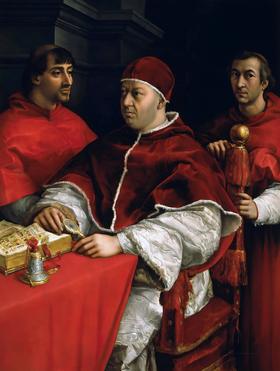
1963
Council
Second Vatican Council Sacrosanctum Concilium 73

“"Extreme unction," which may also and more fittingly be called "anointing of the sick," is not a sacrament for those only who are at the point of death. Hence, as soon as any one of the faithful begins to be in danger of death from sickness or old age, the fitting time for him to receive this sacrament has certainly already arrived.”

Read it in the source: vatican.va

See it on the timeline: The Anointing of the Sick

1964
Council
Second Vatican Council Lumen Gentium 62, 66

“For no creature could ever be counted as equal with the Incarnate Word and Redeemer. … This cult, as it always existed, although it is altogether singular, differs essentially from the cult of adoration which is offered to the Incarnate Word, as well to the Father and the Holy Spirit, and it is most favorable to it.”

Read it in the source: vatican.va

See it on the timeline: Honor given to Mary

1964
Council
Second Vatican Council Lumen Gentium 56

“It is no wonder therefore that the usage prevailed among the Fathers whereby they called the mother of God entirely holy and free from all stain of sin, as though fashioned by the Holy Spirit and formed as a new creature. … Adorned from the first instant of her conception with the radiance of an entirely unique holiness, the Virgin of Nazareth is greeted, on God's command, by an angel messenger as "full of grace"…”

Read it in the source: vatican.va

See it on the timeline: Mary without sin

1964
Council
Second Vatican Council Lumen Gentium 52, 57

“Joined to Christ the Head and in the unity of fellowship with all His saints, the faithful must in the first place reverence the memory "of the glorious ever Virgin Mary, Mother of our God and Lord Jesus Christ". … This union is manifest also at the birth of Our Lord, who did not diminish His mother's virginal integrity but sanctified it…”

Read it in the source: vatican.va

See it on the timeline: Perpetual virginity

1964
Council
Second Vatican Council Lumen Gentium 60

“There is but one Mediator as we know from the words of the apostle, "for there is one God and one mediator of God and men, the man Christ Jesus, who gave himself a redemption for all". The maternal duty of Mary toward men in no wise obscures or diminishes this unique mediation of Christ, but rather shows His power. For all the salvific influence of the Blessed Virgin on men originates, not from some inner necessity, but from the divine pleasure. It flows forth from the superabundance of the merits of Christ, rests on His mediation, depends entirely on it and draws all its power from it.”

Read it in the source: vatican.va

See it on the timeline: Mary as Mediatrix

1964
Council
Second Vatican Council Lumen Gentium 62

“Therefore the Blessed Virgin is invoked by the Church under the titles of Advocate, Auxiliatrix, Adjutrix, and Mediatrix. … This, however, is to be so understood that it neither takes away from nor adds anything to the dignity and efficaciousness of Christ the one Mediator. … The Church does not hesitate to profess this subordinate role of Mary.”

Read it in the source: vatican.va

See it on the timeline: Mary as Mediatrix

1964
Council
Second Vatican Council Lumen Gentium 12

“The entire body of the faithful, anointed as they are by the Holy One, cannot err in matters of belief. They manifest this special property by means of the whole peoples' supernatural discernment in matters of faith when "from the Bishops down to the last of the lay faithful" … they show universal agreement in matters of faith and morals. That discernment in matters of faith is aroused and sustained by the Spirit of truth. It is exercised under the guidance of the sacred teaching authority, in faithful and respectful obedience to which the people of God accepts that which is not just the word of men but truly the word of God.”

Read it in the source: vatican.va

See it on the timeline: The Magisterium

1964
Council
Second Vatican Council Lumen Gentium 20

“That divine mission, entrusted by Christ to the apostles, will last until the end of the world, since the Gospel they are to teach is for all time the source of all life for the Church. And for this reason the apostles, appointed as rulers in this society, took care to appoint successors. … Therefore, the Sacred Council teaches that bishops by divine institution have succeeded to the place of the apostles”

Read it in the source: vatican.va

See it on the timeline: Apostolic succession

1964
Council
Second Vatican Council Lumen Gentium 25

“And this infallibility with which the Divine Redeemer willed His Church to be endowed in defining doctrine of faith and morals, extends as far as the deposit of Revelation extends, which must be religiously guarded and faithfully expounded. … For then the Roman Pontiff is not pronouncing judgment as a private person, but as the supreme teacher of the universal Church, in whom the charism of infallibility of the Church itself is individually present, he is expounding or defending a doctrine of Catholic faith.”

Read it in the source: vatican.va

See it on the timeline: Papal infallibility

1964
Council
Second Vatican Council Unitatis Redintegratio 3

“For men who believe in Christ and have been truly baptized are in communion with the Catholic Church even though this communion is imperfect. … it remains true that all who have been justified by faith in Baptism are members of Christ's body … and have a right to be called Christian, and so are correctly accepted as brothers by the children of the Catholic Church.”

Read it in the source: vatican.va

See it on the timeline: Are Catholics Christians?

1964
Council
Second Vatican Council Lumen Gentium 8

“This Church constituted and organized in the world as a society, subsists in the Catholic Church, which is governed by the successor of Peter and by the Bishops in communion with him, … although many elements of sanctification and of truth are found outside of its visible structure. These elements, as gifts belonging to the Church of Christ, are forces impelling toward catholic unity.”

Read it in the source: vatican.va

See it on the timeline: The one Church

1964
Council
Second Vatican Council Unitatis Redintegratio 6

“Christ summons the Church to continual reformation as she sojourns here on earth. The Church is always in need of this, in so far as she is an institution of men here on earth. Thus if, in various times and circumstances, there have been deficiencies in moral conduct or in church discipline, or even in the way that church teaching has been formulated - to be carefully distinguished from the deposit of faith itself - these can and should be set right at the opportune moment.”

Read it in the source: vatican.va

See it on the timeline: Was the Church corrupted early?

1964
Council
Second Vatican Council Lumen Gentium 14, 16

“Whosoever, therefore, knowing that the Catholic Church was made necessary by Christ, would refuse to enter or to remain in it, could not be saved. … Nor does Divine Providence deny the helps necessary for salvation to those who, without blame on their part, have not yet arrived at an explicit knowledge of God and with His grace strive to live a good life.”

Read it in the source: vatican.va

See it on the timeline: No salvation outside the Church

1964
Council
Second Vatican Council Lumen Gentium 10

“Christ the Lord, High Priest taken from among men, made the new people "a kingdom and priests to God the Father". … Though they differ from one another in essence and not only in degree, the common priesthood of the faithful and the ministerial or hierarchical priesthood are nonetheless interrelated: each of them in its own special way is a participation in the one priesthood of Christ.”

Read it in the source: vatican.va

See it on the timeline: The ordained priesthood

1964
Council
Second Vatican Council Lumen Gentium 28

“Let them, as fathers in Christ, take care of the faithful whom they have begotten by baptism and their teaching.”

Read it in the source: vatican.va

See it on the timeline: Calling priests "Father"

1964
Council
Second Vatican Council Lumen Gentium 14

“He is not saved, however, who, though part of the body of the Church, does not persevere in charity. … All the Church's children should remember that their exalted status is to be attributed not to their own merits but to the special grace of Christ. If they fail moreover to respond to that grace in thought, word and deed, not only shall they not be saved but they will be the more severely judged.”

Read it in the source: vatican.va

See it on the timeline: Eternal security

1964
Council
Second Vatican Council Lumen Gentium 50

“For just as Christian communion among wayfarers brings us closer to Christ, so our companionship with the saints joins us to Christ, from Whom as from its Fountain and Head issues every grace and the very life of the people of God. … For every genuine testimony of love shown by us to those in heaven, by its very nature tends toward and terminates in Christ”

Read it in the source: vatican.va

See it on the timeline: Praying to saints

1964
Council
Second Vatican Council Lumen Gentium 16

“But the plan of salvation also includes those who acknowledge the Creator. In the first place amongst these there are the Muslims, who, professing to hold the faith of Abraham, along with us adore the one and merciful God, who on the last day will judge mankind. … Wherefore to promote the glory of God and procure the salvation of all of these, and mindful of the command of the Lord, "Preach the Gospel to every creature", the Church fosters the missions with care and attention.”

Read it in the source: vatican.va

See it on the timeline: Islam and the one God

1962-1965
Council

Second Vatican Council

Second Vatican Council Lumen Gentium 1 (21 November 1964)

“Since the Church is in Christ like a sacrament or as a sign and instrument both of a very closely knit union with God and of the unity of the whole human race, it desires now to unfold more fully to the faithful of the Church and to the whole world its own inner nature and universal mission. This it intends to do following faithfully the teaching of previous councils.”

Read it in the source: vatican.va

See it on the timeline: The ecumenical councils

21 November 1964
Council

Second Vatican Council: the pope and the college of bishops

Second Vatican Council Lumen Gentium 22

“But the college or body of bishops has no authority unless it is understood together with the Roman Pontiff, the successor of Peter as its head. The pope's power of primacy over all, both pastors and faithful, remains whole and intact. In virtue of his office, that is as Vicar of Christ and pastor of the whole Church, the Roman Pontiff has full, supreme and universal power over the Church.”

Read it in the source: vatican.va

See it on the timeline: The tradition of the papacy

1964
Council
Second Vatican Council Lumen Gentium, 11

“They are more perfectly bound to the Church by the sacrament of Confirmation, and the Holy Spirit endows them with special strength so that they are more strictly obliged to spread and defend the faith, both by word and by deed, as true witnesses of Christ”

Read it in the source: vatican.va

See it on the timeline: Confirmation

1964
Council
Second Vatican Council Lumen Gentium 11 (21 November 1964)

“Taking part in the Eucharistic sacrifice, which is the fount and apex of the whole Christian life, they offer the Divine Victim to God, and offer themselves along with It. … Strengthened in Holy Communion by the Body of Christ, they then manifest in a concrete way that unity of the people of God which is suitably signified and wondrously brought about by this most august sacrament.”

Read it in the source: vatican.va

See it on the timeline: The Eucharist

21 November 1964
Council
Second Vatican Council Lumen Gentium 21

“the apostles were enriched by Christ with a special outpouring of the Holy Spirit coming upon them, and they passed on this spiritual gift to their helpers by the imposition of hands, and it has been transmitted down to us in Episcopal consecration. … And the Sacred Council teaches that by Episcopal consecration the fullness of the sacrament of Orders is conferred, that fullness of power, namely, which both in the Church's liturgical practice and in the language of the Fathers of the Church is called the high priesthood, the supreme power of the sacred ministry.”

Read it in the source: vatican.va

See it on the timeline: Holy Orders

21 November 1964
Council
Second Vatican Council Lumen Gentium 29

“the diaconate can in the future be restored as a proper and permanent rank of the hierarchy. It pertains to the competent territorial bodies of bishops, of one kind or another, with the approval of the Supreme Pontiff, to decide whether and where it is opportune for such deacons to be established for the care of souls. With the consent of the Roman Pontiff, this diaconate can, in the future, be conferred upon men of more mature age, even upon those living in the married state.”

Read it in the source: vatican.va

See it on the timeline: Holy Orders

21 November 1964
Council

The Second Vatican Council on the Churches of the East

Second Vatican Council Unitatis Redintegratio, 15

“These Churches, although separated from us, possess true sacraments, above all by apostolic succession, the priesthood and the Eucharist, whereby they are linked with us in closest intimacy. Therefore some worship in common (communicatio in sacris), given suitable circumstances and the approval of Church authority, is not only possible but to be encouraged.”

Read it in the source: vatican.va

See it on the timeline: The East-West Schism

21 November 1964
Council

The Second Vatican Council on separated Christians

Second Vatican Council Unitatis Redintegratio, 3

“But in subsequent centuries much more serious dissensions made their appearance and quite large communities came to be separated from full communion with the Catholic Church - for which, often enough, men of both sides were to blame. The children who are born into these Communities and who grow up believing in Christ cannot be accused of the sin involved in the separation, and the Catholic Church embraces upon them as brothers, with respect and affection. For men who believe in Christ and have been truly baptized are in communion with the Catholic Church even though this communion is imperfect.”

Read it in the source: vatican.va

See it on the timeline: Protestantism

1964
Council
Second Vatican Council Lumen Gentium 25

“Although the individual bishops do not enjoy the prerogative of infallibility, they nevertheless proclaim Christ's doctrine infallibly whenever, even though dispersed through the world, but still maintaining the bond of communion among themselves and with the successor of Peter, and authentically teaching matters of faith and morals, they are in agreement on one position as definitively to be held. … And this infallibility with which the Divine Redeemer willed His Church to be endowed in defining doctrine of faith and morals, extends as far as the deposit of Revelation extends, which must be religiously guarded and faithfully expounded. … but a new public revelation they do not accept as pertaining to the divine deposit of faith.”

Read it in the source: vatican.va

See it on the timeline: The Magisterium

1964
Council
Second Vatican Council Unitatis Redintegratio 3

“The children who are born into these Communities and who grow up believing in Christ cannot be accused of the sin involved in the separation, and the Catholic Church embraces upon them as brothers, with respect and affection. For men who believe in Christ and have been truly baptized are in communion with the Catholic Church even though this communion is imperfect. … For it is only through Christ's Catholic Church, which is "the all-embracing means of salvation," that they can benefit fully from the means of salvation.”

Read it in the source: vatican.va

See it on the timeline: No salvation outside the Church

1965
Council
Second Vatican Council Dei Verbum 11

“In composing the sacred books, God chose men and while employed by Him they made use of their powers and abilities, so that with Him acting in them and through them, they, as true authors, consigned to writing everything and only those things which He wanted.”

Read it in the source: vatican.va

See it on the timeline: The inspiration of Scripture

1965
Council
Second Vatican Council Dei Verbum 9

“For Sacred Scripture is the word of God inasmuch as it is consigned to writing under the inspiration of the divine Spirit, while sacred tradition takes the word of God entrusted by Christ the Lord and the Holy Spirit to the Apostles, and hands it on to their successors in its full purity … Consequently it is not from Sacred Scripture alone that the Church draws her certainty about everything which has been revealed.”

Read it in the source: vatican.va

See it on the timeline: Scripture and Tradition

1965
Council
Second Vatican Council Dei Verbum 8

“The words of the holy fathers witness to the presence of this living tradition, whose wealth is poured into the practice and life of the believing and praying Church. Through the same tradition the Church's full canon of the sacred books is known, and the sacred writings themselves are more profoundly understood and unceasingly made active in her”

Read it in the source: vatican.va

See it on the timeline: The authority of the Fathers

1965
Council
Second Vatican Council Dei Verbum 10

“But the task of authentically interpreting the word of God, whether written or handed on, has been entrusted exclusively to the living teaching office of the Church, whose authority is exercised in the name of Jesus Christ. This teaching office is not above the word of God, but serves it, teaching only what has been handed on, listening to it devoutly, guarding it scrupulously and explaining it faithfully in accord with a divine commission and with the help of the Holy Spirit, it draws from this one deposit of faith everything which it presents for belief as divinely revealed.”

Read it in the source: vatican.va

See it on the timeline: The Magisterium

1965
Council
Second Vatican Council Dei Verbum 8

“Therefore the Apostles, handing on what they themselves had received, warn the faithful to hold fast to the traditions which they have learned either by word of mouth or by letter (see 2 Thess. 2:15), and to fight in defense of the faith handed on once and for all (see Jude 1:3) … This tradition which comes from the Apostles develops in the Church with the help of the Holy Spirit. For there is a growth in the understanding of the realities and the words which have been handed down.”

Read it in the source: vatican.va

See it on the timeline: Doctrines defined later

1965
Council
Second Vatican Council Dei Verbum 25

“The sacred synod also earnestly and especially urges all the Christian faithful, especially Religious, to learn by frequent reading of the divine Scriptures the "excellent knowledge of Jesus Christ" (Phil. 3:8). "For ignorance of the Scriptures is ignorance of Christ."”

Read it in the source: vatican.va

See it on the timeline: Are Catholics Christians?

1965
Council
Second Vatican Council Presbyterorum Ordinis 16

“Indeed, it [perfect and perpetual continence] is not demanded by the very nature of the priesthood, as is apparent from the practice of the early Church and from the traditions of the Eastern Churches. where, besides those who with all the bishops, by a gift of grace, choose to observe celibacy, there are also married priests of highest merit. … celibacy, which first was recommended to priests, later in the Latin Church was imposed upon all who were to be promoted to sacred orders.”

Read it in the source: vatican.va

See it on the timeline: Priestly celibacy

1965
Council
Second Vatican Council Presbyterorum Ordinis 9

“Though priests of the New Testament, in virtue of the sacrament of Orders, exercise the most outstanding and necessary office of father and teacher among and for the People of God, they are nevertheless, together with all Christ's faithful, disciples of the Lord, made sharers in his Kingdom by the grace of God's call. … For priests are brothers among brothers … with all those who have been reborn at the baptismal font.”

Read it in the source: vatican.va

See it on the timeline: Calling priests "Father"

1965
Council
Second Vatican Council Nostra Aetate 3

“They adore the one God, living and subsisting in Himself; merciful and all-powerful, the Creator of heaven and earth, who has spoken to men; they take pains to submit wholeheartedly to even His inscrutable decrees, just as Abraham, with whom the faith of Islam takes pleasure in linking itself, submitted to God. Though they do not acknowledge Jesus as God, they revere Him as a prophet.”

Read it in the source: vatican.va

See it on the timeline: Islam and the one God

1965
Council
Second Vatican Council Nostra Aetate 2

“The Catholic Church rejects nothing that is true and holy in these religions. She regards with sincere reverence those ways of conduct and of life, those precepts and teachings which, though differing in many aspects from the ones she holds and sets forth, nonetheless often reflect a ray of that Truth which enlightens all men. Indeed, she proclaims, and ever must proclaim Christ "the way, the truth, and the life" (John 14:6), in whom men may find the fullness of religious life”

Read it in the source: vatican.va

See it on the timeline: Other religions

1965
Council
Second Vatican Council Gaudium et Spes, 50

“Let them thoughtfully take into account both their own welfare and that of their children, those already born and those which the future may bring. … The parents themselves and no one else should ultimately make this judgment in the sight of God. But in their manner of acting, spouses should be aware that they cannot proceed arbitrarily, but must always be governed according to a conscience dutifully conformed to the divine law itself”

Read it in the source: vatican.va

See it on the timeline: Contraception

1965
Council
Second Vatican Council Gaudium et Spes, 51

“For God, the Lord of life, has conferred on men the surpassing ministry of safeguarding life in a manner which is worthy of man. Therefore from the moment of its conception life must be guarded with the greatest care while abortion and infanticide are unspeakable crimes.”

Read it in the source: vatican.va

See it on the timeline: Abortion

1965
Council

The Church on the history in the Gospels

Second Vatican Council Dei Verbum 19

“Holy Mother Church has firmly and with absolute constancy held, and continues to hold, that the four Gospels just named, whose historical character the Church unhesitatingly asserts, faithfully hand on what Jesus Christ, while living among men, really did and taught for their eternal salvation until the day He was taken up into heaven”

Read it in the source: vatican.va

See it on the timeline: The life of Jesus Christ: the record inside and outside the Bible

1965
Council
Second Vatican Council Gaudium et Spes, 48

“Christ the Lord abundantly blessed this many-faceted love, welling up as it does from the fountain of divine love and structured as it is on the model of His union with His Church. For as God of old made Himself present to His people through a covenant of love and fidelity, so now the Savior of men and the Spouse of the Church comes into the lives of married Christians through the sacrament of matrimony.”

Read it in the source: vatican.va

See it on the timeline: Matrimony

1965
Council

Second Vatican Council: Nostra Aetate

Second Vatican Council Declaration Nostra Aetate, 28 October 1965, no. 4

“True, the Jewish authorities and those who followed their lead pressed for the death of Christ; still, what happened in His passion cannot be charged against all the Jews, without distinction, then alive, nor against the Jews of today. Although the Church is the new people of God, the Jews should not be presented as rejected or accursed by God, as if this followed from the Holy Scriptures. … Furthermore, in her rejection of every persecution against any man, the Church, mindful of the patrimony she shares with the Jews and moved not by political reasons but by the Gospel's spiritual love, decries hatred, persecutions, displays of anti-Semitism, directed against Jews at any time and by anyone.”

Read it in the source: vatican.va

See it on the timeline: The Church and the Jewish people

1965
Council

Vatican II: "no one is to be coerced into faith"

Second Vatican Council Declaration on Religious Freedom, Dignitatis Humanae, 7 December 1965, no. 12

“In the life of the People of God, as it has made its pilgrim way through the vicissitudes of human history, there has at times appeared a way of acting that was hardly in accord with the spirit of the Gospel or even opposed to it. Nevertheless, the doctrine of the Church that no one is to be coerced into faith has always stood firm.”

Read it in the source: vatican.va

See it on the timeline: The Inquisition and the use of force against heresy

1965
Council

Vatican II deplores a failure to respect the independence of science

Second Vatican Council Pastoral Constitution Gaudium et Spes, 7 December 1965, no. 36

“Therefore if methodical investigation within every branch of learning is carried out in a genuinely scientific manner and in accord with moral norms, it never truly conflicts with faith, for earthly matters and the concerns of faith derive from the same God. … Consequently, we cannot but deplore certain habits of mind, which are sometimes found too among Christians, which do not sufficiently attend to the rightful independence of science and which, from the arguments and controversies they spark, lead many minds to conclude that faith and science are mutually opposed.”

Read it in the source: vatican.va

See it on the timeline: The Galileo case

1965
Council

The Church received the Old Testament through Israel

Second Vatican Council Declaration Nostra Aetate, 28 October 1965, no. 4

“The Church, therefore, cannot forget that she received the revelation of the Old Testament through the people with whom God in His inexpressible mercy concluded the Ancient Covenant. Nor can she forget that she draws sustenance from the root of that well-cultivated olive tree onto which have been grafted the wild shoots, the Gentiles. Indeed, the Church believes that by His cross Christ, Our Peace, reconciled Jews and Gentiles. making both one in Himself.”

Read it in the source: vatican.va

See it on the timeline: Judaism and the Church

1965
Council

The Second Vatican Council on the quarrels of the past

Second Vatican Council Nostra Aetate 3

“Since in the course of centuries not a few quarrels and hostilities have arisen between Christians and Moslems, this sacred synod urges all to forget the past and to work sincerely for mutual understanding and to preserve as well as to promote together for the benefit of all mankind social justice and moral welfare, as well as peace and freedom.”

Read it in the source: vatican.va

See it on the timeline: Islam and the Church

The full Catholic answer: Islam and the one God

1965
Council

Vatican II: Christ refused to rule by force, as the servant of Isaiah

Second Vatican Council Declaration on Religious Freedom, Dignitatis Humanae, 7 December 1965, no. 11

“But He Himself, noting that the cockle had been sown amid the wheat, gave orders that both should be allowed to grow until the harvest time, which will come at the end of the world. He refused to be a political messiah, ruling by force: He preferred to call Himself the Son of Man, who came "to serve and to give his life as a ransom for the many" (Mark 10:45). He showed Himself the perfect servant of God, who "does not break the bruised reed nor extinguish the smoking flax" (Matt. 12:20).”

Read it in the source: vatican.va

See it on the timeline: The Inquisition and the use of force against heresy

1965
Council

The Church holds that revelation is complete in Christ

Second Vatican Council Dei Verbum 4

“The Christian dispensation, therefore, as the new and definitive covenant, will never pass away and we now await no further new public revelation before the glorious manifestation of our Lord Jesus Christ”

Read it in the source: vatican.va

See it on the timeline: Islam and the Church

Today
Council

Five centuries on: many communities, differing among themselves

Second Vatican Council Unitatis Redintegratio, 19 (21 November 1964)

“In the great upheaval which began in the West toward the end of the Middle Ages, and in later times too, Churches and ecclesial Communities came to be separated from the Apostolic See of Rome. … However, since these Churches and ecclesial Communities, on account of their different origins, and different teachings in matters of doctrine on the spiritual life, vary considerably not only with us, but also among themselves, the task of describing them at all adequately is extremely difficult; and we have no intention of making such an attempt here.”

Read it in the source: vatican.va

See it on the timeline: Protestantism