Tradition Timeline Leave an objection

Start page / Offshoots

Islam and the Church

Each mark is one quotation. Touch the timeline to read it.

Islam began in Arabia in the seventh century, among peoples who knew Jews and Christians. Its calendar counts from 622, when Muhammad moved from Mecca to Medina. This timeline sets side by side what the Church already held about the Son of God and about revelation, what Muslim texts say about God, Jesus, Muhammad and the earlier Scriptures, and how Christians and Muslims have met, fought and spoken to each other since. The two sides agree that God is one and that Jesus is a figure of great importance. They differ on whether Jesus is the Son of God, on whether he died on the cross, and on whether revelation was completed in Christ. The Church holds that it was. The record also shows violence and contempt on the Christian side, and the Church's own later words about them. Muslim texts are quoted from the pages of the Fordham Sourcebooks, which carry only a few of them.

Where it starts with Jesus

Jesus says that no one knows the Father except the Son, and those to whom the Son chooses to reveal him.

“All things have been delivered to me by my Father; and no one knows the Son except the Father, and no one knows the Father except the Son and any one to whom the Son chooses to reveal him.”

JesusMatthew 11:27Read it in the source: Bible Gateway, RSV Catholic Edition

How it points to Jesus

Muslims and Christians both speak of one God and both honour Jesus, but they say different things about who he is. The Church holds, on the strength of words like these, that the Father is fully made known through the Son. That is why this timeline puts the Qur'an and the Creed side by side. The question between the two faiths is what Jesus is and what he has revealed.

Drafted from primary sources. Every quotation is checked against the page it links to. The Muslim texts are on the fallback host fordham.edu (Internet Medieval Sourcebook) and are given in the translations printed there; the page for the Qur'an (Surahs 1 and 47) names no translator, and the page for the Pact of Umar says its translation source is not given. The Pact of Umar is dated by tradition, and the page itself says it is "supposed" to be the peace offered by Umar. No approved page was found for Qur'an 3:45-59, 4:157, 4:171, 5:72-75, 5:116, 19, 33:40 or 112 (carried by quran.com and similar sites), for the letter "A Common Word" of 2007 (acommonword.com), for St. John of Damascus on the Ishmaelites (his On Heresies, ch. 100), for St. Thomas Aquinas, Summa contra Gentiles I.6, for the accounts of St. Francis before the Sultan by St. Bonaventure and Jacques de Vitry, so none of these is quoted.

25 quotations in date order

A work in progress. The quotations below are not all the evidence on this matter. More are being added.

What the Old Testament preparedbefore Christ
Old Testament
Scripture

Abraham, father of a multitude of nations

The Book of Genesis Genesis 17:4-5

““Behold, my covenant is with you, and you shall be the father of a multitude of nations. No longer shall your name be Abram, but your name shall be Abraham; for I have made you the father of a multitude of nations.”

Read it in the source: Bible Gateway, RSV Catholic Edition

Old Testament
Scripture

The Lord is one

Moses Deuteronomy 6:4-5

““Hear, O Israel: The Lord our God is one Lord; and you shall love the Lord your God with all your heart, and with all your soul, and with all your might.”

Read it in the source: Bible Gateway, RSV Catholic Edition

What the Church held before IslamScripture and the Creed of 325
c. AD 30
Scripture

Jesus is asked if he is the Son of God

The high priest and Jesus Matthew 26:63-64

“I adjure you by the living God, tell us if you are the Christ, the Son of God.” Jesus said to him, “You have said so. But I tell you, hereafter you will see the Son of man seated at the right hand of Power”

Read it in the source: Bible Gateway, RSV Catholic Edition

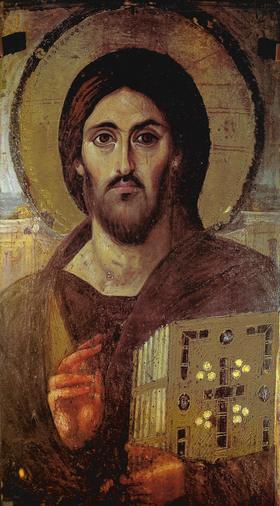
c. AD 30An ancient painted icon of Christ with a dark beard and a gold halo, his right hand raised in blessing and a jewelled book of the Gospels in his left
Scripture

The first commandment: the Lord is one

Jesus Mark 12:28-30

“And one of the scribes came up and heard them disputing with one another, and seeing that he answered them well, asked him, “Which commandment is the first of all?” Jesus answered, “The first is, ‘Hear, O Israel: The Lord our God, the Lord is one; and you shall love the Lord your God with all your heart, and with all your soul, and with all your mind, and with all your strength.’”

Read it in the source: Bible Gateway, RSV Catholic Edition

c. AD 30A bearded man with a halo leans on a stone window ledge with his hand to his cheek, a book beside him and a garland of fruit above
Scripture

The death of Jesus on the cross

St. Mark Mark 15:37-39

“And Jesus uttered a loud cry, and breathed his last. And the curtain of the temple was torn in two, from top to bottom. And when the centurion, who stood facing him, saw that he thus breathed his last, he said, “Truly this man was the Son of God!””

Read it in the source: Bible Gateway, RSV Catholic Edition

c. 65
Scripture

God has spoken by a Son

The Letter to the Hebrews Hebrews 1:1-2

“In many and various ways God spoke of old to our fathers by the prophets; but in these last days he has spoken to us by a Son, whom he appointed the heir of all things, through whom also he created the world.”

Read it in the source: Bible Gateway, RSV Catholic Edition

325A crowded icon of haloed bishops in bright vestments seated in rows around a throne that holds an open book
Council

The Son of God, begotten not made

First Council of Nicaea The Creed of the 318 Fathers

“We believe in one God the Father all powerful, maker of all things both seen and unseen. And in one Lord Jesus Christ, the Son of God, the only-begotten begotten from the Father”

Read it in the source: Papal Encyclicals Online

The rise of Islam622 to 1095: what Muslim texts say, and the first centuries
622

Islam: arose in Arabia in the seventh century. Muhammad and his followers move from Mecca to Medina. The Muslim calendar counts its years from this move.

622 to 632
Muslim

The Qur'an on the oneness of God and on what was revealed to Muhammad

The Qur'an Surah 47:3 and 47:20, in the translation printed on the linked page (the page names no translator)

“But as for those who believe and do righteous deeds and believe in that which has been revealed to Muhammad - and it is the truth from their Lord - HE removes from them their sins and sets right their affairs. … Know, therefore, that there is no god other than ALLAH”

Read it in the source: Fordham Sourcebook

622 to 632
Muslim

The opening Surah, recited in daily prayer

The Qur'an Surah 1, in the translation printed on the linked page (the page names no translator)

“In the name of ALLAH, the Gracious, the Merciful. … All praise is due to ALLAH alone, Lord of all the worlds. … Master of the Day of Judgment. … THEE alone do we worship and THEE alone do we implore for help. … Guide us in the straight path”

Read it in the source: Fordham Sourcebook

d. 632
Muslim

Muhammad on himself, and on Jesus

Ibn Ishaq, reporting Muhammad, in his Life of Muhammad Selections from the Life of Muhammad (Ibn Ishaq, d. c. 773), as given on the linked page

“I am what Abraham my father prayed for and the good news of [my brother] Jesus.”

Read it in the source: Fordham Sourcebook

7th century (by tradition)
Muslim

The Christians of Syria under Muslim rule

The Christians of Syria, in the Pact of Umar as reported by 'Abd al-Rahman ibn Ghanam The Pact of Umar, as transmitted by al-Turtushi, Siraj al-Muluk, pp. 229-230

“When you came against us, we asked you for safe-conduct (aman) for ourselves, our descendants, our property, and the people of our community, and we undertook the following obligations toward you: … We shall not manifest our religion publicly nor convert anyone to it. We shall not prevent any of our kin from entering Islam if they wish it. … We shall not display our crosses or our books in the roads or markets of the Muslims.”

Read it in the source: Fordham Sourcebook

Crusade, contact and conflict1095 to 1312
1095
Magisterium

Pope Urban II calls Christians to the East

Pope Urban II, as reported by Fulcher of Chartres Speech at the Council of Clermont, according to Fulcher of Chartres

“For your brethren who live in the east are in urgent need of your help, and you must hasten to give them the aid which has often been promised them. For, as the most of you have heard, the Turks and Arabs have attacked them and have conquered the territory of Romania [the Greek empire] as far west as the shore of the Mediterranean and the Hellespont, which is called the Arm of St. George. … O what a disgrace if such a despised and base race, which worships demons, should conquer a people which has the faith of omnipotent God and is made glorious with the name of Christ!”

Read it in the source: Fordham Sourcebook

c. 1100
Muslim

A Muslim theologian on how children come to their religion

Al-Ghazali Munkidh min al-Dalal (Deliverance from Error), opening

“Having noticed how easily the children of Christians become Christians, and the children of Muslims embrace Islam, and remembering also the traditional saying ascribed to the Prophet, “Every child has in him the germ of Islam, then his parents make him Jew, Christian, or Zarathustrian,” I was moved by a keen desire to learn what was this innate disposition in the child”

Read it in the source: Fordham Sourcebook

c. 1130
Muslim

A Muslim commentator on the Qur'an and the earlier Scriptures

Al-Zamakhshari The Discoverer of Truth (a commentary on the Qur'an), Preface

“a lecture written in the Arabic language, and free from all faults, which is the key to open the treasures of all spiritual and temporal blessings, and which confirms and witnesses the truth of all the Holy Books which have preceded it … the illustrious Prophet whose name has been inscribed in the Law and the Gospel!”

Read it in the source: Fordham Sourcebook

1219A smiling pope in white waves with his right hand
Magisterium

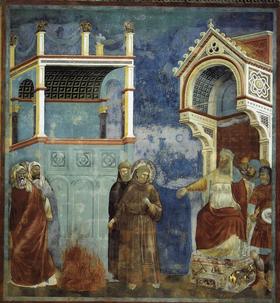
St. Francis of Assisi goes to the Sultan

Pope Francis Fratelli Tutti 3 (3 October 2020), on St. Francis's visit to Sultan Malik-el-Kamil in 1219

“It was his visit to Sultan Malik-el-Kamil, in Egypt, which entailed considerable hardship, given Francis’ poverty, his scarce resources, the great distances to be traveled and their differences of language, culture and religion. That journey, undertaken at the time of the Crusades, further demonstrated the breadth and grandeur of his love, which sought to embrace everyone.”

Read it in the source: vatican.va

1312
Council

The Council of Vienne founds schools of Arabic

Council of Vienne Decree on schools of languages (Constitution 24)

“we decree that in each of these places there should be catholic scholars with adequate knowledge of Hebrew, Arabic and Chaldaic. There are to be two experts for each language in each place. They shall direct the schools, make faithful translations of books from these languages into Latin, and teach others those languages with all earnestness”

Read it in the source: Papal Encyclicals Online

1312
Council

The Council of Vienne forbids the Muslim call to prayer in Christian lands

Council of Vienne Decree on the Saracens (Constitution 25)

“It is an insult to the holy name and a disgrace to the christian faith that in certain parts of the world subject to christian princes where Saracens live, sometimes apart, sometimes intermingled with Christians, the Saracen priests commonly called Zabazala, in their temples or mosques, in which the Saracens meet to adore the infidel Mahomet, loudly invoke and extol his name each day at certain hours from a high place, in the hearing of both Christians and Saracens and there make public declarations in his honour.”

Read it in the source: Papal Encyclicals Online

Dialogue and what remains1965 to today
1992
Magisterium

The call of Abraham

Catechism of the Catholic Church CCC 59

“In order to gather together scattered humanity God calls Abram from his country, his kindred and his father's house, and makes him Abraham, that is, "the father of a multitude of nations". "In you all the nations of the earth shall be blessed."”

Read it in the source: vatican.va

1965Rows of bishops in white mitres and copes sit in tiered stands hung with red and green cloth
Council

The Second Vatican Council on the quarrels of the past

Second Vatican Council Nostra Aetate 3

“Since in the course of centuries not a few quarrels and hostilities have arisen between Christians and Moslems, this sacred synod urges all to forget the past and to work sincerely for mutual understanding and to preserve as well as to promote together for the benefit of all mankind social justice and moral welfare, as well as peace and freedom.”

Read it in the source: vatican.va

The full Catholic answer: Islam and the one God

1965
Council

The Church holds that revelation is complete in Christ

Second Vatican Council Dei Verbum 4

“The Christian dispensation, therefore, as the new and definitive covenant, will never pass away and we now await no further new public revelation before the glorious manifestation of our Lord Jesus Christ”

Read it in the source: vatican.va

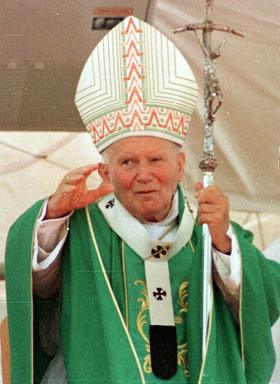
2001An elderly pope in green vestments and a white and gold mitre raises his hand in greeting, holding his staff with the crucifix
Magisterium

Pope John Paul II in the Umayyad Mosque at Damascus

Pope St. John Paul II Address at the Umayyad Mosque, Damascus, 6 May 2001, 3, 4 and 5

“When, on the occasion of weddings or funerals or other celebrations, Christians and Muslims remain in silent respect at the other’s prayer, they bear witness to what unites them, without disguising or denying the things that separate. … For all the times that Muslims and Christians have offended one another, we need to seek forgiveness from the Almighty and to offer each other forgiveness. … Islam too pays tribute to Mary and hails her as "chosen above the women of the world" (Quran, III:42).”

Read it in the source: vatican.va

The full Catholic answer: Islam and the one God

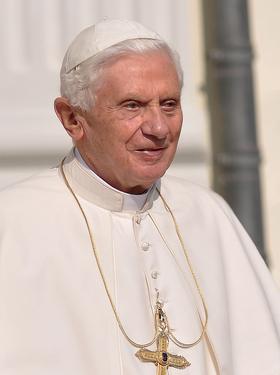
12 Sept. 2006A white-haired pope in a white cassock and skullcap, smiling
Magisterium

Pope Benedict XVI at Regensburg, quoting a Byzantine emperor

Pope Benedict XVI, quoting the Byzantine emperor Manuel II Paleologus Lecture at the University of Regensburg, 12 September 2006

“he addresses his interlocutor with a startling brusqueness, a brusqueness that we find unacceptable, on the central question about the relationship between religion and violence in general, saying: "Show me just what Mohammed brought that was new, and there you will find things only evil and inhuman, such as his command to spread by the sword the faith he preached." … The emperor, after having expressed himself so forcefully, goes on to explain in detail the reasons why spreading the faith through violence is something unreasonable.”

Read it in the source: vatican.va

17 Sept. 2006
Magisterium

Pope Benedict XVI on the reaction to Regensburg

Pope Benedict XVI Angelus, Castel Gandolfo, 17 September 2006

“I am deeply sorry for the reactions in some countries to a few passages of my address at the University of Regensburg, which were considered offensive to the sensibility of Muslims. These in fact were a quotation from a medieval text, which do not in any way express my personal thought.”

Read it in the source: vatican.va

2013A smiling pope in white waves with his right hand
Magisterium

Pope Francis on Islam, and on Christians in Muslim countries

Pope Francis Evangelii Gaudium 252-253

“The sacred writings of Islam have retained some Christian teachings; Jesus and Mary receive profound veneration and it is admirable to see how Muslims both young and old, men and women, make time for daily prayer and faithfully take part in religious services. … I ask and I humbly entreat those countries to grant Christians freedom to worship and to practice their faith, in light of the freedom which followers of Islam enjoy in Western countries!”

Read it in the source: vatican.va

4 Feb. 2019
Magisterium

A joint declaration with the Grand Imam of Al-Azhar

Pope Francis and the Grand Imam of Al-Azhar, Ahmad al-Tayyeb Document on Human Fraternity for World Peace and Living Together, Abu Dhabi, 4 February 2019

“Freedom is a right of every person: each individual enjoys the freedom of belief, thought, expression and action. The pluralism and the diversity of religions, colour, sex, race and language are willed by God in His wisdom, through which He created human beings. This divine wisdom is the source from which the right to freedom of belief and the freedom to be different derives. Therefore, the fact that people are forced to adhere to a certain religion or culture must be rejected”

Read it in the source: vatican.va
Related timelines

Judaism and the ChurchThe Church came out of Israel. Jesus and his apostles were Jews, and the Scriptures and promises she reads are Israel's. This timeline follows how the Church and the synagogue went separate ways in the first and second centuries, over three questions: whether Jesus is the Messiah and Son of God, whether Gentiles must keep the Law of Moses, and what the destruction of the Temple in AD 70 meant. It shows what Judaism teaches in the words of Jewish writers, and what the Church has said in reply and about the Jewish people, down to the Catechism and recent popes. Each side is quoted in its own words, in date order.24 quotations, from the Old Testament to 2013Islam and the one God“The Catholic Church teaches that Islam and Christianity have the same God. But Islam denies that Jesus is the Son of God, and Scripture says that no one who denies the Son has the Father.”17 quotations, from the Old Testament to 2000The Church and the Jewish peopleFor many centuries Christians, among them Fathers, councils and popes, spoke of the Jews with contempt and placed them under laws that set them apart: a distinguishing dress, exclusion from public office, forced attendance at sermons, separate quarters. Popes also forbade forced baptism and rejected the charge of ritual murder. This timeline gives those texts in their own words, in date order, and then the Church's own later judgment on that history and her requests for forgiveness.19 quotations, from the Old Testament to 2010Other religions“The Catholic Church now teaches that all religions are paths to God. Jesus said that he is the way, and that no one comes to the Father except through him.”20 quotations, from the Old Testament to 2024Violence in the Church's history“The Catholic Church has murdered more people than any other institution in the history of the world. A church with that much blood on its hands cannot be the Church of Christ.”19 quotations, from the Old Testament to 2018The life of Jesus Christ: the record inside and outside the BibleJesus of Nazareth lived in Galilee and Judea and was crucified under Pontius Pilate about AD 30. This timeline sets out the record of his life, death and resurrection in date order. It begins with the Gospels and the letters of the apostles. Some of these writers say they saw him themselves. Luke says he wrote down what eyewitnesses had handed on, and an early report says Mark wrote down the preaching of Peter. It goes on to Roman, Jewish and Greek writers who were not Christians, and to the first Christian writers after the apostles. It goes on to what the Church says about the Gospels as history and what she confesses about him today, that he is one divine person, true God and true man, and ends with the Shroud of Turin, the linen cloth that is still being studied.53 quotations, from the Old Testament to 2010