c. AD 30
Scripture
Jesus, before Pilate John 18:36
“Jesus answered, “My kingship is not of this world; if my kingship were of this world, my servants would fight, that I might not be handed over to the Jews; but my kingship is not from the world.””
Start page / Objections / The Church
Verses cited for this objection: Matt. 7:15-20, Matt. 26:52, Rev. 17:6
Short answer
The Church does not deny that blood was shed in her name. Popes and councils called for the crusades and promised the remission of sins to those who went. Councils handed condemned heretics to the secular power, and those texts are on the Inquisition timeline. Pope St. John Paul II asked God's pardon for this in 2000, and Pope Benedict XVI said the Church acknowledges it with great shame. None of the sources quoted here counts the dead, and this page does not offer a number. Benedict XVI also said that the denial of God has led to violence that knows no bounds, and he pointed to the concentration camps. What Jesus taught and what the early Christians wrote stand against killing. The Church teaches that she is holy and that her members, her ministers among them, are sinners.
At his arrest one of his followers draws a sword to defend him. Jesus tells him to put it away.
“Then Jesus said to him, “Put your sword back into its place; for all who take the sword will perish by the sword.”
JesusMatthew 26:52Read it in the source: Bible Gateway, RSV Catholic Edition
This is the standard the Church is judged by, and it is his. Where Christians shed blood in his name, they went against his own word. Pope St. John Paul II asked God's pardon for it in 2000. The crimes of his followers are measured against Jesus. They are not a measure of him.
Drafted from primary sources. Every quotation is checked against the page it links to. Pope Urban II's speech and Pope Nicholas I's letter are quoted from English translations on a fallback host, because no preferred host carries them. The texts on the punishment of heretics are on the timeline "The Inquisition and the use of force against heresy" and are not repeated here.
A work in progress. The quotations below are not all the evidence on this matter. More are being added.
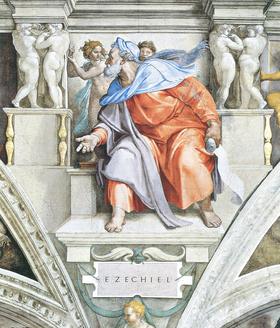
““Son of man, prophesy against the shepherds of Israel, prophesy, and say to them, even to the shepherds, Thus says the Lord God: Ho, shepherds of Israel who have been feeding yourselves! Should not shepherds feed the sheep? You eat the fat, you clothe yourselves with the wool, you slaughter the fatlings; but you do not feed the sheep. The weak you have not strengthened, the sick you have not healed, the crippled you have not bound up, the strayed you have not brought back, the lost you have not sought, and with force and harshness you have ruled them.”
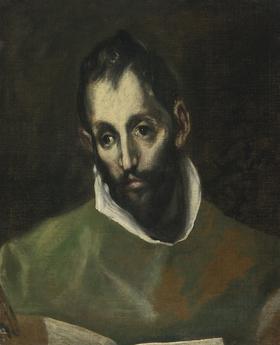
“And he sent messengers ahead of him, who went and entered a village of the Samaritans, to make ready for him; but the people would not receive him, because his face was set toward Jerusalem. And when his disciples James and John saw it, they said, “Lord, do you want us to bid fire come down from heaven and consume them?” But he turned and rebuked them. And they went on to another village.”
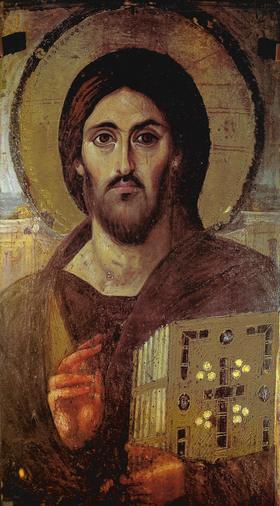
“And behold, one of those who were with Jesus stretched out his hand and drew his sword, and struck the slave of the high priest, and cut off his ear. Then Jesus said to him, “Put your sword back into its place; for all who take the sword will perish by the sword.”
“Jesus answered, “My kingship is not of this world; if my kingship were of this world, my servants would fight, that I might not be handed over to the Jews; but my kingship is not from the world.””
“For when they know that we cannot endure even to see a man put to death, though justly; who of them can accuse us of murder or cannibalism? Who does not reckon among the things of greatest interest the contests of gladiators and wild beasts, especially those which are given by you? But we, deeming that to see a man put to death is much the same as killing him, have abjured such spectacles. How, then, when we do not even look on, lest we should contract guilt and pollution, can we put people to death?”
“For when God forbids us to kill, He not only prohibits us from open violence, which is not even allowed by the public laws, but He warns us against the commission of those things which are esteemed lawful among men. Thus it will be neither lawful for a just man to engage in warfare, since his warfare is justice itself, nor to accuse any one of a capital charge, because it makes no difference whether you put a man to death by word, or rather by the sword, since it is the act of putting to death itself which is prohibited.”
“Therefore, no communion should be shared with those who do not believe and who adore idols. Yet, violence should by no means be inflicted upon them to make them believe. For everything which is not voluntary, cannot be good”
“On this account I, or rather the Lord, beseech you as Christ's heralds to publish this everywhere and to persuade all people of whatever rank, foot-soldiers and knights, poor and rich, to carry aid promptly to those Christians and to destroy that vile race from the lands of our friends. I say this to those who are present, it meant also for those who are absent. Moreover, Christ commands it. "All who die by the way, whether by land or by sea, or in battle against the pagans, shall have immediate remission of sins. This I grant them through the power of God with which I am invested.”
“To those who set out for Jerusalem and offer effective help towards the defence of the christian people and overcoming the tyranny of the infidels, we grant the remission of their sins, and we place their houses and families and all their goods under the protection of blessed Peter and the Roman church, just as has been decreed by our lord pope Urban.”
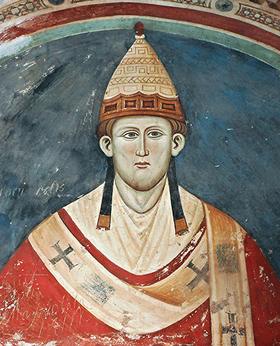
“No cleric may decree or pronounce a sentence involving the shedding of blood, or carry out a punishment involving the same, or be present when such punishment is carried out. … A cleric may not write or dictate letters which require punishments involving the shedding of blood, in the courts of princes this responsibility should be entrusted to laymen and not to clerics. Moreover no cleric may be put in command of mercenaries or crossbowmen or suchlike men of blood”
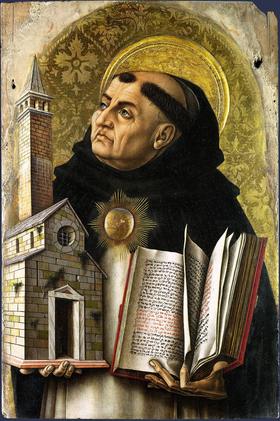
“Among unbelievers there are some who have never received the faith, such as the heathens and the Jews: and these are by no means to be compelled to the faith, in order that they may believe, because to believe depends on the will: nevertheless they should be compelled by the faithful, if it be possible to do so, so that they do not hinder the faith, by their blasphemies, or by their evil persuasions, or even by their open persecutions. It is for this reason that Christ's faithful often wage war with unbelievers, not indeed for the purpose of forcing them to believe, because even if they were to conquer them, and take them prisoners, they should still leave them free to believe, if they will, but in order to prevent them from hindering the faith of Christ.”
“the said Indians and all other people who may later be discovered by Christians, are by no means to be deprived of their liberty or the possession of their property, even though they be outside the faith of Jesus Christ; and that they may and should, freely and legitimately, enjoy their liberty and the possession of their property; nor should they be in any way enslaved; should the contrary happen, it shall be null and have no effect.”
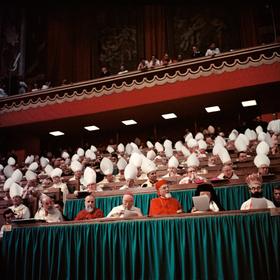
“Any act of war aimed indiscriminately at the destruction of entire cities of extensive areas along with their population is a crime against God and man himself. It merits unequivocal and unhesitating condemnation.”
“All members of the Church, including her ministers, must acknowledge that they are sinners. In everyone, the weeds of sin will still be mixed with the good wheat of the Gospel until the end of time. Hence the Church gathers sinners already caught up in Christ's salvation but still on the way to holiness”
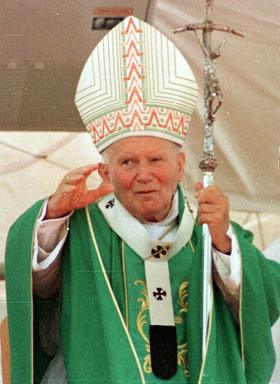
“Another painful chapter of history to which the sons and daughters of the Church must return with a spirit of repentance is that of the acquiescence given, especially in certain centuries, to intolerance and even the use of violence in the service of truth. … Yet the consideration of mitigating factors does not exonerate the Church from the obligation to express profound regret for the weaknesses of so many of her sons and daughters who sullied her face, preventing her from fully mirroring the image of her crucified Lord, the supreme witness of patient love and of humble meekness.”
“we cannot fail to recognize the infidelities to the Gospel committed by some of our brethren, especially during the second millennium. Let us ask pardon for the divisions which have occurred among Christians, for the violence some have used in the service of the truth and for the distrustful and hostile attitudes sometimes taken towards the followers of other religions.”
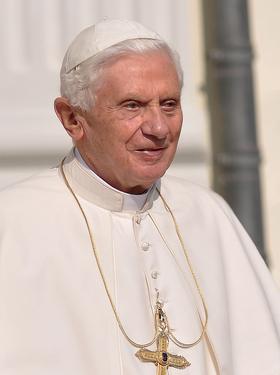
“As a Christian I want to say at this point: yes, it is true, in the course of history, force has also been used in the name of the Christian faith. We acknowledge it with great shame. But it is utterly clear that this was an abuse of the Christian faith, one that evidently contradicts its true nature.”
“The enemies of religion – as we said earlier – see in religion one of the principal sources of violence in the history of humanity and thus they demand that it disappear. But the denial of God has led to much cruelty and to a degree of violence that knows no bounds, which only becomes possible when man no longer recognizes any criterion or any judge above himself, now having only himself to take as a criterion. The horrors of the concentration camps reveal with utter clarity the consequences of God’s absence.”
“Recourse to the death penalty on the part of legitimate authority, following a fair trial, was long considered an appropriate response to the gravity of certain crimes and an acceptable, albeit extreme, means of safeguarding the common good. … Consequently, the Church teaches, in the light of the Gospel, that “the death penalty is inadmissible because it is an attack on the inviolability and dignity of the person””
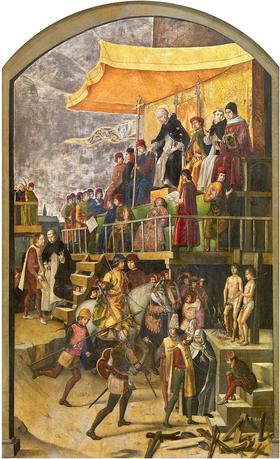 The Inquisition and the use of force against heresyEarly Christian writers said that religion cannot be forced. From the fourth century bishops came to accept the coercion of heretics by the state. In the Middle Ages councils and popes set up inquiries into heresy, handed the condemned to the secular power for punishment, and ordered rulers to force confessions. This timeline gives those texts in date order, and then the Church's later teaching on religious freedom and her requests for pardon.
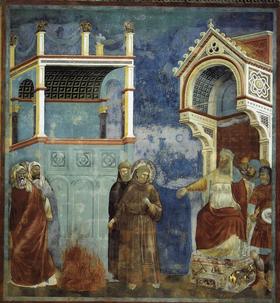 Islam and the one God“The Catholic Church teaches that Islam and Christianity have the same God. But Islam denies that Jesus is the Son of God, and Scripture says that no one who denies the Son has the Father.”
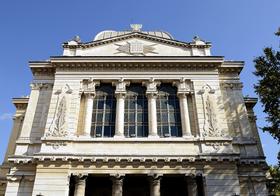 The Church and the Jewish peopleFor many centuries Christians, among them Fathers, councils and popes, spoke of the Jews with contempt and placed them under laws that set them apart: a distinguishing dress, exclusion from public office, forced attendance at sermons, separate quarters. Popes also forbade forced baptism and rejected the charge of ritual murder. This timeline gives those texts in their own words, in date order, and then the Church's own later judgment on that history and her requests for forgiveness.
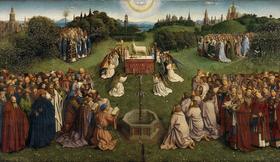 Other religions“The Catholic Church now teaches that all religions are paths to God. Jesus said that he is the way, and that no one comes to the Father except through him.”
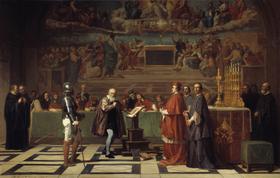 The Galileo caseIn 1616 the Congregation of the Index called the teaching that the earth moves false and contrary to Holy Scripture. In 1633 the cardinals of the Holy Office judged Galileo Galilei vehemently suspected of heresy for holding it, banned his book and sentenced him to prison. This timeline gives what the Church had taught before then about Scripture and the knowledge of nature, the two rulings in their own words, and what the Church has said about them since.