Tradition Timeline Leave an objection

Start page / Scandals

The Inquisition and the use of force against heresy

Each mark is one quotation. Touch the timeline to read it.
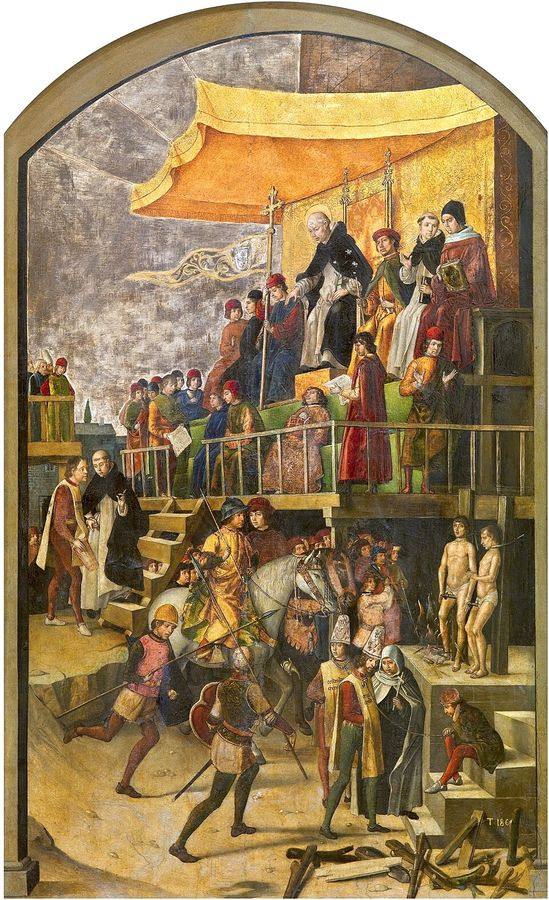
A friar sits enthroned under a canopy on a high platform among judges, while below condemned men stand tied to stakes
St. Dominic Presiding over an Auto-da-fé, by Pedro Berruguete, in the Prado, Madrid, painted for the Dominicans of Ávila in the years of the Spanish Inquisition. Dominic died in 1221, before the Inquisition was set up. Painting: Pedro Berruguete, about 1493 to 1499, Public domain, via Wikimedia Commons. Resized.

Early Christian writers said that religion cannot be forced. From the fourth century bishops came to accept the coercion of heretics by the state. In the Middle Ages councils and popes set up inquiries into heresy, handed the condemned to the secular power for punishment, and ordered rulers to force confessions. This timeline gives those texts in date order, and then the Church's later teaching on religious freedom and her requests for pardon.

Where it starts with Jesus

In the parable of the wheat and the weeds, the servants want to pull up the weeds at once. The master tells them to let both grow until the harvest.

“The servants said to him, ‘Then do you want us to go and gather them?’ But he said, ‘No; lest in gathering the weeds you root up the wheat along with them. Let both grow together until the harvest; and at harvest time I will tell the reapers, Gather the weeds first and bind them in bundles to be burned, but gather the wheat into my barn.’”

Jesus ChristMatthew 13:28-30Read it in the source: Bible Gateway, RSV Catholic Edition

How it points to Jesus

This timeline records how far Christians moved from that patience, and it does not excuse it. Jesus forced no one to believe. The use of force against heresy is measured against his words and his own way of acting.

Drafted from primary sources. Every quotation is checked against the page it links to. The bull Ad extirpanda is quoted from a modern English translation on a fallback host. The decrees that founded the papal, Spanish and Roman inquisitions (Lucius III in 1184, Gregory IX in 1231, Sixtus IV in 1478, Paul III in 1542) are not quoted, because no English text of them was found on an approved host.

18 quotations in date order

A work in progress. The quotations below are not all the evidence on this matter. More are being added.

The Old Testamentbefore Christ
Old Testament
Scripture

The servant who will not break a bruised reed

The prophet Isaiah Isaiah 42:1-4

“Behold my servant, whom I uphold, my chosen, in whom my soul delights; I have put my Spirit upon him, he will bring forth justice to the nations. He will not cry or lift up his voice, or make it heard in the street; a bruised reed he will not break, and a dimly burning wick he will not quench; he will faithfully bring forth justice.”

Read it in the source: Bible Gateway, RSV Catholic Edition

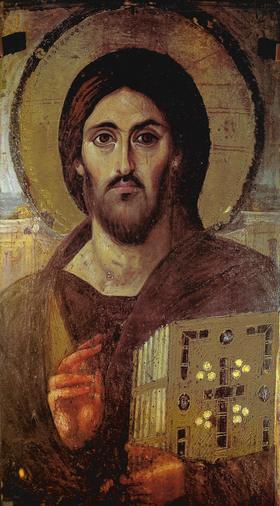
c. 30An ancient painted icon of Christ with a dark beard and a gold halo, his right hand raised in blessing and a jewelled book of the Gospels in his left
Scripture

The parable of the wheat and the weeds

Jesus Christ Matthew 13:28-30

“The servants said to him, ‘Then do you want us to go and gather them?’ But he said, ‘No; lest in gathering the weeds you root up the wheat along with them. Let both grow together until the harvest; and at harvest time I will tell the reapers, Gather the weeds first and bind them in bundles to be burned, but gather the wheat into my barn.’”

Read it in the source: Bible Gateway, RSV Catholic Edition

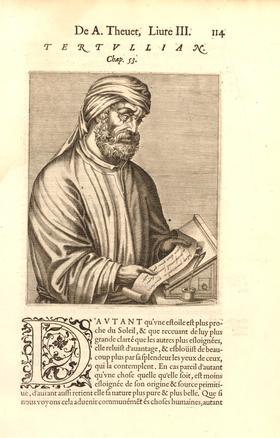
c. 212An engraving of a bearded man in a turban holding a scroll, set in a page of printed French text
Church Father

"It is no part of religion to compel religion"

Tertullian To Scapula, ch. 2

“However, it is a fundamental human right, a privilege of nature, that every man should worship according to his own convictions: one man's religion neither harms nor helps another man. It is assuredly no part of religion to compel religion — to which free-will and not force should lead us — the sacrificial victims even being required of a willing mind.”

Read it in the source: New Advent

c. 310
Church Father

Religion defended "not by putting to death, but by dying"

Lactantius Divine Institutes, Book 5, ch. 20

“There is no occasion for violence and injury, for religion cannot be imposed by force; the matter must be carried on by words rather than by blows, that the will may be affected. … For religion is to be defended, not by putting to death, but by dying; not by cruelty, but by patient endurance; not by guilt, but by good faith … For if you wish to defend religion by bloodshed, and by tortures, and by guilt, it will no longer be defended, but will be polluted and profaned. For nothing is so much a matter of free-will as religion; in which, if the mind of the worshipper is disinclined to it, religion is at once taken away, and ceases to exist.”

Read it in the source: New Advent

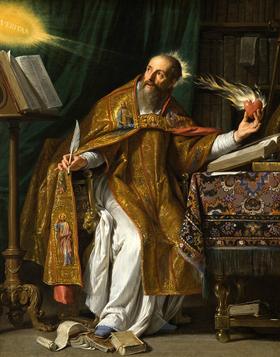
408A bishop in a gold cope sits at a desk with a quill in one hand and a flaming heart in the other, looking up at a burst of light
Church Father

St. Augustine changes his mind and accepts coercion

St. Augustine Letter 93, to Vincentius, no. 17

“I have therefore yielded to the evidence afforded by these instances which my colleagues have laid before me. For originally my opinion was, that no one should be coerced into the unity of Christ, that we must act only by words, fight only by arguments, and prevail by force of reason, lest we should have those whom we knew as avowed heretics feigning themselves to be Catholics. But this opinion of mine was overcome not by the words of those who controverted it, but by the conclusive instances to which they could point. For, in the first place, there was set over against my opinion my own town, which, although it was once wholly on the side of Donatus, was brought over to the Catholic unity by fear of the imperial edicts”

Read it in the source: New Advent

409
Church Father

St. Augustine asks that the Donatists not be put to death

St. Augustine Letter 100, to Donatus the proconsul, nos. 1-2

“It is not their death, but their deliverance from error, that we seek to accomplish by the help of the terror of judges and of laws, whereby they may be preserved from falling under the penalty of eternal judgment … We beg you, therefore, when you are pronouncing judgment in cases affecting the Church, how wicked soever the injuries may be which you shall ascertain to have been attempted or inflicted on the Church, to forget that you have the power of capital punishment, and not to forget our request.”

Read it in the source: New Advent

The Middle Ages800 to 1500
1179
Council

The Third Lateran Council calls for arms against the Cathars

Third Lateran Council Canon 27

“As St. Leo says, though the discipline of the church should be satisfied with the judgment of the priest and should not cause the shedding of blood, yet it is helped by the laws of catholic princes so that people often seek a salutary remedy when they fear that a corporal punishment will overtake them. For this reason, since in Gascony and the regions of Albi and Toulouse and in other places the loathsome heresy of those whom some call the Cathars, others the Patarenes, others the Publicani, and others by different names, has grown so strong … we declare that they and their defenders and those who receive them are under anathema, and we forbid under pain of anathema that anyone should keep or support them in their houses or lands or should trade with them. … Meanwhile we receive under the protection of the church, as we do those who visit the Lord’s sepulchre, those who fired by their faith have taken upon themselves the task of driving out these heretics, and we decree that they should remain undisturbed from all disquiet both in their property and persons.”

Read it in the source: Papal Encyclicals Online

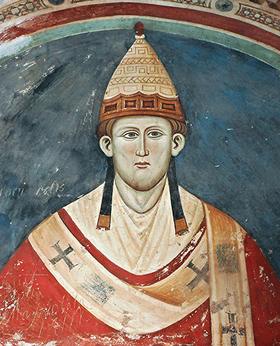
1215A medieval wall painting of a young beardless pope in a tall pointed tiara and a pallium marked with crosses
Council

The Fourth Lateran Council: the condemned handed to the secular power

Fourth Lateran Council Constitution 3, On Heretics

“We condemn all heretics, whatever names they may go under. … Let those condemned be handed over to the secular authorities present, or to their bailiffs, for due punishment. Clerics are first to be degraded from their orders. The goods of the condemned are to be confiscated, if they are lay persons … We add further that each archbishop or bishop, either in person or through his archdeacon or through suitable honest persons, should visit twice or at least once in the year any parish of his in which heretics are said to live. There he should compel three or more men of good repute, or even if it seems expedient the whole neighbourhood, to swear that if anyone knows of heretics there or of any persons who hold secret conventicles or who differ in their life and habits from the normal way of living of the faithful, then he will take care to point them out to the bishop.”

Read it in the source: Papal Encyclicals Online

1252
Magisterium

Ad extirpanda: rulers ordered to force confessions

Pope Innocent IV Bull Ad extirpanda, 15 May 1252, Law 25

“The head of state or ruler must force all the heretics whom he has in custody, … provided he does so without killing them or breaking their arms or legs, as actual robbers and murderers of souls and thieves of the sacraments of God and Christian faith, to confess their errors and accuse other heretics whom they know, and specify their motives, … and those whom they have seduced, and those who have lodged them and defended them, as thieves and robbers of material goods are made to accuse their accomplices and confess the crimes they have committed.”

Read it in the source: Documenta Catholica Omnia

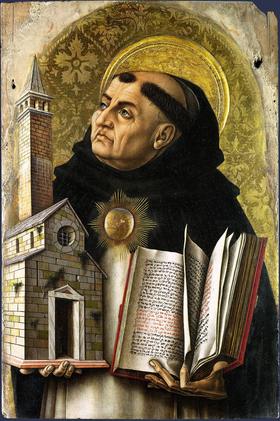
c. 1271A Dominican friar with a tonsure and a gold halo holds an open book and a small church, with a shining sun on his chest
Doctor of the Church

St. Thomas Aquinas defends the death penalty for heresy

St. Thomas Aquinas Summa Theologiae II-II, q. 11, a. 3, I answer that

“On their own side there is the sin, whereby they deserve not only to be separated from the Church by excommunication, but also to be severed from the world by death. For it is a much graver matter to corrupt the faith which quickens the soul, than to forge money, which supports temporal life. Wherefore if forgers of money and other evil-doers are forthwith condemned to death by the secular authority, much more reason is there for heretics, as soon as they are convicted of heresy, to be not only excommunicated but even put to death. On the part of the Church, however, there is mercy which looks to the conversion of the wanderer, wherefore she condemns not at once, but "after the first and second admonition," as the Apostle directs: after that, if he is yet stubborn, the Church no longer hoping for his conversion, looks to the salvation of others, by excommunicating him and separating him from the Church, and furthermore delivers him to the secular tribunal to be exterminated thereby from the world by death.”

Read it in the source: New Advent
1311-1312
Council

The Council of Vienne on abuses by inquisitors

Council of Vienne Decrees, no. 26

“The apostolic see has received many complaints that some inquisitors, appointed by it to suppress heresy, have overstepped the limits of the power given to them. They occasionally so enlarge their authority that what has been wisely provided by the apostolic see for the growth of the faith, oppresses the innocent under pretext of piety and results in harm to the faithful. … The bishop, however, without the inquisitor, or the inquisitor without the diocesan bishop or his officer or the delegate of the chapter when the see is vacant, may not commit to harsh or close imprisonment, which seems more like punishment than custody, or subject anyone to torture or pronounce sentence on anyone, if they can have access to each other within eight days after seeking it”

Read it in the source: Papal Encyclicals Online

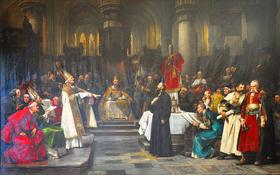
1415A man in a dark robe stands alone in the middle of a hall crowded with seated bishops and cardinals
Council

John Hus handed to the secular court at Constance

Council of Constance Session 15, 6 July 1415, sentence against John Hus

“this holy synod of Constance therefore declares and decrees that the same John Hus is to be deposed and degraded from the order of the priesthood and from the other orders held by him. … This holy synod of Constance, seeing that God’s church has nothing more that it can do, relinquishes John Hus to the judgment of the secular authority and decrees that he is to be relinquished to the secular court.”

Read it in the source: Papal Encyclicals Online

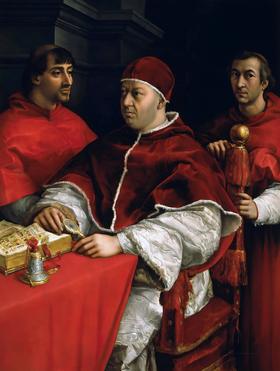
1520A heavy-set pope in a red cap and cape sits at a table with an illuminated book and a magnifying glass, with a cardinal standing on either side
Magisterium

Leo X condemns the proposition that burning heretics is against the Spirit

Pope Leo X Bull Exsurge Domine, 15 June 1520, condemned proposition 33 and the sentence on the propositions

“33. That heretics be burned is against the will of the Spirit. … we condemn, reprobate, and reject completely each of these theses or errors as either heretical, scandalous, false, offensive to pious ears or seductive of simple minds, and against Catholic truth.”

Read it in the source: Papal Encyclicals Online

The Modern Era1800 to today
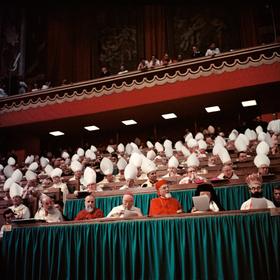
1965Rows of bishops in white mitres and copes sit in tiered stands hung with red and green cloth
Council

Vatican II: "no one is to be coerced into faith"

Second Vatican Council Declaration on Religious Freedom, Dignitatis Humanae, 7 December 1965, no. 12

“In the life of the People of God, as it has made its pilgrim way through the vicissitudes of human history, there has at times appeared a way of acting that was hardly in accord with the spirit of the Gospel or even opposed to it. Nevertheless, the doctrine of the Church that no one is to be coerced into faith has always stood firm.”

Read it in the source: vatican.va

1965
Council

Vatican II: Christ refused to rule by force, as the servant of Isaiah

Second Vatican Council Declaration on Religious Freedom, Dignitatis Humanae, 7 December 1965, no. 11

“But He Himself, noting that the cockle had been sown amid the wheat, gave orders that both should be allowed to grow until the harvest time, which will come at the end of the world. He refused to be a political messiah, ruling by force: He preferred to call Himself the Son of Man, who came "to serve and to give his life as a ransom for the many" (Mark 10:45). He showed Himself the perfect servant of God, who "does not break the bruised reed nor extinguish the smoking flax" (Matt. 12:20).”

Read it in the source: vatican.va

1992
Magisterium

The Catechism on torture in the Church's own tribunals

Catechism of the Catholic Church CCC 2298

“In times past, cruel practices were commonly used by legitimate governments to maintain law and order, often without protest from the Pastors of the Church, who themselves adopted in their own tribunals the prescriptions of Roman law concerning torture. Regrettable as these facts are, the Church always taught the duty of clemency and mercy. She forbade clerics to shed blood. In recent times it has become evident that these cruel practices were neither necessary for public order, nor in conformity with the legitimate rights of the human person. On the contrary, these practices led to ones even more degrading. It is necessary to work for their abolition. We must pray for the victims and their tormentors.”

Read it in the source: vatican.va

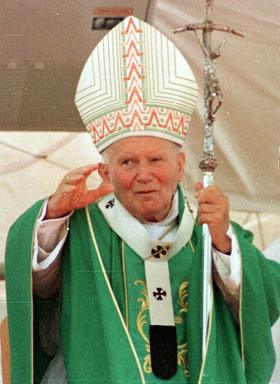
2000An elderly pope in green vestments and a white and gold mitre raises his hand in greeting, holding his staff with the crucifix
Liturgy

The Day of Pardon: sins committed in the service of truth

Pope St. John Paul II Universal Prayer, Confession of Sins and Asking for Forgiveness, Day of Pardon, St. Peter's Basilica, 12 March 2000, part II

“Lord, God of all men and women, in certain periods of history Christians have at times given in to intolerance and have not been faithful to the great commandment of love, sullying in this way the face of the Church, your Spouse. Have mercy on your sinful children and accept our resolve to seek and promote truth in the gentleness of charity, in the firm knowledge that truth can prevail only in virtue of truth itself.”

Read it in the source: vatican.va

2004
Magisterium

John Paul II on the Inquisition

Pope St. John Paul II Letter to Cardinal Roger Etchegaray on the presentation of the volume "L'Inquisizione", 15 June 2004, nos. 1, 3 and 4

“In public opinion, the image of the Inquisition is as it were the symbol of such counter-witness and scandal. How faithful to reality is this image? Before asking for forgiveness it is necessary to have exact knowledge of the facts … The institution of the Inquisition has been abolished. As I had an opportunity to say to the participants in the Symposium, the children of the Church cannot but return with a spirit of repentance to "the acquiescence given, especially in certain centuries, to intolerance and even the use of violence in the service of the truth" … The prayer I addressed to God on that occasion contains the reasons for a request for forgiveness that can also be applied to the tragedies associated with the Inquisition, as well as to the injuries to memory that result from it.”

Read it in the source: vatican.va

Related timelines

Violence in the Church's history“The Catholic Church has murdered more people than any other institution in the history of the world. A church with that much blood on its hands cannot be the Church of Christ.”19 quotations, from the Old Testament to 2018The Church and the Jewish peopleFor many centuries Christians, among them Fathers, councils and popes, spoke of the Jews with contempt and placed them under laws that set them apart: a distinguishing dress, exclusion from public office, forced attendance at sermons, separate quarters. Popes also forbade forced baptism and rejected the charge of ritual murder. This timeline gives those texts in their own words, in date order, and then the Church's own later judgment on that history and her requests for forgiveness.19 quotations, from the Old Testament to 2010The Galileo caseIn 1616 the Congregation of the Index called the teaching that the earth moves false and contrary to Holy Scripture. In 1633 the cardinals of the Holy Office judged Galileo Galilei vehemently suspected of heresy for holding it, banned his book and sentenced him to prison. This timeline gives what the Church had taught before then about Scripture and the knowledge of nature, the two rulings in their own words, and what the Church has said about them since.16 quotations, from the Old Testament to 1992Clergy sexual abuse and the Church's responsePriests, deacons and religious sexually abused children and young people, and in many places bishops and religious superiors knew and moved the abuser, kept it from the police and kept it quiet. This timeline first sets out what happened, in the words of the courts, grand juries and state inquiries that examined it and of the studies the Church herself commissioned. It then gives what the popes and bishops said and did in answer, in date order.61 quotations, from the Old Testament to 2023 to 2024