Tradition Timeline Leave an objection

Start page / Kinds of source

Protestant Writers

All 68 quotations on this site filed under “Protestant”, from every timeline, in date order.

Each mark is one quotation. Touch the timeline to read it.

Why Protestant writers are quoted

The Protestant Reformation began in 1517, when Martin Luther published the Ninety-five Theses. This row gives the Reformers and the confessions of the Protestant bodies in their own words. A fair answer has to begin with what the other side says, so nothing on this row is our summary.

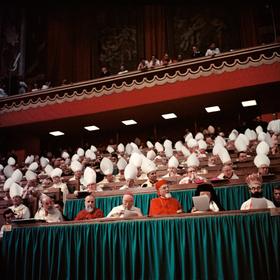
  1. Rows of bishops in white mitres and copes sit in tiered stands hung with red and green cloth

    The Catholic Church does not blame those born into these communities for the separation, and she calls them brothers.

    “But in subsequent centuries much more serious dissensions made their appearance and quite large communities came to be separated from full communion with the Catholic Church - for which, often enough, men of both sides were to blame. The children who are born into these Communities and who grow up believing in Christ cannot be accused of the sin involved in the separation, and the Catholic Church embraces upon them as brothers, with respect and affection. For men who believe in Christ and have been truly baptized are in communion with the Catholic Church even though this communion is imperfect.”

    Second Vatican CouncilUnitatis Redintegratio, 3, 21 November 1964Read it in the source: vatican.va

Where the site has a timeline that gives the Catholic answer, the entry links to it.

Protestantism: all 93 quotations

68 quotations in date order

A work in progress. The quotations below are not all the evidence on this matter. More are being added.

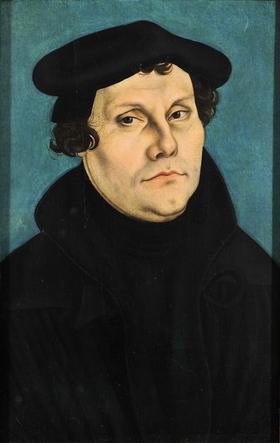
his years as a friarA portrait of a man in a black cap and black gown against a blue-green background
Protestant, Lutheran

A troubled conscience: Luther's own account of his struggle

Martin Luther Preface to the Complete Edition of Luther's Latin Works (1545)

“But I, blameless monk that I was, felt that before God I was a sinner with an extremely troubled conscience. I couldn't be sure that God was appeased by my satisfaction. I did not love, no, rather I hated the just God who punishes sinners. In silence, if I did not blaspheme, then certainly I grumbled vehemently and got angry at God.”

Read it in the source: Fordham Sourcebook

See it on the timeline: Protestantism

early 1514
Protestant, Lutheran

Before indulgences: Luther on disorder at home in the Church

Martin Luther Letter to George Spalatin, January or February 1514

“I often regret and deplore that we Christians have begun to be wise abroad and fools at home. A hundred times worse blasphemies than this exist in the very streets of Jerusalem, and the high places are filled with spiritual idols. We ought to show our excessive zeal in removing these offences which are our real, intestine enemies.”

Read it in the source: Fordham Sourcebook

See it on the timeline: Protestantism

8 April 1516
Protestant, Lutheran

Before indulgences: "Thou, Lord Jesus, art my righteousness"

Martin Luther Letter to a fellow Augustinian, Brother George, 8 April 1516

“Now I would like to know whether your soul, tired of her own righteousness, would learn to breathe and confide in the righteousness of Christ. … Therefore, my sweet brother, learn Christ and him crucified; learn to pray to him despairing Of Yourself, saying: Thou, Lord Jesus, art my righteousness, but I am thy sin; thou has taken on thyself what thou wast not, and hast given to me what I was not. Beware of aspiring to such purity that you will not wish to seem to Yourself, or to be, a sinner. For Christ only dwells in sinners.”

Read it in the source: Fordham Sourcebook

See it on the timeline: Protestantism

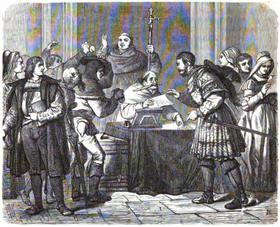
31 October 1517A black and white engraving of a friar at a table with a money chest, surrounded by soldiers and townspeople
Protestant, Lutheran

The indulgence for St. Peter's: what Luther says the people were led to believe

Martin Luther Letter to Albrecht, Archbishop of Mainz, 31 October 1517

“Papal indulgences for the building of St. Peter's are circulating under your most distinguished name, and as regards them, I do not bring accusation against the outcries of the preachers, which I have not heard, so much as I grieve over the wholly false impressions which the people have conceived from them; to wit, -- the unhappy souls believe that if they have purchased letters of indulgence they are sure of their salvation; again, that so soon as they cast their contributions into the money-box, souls fly out of purgatory”

Read it in the source: Fordham Sourcebook

See it on the timeline: Protestantism

31 October 1517
Protestant, Lutheran

Luther's complaint about the archbishop's instruction to the preachers

Martin Luther Letter to Albrecht, Archbishop of Mainz, 31 October 1517

“it is the first and the sole duty of all bishops that the people should learn the Gospel and the love of Christ … it is said in the Instruction to the Commissaries which is issued under your name, Most Reverend Father (doubtless without your knowledge and consent), that one of the chief graces of indulgence is that inestimable gift of God by which man is reconciled to God, and all the penalties of purgatory are destroyed. Again, it is said that contrition is not necessary in those who purchase souls … or buy confessionalia.”

Read it in the source: Fordham Sourcebook

See it on the timeline: Protestantism

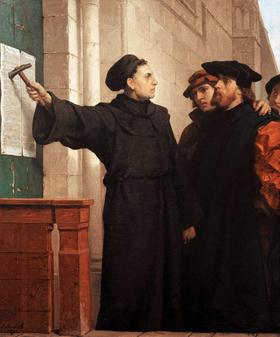
31 October 1517A friar in a black habit nails a paper to a church door with a hammer while onlookers watch
Protestant, Lutheran

The Ninety-five Theses: repentance, and the limits of the pope's pardon

Martin Luther Ninety-five Theses, theses 1 and 5

“When our Lord and Master Jesus Christ said, "Repent" (Mt 4:17), he willed the entire life of believers to be one of repentance. … The pope neither desires nor is able to remit any penalties except those imposed by his own authority or that of the canons.”

Read it in the source: Fordham Sourcebook

See it on the timeline: Protestantism

31 October 1517
Protestant, Lutheran

The Ninety-five Theses: against the indulgence preachers

Martin Luther Ninety-five Theses, theses 21, 27 and 32

“Thus those indulgence preachers are in error who say that a man is absolved from every penalty and saved by papal indulgences. … They preach only human doctrines who say that as soon as the money clinks into the money chest, the soul flies out of purgatory. … Those who believe that they can be certain of their salvation because they have indulgence letters will be eternally damned, together with their teachers.”

Read it in the source: Fordham Sourcebook

See it on the timeline: Protestantism

31 October 1517
Protestant, Lutheran

The Ninety-five Theses: what Christians are to be taught

Martin Luther Ninety-five Theses, theses 36, 43, 71 and 72

“Any truly repentant Christian has a right to full remission of penalty and guilt, even without indulgence letters. … Christians are to be taught that he who gives to the poor or lends to the needy does a better deed than he who buys indulgences. … Let him who speaks against the truth concerning papal indulgences be anathema and accursed. … But let him who guards against the lust and license of the indulgence preachers be blessed.”

Read it in the source: Fordham Sourcebook

See it on the timeline: Protestantism

31 October 1517
Protestant, Lutheran

The Ninety-five Theses: the questions of the laity

Martin Luther Ninety-five Theses, theses 81 and 86

“This unbridled preaching of indulgences makes it difficult even for learned men to rescue the reverence which is due the pope from slander or from the shrewd questions of the laity. … "Why does not the pope, whose wealth is today greater than the wealth of the richest Crassus, build this one basilica of St. Peter with his own money rather than with the money of poor believers?"”

Read it in the source: Fordham Sourcebook

See it on the timeline: Protestantism

1519, by Luther's accountA portrait of a man in a black cap and black gown against a blue-green background
Protestant, Lutheran

Luther's account of how his struggle ended: "the just person lives by faith"

Martin Luther Preface to the Complete Edition of Luther's Latin Works (1545)

“I meditated night and day on those words until at last, by the mercy of God, I paid attention to their context: "The justice of God is revealed in it, as it is written: 'The just person lives by faith.'" I began to understand that in this verse the justice of God is that by which the just person lives by a gift of God, that is by faith. … All at once I felt that I had been born again and entered into paradise itself through open gates.”

Read it in the source: Fordham Sourcebook

See it on the timeline: Protestantism

August 1520
Protestant, Lutheran

No ordained priesthood apart from all believers

Martin Luther To the Christian Nobility of the German Nation, The First Wall

“…all Christians are truly of the Spiritual Estate, and there is no difference among them, save of office alone. … Thus we are all consecrated as priests by baptism, as St. Peter says: "Ye are a royal priesthood, a holy nation" (1 Peter ii. 9)”

Read it in the source: CCEL

See it on the timeline: Protestantism

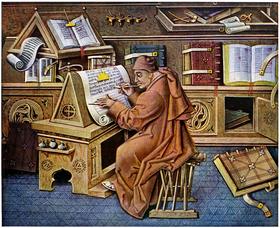
August 1520A manuscript painting of a man in a brown robe writing at a sloping desk in a room full of books
Protestant, Lutheran

Scripture judged by each believer, not by the pope

Martin Luther To the Christian Nobility of the German Nation, The Second Wall

“Therefore it is a wickedly devised fable, and they cannot quote a single letter to confirm it, that it is for the Pope alone to interpret the Scriptures or to confirm the interpretation of them … we should boldly judge what they do and what they leave undone, by our own understanding of the Scriptures, and force them to follow the better understanding, and not their own.”

Read it in the source: CCEL

See it on the timeline: Protestantism

August 1520A portrait of a man in a black cap and black gown against a blue-green background
Protestant, Lutheran

Clergy free to marry

Martin Luther To the Christian Nobility of the German Nation, Twenty-seven Articles, article 14

“Therefore, we teach clearly according to the Apostle, that every town should elect a pious learned citizen from the congregation and charge him with the office of minister; the congregation should support him and he should be left at liberty to marry or not. … My advice is, to restore liberty, and to leave every man free to marry or not to marry.”

Read it in the source: CCEL

See it on the timeline: Protestantism

October 1520
Protestant, Lutheran

No sacrifice in the Mass

Martin Luther On the Babylonish Captivity of the Church, Concerning the Lord's Supper

“We must also get rid of another scandal, which is a much greater and a very specious one; that is, that the mass is universally believed to be a sacrifice offered to God. … Unless we hold the mass to be the promise or testament of Christ, according to the plain meaning of the words, we lose all the gospel and our whole comfort. Let us allow nothing to prevail against those words, even if an angel from heaven taught us otherwise. Now in these words there is nothing about a work or sacrifice.”

Read it in the source: CCEL

See it on the timeline: Protestantism

November 1520
Protestant, Lutheran

Faith alone

Martin Luther Concerning Christian Liberty

“Hence it is clear that, as the soul needs the word alone for life and justification, so it is justified by faith alone and not by any works. For if it could be justified by any other means, it would have no need of the word, nor consequently of faith.”

Read it in the source: CCEL

See it on the timeline: Protestantism

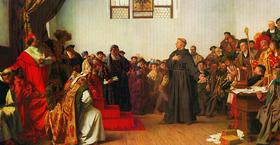
18 April 1521A friar in black stands speaking in the middle of a crowded hall, facing the young emperor on his throne
Protestant, Lutheran

Luther at the Diet of Worms

Martin Luther Answer before the Emperor Charles V at the Diet of Worms, as translated in Schaff, History of the Christian Church, vol. 7, § 55

“Unless I am refuted and convicted by testimonies of the Scriptures or by clear arguments (since I believe neither the Pope nor the Councils alone; it being evident that they have often erred and contradicted themselves), I am conquered by the Holy Scriptures quoted by me, and my conscience is bound in the word of God: I can not and will not recant any thing, since it is unsafe and dangerous to do any thing against the conscience.”

Read it in the source: CCEL

See it on the timeline: Protestantism

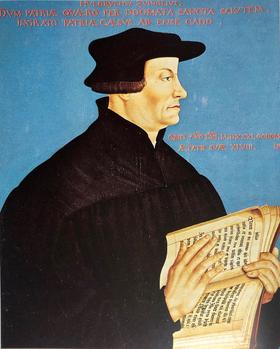
January 1523A man in profile in a black cap and gown, holding an open book, against a blue background
Protestant, Reformed

The Mass as a memorial, not a sacrifice

Ulrich Zwingli The Sixty-seven Articles, article 18

“Christ, who offered himself once on the cross, is the sacrifice and victim that makes satisfaction for ever for the sins of all the faithful. From this it follows that the Mass is not a sacrifice, but a commemoration of the sacrifice offered once on the cross and, as it were, a seal of the redemption through Christ …”

Our translation. The words as written, in Latin:

“Christus qui sese semel in cruce obtulit hostia est et victima satisfaciens in æternum pro peccatis omnium fidelium. Ex quo colligitur, missam non esse sacrificium, sed sacrificii in cruce semel oblati commemorationem et quasi sigillum redemptionis per Christum …”

Read it in the source: CCEL

See it on the timeline: Protestantism

January 1523
Protestant, Reformed

No prayer to the saints

Ulrich Zwingli The Sixty-seven Articles, article 20

“God gives us all things through Christ and in the name of Christ. From this it follows that outside this life we need no intercessor but Christ.”

Our translation. The words as written, in Latin:

“Omnia nobis per Christum et in nomine Christi præstat Deus. Hinc sequitur, nobis extra hanc vitam intercessore præter Christum nullo opus esse.”

Read it in the source: CCEL

See it on the timeline: Protestantism

January 1523
Protestant, Reformed

No purgatory

Ulrich Zwingli The Sixty-seven Articles, article 57

“Holy Scripture knows of no purgatory after this life.”

Our translation. The words as written, in Latin:

“Scriptura sacra purgatorium post hanc vitam nullum novit.”

Read it in the source: CCEL

See it on the timeline: Protestantism

January 1528
Protestant, Reformed

The Lord's Supper without a bodily presence

Berthold Haller and Franz Kolb, revised by Ulrich Zwingli The Ten Theses of Berne, thesis 4

“That the body and blood of Christ are received essentially and bodily in the bread of the Eucharist cannot be shown from Holy Scripture.”

Our translation. The words as written, in Latin:

“Quod corpus et sanguis Christi essentialiter et corporaliter in pane Eucharistiæ percipiatur, ex Scriptura Sacra non potest demonstrari.”

Read it in the source: CCEL

See it on the timeline: Protestantism

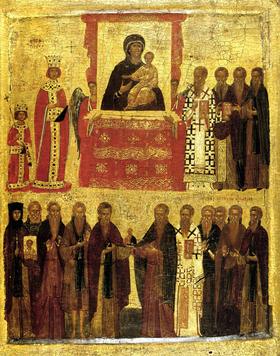
January 1528A gold icon in two rows: above, an image of the Virgin and Child on a stand between an empress and a patriarch; below, a line of saints holding icons
Protestant, Reformed

Images removed from churches

Berthold Haller and Franz Kolb, revised by Ulrich Zwingli The Ten Theses of Berne, thesis 8

“To make images for worship is contrary to the Word of God contained in the books of the Old and New Testament. Therefore, where they are set up with danger of being adored, they are to be removed.”

Our translation. The words as written, in Latin:

“Imagines fabricare cultus gratia, Dei Verbo, Veteris et Novi Testamenti libris comprehenso repugnat. Idcirco si sub periculo adorationis proponantur, abolendæ.”

Read it in the source: CCEL

See it on the timeline: Protestantism

October 1529A portrait of a man in a black cap and black gown against a blue-green background
Protestant, Lutheran

The Reformers divided on the Lord's Supper

Martin Luther, Ulrich Zwingli and the other theologians at Marburg The Marburg Articles, article 15

“…the sacrament of the altar is the sacrament of the very body and very blood of Jesus Christ; and that the spiritual manducation of this body and blood is specially necessary to every true Christian. … And although at present we are not agreed on the question whether the real body and blood of Christ are corporally present in the bread and wine, yet both parties shall cherish Christian charity for one another, so far as the conscience of each will permit”

Read it in the source: CCEL

See it on the timeline: Protestantism

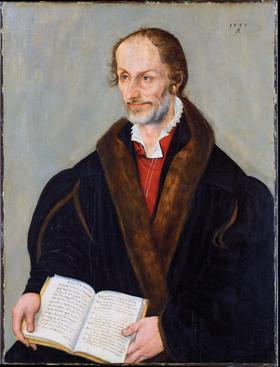
1530A thin man with a short beard, in a fur-collared black gown, holding an open book
Protestant, Lutheran

The Lutheran confession rejects the denial of the presence

Philip Melanchthon and the Lutheran princes Augsburg Confession, Article 10

“Of the Supper of the Lord they teach that the [true] body and blood of Christ are truly present [under the form of bread and wine], and are [there] communicated to those that eat in the Lord's Supper [and receive]. And they disapprove of those that teach otherwise [wherefore also the opposite doctrine is rejected].”

Read it in the source: CCEL

See it on the timeline: Protestantism

1530
Protestant, Lutheran

Protestants divided: baptism necessary for salvation, in the Lutheran confession

Philip Melanchthon and the Lutheran princes Augsburg Confession, Article 9

“Of Baptism they teach that it is necessary to salvation, and that by Baptism the grace of God is offered, and that children are to be baptized, who by Baptism, being offered to God, are received into God's favor.”

Read it in the source: CCEL

See it on the timeline: Protestantism

1530
Protestant, Lutheran

Protestants divided: who may minister. The Lutheran confession requires a regular call

Philip Melanchthon and the Lutheran princes Augsburg Confession, Article 14

“…they teach that no man should publicly … in the Church teach, or administer the Sacraments, except he be rightly called [without a regular call].”

Read it in the source: CCEL

See it on the timeline: Protestantism

1530
Protestant, Lutheran

Baptism for believers only, as the Lutherans recorded it

Philip Melanchthon and the Lutheran princes Augsburg Confession, Article 9

“They condemn the Anabaptists who allow not the Baptism of children, and affirm that children are saved without Baptism.”

Read it in the source: CCEL

See it on the timeline: Protestantism

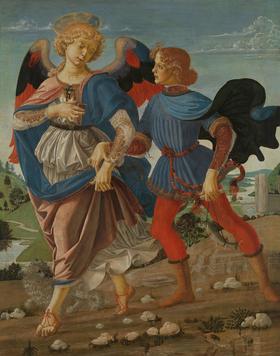
1534A boy carrying a fish walks arm in arm with a winged angel, with a small dog at their feet
Protestant, Lutheran

The seven books: Luther's German Bible prints them apart as "Apocrypha"

Martin Luther German Bible of 1534, heading of the Apocrypha, as translated in Schaff, History of the Christian Church, vol. 7, § 62

“books not equal to the Holy Scriptures, yet useful and good to read”

Read it in the source: CCEL

See it on the timeline: Protestantism

undated; printed 1566
Protestant, Lutheran

Why the seven books were set apart: Luther's own judgments on them

Martin Luther, as written down by his table companions Table Talk, Of God's Word, XXIV (translated by William Hazlitt)

“The author of the book of Ecclesiasticus preaches the law well, but he is no prophet. … The book of Judith is not a history. It accords not with geography. I believe it is a poem, like the legends of the saints … I take the book of Tobit to be a comedy concerning women, an example for house-government. I am so great an enemy to the second book of the Maccabees, and to Esther, that I wish they had not come to us at all, for they have too many heathen unnaturalities.”

Read it in the source: CCEL

See it on the timeline: Protestantism

1537A manuscript painting of a man in a brown robe writing at a sloping desk in a room full of books
Protestant, Lutheran

Scripture alone

Martin Luther Smalcald Articles, Part II, Article II, Of the Mass

“For it will not do to frame articles of faith from the works or words of the holy Fathers … The rule is: The Word of God shall establish articles of faith, and no one else, not even an angel.”

Read it in the source: CCEL

See it on the timeline: Protestantism

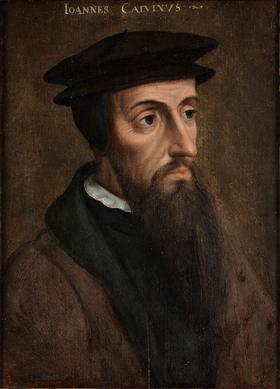
1559A man with a long dark beard in a black cap and a fur-collared gown, seen in three-quarter profile
Protestant, Reformed

The rock as Peter's confession, used against the papal office

John Calvin Institutes of the Christian Religion 4.6.6

“…how futilely those argue who, out of the mere name of Peter, would rear up a governing power over the whole Church. … Peter had confessed in his own name, and that of his brethren, that Christ was the Son of God (Mt. 16:16). On this rock Christ builds his Church, because it is the only foundation; as Paul says, "Other foundation than this can no man lay" (1 Cor. 3:11).”

Read it in the source: CCEL

See it on the timeline: Protestantism

1559
Protestant, Reformed

The elect cannot lose salvation ("once saved, always saved")

John Calvin Institutes of the Christian Religion 3.24.6

“But Christ has freed us from anxiety on this head; for the following promises undoubtedly have respect to the future … Again, when he declares, "Every plant which my heavenly Father has not planted shall be rooted up," (Mt. 15:13), he intimates conversely that those who have their root in God can never be deprived of their salvation.”

Read it in the source: CCEL

See it on the timeline: Protestantism

1561A boy carrying a fish walks arm in arm with a winged angel, with a small dog at their feet
Protestant, Reformed

The seven books: a Reformed confession lists them as apocryphal

Guido de Brès Belgic Confession, Article 6

“We distinguish between these holy books and the apocryphal ones, which are the third and fourth books of Esdras; the books of Tobit, Judith, Wisdom, Jesus Sirach, Baruch … and the two books of Maccabees. The church may certainly read these books and learn from them as far as they agree with the canonical books. But they do not have such power and virtue that one could confirm from their testimony any point of faith or of the Christian religion.”

Read it in the source: Fordham Sourcebook

See it on the timeline: Protestantism

1571
Protestant, Anglican

The seven books: the Church of England reads them but proves no doctrine from them

Church of England Thirty-nine Articles of Religion, Article 6

“And the other Books (as Hierome saith) the Church doth read for example of life and instruction of manners; but yet doth it not apply them to establish any doctrine; such are these following: … The Book of Tobias, The Book of Judith, The rest of the Book of Esther, The Book of Wisdom, Jesus the Son of Sirach, Baruch the Prophet, … The First Book of Maccabees, The Second Book of Maccabees.”

Read it in the source: Fordham Sourcebook

See it on the timeline: Protestantism

1647
Protestant, Reformed

The seven books: the Westminster Confession gives them no authority in the church

Westminster Assembly of Divines Westminster Confession of Faith, ch. 1, Of the Holy Scripture, III

“The books commonly called Apocrypha, not being of divine inspiration, are no part of the Canon of the Scripture; and therefore are of no authority in the Church of God, nor to be any otherwise approved, or made use of, than other human writings.”

Read it in the source: CCEL

See it on the timeline: Protestantism

1675
Protestant, Quaker

Protestants divided: ministers need no human commission, in the Quaker propositions

Robert Barclay Theses Theologicae (the Confession of the Society of Friends), Tenth Proposition, Concerning the Ministry

“Moreover, those who have this authority may and ought to preach the gospel, though without human commission or literature; as, on the other hand, those who want the authority of this divine gift, however learned or authorized by the commissions of men and churches, are to be esteemed but as deceivers, and not true ministers of the gospel.”

Read it in the source: CCEL

See it on the timeline: Protestantism

1675
Protestant, Quaker

Protestants divided: no water baptism, in the Quaker propositions

Robert Barclay Theses Theologicae (the Confession of the Society of Friends), Twelfth Proposition, Concerning Baptism

“And this baptism is a pure and spiritual thing, to wit, the baptism of the Spirit and Fire, by which we are buried with him, that, being washed and purged from our sins, we may 'walk in newness of life;' of which the baptism of John was a figure, which was commanded for a time, and not to continue forever. … As to the baptism of infants, it is a mere human tradition, for which neither precept nor practice is to be found in all the Scripture.”

Read it in the source: CCEL

See it on the timeline: Protestantism

1677
Protestant, Baptist

Baptism as a sign, for believers only

Particular Baptist churches of London Second London Confession (printed by Schaff as the Baptist Confession of 1688), Of Baptism, 1-2

“Baptism is an ordinance of the New Testament ordained by Jesus Christ to be unto the party baptized a sign of his fellowship with him in his death and resurrection; of his being engrafted into him; of remission of sins; and of his giving up unto God, through Jesus Christ, to live and walk in newness of life. 2. Those who do actually profess repentance towards God, faith in and obedience to our Lord Jesus, are the only proper subjects of this ordinance.”

Read it in the source: CCEL

See it on the timeline: Protestantism

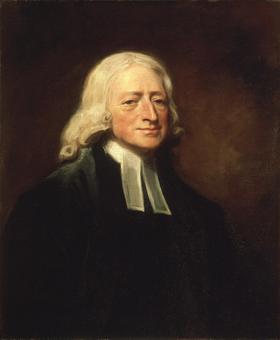
1784An old man with long white hair in a black gown with white preaching bands
Protestant, Methodist

Protestants divided: grace can be lost, in the Methodist articles

John Wesley Methodist Articles of Religion, Article 12, Of Sin after Justification

“Wherefore, the grant of repentance is not to be denied to such as fall into sin after justification: after we have received the Holy Ghost, we may depart from grace given, and fall into sin, and, by the grace of God, rise again …”

Read it in the source: CCEL

See it on the timeline: Protestantism

The Modern Era1800 to today
2000
Protestant, Baptist

Protestants divided today: true believers will never fall away, in the Southern Baptist confession

Southern Baptist Convention The Baptist Faith and Message 2000, Article V, God's Purpose of Grace

“All true believers endure to the end. Those whom God has accepted in Christ, and sanctified by His Spirit, will never fall away from the state of grace, but shall persevere to the end.”

Read it in the source: bfm.sbc.net

See it on the timeline: Protestantism

2000, amended 2023
Protestant, Baptist

Protestants divided today: the office of pastor limited to men, in the Southern Baptist confession

Southern Baptist Convention The Baptist Faith and Message 2000, Article VI, The Church

“Its two scriptural offices are that of pastor/elder/overseer and deacon. While both men and women are gifted for service in the church, the office of pastor/elder/overseer is limited to men as qualified by Scripture.”

Read it in the source: bfm.sbc.net

See it on the timeline: Protestantism

2000
Protestant, Baptist

Protestants divided today: marriage as one man and one woman, in the Southern Baptist confession

Southern Baptist Convention The Baptist Faith and Message 2000, Article XVIII, The Family

“Marriage is the uniting of one man and one woman in covenant commitment for a lifetime. It is God’s unique gift to reveal the union between Christ and His church and to provide for the man and the woman in marriage the framework for intimate companionship, the channel of sexual expression according to biblical standards, and the means for procreation of the human race.”

Read it in the source: bfm.sbc.net

See it on the timeline: Protestantism

2005
Protestant

Protestants divided today: marriage for couples regardless of gender, in the United Church of Christ

General Synod of the United Church of Christ Resolution In Support of Equal Marriage Rights for All, Twenty-fifth General Synod, Atlanta, 2005

“THEREFORE LET IT BE RESOLVED, that the Twenty-fifth General Synod of the United Church of Christ affirms equal marriage rights for couples regardless of gender and declares that the government should not interfere with couples regardless of gender who choose to marry and share fully and equally in the rights, responsibilities and commitment of legally recognized marriage … LET IT BE FURTHER RESOLVED, that the Twenty-fifth General Synod calls upon congregations, after prayerful biblical, theological, and historical study, to consider adopting Wedding Policies that do not discriminate against couples based on gender”

Read it in the source: ucc.org

See it on the timeline: Protestantism

30 June 2015
Protestant

Protestants divided today: gender identity and gender expression, in the United Church of Christ

General Synod of the United Church of Christ Resolution Reaffirming Our Commitment to Full Equality for Persons of Any Sexual Orientation, Gender Identity or Gender Expression, Thirtieth General Synod, Cleveland, 30 June 2015

“WHEREAS, General Synod and other settings of the United Church of Christ have repeatedly advocated for the equal rights and dignity of lesbian, gay, bisexual and transgender persons (LGBT) in the United States and abroad … THEREFORE BE IT RESOLVED that the Thirtieth General Synod of the United Church of Christ reaffirms its commitment to the full legal protection of the civil rights of all persons regardless of sexual orientation or gender identity and expression”

Read it in the source: ucc.org

See it on the timeline: Protestantism

2024
Protestant, Methodist

Protestants divided today: the United Methodist Church changes its teaching on homosexuality and marriage

Burton Edwards, for Ask The UMC, the United Methodist Information Service Ask The UMC, What's new in the Book of Discipline, Part 5: Human Sexuality, on the 2024 General Conference

“The Revised Social Principles approved by the 2024 General Conference took two substantial steps away from the position first declared in 1972 that “the practice of homosexuality is incompatible with Christian teaching.” Not only is that phrase no longer part of the Social Principles, but no mention of homosexuality is to be found there at all. … On marriage, the Revised Social Principles make this statement: “Within the church, we affirm marriage as a sacred, lifelong covenant that brings two people of faith, an adult man and woman of consenting age or two adult persons of consenting age, into union with one another and into deeper relationship with God and the religious community” (Paragraph 162.D).”

Read it in the source: umc.org

See it on the timeline: Protestantism
TodayA thin man with a short beard, in a fur-collared black gown, holding an open book
Protestant, Lutheran

How is a person saved? The Lutheran answer

Philip Melanchthon and the Lutheran princes Augsburg Confession (1530), Article 4, Of Justification

“Also they teach that men can not be justified [obtain forgiveness of sins and righteousness] before God by their own powers, merits, or works; but are justified freely [of grace] for Christ's sake through faith, when they believe that they are received into favor, and their sins forgiven for Christ's sake, who by his death hath satisfied for our sins.”

Read it in the source: CCEL

See it on the timeline: Protestantism
Today
Protestant, Lutheran

Scripture: the Lutheran teaching

The authors of the Formula of Concord Formula of Concord (1576), Epitome, Of the Compendious Rule and Norm, I

“But other writings, whether of the fathers or of the moderns, with whatever name they come, are in nowise to be equalled to the Holy Scriptures, but are all to be esteemed inferior to them, so that they be not otherwise received than in the rank of witnesses, to show what doctrine was taught after the Apostles' times also, and in what parts of the world that more sound doctrine of the Prophets and Apostles has been preserved.”

Read it in the source: CCEL

See it on the timeline: Protestantism
TodayA portrait of a man in a black cap and black gown against a blue-green background
Protestant, Lutheran

Baptism: the Lutheran teaching

Martin Luther Small Catechism (1529), Part IV, The Sacrament of Holy Baptism, II

“It worketh forgiveness of sins, delivers from death and the devil, and gives everlasting salvation to all who believe, as the Word and promise of God declare.”

Read it in the source: CCEL

See it on the timeline: Protestantism
Today
Protestant, Lutheran

The Lord's Supper: the Lutheran teaching

Martin Luther Small Catechism (1529), Part V, The Sacrament of the Altar

“It is the true body and blood of our Lord Jesus Christ, under the bread and wine, given unto us Christians to eat and to drink, as it was instituted by Christ himself.”

Read it in the source: CCEL

See it on the timeline: Protestantism
TodayA crowded panelled chamber of men in black gowns and white collars, one of them standing to speak
Protestant, Reformed

How is a person saved? The Reformed and Presbyterian answer

Westminster Assembly of Divines Westminster Confession of Faith (1647), ch. 3, Of God's Eternal Decree, VI and VII

“Neither are any other redeemed by Christ, effectually called, justified, adopted, sanctified, and saved, but the elect only. … The rest of mankind God was pleased, according to the unsearchable counsel of his own will, whereby he extendeth or withholdeth mercy as he pleaseth, for the glory of his sovereign power over his creatures, to pass by, and to ordain them to dishonor and wrath for their sin, to the praise of his glorious justice.”

Read it in the source: CCEL

See it on the timeline: Protestantism
Today
Protestant, Reformed

Scripture: the Reformed and Presbyterian teaching

Westminster Assembly of Divines Westminster Confession of Faith (1647), ch. 1, Of the Holy Scripture, VI

“The whole counsel of God, concerning all things necessary for his own glory, man's salvation, faith, and life, is either expressly set down in Scripture, or by good and necessary consequence may be deduced from Scripture: unto which nothing at any time is to be added, whether by new revelations of the Spirit, or traditions of men.”

Read it in the source: CCEL

See it on the timeline: Protestantism
Today
Protestant, Reformed

Baptism: the Reformed and Presbyterian teaching

Westminster Assembly of Divines Westminster Confession of Faith (1647), ch. 28, Of Baptism, V

“Although it be a great sin to contemn or neglect this ordinance, … yet grace and salvation are not so inseparably annexed unto it, as that no person can be regenerated or saved without it, … or that all that are baptized are undoubtedly regenerated.”

Read it in the source: CCEL

See it on the timeline: Protestantism
Today
Protestant, Reformed

The Lord's Supper: the Reformed and Presbyterian teaching

Westminster Assembly of Divines Westminster Confession of Faith (1647), ch. 29, Of the Lord's Supper, VII

“Worthy receivers, outwardly partaking of the visible elements in this sacrament, … do then also inwardly by faith, really and indeed, yet not carnally and corporally, but spiritually, receive and feed upon Christ crucified, and all benefits of his death: the body and blood of Christ being then not corporally or carnally in, with, or under the bread and wine; yet as really, but spiritually, present to the faith of believers in that ordinance, as the elements themselves are, to their outward senses.”

Read it in the source: CCEL

See it on the timeline: Protestantism
Today
Protestant, Anglican

How is a person saved? The Anglican answer

Church of England Thirty-nine Articles of Religion (1571), Article 11, Of the Justification of Man

“We are accounted righteous before God, only for the merit of our Lord and Saviour Jesus Christ by Faith, and not for our own works or deservings. Wherefore, that we are justified by Faith only, is a most wholesome Doctrine, and very full of comfort, as more largely expressed in the Homily of Justification.”

Read it in the source: Fordham Sourcebook

See it on the timeline: Protestantism
Today
Protestant, Anglican

Scripture: the Anglican teaching

Church of England Thirty-nine Articles of Religion (1571), Article 6, Of the Sufficiency of the Holy Scriptures for Salvation

“Holy Scripture containeth all things necessary to salvation: so that whatsoever is not read therein, nor may be proved thereby, is not to be required of any man, that it should be believed as an article of the Faith, or be thought requisite or necessary to salvation.”

Read it in the source: Fordham Sourcebook

See it on the timeline: Protestantism
Today
Protestant, Anglican

Baptism: the Anglican teaching

Church of England Thirty-nine Articles of Religion (1571), Article 27, Of Baptism

“Baptism is not only a sign of profession, and mark of difference, whereby Christian men are discerned from others that be not christened, but it is also a sign of Regeneration or New-Birth, whereby, as by an instrument, they that receive Baptism rightly are grafted into the Church … The Baptism of young Children is in any wise to be retained in the Church, as most agreeable with the institution of Christ.”

Read it in the source: Fordham Sourcebook

See it on the timeline: Protestantism
Today
Protestant, Anglican

The Lord's Supper: the Anglican teaching

Church of England Thirty-nine Articles of Religion (1571), Article 28, Of the Lord's Supper

“Transubstantiation (or the change of the substance of Bread and Wine) in the Supper of the Lord, cannot be proved by Holy Writ; but is repugnant to the plain words of Scripture, overthroweth the nature of a Sacrament, and hath given occasion to many superstitions. The Body of Christ is given, taken, and eaten, in the Supper, only after an heavenly and spiritual manner. And the mean whereby the Body of Christ is received and eaten in the Supper, is Faith.”

Read it in the source: Fordham Sourcebook

See it on the timeline: Protestantism
TodayAn old man with long white hair in a black gown with white preaching bands
Protestant, Methodist

How is a person saved? The Methodist answer

John Wesley Methodist Articles of Religion (1784), Article 9, Of the Justification of Man

“We are accounted righteous before God only for the merit of our Lord and Saviour Jesus Christ by faith, and not for our own works or deservings. Wherefore, that we are justified by faith only is a most wholesome doctrine, and very full of comfort.”

Read it in the source: CCEL

See it on the timeline: Protestantism

Today
Protestant, Methodist

Scripture: the Methodist teaching

John Wesley Methodist Articles of Religion (1784), Article 5, The Sufficiency of the Holy Scriptures for Salvation

“The Holy Scriptures contain all things necessary to salvation; so that whatsoever is not read therein, nor may be proved thereby, is not to be required of any man that it should be believed as an article of faith, or be thought requisite or necessary to salvation.”

Read it in the source: CCEL

See it on the timeline: Protestantism

Today
Protestant, Methodist

Baptism: the Methodist teaching

John Wesley Methodist Articles of Religion (1784), Article 17, Of Baptism

“Baptism is not only a sign of profession, and mark of difference, whereby Christians are distinguished from others that are not baptized; but it is also a sign of regeneration, or the new birth. The baptism of young children is to be retained in the Church.”

Read it in the source: CCEL

See it on the timeline: Protestantism

Today
Protestant, Methodist

The Lord's Supper: the Methodist teaching

John Wesley Methodist Articles of Religion (1784), Article 18, Of the Lord's Supper

“Transubstantiation, or the change of the substance of bread and wine in the Supper of our Lord, can not be proved by Holy Writ, but is repugnant to the plain words of Scripture, overthroweth the nature of a sacrament, and hath given occasion to many superstitions. The body of Christ is given, taken, and eaten in the Supper only after a heavenly and spiritual manner. And the means whereby the body of Christ is received and eaten in the Supper is faith.”

Read it in the source: CCEL

See it on the timeline: Protestantism

Today
Protestant, Baptist

How is a person saved? The Southern Baptist answer

Southern Baptist Convention The Baptist Faith and Message 2000, Article IV, Salvation

“Salvation involves the redemption of the whole man, and is offered freely to all who accept Jesus Christ as Lord and Saviour, who by His own blood obtained eternal redemption for the believer. In its broadest sense salvation includes regeneration, justification, sanctification, and glorification. There is no salvation apart from personal faith in Jesus Christ as Lord.”

Read it in the source: bfm.sbc.net

See it on the timeline: Protestantism

Today
Protestant, Baptist

Scripture: the Southern Baptist teaching

Southern Baptist Convention The Baptist Faith and Message 2000, Article I, The Scriptures

“It reveals the principles by which God judges us, and therefore is, and will remain to the end of the world, the true center of Christian union, and the supreme standard by which all human conduct, creeds, and religious opinions should be tried.”

Read it in the source: bfm.sbc.net

See it on the timeline: Protestantism

Today
Protestant, Baptist

Baptism: the Southern Baptist teaching

Southern Baptist Convention The Baptist Faith and Message 2000, Article VII, Baptism and the Lord's Supper

“Christian baptism is the immersion of a believer in water in the name of the Father, the Son, and the Holy Spirit. It is an act of obedience symbolizing the believer’s faith in a crucified, buried, and risen Saviour, the believer’s death to sin, the burial of the old life, and the resurrection to walk in newness of life in Christ Jesus.”

Read it in the source: bfm.sbc.net

See it on the timeline: Protestantism

Today
Protestant, Baptist

The Lord's Supper: the Southern Baptist teaching

Southern Baptist Convention The Baptist Faith and Message 2000, Article VII, Baptism and the Lord's Supper

“The Lord’s Supper is a symbolic act of obedience whereby members of the church, through partaking of the bread and the fruit of the vine, memorialize the death of the Redeemer and anticipate His second coming.”

Read it in the source: bfm.sbc.net

See it on the timeline: Protestantism

Today
Protestant, Quaker

How is a person saved? The Quaker answer

Robert Barclay Theses Theologicae (the Confession of the Society of Friends, 1675), Seventh Proposition, Concerning Justification

“As many as resist not this light, but receive the same, in them is produced an holy, pure, and spiritual birth, bringing forth holiness, righteousness, purity, and all those other blessed fruits which are acceptable to God; by which holy birth, to wit, Jesus Christ formed within us, and working his works in us, as we are sanctified, so we are justified in the sight of God”

Read it in the source: CCEL

See it on the timeline: Protestantism

Today
Protestant, Quaker

Scripture: the Quaker teaching

Robert Barclay Theses Theologicae (the Confession of the Society of Friends, 1675), Third Proposition, Concerning the Scriptures

“nevertheless, because they are only a declaration of the fountain, and not the fountain itself, therefore they are not to be esteemed the principal ground of all truth and knowledge, nor yet the adequate primary rule of faith and manners.”

Read it in the source: CCEL

See it on the timeline: Protestantism

Today
Protestant, Quaker

Baptism: the Quaker teaching

Robert Barclay Theses Theologicae (the Confession of the Society of Friends, 1675), Twelfth Proposition, Concerning Baptism

“As there is one Lord and one faith, so there is 'one baptism; which is not the putting away the filth of the flesh, but the answer of a good conscience before God, by the resurrection of Jesus Christ.' And this baptism is a pure and spiritual thing, to wit, the baptism of the Spirit and Fire”

Read it in the source: CCEL

See it on the timeline: Protestantism

Today
Protestant, Quaker

The Lord's Supper: the Quaker teaching

Robert Barclay Theses Theologicae (the Confession of the Society of Friends, 1675), Thirteenth Proposition, Concerning the Communion

“The communion of the body and blood of Christ is inward and spiritual, which is the participation of his flesh and blood, by which the inward man is daily nourished in the hearts of those in whom Christ dwells”

Read it in the source: CCEL

See it on the timeline: Protestantism