Tradition Timeline Leave an objection

Start page / Kinds of source

Church Governance

All 41 quotations on this site filed under “Church governance”, from every timeline, in date order.

Each mark is one quotation. Touch the timeline to read it.

Why Church governance has a row of its own

To govern is to make laws, judge cases and correct what has gone wrong. The pope and the bishops govern the Church as well as teach. This row holds their laws, norms, statements and letters about how the Church is run and how wrongs in her are dealt with. These are not teaching on faith or morals, so they are kept apart from the Magisterium row.

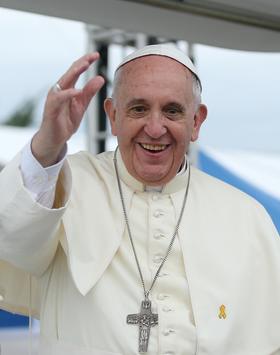
  1. A smiling pope in white waves with his right hand

    A law of this kind binds the bishops themselves. In 2016 Pope Francis laid down that a bishop can be removed from office for negligence, and that in cases of the abuse of minors grave negligence is enough.

    “§ 1. The diocesan Bishop or Eparch, or one who even holds a temporary title and is responsible for a Particular Church, or other community of faithful that is its legal equivalent, according to can. 368 CIC or can. 313 CCEO, can be legitimately removed from this office if he has through negligence committed or through omission facilitated acts that have caused grave harm to others, either to physical persons or to the community as a whole. The harm may be physical, moral, spiritual or through the use of patrimony. § 2. The diocesan Bishop or Eparch can only be removed if he is objectively lacking in a very grave manner the diligence that his pastoral office demands of him, even without serious moral fault on his part. § 3. In the case of the abuse of minors and vulnerable adults it is enough that the lack of diligence be grave.”

    Pope FrancisApostolic Letter motu proprio As a Loving Mother, 4 June 2016, art. 1, 2016Read it in the source: vatican.va

  2. A smiling pope in white waves with his right hand

    The Church has said that failing to use her own laws did great damage.

    “In the past, great damage was done by a failure to appreciate the close relationship existing in the Church between the exercise of charity and recourse — where circumstances and justice so require — to disciplinary sanctions. This manner of thinking — as we have learned from experience — risks leading to tolerating immoral conduct, for which mere exhortations or suggestions are insufficient remedies. … Negligence on the part of a bishop in resorting to the penal system is a sign that he has failed to carry out his duties honestly and faithfully, as I have expressly pointed out in recent documents, including the Apostolic Letters issued Motu Proprio As a Loving Mother (4 June 2016) and Vos Estis Lux Mundi (7 May 2019).”

    Pope FrancisApostolic Constitution Pascite gregem Dei, reforming Book VI of the Code of Canon Law, 23 May 2021, 2021Read it in the source: vatican.va

A law or a norm can be changed, and some on this row replaced earlier ones. Each entry names the document and its date. So far the row holds the Church's official statements and measures on the sexual abuse of minors by clergy. What state inquiries and courts found is on the Civil inquiries row.

Clergy sexual abuse and the Church's response: all 61 quotations

41 quotations in date order

A work in progress. The quotations below are not all the evidence on this matter. More are being added.

The Modern Era1800 to today
1962
Church governance

Secrecy imposed on Church trials: Crimen sollicitationis

Supreme Sacred Congregation of the Holy Office Instruction on the Manner of Proceeding in Causes involving the Crime of Solicitation (Crimen sollicitationis), 1962, no. 11, unofficial English translation on vatican.va

“Since, however, in dealing with these causes, more than usual care and concern must be shown that they be treated with the utmost confidentiality, and that, once decided and the decision executed, they are covered by permanent silence … all those persons in any way associated with the tribunal, or knowledgeable of these matters by reason of their office, are bound to observe inviolably the strictest confidentiality, commonly known as the secret of the Holy Office, in all things and with all persons, under pain of incurring automatic excommunication, ipso facto and undeclared, reserved to the sole person of the Supreme Pontiff, excluding even the Sacred Penitentiary.”

Read it in the source: vatican.va

See it on the timeline: Clergy sexual abuse and the Church's response

1984 to 1985
Church governance

The Gauthe case in Louisiana puts abuse before the American bishops

Michael R. Merz, member of the National Review Board, in a history written for the United States Conference of Catholic Bishops A History of the National Review Board (2011), Background

“All this changed in 1984 with the civil and criminal trials of Father Gilbert Gauthe in Southwest Louisiana for sexual abuse of children. … After the Gauthe case, the USCCB began to focus as a body on clerical sexual abuse of minors, including it on their Spring 1985 general assembly agenda. … Despite the discussion, no national plan was adopted.”

Read it in the source: USCCB

See it on the timeline: Clergy sexual abuse and the Church's response

1985
Church governance

What the American bishops knew by 1985

John Jay College research team, in a study commissioned by the United States Conference of Catholic Bishops The Causes and Context of Sexual Abuse of Minors by Catholic Priests in the United States, 1950-2010 (2011), Executive Summary

“By 1985, bishops knew that the sexual abuse of minors by Catholic priests was a problem, but they did not know the scope of the problem. Though more than 80 percent of cases now known had already occurred by 1985, only 6 percent of those cases had been reported to the dioceses by that time. When allegations of abuse were made, most diocesan leaders responded. However, the response typically focused on the priest-abusers rather than on the victims. Data indicate that the majority of diocesan leaders took actions to help “rehabilitate” the abusive priests. There is little evidence that diocesan leaders met directly with victims before 2002; consequently, the understanding of the harm of sexual abuse to the victim was limited.”

Read it in the source: USCCB

See it on the timeline: Clergy sexual abuse and the Church's response

1992
Church governance

The Porter and Kos cases, and five principles left to each bishop

Michael R. Merz, member of the National Review Board, in a history written for the United States Conference of Catholic Bishops A History of the National Review Board (2011), Background

“More national public attention came in 1992 with the cases of James Porter in Fall River, Massachusetts, and Rudy Kos in Dallas, Texas. In 1992, then USCCB President Archbishop Daniel E. Pilarczyk recommended that bishops apply the following Five Principles in dealing with these cases: 1. Respond promptly to allegations of abuse. 2. If the allegations are supported by evidence, remove the offender and refer him for evaluation. 3. Report abuse to civil authorities as required by law. 4. Reach out to victims. 5. Be as open as possible with the community. Some dioceses created child protection plans based on the Five Principles and some did not.”

Read it in the source: USCCB

See it on the timeline: Clergy sexual abuse and the Church's response

11 June 1993
Church governance

The first papal letter to the American bishops on the scandals

Pope St. John Paul II Letter to the Bishops of the United States of America, 11 June 1993

“During these last months I have become aware of how much you, the Pastors of the Church in the United States, together with all the faithful, are suffering because of certain cases of scandal given by members of the clergy. During the ad Limina visits many times the conversation has turned to this problem of how the sins of clerics have shocked the moral sensibilities of many and become an occasion of sin for others. … Therefore, I fully share your sorrow and your concern, especially your concern for the victims so seriously hurt by these misdeeds.”

Read it in the source: vatican.va

See it on the timeline: Clergy sexual abuse and the Church's response

2000
Church governance

McCarrick is made Archbishop of Washington: what the Holy See knew

Secretariat of State of the Holy See Report on the Holy See's institutional knowledge and decision-making process related to former Cardinal Theodore Edgar McCarrick (from 1930 to 2017), 10 November 2020, Executive Summary

“These allegations were generally summarized in a 28 October 1999 letter from Cardinal O’Connor, the Archbishop of New York, to the Apostolic Nuncio, and were shared with Pope John Paul II shortly thereafter. … Information regarding McCarrick’s conduct led to the conclusion that it would be imprudent to transfer him from Newark to another See on three occasions, namely Chicago (in 1997), … New York (1999/2000) … and, initially, Washington (July 2000). … However, Pope John Paul II seems to have changed his mind in August/September 2000, ultimately leading to his decision to appoint McCarrick to Washington in November 2000. … At the time of McCarrick’s appointment, and in part because of the limited nature of the Holy See’s own prior investigations, the Holy See had never received a complaint directly from a victim, whether adult or minor, about McCarrick’s misconduct.”

Read it in the source: vatican.va

See it on the timeline: Clergy sexual abuse and the Church's response

2001
Church governance

Abuse cases reserved to Rome

Congregation for the Doctrine of the Faith Letter on the more grave delicts reserved to the Congregation, 18 May 2001

“A delict against morals, namely: the delict committed by a cleric against the Sixth Commandment of the Decalogue with a minor below the age of 18 years. … As often as an ordinary or hierarch has at least probable knowledge of a reserved delict, after he has carried out the preliminary investigation he is to indicate it to the Congregation for the Doctrine of the Faith…”

Read it in the source: vatican.va

See it on the timeline: Clergy sexual abuse and the Church's response

January 2002
Church governance

The Boston Globe and the Geoghan case

John Jay College research team, in a study commissioned by the United States Conference of Catholic Bishops The Causes and Context of Sexual Abuse of Minors by Catholic Priests in the United States, 1950-2010 (2011), Chapter 1

“In January 2002, the Boston Globe began publishing a series of investigative articles on the sexual abuse of minors by priests in the Archdiocese of Boston. The impetus for the articles was concern about actions taken by the diocese in response to the behavior of John Geoghan, a Boston priest with a long history of accusations of sexual abuse. Cardinal Law and other bishops had allowed him to serve in multiple parishes despite the many allegations of abuse that had been made against him. The Globe’s series of articles in 2002, as well as the growing number of reports nationally about priests who sexually abused minors, led to the understanding that there was a sexual abuse “scandal” or “crisis” in the Catholic Church.”

Read it in the source: USCCB

See it on the timeline: Clergy sexual abuse and the Church's response

2002
Church governance

"No place in the priesthood" stated to the American cardinals

Pope St. John Paul II Address to the Cardinals of the United States, 23 April 2002, no. 3

“It must be absolutely clear to the Catholic faithful, and to the wider community, that Bishops and superiors are concerned, above all else, with the spiritual good of souls. People need to know that there is no place in the priesthood and religious life for those who would harm the young.”

Read it in the source: vatican.va

See it on the timeline: Clergy sexual abuse and the Church's response

13 June 2002
Church governance

"We are the ones": the American bishops confess at Dallas

Bishop Wilton D. Gregory, President of the United States Conference of Catholic Bishops Statement by the President of the USCCB on Sexual Abuse, Dallas, 13 June 2002

“The crisis, in truth, is about a profound loss of confidence by the faithful in our leadership as shepherds, because of our failures in addressing the crime of the sexual abuse of children and young people by priests and church personnel. … It is we who need to confess, and so we do. We are the ones, whether through ignorance or lack of vigilance or, God forbid, with knowledge, who allowed priest abusers to remain in ministry and reassigned them to communities where they continued to abuse. We are the ones who chose not to report the criminal actions of priests to the authorities, because the law did not require this. We are the ones who worried more about the possibility of scandal than bringing about the kind of openness that helps prevent abuse. And we are the ones who, at times, responded to victims and their families as adversaries and not as suffering members of the church.”

Read it in the source: USCCB

See it on the timeline: Clergy sexual abuse and the Church's response

2002
Church governance

The Dallas Charter and the Essential Norms

United States Conference of Catholic Bishops Essential Norms for Diocesan/Eparchial Policies Dealing with Allegations of Sexual Abuse of Minors by Priests or Deacons, norms 8 and 11, with the decree of the Congregation for Bishops, 8 December 2002

“8. When even a single act of sexual abuse by a priest or deacon is admitted or is established after an appropriate process in accord with canon law, the offending priest or deacon will be removed permanently from ecclesiastical ministry, not excluding dismissal from the clerical state, if the case so warrants … 11. The diocese/eparchy will comply with all applicable civil laws with respect to the reporting of allegations of sexual abuse of minors to civil authorities and will cooperate in their investigation. In every instance, the diocese/eparchy will advise and support a person’s right to make a report to public authorities.”

Read it in the source: vatican.va

See it on the timeline: Clergy sexual abuse and the Church's response

February 2004
Church governance

The John Jay study: 4,392 priests accused, 1950 to 2002

John Jay College of Criminal Justice, in a study commissioned by the United States Conference of Catholic Bishops The Nature and Scope of Sexual Abuse of Minors by Catholic Priests and Deacons in the United States 1950-2002 (February 2004), sections 2.1 and 2.3

“the total number of Catholic priests and deacons in the United States who have been accused of sexual abuse of children is 4,392. … If the total of the accused priests (4,392) is divided by the total of all priests in ministry between 1950 and 2002 (109,694), the result is 4%”

Read it in the source: USCCB

See it on the timeline: Clergy sexual abuse and the Church's response

February 2004
Church governance

The John Jay study: 10,667 people made allegations

John Jay College of Criminal Justice, in a study commissioned by the United States Conference of Catholic Bishops The Nature and Scope of Sexual Abuse of Minors by Catholic Priests and Deacons in the United States 1950-2002 (February 2004), Executive Summary and section 4.3

“A total of 10,667 individuals made allegations of child sexual abuse by priests. … The largest group of alleged victims (50.9%) was between the ages of 11 and 14 … of all victims whose gender was reported, (Table 4.3.1) 81% were male and 19% were female.”

Read it in the source: USCCB

See it on the timeline: Clergy sexual abuse and the Church's response

February 2004
Church governance

The John Jay study: the police were told about one accused priest in four

John Jay College of Criminal Justice, in a study commissioned by the United States Conference of Catholic Bishops The Nature and Scope of Sexual Abuse of Minors by Catholic Priests and Deacons in the United States 1950-2002 (February 2004), Executive Summary, Reporting and Actions Taken

“To date, the police have been contacted about 1,021 priests with allegations of abuse, or 24% of our total. Nearly all of these reports have led to investigations, and 384 instances have led to criminal charges.”

Read it in the source: USCCB

See it on the timeline: Clergy sexual abuse and the Church's response

2008
Church governance

"Sometimes very badly handled": Benedict XVI to the American bishops

Pope Benedict XVI Address to the Bishops of the United States, Washington, 16 April 2008

“Among the countersigns to the Gospel of life found in America and elsewhere is one that causes deep shame: the sexual abuse of minors. Many of you have spoken to me of the enormous pain that your communities have suffered when clerics have betrayed their priestly obligations and duties by such gravely immoral behavior. … Responding to this situation has not been easy and, as the President of your Episcopal Conference has indicated, it was “sometimes very badly handled”.”

Read it in the source: vatican.va

See it on the timeline: Clergy sexual abuse and the Church's response

11 December 2009
Church governance

The Pope "shares the outrage" after the Dublin report

Holy See Press Office Press release on the meeting of Benedict XVI with representatives of the Irish Episcopal Conference and senior officials of the Roman Curia, 11 December 2009

“After careful study of the Report, the Holy Father was deeply disturbed and distressed by its contents. He wishes once more to express his profound regret at the actions of some members of the clergy who have betrayed their solemn promises to God, as well as the trust placed in them by the victims and their families, and by society at large. The Holy Father shares the outrage, betrayal and shame felt by so many of the faithful in Ireland … The Holy See takes very seriously the central issues raised by the Report, including questions concerning the governance of local Church leaders with ultimate responsibility for the pastoral care of children.”

Read it in the source: vatican.va

See it on the timeline: Clergy sexual abuse and the Church's response

16 February 2010
Church governance

"The failure of Irish Church authorities for many years"

Holy See Press Office Press release on the meeting of the Holy Father with Irish bishops and senior members of the Roman Curia, 16 February 2010

“Together they examined the failure of Irish Church authorities for many years to act effectively in dealing with cases involving the sexual abuse of young people by some Irish clergy and religious. All those present recognized that this grave crisis has led to a breakdown in trust in the Church’s leadership and has damaged her witness to the Gospel and its moral teaching.”

Read it in the source: vatican.va

See it on the timeline: Clergy sexual abuse and the Church's response

13 March 2010
Church governance

Three thousand cases sent to Rome in nine years

Msgr. Charles J. Scicluna, Promoter of Justice of the Congregation for the Doctrine of the Faith Interview with Gianni Cardinale, 13 March 2010, as published on vatican.va

“In 2003 and 2004 a great wave of cases flooded over our desks. Many of them came from the United States and concerned the past. … Overall in the last nine years (2001-2010) we have considered accusations concerning around three thousand cases of diocesan and religious priests, which refer to crimes committed over the last fifty years.”

Read it in the source: vatican.va

See it on the timeline: Clergy sexual abuse and the Church's response

2010
Church governance

Letter to the Catholics of Ireland: to the victims

Pope Benedict XVI Pastoral Letter to the Catholics of Ireland, 19 March 2010, no. 6

“You have suffered grievously and I am truly sorry. I know that nothing can undo the wrong you have endured. Your trust has been betrayed and your dignity has been violated. Many of you found that, when you were courageous enough to speak of what happened to you, no one would listen. Those of you who were abused in residential institutions must have felt that there was no escape from your sufferings. It is understandable that you find it hard to forgive or be reconciled with the Church. In her name, I openly express the shame and remorse that we all feel.”

Read it in the source: vatican.va

See it on the timeline: Clergy sexual abuse and the Church's response

2010
Church governance

Letter to the Catholics of Ireland: to the bishops

Pope Benedict XVI Pastoral Letter to the Catholics of Ireland, 19 March 2010, no. 11

“It cannot be denied that some of you and your predecessors failed, at times grievously, to apply the long-established norms of canon law to the crime of child abuse. Serious mistakes were made in responding to allegations. I recognize how difficult it was to grasp the extent and complexity of the problem, to obtain reliable information and to make the right decisions in the light of conflicting expert advice. Nevertheless, it must be admitted that grave errors of judgement were made and failures of leadership occurred. All this has seriously undermined your credibility and effectiveness.”

Read it in the source: vatican.va

See it on the timeline: Clergy sexual abuse and the Church's response

1 May 2010
Church governance

The founder of the Legionaries of Christ: "real crimes"

Holy See Communiqué regarding the Apostolic Visitation of the Congregation of the Legionaries of Christ, 1 May 2010

“The very grave and objectively immoral actions of Father Maciel, confirmed by incontrovertible testimonies, in some cases constitute real crimes and manifest a life devoid of scruples and authentic religious meaning. This life was unknown to the great majority of the Legionaries, above all because of the system of relationships constructed by Father Maciel, who was able skilfully to create alibis for himself, to obtain trust, confidence and silence from those around him, and to reinforce his personal role as a charismatic founder. Not infrequently a deplorable discrediting and distancing of those who entertained doubts as to the probity of his conduct, as well as a misguided concern to avoid damaging the good that the Legion was accomplishing, created around him a defence mechanism that for a long time rendered him unassailable, making it very difficult, as a result, to know the truth about his life.”

Read it in the source: vatican.va

See it on the timeline: Clergy sexual abuse and the Church's response

2011
Church governance

Every bishops' conference told to write guidelines

Congregation for the Doctrine of the Faith Circular Letter to assist Episcopal Conferences in developing Guidelines for dealing with cases of sexual abuse of minors perpetrated by clerics, 3 May 2011, I, e

“Sexual abuse of minors is not just a canonical delict but also a crime prosecuted by civil law. Although relations with civil authority will differ in various countries, nevertheless it is important to cooperate with such authority within their responsibilities. Specifically, without prejudice to the sacramental internal forum, the prescriptions of civil law regarding the reporting of such crimes to the designated authority should always be followed.”

Read it in the source: vatican.va

See it on the timeline: Clergy sexual abuse and the Church's response

3 September 2011
Church governance

The Holy See answers the Cloyne Report

Holy See Response to Mr Eamon Gilmore, Tánaiste and Minister for Foreign Affairs and Trade of Ireland, concerning the Cloyne Report, 3 September 2011

“This Report has brought to light very serious and disturbing failings in the handling of accusations of sexual abuse of children and young people by clerics in the Diocese of Cloyne. At the outset, the Holy See wishes to state its abhorrence for the crimes of sexual abuse which took place in that Diocese, and indeed in other Irish Dioceses. The Holy See is sorry and ashamed for the terrible sufferings which the victims of abuse and their families have had to endure within the Church of Jesus Christ, a place where this should never happen. … The Holy See is deeply concerned at the findings of the Commission of Inquiry concerning grave failures in the ecclesiastical governance of the Diocese of Cloyne and the mishandling of allegations of abuse.”

Read it in the source: vatican.va

See it on the timeline: Clergy sexual abuse and the Church's response

7 July 2014
Church governance

Pope Francis meets victims: "sins of omission on the part of Church leaders"

Pope Francis Homily at Mass with a group of victims of clergy sexual abuse, Domus Sanctae Marthae, 7 July 2014

“Before God and his people I express my sorrow for the sins and grave crimes of clerical sexual abuse committed against you. And I humbly ask forgiveness. I beg your forgiveness, too, for the sins of omission on the part of Church leaders who did not respond adequately to reports of abuse made by family members, as well as by abuse victims themselves. This led to even greater suffering on the part of those who were abused and it endangered other minors who were at risk.”

Read it in the source: vatican.va

See it on the timeline: Clergy sexual abuse and the Church's response

2016
Church governance

Negligent bishops can be removed: As a Loving Mother

Pope Francis Apostolic Letter motu proprio As a Loving Mother, 4 June 2016, art. 1

“§ 1. The diocesan Bishop or Eparch, or one who even holds a temporary title and is responsible for a Particular Church, or other community of faithful that is its legal equivalent, according to can. 368 CIC or can. 313 CCEO, can be legitimately removed from this office if he has through negligence committed or through omission facilitated acts that have caused grave harm to others, either to physical persons or to the community as a whole. The harm may be physical, moral, spiritual or through the use of patrimony. § 2. The diocesan Bishop or Eparch can only be removed if he is objectively lacking in a very grave manner the diligence that his pastoral office demands of him, even without serious moral fault on his part. § 3. In the case of the abuse of minors and vulnerable adults it is enough that the lack of diligence be grave.”

Read it in the source: vatican.va

See it on the timeline: Clergy sexual abuse and the Church's response

2017 to 2019
Church governance

McCarrick accused of abusing a minor, and dismissed from the priesthood

Secretariat of State of the Holy See Report on the Holy See's institutional knowledge and decision-making process related to former Cardinal Theodore Edgar McCarrick, 10 November 2020, Executive Summary

“In June 2017, the Archdiocese of New York learned of the first known allegation of sexual abuse by McCarrick of a victim under 18 years of age, which occurred in the early 1970s. … Shortly after the accusation was deemed credible, Pope Francis requested McCarrick’s resignation from the College of Cardinals. Following an administrative penal process by the Congregation for the Doctrine of the Faith, McCarrick was found culpable of acts in contravention of the Sixth Commandment of the Decalogue involving both minors and adults, and on that basis was dismissed from the clerical state.”

Read it in the source: vatican.va

See it on the timeline: Clergy sexual abuse and the Church's response

2018
Church governance

The Pope admits his own errors over Chile

Pope Francis Letter to the Bishops of Chile following the report of Archbishop Charles J. Scicluna, 8 April 2018

“With regard to myself, I recognize, and I would like you to convey this faithfully, that I have made serious errors in the assessment and perception of the situation, in particular through the lack of reliable and balanced information. I now beg the forgiveness of all those whom I have offended and I hope to be able to do so personally, in the coming weeks, in the meetings that I will have with representatives of the people interviewed.”

Read it in the source: vatican.va

See it on the timeline: Clergy sexual abuse and the Church's response

31 May 2018
Church governance

Chile: "the culture of abuse and the system of cover-up"

Pope Francis Letter to the People of God that journeys in Chile, 31 May 2018, nos. 3 and 4 (Spanish; no English text on vatican.va)

“I believe that here lies one of our main faults and omissions: not knowing how to listen to the victims. In this way partial conclusions were built that lacked crucial elements for a sound and clear discernment. With shame I must say that we did not know how to listen and react in time. … The "never again" to the culture of abuse, and to the system of cover-up that allows it to perpetuate itself, requires all of us to work together to generate a culture of care that permeates our ways of relating”

Our translation. The words as written, in Spanish:

“Creo que aquí reside una de nuestras principales faltas y omisión: el no saber escuchar a las víctimas. Así se construyeron conclusiones parciales a las que les faltaban elementos cruciales para un sano y claro discernimiento. Con vergüenza debo decir que no supimos escuchar y reaccionar a tiempo. … El “nunca más” a la cultura del abuso, así como al sistema de encubrimiento que le permite perpetuarse, exige trabajar entre todos para generar una cultura del cuidado que impregne nuestras formas de relacionarnos”

Read it in the source: vatican.va

See it on the timeline: Clergy sexual abuse and the Church's response

14 August 2018
Church governance

The American bishops answer the grand jury: "shamed by and sorry for"

Cardinal Daniel N. DiNardo and Bishop Timothy L. Doherty, for the United States Conference of Catholic Bishops Joint statement on the Pennsylvania grand jury report, 14 August 2018

“The report of the Pennsylvania grand jury again illustrates the pain of those who have been victims of the crime of sexual abuse by individual members of our clergy, and by those who shielded abusers and so facilitated an evil that continued for years or even decades. … As a body of bishops, we are shamed by and sorry for the sins and omissions by Catholic priests and Catholic bishops.”

Read it in the source: USCCB

See it on the timeline: Clergy sexual abuse and the Church's response

2018
Church governance

Letter to the People of God

Pope Francis Letter to the People of God, 20 August 2018, no. 1

“In recent days, a report was made public which detailed the experiences of at least a thousand survivors, victims of sexual abuse, the abuse of power and of conscience at the hands of priests over a period of approximately seventy years. … The heart-wrenching pain of these victims, which cries out to heaven, was long ignored, kept quiet or silenced. … With shame and repentance, we acknowledge as an ecclesial community that we were not where we should have been, that we did not act in a timely manner, realizing the magnitude and the gravity of the damage done to so many lives. We showed no care for the little ones; we abandoned them.”

Read it in the source: vatican.va

See it on the timeline: Clergy sexual abuse and the Church's response

13 November 2018
Church governance

The bishops' lay review board: "the faithful and the clergy do not trust many of you"

National Review Board (Francesco Cesareo, Chair) Special Report of the National Review Board to the Body of Bishops on the Sexual Abuse Crisis in the Church, 13 November 2018

“The Pennsylvania Grand Jury Report exposed the fact that some bishops have not been sufficiently open and transparent. It has taken the intervention of the state and the media to fully expose the darkness of abuse in our dioceses. It is shameful that the sin of abuse was hidden and allowed to fester until uncovered by the secular world. Even more unbearable is the fact that so many innocent children and young people suffered because of the inaction and silence of some bishops. … Today, the faithful and the clergy do not trust many of you. They are angry and frustrated, no longer satisfied with words and even with prayer.”

Read it in the source: USCCB

See it on the timeline: Clergy sexual abuse and the Church's response

23 February 2019
Church governance

A cardinal at the Vatican meeting: files destroyed, victims silenced

Cardinal Reinhard Marx Presentation at the Meeting on the Protection of Minors in the Church, Vatican, 23 February 2019

“The sexual abuse of children and youths is in no small measure due to the abuse of power in the area of administration. In this regard, administration has not contributed to fulfilling the mission of the Church, but on the contrary, has obscured, discredited and made it impossible. Files that could have documented the terrible deeds and named those responsible were destroyed, or not even created. Instead of the perpetrators, the victims were regulated and silence imposed on them. The stipulated procedures and processes for the prosecution of offences were deliberately not complied with, but instead cancelled or overridden. The rights of victims were effectively trampled underfoot, and left to the whims of individuals.”

Read it in the source: vatican.va

See it on the timeline: Clergy sexual abuse and the Church's response

2019
Church governance

The Vatican meeting on the protection of minors

Pope Francis Address at the end of the Eucharistic Concelebration, Meeting on the Protection of Minors in the Church, 24 February 2019, point 5

“No abuse should ever be covered up (as was often the case in the past) or not taken sufficiently seriously, since the covering up of abuses favours the spread of evil and adds a further level of scandal.”

Read it in the source: vatican.va

See it on the timeline: Clergy sexual abuse and the Church's response

2019
Church governance

Bishops made accountable: Vos estis lux mundi

Pope Francis Apostolic Letter motu proprio Vos estis lux mundi, 7 May 2019, art. 1 §1

“§1. These norms apply to reports regarding clerics or members of Institutes of Consecrated Life or Societies of Apostolic Life and concerning: a) delicts against the sixth commandment of the Decalogue consisting of: … ii. performing sexual acts with a minor or a vulnerable person; … b) conduct carried out by the subjects referred to in article 6, consisting of actions or omissions intended to interfere with or avoid civil investigations or canonical investigations, whether administrative or penal, against a cleric or a religious regarding the delicts referred to in letter a) of this paragraph.”

Read it in the source: vatican.va

See it on the timeline: Clergy sexual abuse and the Church's response

2019
Church governance

The pontifical secret lifted

Pope Francis Rescriptum ex audientia with the Instruction On the Confidentiality of Legal Proceedings, 6 December 2019, nos. 1, 4 and 5

“1. The pontifical secret does not apply to accusations, trials and decisions involving the offences referred to in: a) Article 1 of the Motu proprio “Vos estis lux mundi” (7 May 2019); … 4. Office confidentiality shall not prevent the fulfilment of the obligations laid down in all places by civil laws, including any reporting obligations, and the execution of enforceable requests of civil judicial authorities. 5. The person who files the report, the person who alleges to have been harmed and the witnesses shall not be bound by any obligation of silence with regard to matters involving the case.”

Read it in the source: vatican.va

See it on the timeline: Clergy sexual abuse and the Church's response

2020
Church governance

The McCarrick report published

Cardinal Pietro Parolin, Secretary of State Statement on the publication of the Report on the Holy See's institutional knowledge and decision-making related to former Cardinal Theodore Edgar McCarrick, 10 November 2020

“The Report on the Holy See’s institutional knowledge and decision-making process related to former Cardinal Theodore Edgar McCarrick, which the Secretariat of State drew up on the Pope’s mandate, is published today. … We publish the Report with sorrow for the wounds that these events have caused to the victims, their families, the Church in the United States, and the Universal Church.”

Read it in the source: vatican.va

See it on the timeline: Clergy sexual abuse and the Church's response

2021
Church governance

The Church's penal law rewritten: Pascite gregem Dei

Pope Francis Apostolic Constitution Pascite gregem Dei, reforming Book VI of the Code of Canon Law, 23 May 2021

“In the past, great damage was done by a failure to appreciate the close relationship existing in the Church between the exercise of charity and recourse — where circumstances and justice so require — to disciplinary sanctions. This manner of thinking — as we have learned from experience — risks leading to tolerating immoral conduct, for which mere exhortations or suggestions are insufficient remedies. … Negligence on the part of a bishop in resorting to the penal system is a sign that he has failed to carry out his duties honestly and faithfully, as I have expressly pointed out in recent documents, including the Apostolic Letters issued Motu Proprio As a Loving Mother (4 June 2016) and Vos Estis Lux Mundi (7 May 2019).”

Read it in the source: vatican.va

See it on the timeline: Clergy sexual abuse and the Church's response

6 October 2021
Church governance

The Pope on the French report: "my shame, our shame"

Pope Francis General Audience, 6 October 2021

“Brothers and sisters, yesterday, the Episcopal Conference and the Conference of men and women religious in France received the Independent Commission’s report regarding sexual abuse in the Church which was tasked to evaluate the extent of the phenomenon of sexual aggression and violence committed against minors from 1950 onwards. Unfortunately, a considerable number was revealed. I wish to express to the victims my sadness and my pain for the traumas they endured and my shame, our shame, my shame that for so long the Church has been incapable of putting this at the centre of her concerns, assuring them of my prayers.”

Read it in the source: vatican.va

See it on the timeline: Clergy sexual abuse and the Church's response

2023
Church governance

Vos estis lux mundi reissued and extended

Pope Francis Apostolic Letter motu proprio Vos estis lux mundi (updated), 25 March 2023, art. 6

“The procedural norms referred to in this title concern the delicts referred to in article 1, carried out by: a) Cardinals, Patriarchs, Bishops and Legates of the Roman Pontiff; … f) lay faithful who are or who were Moderators of international associations of the faithful recognized or erected by the Apostolic See, for acts committed durante munere.”

Read it in the source: vatican.va

See it on the timeline: Clergy sexual abuse and the Church's response

2023 to 2024
Church governance

The United States today: 902 allegations in one year, most through the courts

StoneBridge Business Partners, auditors, in the annual report of the United States Conference of Catholic Bishops Report on the Implementation of the Charter for the Protection of Children and Young People, 2024 Annual Report, Chapter Two

“Between July 1, 2023 and June 30, 2024, 902 allegations were reported by 855 victims/survivors of child sexual abuse by clergy throughout 195 Catholic dioceses and eparchies that reported information. … The abuse was alleged to have occurred primarily from the 1960’s to the present. … Allegations received as a result of lawsuits, compensation programs, and bankruptcies, make up approximately 61% of allegations during 2024.”

Read it in the source: USCCB

See it on the timeline: Clergy sexual abuse and the Church's response

2023 to 2024
Church governance

The United States today: $242 million paid in one year

Center for Applied Research in the Apostolate (CARA), in the annual report of the United States Conference of Catholic Bishops Report on the Implementation of the Charter for the Protection of Children and Young People, 2024 Annual Report, Chapter Three

“Dioceses and eparchies that responded to the survey and reported costs related to allegations, paid out $242,799,401 between July 1, 2023 and June 30, 2024.”

Read it in the source: USCCB

See it on the timeline: Clergy sexual abuse and the Church's response