Tradition Timeline Leave an objection

Start page / Kinds of source

Jewish Writers

All 5 quotations on this site filed under “Jewish”, from every timeline, in date order.

Each mark is one quotation. Touch the timeline to read it.

Why Jewish writers are quoted

The Church came out of Israel. Jesus, his mother and the apostles were Jews, and the Scriptures the Church reads were first Israel's. This row gives Jewish writers in their own words, from the fall of the Temple in the year 70 onward, so that what Judaism holds is stated by those who hold it and not by us.

  1. The Catechism says the Jewish faith is already a response to what God revealed in the Old Covenant, which sets it apart from other religions that are not Christian.

    “The Jewish faith, unlike other non-Christian religions, is already a response to God's revelation in the Old Covenant.”

    Catechism of the Catholic ChurchCCC 839, 1992Read it in the source: vatican.va

  2. The Catechism also states the difference: the Church awaits the return of the Messiah who died and rose, and Judaism awaits a Messiah who has not yet come.

    “But one awaits the return of the Messiah who died and rose from the dead and is recognized as Lord and Son of God; the other awaits the coming of a Messiah, whose features remain hidden till the end of time; and the latter waiting is accompanied by the drama of not knowing or of misunderstanding Christ Jesus.”

    Catechism of the Catholic ChurchCCC 840, 1992Read it in the source: vatican.va

The wrongs done to Jews in the name of Christians are set out on a timeline of their own in the Scandals section.

Judaism and the Church: all 24 quotations

5 quotations in date order

A work in progress. The quotations below are not all the evidence on this matter. More are being added.

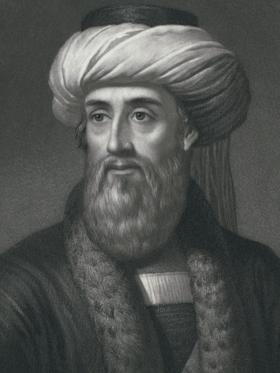
AD 70An engraved portrait of a bearded man in a large turban and a fur-trimmed robe
Jewish

The Temple burned

Flavius Josephus The Wars of the Jews, Book 6, ch. 4, sect. 8

“Now although any one would justly lament the destruction of such a work as this was, since it was the most admirable of all the works that we have seen or heard of, both for its curious structure and its magnitude, and also for the vast wealth bestowed upon it, as well as for the glorious reputation it had for its holiness; yet might such a one comfort himself with this thought, that it was fate that decreed it so to be, which is inevitable, both as to living creatures, and as to works and places also.”

Read it in the source: CCEL

See it on the timeline: Judaism and the Church

c. AD 93
Jewish

The Pharisees, as a Jewish historian describes them

Flavius Josephus Antiquities of the Jews, Book 18, ch. 1, sect. 3

“Now, for the Pharisees, they live meanly, and despise delicacies in diet; and they follow the conduct of reason; and what that prescribes to them as good for them they do; and they think they ought earnestly to strive to observe reason's dictates for practice. They also pay a respect to such as are in years; nor are they so bold as to contradict them in any thing which they have introduced; … They also believe that souls have an immortal rigor in them, and that under the earth there will be rewards or punishments, according as they have lived virtuously or viciously in this life; and the latter are to be detained in an everlasting prison, but that the former shall have power to revive and live again; on account of which doctrines they are able greatly to persuade the body of the people; and whatsoever they do about Divine worship, prayers, and sacrifices, they perform them according to their direction;”

Read it in the source: CCEL

See it on the timeline: Judaism and the Church

c. AD 95
Jewish

Which books the Jews hold to be divine

Flavius Josephus Against Apion, Book 1, sect. 8

“For we have not an innumerable multitude of books among us, disagreeing from and contradicting one another, [as the Greeks have,] but only twenty-two books, … which contain the records of all the past times; which are justly believed to be divine; and of them five belong to Moses, which contain his laws and the traditions of the origin of mankind till his death.”

Read it in the source: CCEL

See it on the timeline: Judaism and the Church

The Middle Ages800 to 1500
c. 1140
Jewish

What a Jewish rabbi says he believes

Judah Ha-Levi The Kuzari, Part I, sect. 11

“The Rabbi replied: I believe in the God of Abraham, Isaac and Israel, who led the children of Israel out of Egypt with signs and miracles; who fed them in the desert and gave them the land, after having made them traverse the sea and the Jordan in a miraculous way; who sent Moses with His law, and subsequently thousands of prophets, who confirmed His law by promises to the observant. and threats to the disobedient. Our belief is comprised in the Torah -- a very large domain.”

Read it in the source: Fordham Sourcebook

See it on the timeline: Judaism and the Church

c. 1180
Jewish

The Messiah in Jewish law, and a Torah that does not change

Moses Maimonides Mishneh Torah, Laws of Kings, ch. 11 (Laws Concerning Mashiach)

“This Torah, with its statutes and laws, is everlasting. We may neither add to them nor detract from them. … If a king will arise from the House of David who delves deeply into the study of the Torah and, like David his ancestor, observes its mitzvos as prescribed by the Written Law and the Oral Law; if he will compel all of Israel to walk in [the way of the Torah] and repair the breaches [in its observance]; and if he will fight the wars of G-d; - we may, with assurance, consider him Mashiach. If he succeeds in the above, builds the [Beis Ha]Mikdash on its site, and gathers in the dispersed remnant of Israel, he is definitely the Mashiach.”

Read it in the source: Fordham Sourcebook

See it on the timeline: Judaism and the Church