“Behold, my covenant is with you, and you shall be the father of a multitude of nations. No longer shall your name be Abram, but your name shall be Abraham; for I have made you the father of a multitude of nations.”
Short answer
Jesus said this while rebuking men who loved titles and places of honor, and in the same passage he also forbade "rabbi" and "master". After he said it, Stephen addresses the elders as "fathers", Paul tells the Corinthians "I became your father in Christ Jesus through the gospel", and John writes to "fathers". St. John Chrysostom and St. Jerome read the verse as teaching that God alone is Father in the highest sense, and they do not read it as a ban on the word. The Church calls her priests "fathers in Christ" in that lesser sense, and tells them they are "brothers among brothers" with the rest of the baptized.
Where it starts with Jesus
Jesus says his disciples have one teacher, one Father in heaven and one master, the Christ.
“But you are not to be called rabbi, for you have one teacher, and you are all brethren. And call no man your father on earth, for you have one Father, who is in heaven. Neither be called masters, for you have one master, the Christ.”
JesusMatthew 23:8-10Read it in the source: Bible Gateway, RSV Catholic Edition
How it points to Jesus
The Church takes this to mean that no man may stand in the place of God or of Christ. A priest is called father in the sense in which Paul told the Corinthians that he became their father in Christ Jesus through the gospel. The title names a man who serves the one Father by bringing people to his Son.
Drafted from primary sources. Every quotation is checked against the page it links to.
18 quotations in date order
A work in progress. The quotations below are not all the evidence on this matter. More are being added.
“My father, my father! the chariots of Israel and its horsemen!”
“…they love the place of honor at feasts and the best seats in the synagogues, and salutations in the market places, and being called rabbi by men. But you are not to be called rabbi, for you have one teacher, and you are all brethren. And call no man your father on earth, for you have one Father, who is in heaven. Neither be called masters, for you have one master, the Christ. He who is greatest among you shall be your servant; whoever exalts himself will be humbled, and whoever humbles himself will be exalted.”
“Brethren and fathers, hear me. The God of glory appeared to our father Abraham”
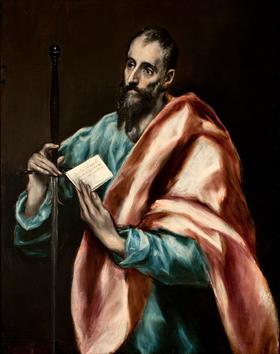
“I do not write this to make you ashamed, but to admonish you as my beloved children. For though you have countless guides in Christ, you do not have many fathers. For I became your father in Christ Jesus through the gospel.”
“That is why it depends on faith, in order that the promise may rest on grace and be guaranteed to all his descendants—not only to the adherents of the law but also to those who share the faith of Abraham, for he is the father of us all, as it is written, “I have made you the father of many nations””
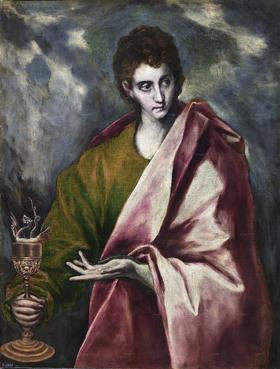
“I am writing to you, fathers, because you know him who is from the beginning.”
“…the whole multitude both of the heathen and Jews, who dwelt at Smyrna, cried out with uncontrollable fury, and in a loud voice, This is the teacher of Asia, the father of the Christians, and the overthrower of our gods”
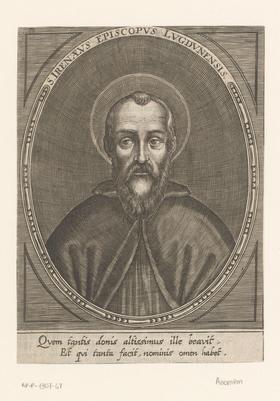
“For when any person has been taught from the mouth of another, he is termed the son of him who instructs him, and the latter [is called] his father.”
“To Father Cyprian, the presbyters and deacons abiding at Rome, greeting.”
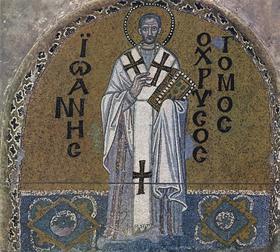
“Call not, father, … not that they should not call, but they may know whom they ought to call Father, in the highest sense. For like as the master is not a master principally; so neither is the father. For He is cause of all, both of the masters, and of the fathers.”
“It is a difficulty that the Apostle against this command calls himself the teacher of the Gentiles; and that in monasteries in their common conversation, they call one another, Father. It is to be cleared thus. It is one thing to be father or master by nature, another by sufferance. Thus when we call any man our father, we do it to shew respect to his age, not as regarding him as the author of our being.”
“The Apostles were sent to you as fathers, instead of the Apostles sons have been born to you: there have been appointed Bishops. For in the present day, whence do the Bishops, throughout all the world, derive their origin? The Church itself calls them fathers; the Church itself brought them forth, and placed them on the thrones of the fathers.”
“An abbot who is worthy to preside over a monastery ought always to remember what he is called, and carry out with his deeds the name of a Superior. For he is believed to be Christ's representative, since he is called by His name, the apostle saying: "Ye have received the spirit of adoption of sons, whereby we call Abba, Father."”
“Now just as a carnal father partakes of the character of principle in a particular way, which character is found in God in a universal way, so too a person who, in some way, exercises providence in one respect, partakes of the character of father in a particular way, since a father is the principle of generation, of education, of learning and of whatever pertains to the perfection of human life”
“Let them, as fathers in Christ, take care of the faithful whom they have begotten by baptism and their teaching.”
“Though priests of the New Testament, in virtue of the sacrament of Orders, exercise the most outstanding and necessary office of father and teacher among and for the People of God, they are nevertheless, together with all Christ's faithful, disciples of the Lord, made sharers in his Kingdom by the grace of God's call. … For priests are brothers among brothers … with all those who have been reborn at the baptismal font.”
“The divine fatherhood is the source of human fatherhood; this is the foundation of the honor owed to parents.”
Related timelines
The ordained priesthood“The Bible says all believers are priests. There is no special ordained priesthood in the New Testament Church.”
Holy OrdersThe Catechism calls Holy Orders the sacrament through which the mission Christ gave his apostles continues in the Church until the end of time. It has three degrees: bishop, presbyter and deacon. This timeline begins with Christ choosing and sending the Twelve and the laying on of hands in the New Testament. It then follows the three degrees in the Fathers, the rule for ordaining a bishop at Nicaea, the Fathers on the weight of the office, and the teaching of Aquinas, Florence, Trent, Pius XII, the Second Vatican Council and the Catechism.
Apostolic succession“True apostolic succession consists in preserving the apostles' teaching, not in an unbroken line of episcopal ordinations.”
The priest and the Eucharist“Celebrating the Lord's Supper does not require a priest with a unique power to consecrate; rather, it requires only a pastor authorized to lead the congregation.”
Confession to a priest“We don't need to confess our sins to a priest. Christ is the one mediator, the veil was torn, and we can go straight to God for forgiveness.”
Priestly celibacy“The Bible says a bishop should be the husband of one wife, and Peter was married. Requiring priests to be celibate is unbiblical and treats marriage as something unholy.”